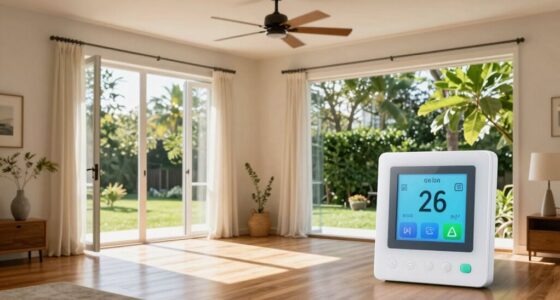
To maximize savings with your smart thermostat, adjust the temperature seasonally—set your home around 68°F in winter during the day and lower it at night or when you’re away. In summer, aim for about 78°F when active and raise it when you’re gone or sleeping. Take advantage of smart features that learn your routines and weather patterns. Continuing will reveal how to fine-tune these settings for even better efficiency and comfort.

Get home appliances delivered free with Prime
- Fast, free delivery on millions of items
- Prime Video, Amazon Music and more included
- Member-only deals all year
Key Takeaways
- Adjust thermostat settings seasonally, e.g., 68°F in winter and 78°F in summer, for optimal energy savings.
- Use smart thermostats to automate temperature changes based on occupancy, weather, and routines.
- Lower heating temperatures at night and when away during winter; raise cooling temps during inactive periods in summer.
- Incorporate outdoor temperature data and energy usage patterns to fine-tune seasonal adjustments.
- Schedule temperature changes around daily routines to maximize comfort while minimizing energy consumption.
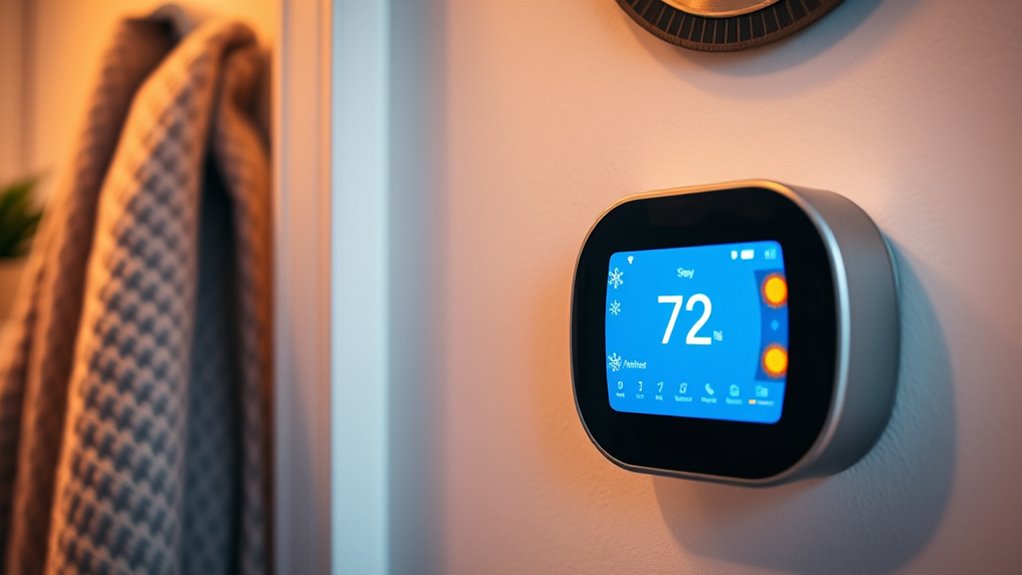
Adjusting your thermostat seasonally is one of the simplest ways to save energy and lower your utility bills. When you make small changes based on the time of year, you enhance your home’s comfort while reducing unnecessary energy use. A key tool in achieving this is smart home integration, which allows your thermostat to learn and adapt to your habits. By connecting your smart thermostat to your home automation system, you gain insights into your energy consumption patterns, making it easier to set effective seasonal temperature schedules.
Adjust your thermostat seasonally with smart home integration to save energy and enhance comfort year-round.
In the winter, you want your home warm enough to be comfortable but not overheated. Lowering your thermostat by just a few degrees—say, setting it to 68°F during the day and dropping it to 60°F at night—can make a significant difference in energy consumption. Smart home integration enables your thermostat to automatically adjust based on your routines, weather forecasts, and occupancy, ensuring you’re not wasting energy when you’re away or asleep. By analyzing your energy consumption patterns, your smart system can identify times when heating is less needed and adjust settings accordingly, maximizing savings without sacrificing comfort. Incorporating seasonal energy demand data into your system can further fine-tune these adjustments for optimal efficiency.
During summer, the goal shifts to keeping your home cool while avoiding excessive air conditioning use. Raising your thermostat to around 78°F when you’re home and active, and increasing it further when you’re away or sleeping, helps reduce cooling costs. Many smart thermostats can detect when you leave the house and automatically adjust to energy-saving settings. Understanding your energy consumption patterns allows you to fine-tune these adjustments, so you’re not cooling an empty house or cooling unnecessarily when outdoor temperatures are lower. With smart home integration, you can also set schedules that align with your daily routines, ensuring enhanced comfort and efficiency.
Seasonal changes in weather influence how your HVAC system performs, and your smart thermostat can account for this. For example, during transitional seasons, you may need to adjust your settings more frequently. By analyzing past energy consumption data, your smart system can suggest ideal temperature points for each season, helping you stay comfortable while saving money. This adaptive approach means you’re not stuck with the same settings year-round but instead utilize data-driven strategies that reflect actual usage patterns and weather fluctuations. Additionally, using smart home integration can help optimize your entire home’s energy efficiency for each season.
Additionally, understanding vape juice shelf life and proper storage techniques can ensure your products remain safe and effective, which is especially important if you use these products regularly. Ultimately, adjusting your thermostat seasonally with the help of smart home integration ensures you’re actively managing your energy consumption patterns. These intelligent systems empower you to make informed decisions, automate adjustments, and maintain comfort without overspending. By staying attentive to seasonal needs, you maximize savings and reduce your environmental impact, all while enjoying a home that adapts seamlessly to your lifestyle.
smart thermostat for seasonal energy savings
As an affiliate, we earn on qualifying purchases.
As an affiliate, we earn on qualifying purchases.
Frequently Asked Questions
How Often Should I Adjust My Thermostat Seasonally?
You should adjust your thermostat seasonally at least twice a year—once before heating season and again before cooling season. This helps optimize energy use and savings. To maximize benefits, consider scheduling energy audits and upgrading insulation, which reduce the workload on your thermostat. These steps verify your home stays comfortable while you save on energy costs, making seasonal adjustments more effective and efficient.
Are There Specific Settings for Extreme Weather Conditions?
In extreme weather conditions, adjusting your thermostat is vital for weather adaptation. During very hot or cold spells, set your thermostat to a higher temperature in summer or lower in winter to save energy. Use smart features to automatically respond to extreme temperatures, preventing overuse of HVAC. This way, you maintain comfort and protect your system from strain, ensuring efficient operation during extreme temperature events.
Can Smart Thermostats Learn My Preferences Over Time?
Smart thermostats use advanced learning algorithms to adapt to your habits over time. They analyze your temperature adjustments, occupancy patterns, and preferences, allowing for better user customization. As you interact with your thermostat, it gradually learns your ideal settings, automatically adjusting to maximize comfort and energy efficiency. This personalized approach helps guarantee your home stays comfortable while saving you money, making your smart thermostat a truly intuitive and responsive device.
How Do Humidity Levels Affect Thermostat Settings?
Think of your home as a garden needing just the right humidity control. High moisture levels can make your space feel warmer and cause discomfort, while low levels can dry out your skin. Adjust your thermostat settings accordingly, especially in winter and summer, to maintain ideal humidity. Smart thermostats can help you monitor moisture levels and maximize comfort without wasting energy, ensuring your home stays cozy and efficient year-round.
Are There Safety Concerns With Changing Thermostat Settings Frequently?
Changing your thermostat settings frequently can raise safety risks, especially if you’re not careful. You might encounter electrical hazards or damage to your system if you don’t follow proper procedures. To avoid these issues, make small adjustments and verify your thermostat is installed correctly. Always turn off power before making changes, and consult a professional if you’re unsure. This way, you reduce safety risks and prevent electrical hazards.
As an affiliate, we earn on qualifying purchases.
Conclusion
So, while it’s tempting to leave your thermostat at a cozy setting year-round, the real savings come from adjusting it seasonally. Ironically, the effort to save money might require a bit of discomfort now and then. But in the end, those small tweaks could make your energy bills less of a nightmare—and prove that sometimes, a little effort in switching settings pays off more than you’d expect. Stay smart, and enjoy the savings!
learning smart thermostat with weather integration
As an affiliate, we earn on qualifying purchases.
As an affiliate, we earn on qualifying purchases.
programmable smart home thermostat
As an affiliate, we earn on qualifying purchases.
As an affiliate, we earn on qualifying purchases.
Fall Picks
fall essentials
As an affiliate, we earn on qualifying purchases.