
TL;DR
A report from Ideal Home examines whether retrofitting insulation can make homes warmer and reduce heating costs. Experts say the benefits depend on the building’s construction and the insulation selected; older solid-wall homes need particular care to avoid trapping moisture. Costs, energy-bill savings and payback periods are not quantified in the source material.
Ideal Home has published expert guidance on whether retrofitting insulation can make homes warmer while lowering heating bills, with specialists saying the outcome depends on the building and the type of insulation. They caution that older homes, especially solid-wall properties, need a careful assessment because unsuitable materials or poor ventilation could contribute to moisture and damp problems.

Get home appliances delivered free with Prime
- Fast, free delivery on millions of items
- Prime Video, Amazon Music and more included
- Member-only deals all year
The report cites Becky Lane, chief executive of home-retrofit company Furbnow, and Martyn Fowler, founder of Elite Renewables. Both say insulation can be worth considering, particularly in older houses that may have little insulation, but advise owners to understand how their property is built before work begins. Lane says pre-1930s buildings were often designed to let moisture pass through their walls, making material choice and ventilation relevant to any retrofit.
The work involved varies by measure. Lane describes loft insulation as relatively straightforward and says cavity-wall insulation typically takes two to four hours, with limited disruption when a home is suitable. Fowler says installers generally drill small holes in external walls to fill a cavity, then repair the openings. He cautions that cavity condition and exposure to driving rain should be checked before filling it.
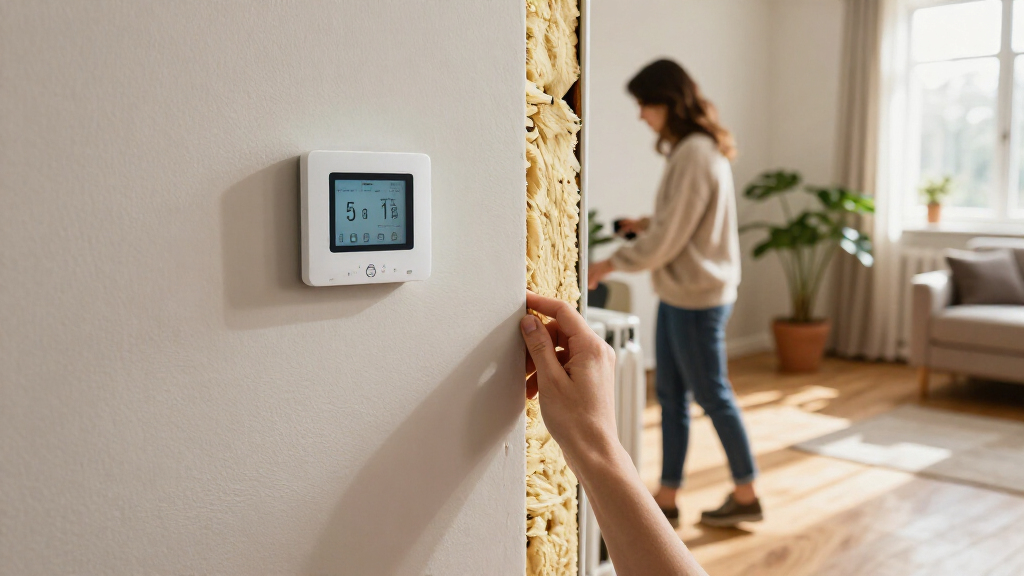
Internal solid-wall insulation is more involved: Fowler says radiators, sockets, skirting boards and sometimes kitchens may need to be moved, followed by wall finishing and redecorating. External wall insulation keeps much of the work outside, but can require scaffolding and adjustments to downpipes, window reveals or other fittings. The report says work may be phased room by room, though it gives no installation prices, expected bill reductions or payback estimates.
Warmth Depends on the Right Retrofit
Insulation can reduce heat escaping through a home’s walls, roof or floors, potentially helping residents stay comfortable without relying as heavily on heating. That possibility matters to households seeking to manage energy use, but the report does not establish a typical saving or guarantee lower bills. The effect will depend on the property, the measure installed, its quality and how the home is heated and used.
The practical risks also differ. A quick cavity-fill job is not automatically suitable for every house, while internal or external solid-wall work can mean substantial expense and disruption. In older buildings, addressing air leakage without adequate ventilation may trap moisture, according to Lane. That makes a building-specific assessment relevant not only to performance but also to avoiding problems after installation.
Products Worth Considering

Bose QuietComfort Ultra 2nd Generation Over-Ear Wireless Headphones with Spatial Audio, Noise Cancelling, Mic – Driftwood Sand (Limited Edit

Roborock Robot Vacuum and Mop with LiDAR Navigation and Self-Empty Dock

Ring Battery Doorbell Plus – Home or Business Security with Head‑to‑Toe HD+ Video, Motion Detection & Alerts, Two‑Way Talk
As an affiliate, we earn on qualifying purchases.
Choosing Insulation for the Building
The Ideal Home report frames retrofit insulation as one possible way to retain warmth rather than simply running central heating for longer. It distinguishes between loft, cavity-wall, solid-wall and floor insulation, which differ in suitability and the amount of work required. Its experts stress that age alone does not determine the right solution: a Victorian solid-wall house and a 1930s cavity-wall property can behave differently.
For cavity-wall work, Fowler says the walls should be checked for condition, exposure to driving rain and a clear cavity. For solid walls, the report’s central caution is moisture management: Lane and Fowler say older walls may need to dry out, so insulation materials and installation methods should suit the construction. The supplied report excerpt also notes that access affects floor insulation, but does not provide further details about that work.
“With an old house you really need to understand what you’re dealing with before you start.”
— Becky Lane, CEO of Furbnow
Savings and Suitability Vary
The source material does not give installation costs, projected energy-bill reductions or payback periods, so it cannot establish whether the work will save money overall for a particular household. It also does not provide a single recommendation for all property types or quantify how much warmth any insulation measure might add.
Suitability remains a property-specific question. The report says cavity condition, exposure to rain, wall construction and moisture management can affect the choice of system. It does not set out an assessment process, name specific insulation products or provide detailed guidance on ventilation standards. Readers should not treat the cited comments as a substitute for inspecting their own home.
Assess the Home Before Work
For homeowners considering a retrofit, the next step described by the experts is to establish the home’s construction and condition before choosing insulation. That includes checking whether walls are solid or cavity-built and, for cavity insulation, whether the cavity is suitable. The report also points to planning for room clearance and dust where internal work is proposed, and for scaffolding or external fittings where outside insulation is used.
No specific policy decision, project deadline or follow-up study is announced in the source. The likely next development for any individual home is a property assessment and a comparison of suitable measures, costs and expected performance. Those details are needed before judging whether an insulation project is likely to deliver lower heating bills.
Key Questions
Can retrofitting insulation lower heating bills?
It may reduce heat loss and the need for heating, but the report provides no typical savings figure. Results depend on the home, the insulation installed and household heating use.
Is insulation suitable for every older house?
No single measure is suitable for every property. The experts say owners should identify the wall construction and consider how the building manages moisture, particularly in older solid-wall homes.
Which insulation work is least disruptive?
The report describes loft insulation as relatively straightforward. Suitable cavity-wall insulation is also presented as a short job, typically taking two to four hours, while internal solid-wall insulation can require moving fittings and redecorating.
Can insulation cause damp?
The experts warn that a poorly chosen or installed system, or making a home more airtight without adequate ventilation, can trap moisture and contribute to damp. The risk depends on the building and the work.
Does the report say how quickly insulation pays for itself?
No. The source material gives no installation costs, bill-saving estimates or payback period, so homeowners would need property-specific information to assess the financial case.
Source: idealhome.co.uk