
To optimize your HVAC fan settings for energy efficiency, adjust your fan to a moderate speed like the “auto” mode, which runs the fan only when heating or cooling is active. Regularly check filters, clear vents, and consider using smart thermostats or fan delay features to promote consistent airflow. Balancing fan speed helps reduce energy use and system wear. Keep exploring for more tips to fine-tune your system and save on energy costs.
Key Takeaways
- Set the fan to “auto” mode to run only during heating or cooling cycles, reducing unnecessary energy use.
- Use moderate fan speeds to balance airflow efficiency and energy consumption effectively.
- Regularly replace filters and clear vents to prevent airflow blockages that increase system workload.
- Utilize smart thermostats and fan delay features to optimize airflow timing and system performance.
- Monitor indoor comfort and system behavior to adjust fan settings for energy savings without sacrificing comfort.

Have you ever wondered how to optimize your HVAC fan settings for comfort and efficiency? It’s a smart question because the way your system’s fan operates directly impacts energy consumption and indoor comfort. To get the most out of your HVAC system, understanding airflow optimization and fan speed control is essential. When you fine-tune these settings, you can reduce energy waste while maintaining a comfortable environment.
Airflow optimization involves adjusting how air moves through your home. Poor airflow can lead to uneven temperatures, drafts, or hot and cold spots. By ensuring proper airflow, you help your HVAC system operate more smoothly and efficiently. This often means making small adjustments to vents, registers, and even the fan speed itself. When airflow is optimized, your system doesn’t have to work as hard to heat or cool your space, which cuts down on energy bills and extends the lifespan of your equipment.
Proper airflow ensures efficient HVAC operation and extends equipment lifespan.
Fan speed control plays a pivotal role in this process. Modern HVAC units often come with variable fan settings, allowing you to set the fan to low, medium, or high. Running your fan at a higher speed might seem like it would improve airflow, but it can actually cause unnecessary energy use and noise. Conversely, setting it too low might reduce airflow, making your space less comfortable. The key is to find a balanced setting that provides adequate airflow without overtaxing your system. Many systems have an “auto” fan setting, which operates the fan only when heating or cooling is actively needed. This setting saves energy by avoiding continuous operation, but if you prefer constant airflow for air quality or comfort reasons, adjusting the fan speed to a moderate level can be beneficial.
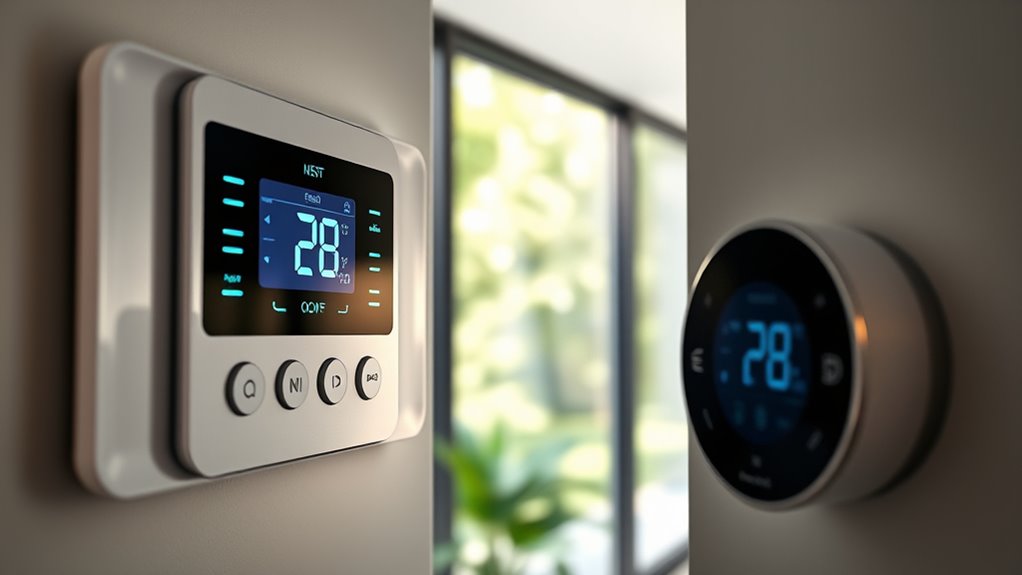
In addition to adjusting the fan speed, consider using advanced features like fan delay or smart thermostats. These tools help optimize airflow by allowing the fan to run for a few minutes after heating or cooling cycles, ensuring even distribution of air. Also, check your vents and filters regularly; clogged filters or blocked vents hinder airflow and cause your system to work harder, wasting energy. Proper maintenance combined with intelligent fan speed control ensures your HVAC system runs efficiently and quietly. Implementing these adjustments can also help you recognize patterns in your system’s performance, which is useful for identifying inefficiencies and making further improvements.]
Frequently Asked Questions
How Often Should I Adjust My HVAC Fan Settings for Optimal Savings?
You should adjust your HVAC fan settings as needed, typically every few months, to balance fan cycle and noise levels. If you notice excessive noise or uneven temperature distribution, consider changing the fan cycle to run less frequently or more often. Regular adjustments help maintain energy efficiency and comfort. Keep an eye on noise levels, and tweak your settings accordingly to save energy without sacrificing comfort.
Can Changing Fan Speed Impact Indoor Air Quality?
Sure, cranking up your fan speed isn’t just for a noisy, windstorm-like living room; it actually boosts air circulation, pushing stale air out and bringing fresh air in. As for indoor air quality, higher speeds can help filter out dust and allergens more effectively. Just watch out for noise levels—unless you’re auditioning for a rock concert, then go ahead! Balancing fan speed improves air quality without turning your home into a noise factory.
Are There Specific Fan Settings Recommended for Different Seasons?
For different seasons, you should adjust your HVAC fan settings to maximize seasonal airflow and comfort. In summer, set your fan to circulate air continuously or in auto mode to enhance cooling and air quality. During winter, use fan mode adjustments to reduce airflow and retain warmth. Switching between auto and continuous modes based on seasonal needs helps improve efficiency, maintains comfort, and guarantees ideal indoor air quality year-round.
How Do I Know if My HVAC System Is Energy-Efficient?
Think of your HVAC system like a car; if it’s running smoothly, it’s fuel-efficient. To check if yours is, schedule an energy audit and review efficiency ratings. If your system has high efficiency ratings, you’re likely saving energy. Otherwise, consider upgrades or maintenance. Regularly changing filters and optimizing fan settings also boost efficiency, making your system more like a well-tuned engine that saves you money.
What Are Signs That My Fan Settings Need Recalibration?
You might need to recalibrate your fan settings if you notice a faulty thermostat causing inconsistent temperatures or if your system makes unusual noises during operation. These signs suggest that your fan isn’t functioning at its best, leading to energy waste. Check for uneven heating or cooling, and if you hear strange sounds, it’s a good idea to have a professional inspect and adjust your system to improve efficiency.
Conclusion
By fine-tuning your HVAC fan settings, you’re not just saving energy—you’re opening the door to a more sustainable future. Think of your system as a symphony, where each adjustment creates harmony between comfort and efficiency. So, take control today, and let your smart choices echo through your energy bills and the environment. After all, isn’t it worth playing your part in making a difference? Small changes today lead to a cooler, greener tomorrow.