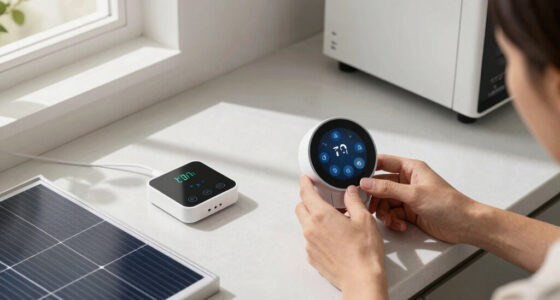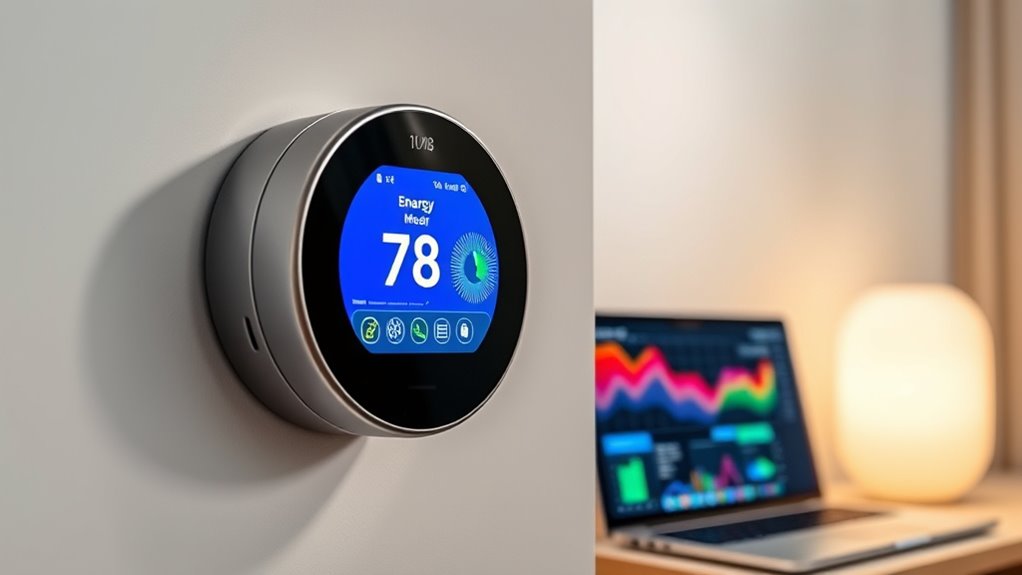

Smart thermostat data visualization helps you understand your energy use through clear graphs and dashboards, revealing patterns in heating and cooling. By spotting peaks, high-usage times, and unneeded system operation, you can adjust settings to save money and increase comfort. Analyzing these visuals also shows how small changes impact your bills. To turn this data into meaningful actions, keep exploring more tips—there’s plenty to improve your home’s efficiency.

Get home appliances delivered free — and shop member deals
- Fast, free delivery on millions of items
- Access to Prime Big Deal Days deals on October 6–7
- Prime Video, Amazon Music and more included
Key Takeaways
- Use graphs and dashboards to identify energy usage patterns and high-peak periods.
- Visualize the impact of thermostat adjustments on energy savings and comfort levels.
- Recognize inefficient habits like unnecessary heating during unoccupied hours through data charts.
- Track changes over time to evaluate the effectiveness of schedule or setting modifications.
- Incorporate community insights and data analysis techniques for deeper understanding and optimized savings.
Have you ever wondered how analyzing thermostat data can help optimize your energy use and improve comfort? By examining your thermostat’s data, you gain valuable insights into your energy consumption patterns and user behavior. This understanding allows you to make smarter decisions about heating and cooling, ultimately saving money and reducing your environmental impact.
When you look at your thermostat data, you can see exactly when and how much energy you’re using. Are there times when your system runs unnecessarily, like during unoccupied hours or when you’re asleep? Identifying these patterns helps you adjust settings to avoid waste. For example, if you notice your heating kicks in early in the morning without much need, you can set a more efficient schedule. Likewise, if your cooling system runs constantly during certain days, it might be time to tweak your temperature settings or improve insulation. This detailed view of your energy consumption enables you to target specific periods or behaviors that lead to higher bills.
Understanding user behavior plays an essential role in optimizing energy use. Your habits—such as adjusting the thermostat frequently, leaving it at a high or low setting, or forgetting to turn it down when away—directly impact your energy efficiency. By analyzing your thermostat data, you become aware of these habits and can make intentional changes. For instance, if you see that you often forget to lower the temperature at night, you might set a sleep schedule or enable automation features. Recognizing these patterns empowers you to develop routines that balance comfort with savings. Over time, this leads to more consistent, energy-efficient behavior that benefits both your wallet and the environment.
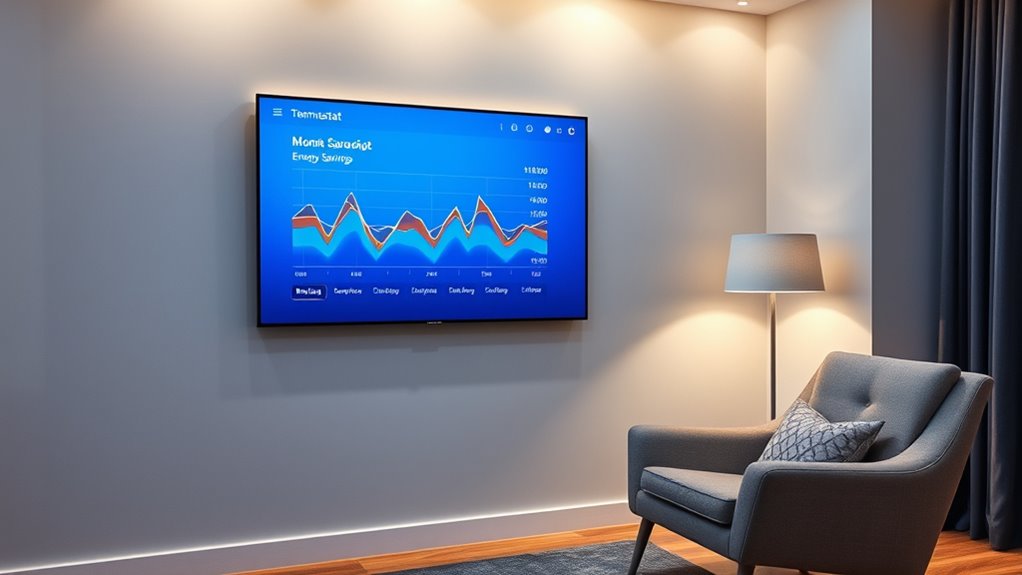
Smart thermostat data visualization tools make this process easier. Graphs, charts, and dashboards translate complex data into clear, actionable insights. You can easily spot trends, such as peaks in energy consumption or periods of high usage, and then adjust your habits or system settings accordingly. These visual summaries also help you evaluate the impact of any changes you make, so you can see which adjustments yield the best savings. With ongoing monitoring, you’ll develop a better understanding of how your behavior influences your energy bills and comfort levels. Additionally, many of these tools leverage smart home integrations to provide more comprehensive control and insights, enhancing your ability to manage your energy consumption effectively. Incorporating data analysis techniques can further refine your understanding and improve your efficiency.
Furthermore, incorporating community involvement can provide support and motivation as you work towards more energy-efficient habits, highlighting the social aspect of sustainable living. In essence, analyzing your thermostat data transforms passive heating and cooling into an active, informed process. It shifts your perspective from simply setting a temperature to understanding how your habits and system use interact. This knowledge equips you to optimize energy consumption, increase comfort, and maximize savings—all while contributing to a more sustainable lifestyle.
smart thermostat energy usage monitor
As an affiliate, we earn on qualifying purchases.
As an affiliate, we earn on qualifying purchases.
Frequently Asked Questions
How Accurate Are Smart Thermostat Energy Savings Predictions?
Your question about how accurate smart thermostat energy savings predictions are is important. These devices use predictive analytics to estimate future energy consumption based on your habits and weather data. While they’re generally quite reliable, factors like sudden weather changes or unusual routines can affect accuracy. Keep in mind, these predictions are helpful guides, but they might not be perfect. Regularly reviewing your data helps you better understand your actual savings.
Can Data Visualization Help Identify System Malfunctions?
Data visualization can definitely help you identify system malfunctions. By using trend analysis, you can spot unusual patterns or inconsistencies that may indicate faults. Visual tools like graphs and charts make it easier to detect subtle changes over time, enabling you to quickly pinpoint issues and perform fault detection. This proactive approach helps make certain your system runs efficiently and prevents costly repairs down the line.
What Privacy Concerns Exist With Sharing Thermostat Data?
When you share thermostat data, privacy concerns arise around data ownership and third-party access. You might worry about who controls your data and if outsiders could access sensitive information about your habits or home. It’s important to review privacy policies and permissions. You should also consider whether your data could be shared without your consent, potentially exposing you to risks like targeted advertising or security breaches.
How Often Should I Review My Energy Data?
You should review your energy data regularly, ideally monthly, to catch seasonal trend analysis and identify patterns in your usage. This helps you make informed adjustments. Also, check your personalized energy reports to understand how your habits impact savings. Frequent reviews keep you aware of changes, optimize comfort, and maximize savings. Staying consistent with these reviews empowers you to fine-tune your thermostat settings effectively.
Are There Apps That Integrate Multiple Smart Home Devices?
You’re wondering if apps can integrate multiple smart home devices. Yes, many apps offer broad device compatibility, allowing you to control everything from lights to thermostats in one place. Look for apps with a user interface that’s intuitive and easy to navigate, so managing your devices feels seamless. These apps simplify your smart home experience, helping you monitor and adjust your devices efficiently without switching between different apps.
thermostat data visualization tools
As an affiliate, we earn on qualifying purchases.
As an affiliate, we earn on qualifying purchases.
Conclusion
By visualizing your smart thermostat data, you’ll clearly see how your adjustments save energy and money. Some might think charts are complicated, but once you get the hang of it, understanding your savings becomes effortless. Don’t let the idea of data overwhelm you—use these visuals as a simple guide to smarter energy use. Embrace the insights, and watch your savings grow while keeping your home comfortable.
As an affiliate, we earn on qualifying purchases.
temperature schedule automation device
As an affiliate, we earn on qualifying purchases.
As an affiliate, we earn on qualifying purchases.
Fall yard work Picks
leaf blowers
As an affiliate, we earn on qualifying purchases.