
TL;DR

Get home appliances delivered free with Prime
- Fast, free delivery on millions of items
- Prime Video, Amazon Music and more included
- Member-only deals all year
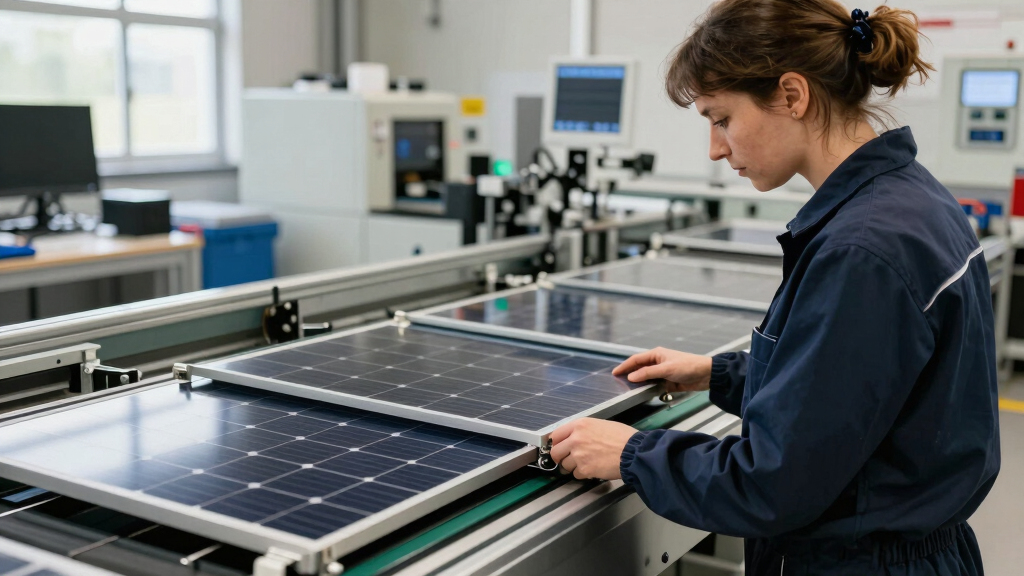
Solarge has begun operations at its automated solar module factory in Weert, Netherlands, producing fully recyclable, lightweight panels. The plant currently has a capacity of 150 MW, with plans to expand to 400 MW, marking a significant step in sustainable PV manufacturing.
Solarge, a Dutch photovoltaic manufacturer, has officially launched its fully automated solar module factory in Weert, Netherlands, with an initial capacity of 150 MW. The facility produces lightweight, fully recyclable modules designed to meet increasing sustainability standards and support diverse installation needs across Europe.
The Weert plant, operational since May 2023, produces the SOLO module, which avoids traditional glass and aluminium frames, significantly reducing weight to 5.5 kg/m²—half that of conventional panels. The factory’s infrastructure is designed to support future expansion to 400 MW, aligning with the company’s growth plans.
Solarge emphasizes its modules are free of PFAs and antimony, substances under regulatory scrutiny, and are fully recyclable with a buy-back guarantee. The company claims its SOLO modules are the first solar panels worldwide certified under the Cradle to Cradle Certified Circularity 4.1 standard at Silver level, validating its focus on circularity and resource efficiency.
The lightweight design allows installation on structures with limited load-bearing capacity, broadening application possibilities for rooftops, ground-mounted systems, and infrastructure projects like airports and logistics centers. The modules also aim to minimize glare, making them suitable for sensitive environments such as airports.
Impact of Solarge’s Circular and Lightweight Modules on PV Industry
Solarge’s innovation in producing fully recyclable, lightweight solar modules represents a significant advancement in sustainable PV manufacturing. Its certification under the Cradle to Cradle standards sets a precedent for circularity in solar panel design, potentially influencing industry standards and regulatory frameworks. The ability to install on structurally limited surfaces broadens market opportunities, especially in urban and industrial settings where weight constraints are critical.
This development underscores Europe’s strategic focus on innovation, circularity, and sustainability in contrast to Asian competitors, potentially strengthening the region’s position in the global PV market. The factory’s expansion plans suggest a growing demand for such advanced modules, indicating a shift toward more environmentally conscious solar solutions.
lightweight recyclable solar panels
As an affiliate, we earn on qualifying purchases.
As an affiliate, we earn on qualifying purchases.
European PV Manufacturing and Sustainability Trends
European solar manufacturing has increasingly prioritized sustainability and circularity, aiming to differentiate from Asian competitors. Recent developments include automated production lines and certification standards that emphasize resource efficiency and recyclability. Solarge’s facility in Weert is part of this broader trend, which seeks to address environmental concerns associated with traditional PV modules, such as the use of toxic substances and end-of-life waste management.
Since its opening in May 2023, the factory has focused on producing its innovative SOLO modules, which are designed to meet stringent environmental standards. The certification under Cradle to Cradle Circularity 4.1 at Silver level is a notable milestone, confirming the company’s commitment to sustainable design and circular economy principles.
Previous articles have highlighted similar efforts across Europe, including automated factories in Lithuania and Belgium, and other innovative PV manufacturing initiatives that aim to enhance efficiency and sustainability in the sector.
“Solarge’s focus on circularity and lightweight design could redefine industry standards for sustainable PV modules.”
— an anonymous researcher
Cradle to Cradle certified solar modules
As an affiliate, we earn on qualifying purchases.
As an affiliate, we earn on qualifying purchases.
Remaining Questions About Factory Expansion and Market Adoption
While the factory is operational and production has begun, details about the timeline for reaching the full 400 MW capacity remain unclear. It is also uncertain how quickly the market will adopt Solarge’s lightweight, recyclable modules, especially given competition from established manufacturers and potential regulatory changes.
Additionally, the long-term performance and durability of the modules, beyond initial certification, are still to be validated through real-world deployment.
solar panels for rooftops with weight limit
As an affiliate, we earn on qualifying purchases.
As an affiliate, we earn on qualifying purchases.
Upcoming Milestones and Market Entry Strategies
Solarge plans to scale up production to its target capacity of 400 MW over the next year, with ongoing efforts to secure large-scale projects across Europe. The company will also seek further certifications to bolster its sustainability claims and expand its product portfolio to include different module formats tailored to specific applications.
Monitoring how the market responds and how the modules perform in diverse environments will be key to assessing the long-term success of the factory and its innovative products.
fully recyclable photovoltaic modules
As an affiliate, we earn on qualifying purchases.
As an affiliate, we earn on qualifying purchases.
Key Questions
What makes Solarge’s modules different from traditional solar panels?
They are lightweight, fully recyclable, and free of environmentally problematic substances like PFAs and antimony, with a design that supports circularity and installation on structurally limited surfaces.
What is the significance of the Cradle to Cradle certification?
It verifies that the modules are designed for resource efficiency, circularity, and long-term reuse, setting a standard for sustainable PV manufacturing.
Will the factory’s production capacity increase soon?
Yes, Solarge has plans to expand from 150 MW to 400 MW, but the timeline for reaching full capacity is still being finalized.
What applications are these modules suited for?
They are ideal for rooftops with structural limitations, ground-mounted systems, and infrastructure projects like airports and logistics centers, especially where weight and glare are concerns.
How might this development influence the European PV industry?
It could set new standards for sustainability and circularity, encouraging other manufacturers to adopt similar environmentally friendly practices and innovative designs.
Source: PV Magazine
Fall yard work Picks
leaf blowers
As an affiliate, we earn on qualifying purchases.