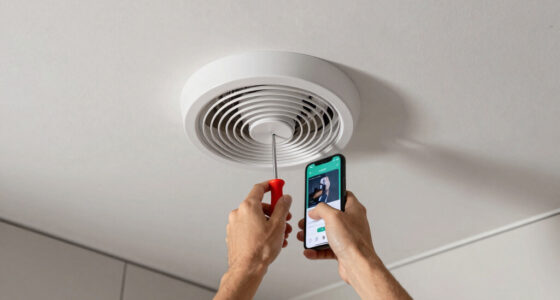
If you’re searching for a smart thermostat for underfloor heating systems, you’re likely looking for a way to enhance comfort and efficiency. The OJ Microline UDG4 stands out as the best overall, thanks to its reliable dual sensing and touchscreen interface. For those seeking seamless smart home integration, the Schluter Ditra-Heat-E WiFi Thermostat offers excellent compatibility. One key tradeoff in this category is balancing advanced features with ease of installation and setup, especially for DIY users. Keep reading to explore the full lineup and find the best match for your heating system and lifestyle.

Get home appliances delivered free — and shop member deals
- Fast, free delivery on millions of items
- Access to Prime Big Deal Days deals on October 6–7
- Prime Video, Amazon Music and more included
Complete the kit


Key Takeaways
- Top picks excel in smart home integration, especially WiFi connectivity and compatibility with control systems.
- Build quality and safety features like ground fault protection are crucial for reliable, long-term use.
- Pricing varies widely; premium models often offer more automation and finer control, but basic models can suffice for simple setups.
- Ease of installation remains a significant factor—some thermostats are more DIY-friendly than others.
- Compatibility with existing systems and voltage requirements are often overlooked but essential for proper functioning.
| OJ Microline UDG4 Touchscreen Programmable Heated Floor Thermostat with GFCI |  | Best Overall for Customization and Safety | Voltage: 120/240V | Amperage: 15 Amps | Power: 1800W@120V, 3600W@240V | VIEW ON AMAZON | See Our Full Breakdown |
| Schluter Ditra-Heat-E-RS1 Smart Thermostat Floor Warming System with Control4 Compatibility |  | Best for Smart Home Integration in Larger Installations | Compatibility: Ditra-Heat, Control4, voice assistants | Voltage: 120V/240V | Maximum Load: 15 amps | VIEW ON AMAZON | See Our Full Breakdown |
| Dual Voltage WiFi Heated Radiant Floor Thermostat |  | Best for Remote Control and Compatibility with Multiple Systems | Voltage: 120V/240V | Dimensions: 4.7×3.0 inches | Floor Sensor Length: 15 ft (4.55 m) | VIEW ON AMAZON | See Our Full Breakdown |
| MAXKOSKO WiFi Smart Radiant Underfloor Heating Thermostat LED Touchscreen |  | Best DIY-Friendly Smart Thermostat for Underfloor Heating | Controller Type: Wi-Fi, LED touchscreen | Floor Sensor Length: 15 ft (4.55 m) | VIEW ON AMAZON | See Our Full Breakdown | |
| Schluter Ditra-Heat-E WiFi Programmable Thermostat |  | Best for User-Friendly Energy Management with Safety | Display: 3.5-inch color screen | Voltage Support: 120V and 240V | Max Load: 15 amps | VIEW ON AMAZON | See Our Full Breakdown |
| Schluter Ditra-Heat-E-RT Thermostat with Built-in Ground Fault Circuit Interrupter |  | Best Overall for Safety and Energy Monitoring | Display: 3.5-inch touchscreen | Voltage Compatibility: 120V and 240V | Safety Feature: Ground Fault Circuit Interrupter (GFCI) | VIEW ON AMAZON | See Our Full Breakdown |
| Mysa Smart Thermostat LITE for Electric Baseboard Heaters |  | Best for Easy DIY Electric Heating Control | Controller Type: Alexa, HomeKit, Google Assistant | Additional Features: Auto-Scheduling, Geofence, Vacation Mode | Voltage: 240 volts | VIEW ON AMAZON | See Our Full Breakdown |
| MAXKOSKO WiFi Smart Radiant Underfloor Heating Thermostat with Touchscreen |  | Best Budget-Friendly WiFi Control | Connectivity: WiFi | Display: LED Touchscreen | Includes: 15 ft floor sensor | VIEW ON AMAZON | See Our Full Breakdown |
| Mysa Smart Thermostat V2 for Electric Baseboard Heaters |  | Best for High-Voltage Electric System Integration | Controller Type: Alexa, HomeKit, Google Assistant | Additional Features: Adaptive Display, Energy Insights, Geofencing | Voltage: 240 volts | VIEW ON AMAZON | See Our Full Breakdown |
| 6iE Smart WiFi Thermostat for Underfloor Heating |  | Best for SmartGeo Automation and User-Friendly Control | Design: Ultra-Thin touchscreen | Connectivity: WiFi, IFTTT | Technology: SmartGeo | VIEW ON AMAZON | See Our Full Breakdown |
| Smart Electric Floor Heating Thermostat 16A AC85V-250V Home Thermostat |  | Best for Easy, Accurate Control in Standard Underfloor Heating | Current: 16A | Voltage: AC85V-250V | Temperature Control Accuracy: 0.5℃ | VIEW ON AMAZON | See Our Full Breakdown |
| Programmable Thermostat for Radiant Underfloor Heating, 120/240V 3600W |  | Best for Custom Scheduling and Versatile Power Support | Voltage: 120/240V | Sensor Type: Indoor air sensor + floor probe | Safety Features: GFCI leakage protection | VIEW ON AMAZON | See Our Full Breakdown |
| smart thermostat for underfloor heating system | Voltage |
|---|---|
| OJ Microline UDG4 Touchscreen | 120/240V |
| Schluter Ditra-Heat-E-RS1 Smar | 120V/240V |
| Dual Voltage WiFi Heated Radia | 120V/240V |
| MAXKOSKO WiFi Smart Radiant Un | — |
| Schluter Ditra-Heat-E WiFi Pro | — |
| Schluter Ditra-Heat-E-RT Therm | — |
| Mysa Smart Thermostat LITE for | 240 volts |
| MAXKOSKO WiFi Smart Radiant Un | — |
| Mysa Smart Thermostat V2 for E | 240 volts |
| 6iE Smart WiFi Thermostat for | — |
| Smart Electric Floor Heating T | AC85V-250V |
| Programmable Thermostat for Ra | 120/240V |
More Details on Our Top Picks
OJ Microline UDG4 Touchscreen Programmable Heated Floor Thermostat with GFCI
This thermostat stands out for its modern touchscreen interface and comprehensive safety features like GFCI, making it ideal for detailed control of various floor types such as tile or wood. Compared with the Schluter Ditra-Heat-E-RS1, it offers more customizable programming and detailed power logging, but requires professional installation and has a lower 15 Amp load capacity, which could limit larger setups. Its dual sensing for air and floor temperature provides precise comfort adjustments, and the safety features make it suitable for wet rooms or high-moisture areas. However, its complexity might overwhelm users unfamiliar with programmable thermostats, and installation is not as straightforward for DIYers. This model is perfect for homeowners seeking detailed control and safety in diverse environments, willing to invest in professional setup.
Pros:- Intuitive touchscreen interface with modern design
- Supports dual voltage and dual sensing for versatile installation
- Energy-efficient adaptive programming and detailed power logging
- Includes safety features like GFCI and floor temperature limiting
Cons:- Requires professional installation for optimal setup
- Limited to 15 Amp load capacity, restricting larger systems
Best for: Homeowners needing precise, programmable control with safety features for various floor materials
Not ideal for: DIY beginners or those with small, simple installations due to its complexity and installation needs
- Voltage:120/240V
- Amperage:15 Amps
- Power:1800W@120V, 3600W@240V
- Floor temperature range:+41 to +104°F (+5 to +40°C)
- Ambient temperature range:+32 to +104°F (0 to +40°C)
- Includes:Floor sensor
- Certifications:C-UL-us Listed, Wet Room Certified
- Warranty:3 Years
Our verdict“This pick suits users who prioritize safety, detailed control, and professional installation for diverse flooring types.”
Schluter Ditra-Heat-E-RS1 Smart Thermostat Floor Warming System with Control4 Compatibility
The Schluter Ditra-Heat-E-RS1 is designed for seamless integration with smart home systems like Control4 and voice assistants, making it ideal for users who want a connected, automated floor heating setup. It features built-in GFCI for enhanced safety, supporting multiple heating cables and expandable for large areas, which sets it apart from simpler models like the MAXKOSKO WiFi Smart Thermostat. Its compatibility with specific heating cable systems ensures reliable operation, but this means it’s less flexible if you use different setups. Installation often requires professional help to ensure safety and optimal performance, which could be a drawback for DIY users. Overall, it’s best suited for those with large or complex floor heating systems that benefit from smart automation and safety features.
Pros:- Seamless integration with Control4 and voice assistants
- Built-in GFCI enhances safety for residential and commercial use
- Expandable system suitable for large areas
- Supports multiple heating cable configurations
Cons:- Requires professional installation for best safety and performance
- Limited to specific cable and system types
Best for: Homeowners with large or complex floor heating systems seeking smart, integrated control
Not ideal for: Small-scale or DIY users without professional installation support or specific cable systems
- Compatibility:Ditra-Heat, Control4, voice assistants
- Voltage:120V/240V
- Maximum Load:15 amps
- Safety Features:Built-in GFCI
- Warranty:3 years
Our verdict“Perfect for users with large, smart-enabled floor heating systems who want integrated safety and automation.”
Dual Voltage WiFi Heated Radiant Floor Thermostat
This WiFi-enabled thermostat offers remote control via the ‘Smart Life’ app, with compatibility with Alexa and Google Assistant, making it ideal for tech-savvy users who want easy control via their smartphones. It supports 120V and 240V systems, providing flexibility across different underfloor heating setups. Its sleek touchscreen display simplifies operation, and the 15-foot floor sensor ensures accurate temperature readings. Compared to the Schluter Ditra-Heat-E-RS1, it’s more straightforward for DIY installation but lacks detailed safety features like GFCI, which might be a concern in moist environments. Its limited details on system compatibility mean it’s best for users with standard setups seeking remote management and voice control.
Pros:- Remote control via smartphone app
- Supports Alexa and Google Assistant voice commands
- Compatible with 120V and 240V systems
- Modern, compact touchscreen design
Cons:- Requires Wi-Fi for full functionality
- Installation may be technical for some users
- Limited information on specific system compatibility
Best for: Tech-savvy homeowners who want remote, app-based control and voice commands for their floor heating
Not ideal for: Users seeking built-in safety features or larger, complex systems needing professional installation
- Voltage:120V/240V
- Dimensions:4.7×3.0 inches
- Floor Sensor Length:15 ft (4.55 m)
Our verdict“Ideal for users wanting convenient remote control and voice integration for standard floor heating setups.”
MAXKOSKO WiFi Smart Radiant Underfloor Heating Thermostat LED Touchscreen
The MAXKOSKO WiFi Smart Thermostat supports remote management through a smartphone app and voice commands, combining ease of use with compatibility across various underfloor heating systems. Its simple installation process and clear manual make it a strong choice for DIY enthusiasts. Compared with the OJ Microline UDG4, it offers similar remote control features but with a more straightforward setup, though it may lack some advanced safety features. Its universal compatibility and easy-to-understand interface make it attractive for those who want quick, flexible installation, but limited brand-specific safety assurances and lack of detailed technical specs could be drawbacks for more complex or safety-sensitive environments.
Pros:- Easy DIY installation with manual guidance
- Supports remote control via smartphone
- Compatible with various underfloor heating systems
- Supports voice commands with Alexa and Google Assistant
Cons:- Limited safety features compared to premium models
- Potential compatibility issues with specific systems
- Less detailed technical specifications
Best for: DIY homeowners seeking an easy-to-install, remotely controllable thermostat for underfloor heating
Not ideal for: Commercial or larger-scale installations requiring advanced safety features and detailed controls
- Controller Type:Wi-Fi, LED touchscreen
- Floor Sensor Length:15 ft (4.55 m)
Our verdict“Best suited for DIYers wanting quick, flexible control over their underfloor heating with minimal setup complexity.”
Schluter Ditra-Heat-E WiFi Programmable Thermostat
This WiFi programmable thermostat features a clear 3.5-inch color screen and supports both 120V and 240V systems, making it suitable for various home setups. Its energy tracking via an app helps users monitor consumption, and the built-in GFCI provides essential electrical safety. Compared with the OJ Microline UDG4, it offers simpler operation and a more user-friendly interface, but it may lack some advanced programming flexibility. Proper installation is necessary to ensure safety and performance, especially in larger or complex systems. This model works well for those who want straightforward energy management combined with modern safety features.
Pros:- Supports both 120V and 240V systems
- Energy tracking via app for monitoring use
- Built-in GFCI for electrical safety
- Color display for easy navigation
Cons:- Requires correct installation to ensure safety
- Additional power module needed for large systems
Best for: Homeowners seeking an easy-to-use, energy-conscious thermostat with safety features for standard floor heating systems
Not ideal for: Large or complex installations that require advanced or highly customizable control features
- Display:3.5-inch color screen
- Voltage Support:120V and 240V
- Max Load:15 amps
- Warranty:3-year limited
Our verdict“Suitable for users wanting simple, safe, and energy-aware control of their underfloor heating in standard setups.”
Schluter Ditra-Heat-E-RT Thermostat with Built-in Ground Fault Circuit Interrupter
This thermostat stands out for integrating safety and usability, featuring a 3.5-inch touchscreen that simplifies programming compared to the more basic interfaces of the MAXKOSKO WiFi Thermostat. Its compatibility with 120V and 240V systems ensures flexibility for different installations, while the built-in GFCI safety feature adds an extra layer of protection that more basic models lack. However, the limited 3-year warranty and need for careful installation could be drawbacks for those seeking a long-term durable solution. Compared with the 6iE Smart WiFi Thermostat, this model emphasizes safety and energy monitoring, making it ideal for safety-conscious homeowners.
Pros:- Intuitive 3.5-inch touchscreen interface for easy programming
- Compatible with 120V and 240V systems, offering installation flexibility
- Built-in GFCI enhances safety during operation
- Offers energy monitoring features to track consumption
Cons:- Installation requires adherence to specific guidelines, which can be complex
- Warranty period of 3 years may be shorter than some users prefer
Best for: Homeowners prioritizing safety, clear programming, and energy monitoring for underfloor heating systems
Not ideal for: DIYers with limited electrical experience or those seeking a longer warranty lifespan
- Display:3.5-inch touchscreen
- Voltage Compatibility:120V and 240V
- Safety Feature:Ground Fault Circuit Interrupter (GFCI)
- Warranty:3 years
Our verdict“This thermostat is best suited for safety-conscious users who value clear interface and energy management features.”
Mysa Smart Thermostat LITE for Electric Baseboard Heaters
This pick makes the most sense for users who want simple installation and seamless integration with smart home systems, supporting platforms like Alexa, HomeKit, and Google Assistant. Compared with the MAXKOSKO WiFi Thermostat, the Mysa LITE offers a more streamlined setup process with step-by-step app guidance, but it’s limited to electric baseboard heaters, unlike models that support multiple systems. Its 5-year warranty and focus on high-voltage electric heating make it a reliable choice for dedicated electric heat users. The lack of compatibility with low-voltage or hydronic systems means it’s not suited for more complex setups.
Pros:- Easy DIY installation with clear app guidance
- Supports multiple voice assistants for hands-free control
- Energy-saving scheduling features that reduce costs
- Five-year warranty enhances peace of mind
Cons:- Limited to electric baseboard and similar high-voltage heaters
- Requires proper wiring and compatibility check before purchase
Best for: Homeowners with electric baseboard heaters seeking straightforward, smart control without extensive wiring
Not ideal for: Those with hydronic or low-voltage systems, as it’s designed specifically for high-voltage electric heaters
- Controller Type:Alexa, HomeKit, Google Assistant
- Additional Features:Auto-Scheduling, Geofence, Vacation Mode
- Voltage:240 volts
- Control Method:App, Touch
- Wattage:3800 watts
- Warranty:5-year
Our verdict“This thermostat is ideal for electric baseboard heater owners seeking simple, smart control with minimal fuss.”
MAXKOSKO WiFi Smart Radiant Underfloor Heating Thermostat with Touchscreen
Compared with the 6iE Thermostat, the MAXKOSKO offers a touchscreen interface and WiFi connectivity at a more accessible price point, making it appealing for those seeking basic remote control. Its compatibility with most underfloor heating systems and simple DIY installation make it versatile, but the lack of smart home integration beyond WiFi and limited customization options could be a downside. The model’s straightforward design is suitable for users who primarily want remote control without additional bells and whistles, though it might not support advanced features like energy optimization or geofencing found in higher-end options.
Pros:- Affordable price point compared to premium options
- Easy DIY installation with simple instructions
- Remote control via smartphone app
- Supports most underfloor heating systems
Cons:- Limited compatibility details—may not suit all systems
- Lacks advanced smart home features such as geofencing or scheduling
Best for: Budget-conscious homeowners wanting remote access and basic control of underfloor heating systems
Not ideal for: Users seeking advanced energy management or deep smart home integration beyond WiFi control
- Connectivity:WiFi
- Display:LED Touchscreen
- Includes:15 ft floor sensor
- Installation:DIY
- Application:Electric underfloor heating
Our verdict“Best suited for budget-minded users seeking straightforward WiFi control of underfloor heating systems without complex features.”
Mysa Smart Thermostat V2 for Electric Baseboard Heaters
This model excels for users with high-voltage electric baseboard heaters, offering WiFi connectivity, adaptive display, and extensive smart home integrations similar to the original Mysa, but with enhancements for more intuitive use. While it supports loads up to 3800W at 240V, making it suitable for larger systems, it’s limited to high-voltage, high-amp systems—not compatible with low-voltage or hydronic systems like the Schluter Ditra-Heat-E-RT. Its geofencing and scheduling features help optimize energy use, but wiring complexity and system compatibility require careful consideration before purchase.
Pros:- Supports smart home platforms including Alexa, Google, and HomeKit
- Features adaptive display and detailed energy insights
- Designed specifically for high-voltage electric heaters
- Helps reduce heating costs with scheduling and geofencing
Cons:- Limited to high-voltage, high-amp systems
- Requires proper wiring and careful compatibility check
Best for: Owners of high-voltage electric baseboard or radiant ceiling heating systems seeking comprehensive smart control
Not ideal for: Users with low-voltage, hydronic, or mixed heating systems that require different control protocols
- Controller Type:Alexa, HomeKit, Google Assistant
- Additional Features:Adaptive Display, Energy Insights, Geofencing
- Voltage:240 volts
- Control Method:App, Touch
- Wattage:3800 watts
- Wiring Compatibility:Proper wiring required
Our verdict“Ideal for high-voltage electric heating system users wanting detailed smart features and energy savings.”
6iE Smart WiFi Thermostat for Underfloor Heating
The 6iE stands out with its SmartGeo technology that automatically adjusts temperature based on location, making it more convenient than manual or scheduled models like the Schluter Ditra-Heat-E-RT. Its ultra-thin touchscreen makes operation simple, but reliance on a smartphone app means users need compatible devices and WiFi connection for full functionality. Compared to the MAXKOSKO WiFi Thermostat, the 6iE offers more automation features, yet it might be less customizable for advanced energy optimization. This makes it a good choice for users who prioritize ease of use and automatic adjustments over extensive manual control options.
Pros:- Automatic temperature regulation with SmartGeo technology
- Intuitive touchscreen interface
- App control and IFTTT integration for automation
- Supports energy-efficient operation
Cons:- Dependent on smartphone app and WiFi connectivity
- Requires compatible electric underfloor heating system
Best for: Homeowners seeking automated, app-controlled underfloor heating with location-based adjustments
Not ideal for: Users without reliable WiFi or those preferring manual or programmable controls over automation
- Design:Ultra-Thin touchscreen
- Connectivity:WiFi, IFTTT
- Technology:SmartGeo
- App Compatibility:MyHeating App
- Application:Electric underfloor heating
Our verdict“Best for users who want hands-free, location-aware control of underfloor heating systems with minimal manual intervention.”
Smart Electric Floor Heating Thermostat 16A AC85V-250V Home Thermostat
This thermostat stands out for its straightforward installation and compatibility with a wide range of underfloor heating systems, making it a solid choice for homeowners seeking reliable temperature regulation. Compared with the Programmable Thermostat for Radiant Underfloor Heating, it offers a simpler setup, though it lacks the advanced scheduling features. Its integration of an LED display and child lock enhances safety and usability, especially in family environments. The adjustable hysteresis allows for more precise control, reducing temperature fluctuations. However, its focus on underfloor heating limits versatility for other systems and requires some wiring knowledge, which could be a barrier for DIY novices.
Pros:- Easy to install and compatible with many underfloor heating systems
- Accurate temperature control with internal and external sensors
- Child lock feature enhances safety
Cons:- Limited to underfloor heating applications only
- Requires compatible wiring and some technical knowledge for setup
Best for: Homeowners who want a reliable, easy-to-install thermostat with precise temperature control for existing underfloor heating systems.
Not ideal for: People seeking a multi-purpose smart thermostat or those without basic wiring experience, as setup can be complex without technical skills.
- Current:16A
- Voltage:AC85V-250V
- Temperature Control Accuracy:0.5℃
- Features:Child lock, Power failure memory, Adjustable hysteresis
Our verdict“This thermostat is best suited for users who prioritize straightforward installation and precise heating management in underfloor systems.”
Programmable Thermostat for Radiant Underfloor Heating, 120/240V 3600W
This model excels for users who want detailed control over their radiant floor heating, especially with its 7-day programmable schedule and dual voltage support. Unlike the Smart Electric Floor Heating Thermostat 16A AC85V-250V Home Thermostat, it offers more advanced features like a large LCD interface and safety protection through GFCI, making it suitable for long-term installations. Its support for 120V and 240V wiring adds versatility for different home wiring setups. The inclusion of a floor sensor helps ensure even heat distribution. However, this thermostat demands some DIY skills, particularly for wiring and setup, which could be a hurdle for less experienced users.
Pros:- Supports dual voltage for flexible installation
- Includes safety features like GFCI leakage protection
- 7-day programmable schedule optimizes energy use
- Easy-to-read LCD interface simplifies operation
Cons:- Requires some DIY skills for installation
- Limited to radiant floor heating systems only
Best for: DIY homeowners who want customizable scheduling and safety features for radiant underfloor heating systems.
Not ideal for: Users seeking a simple, plug-and-play solution or those uncomfortable with wiring and programming tasks.
- Voltage:120/240V
- Sensor Type:Indoor air sensor + floor probe
- Safety Features:GFCI leakage protection
- Installation Kit:Includes floor sensor wire, screws, instructions
Our verdict“This thermostat is well-suited for experienced DIYers who want detailed control and safety features for their radiant floor heating.”

How We Picked
I evaluated these thermostats based on performance, usability, build quality, safety features, and versatility. Priority was given to models that offer reliable temperature control, straightforward installation, and smart home compatibility. I also considered value for money, ensuring that each product provides meaningful features relative to its price. The ranking reflects a balance between advanced capabilities and ease of use, with special attention to safety features like ground fault protection. These criteria help identify options suitable for different user needs—from DIY enthusiasts to tech-savvy homeowners.Factors to Consider When Choosing Smart Thermostat For Underfloor Heating Systems
Choosing the right smart thermostat for underfloor heating involves understanding several key factors. Beyond basic compatibility, you should consider ease of installation, safety features, smart home integration, and control options. Making a well-informed decision means balancing these aspects against your specific heating system and technical comfort level. This guide highlights what to look for in each area to avoid common pitfalls and ensure your investment enhances your home’s comfort and efficiency.Compatibility with Your Heating System
Before choosing a thermostat, verify that it supports your specific underfloor heating system’s voltage and wiring requirements. Some models are designed exclusively for electric systems, while others can handle both electric and hydronic setups. Compatibility issues can lead to installation delays or system malfunctions, so double-check specifications. Overlooking this may result in needing additional adapters or even replacing parts of your setup.
Ease of Installation and Setup
Many smart thermostats are marketed as DIY-friendly, but real-world installation can vary. Look for models with clear instructions, straightforward wiring, and minimal additional components. Some thermostats include features like pre-programmed settings or mobile app guides that simplify the process. A complex installation might require professional help, increasing overall costs and delays. Consider your own technical comfort level before opting for advanced features that demand more wiring or configuration.
Safety and Reliability Features
Safety features such as ground fault protection or circuit interrupters are essential, especially for electric underfloor heating. These prevent electrical issues that could cause damage or hazards. Reliability also hinges on consistent WiFi connection and firmware updates that fix bugs over time. Investing in a model with robust safety features helps avoid potential electrical issues and ensures long-term operation without interruptions.
Smart Home Compatibility and Control
Integration with existing smart home ecosystems like Alexa, Google Assistant, or Apple HomeKit can significantly enhance convenience. Some thermostats also support control via dedicated apps or voice commands, making adjustments effortless. However, not all products support every platform, and compatibility can sometimes be limited by regional or system-specific factors. Ensuring your chosen thermostat works seamlessly with your smart home setup is key to maximizing its benefits.
Cost and Value
Prices for smart thermostats can range from budget options to premium models loaded with features. While investing more often yields improved control, automation, and build quality, it’s important to match features with your actual needs. Basic models may suffice for simple setups, but if you desire detailed scheduling and remote control, a higher-end model could be justified. Balance your budget against the features that will make your heating system more efficient and easier to manage long-term.
Frequently Asked Questions
Can I install a smart thermostat for underfloor heating myself?
Many models are designed for DIY installation, especially those with straightforward wiring and clear instructions. However, electrical work always carries risks, and compatibility with your specific system is critical. If you’re comfortable with basic wiring and electrical safety, you can often install these thermostats yourself. For more complex setups or uncertain wiring, hiring a professional can ensure safety and proper operation, preventing costly mistakes.
Will a smart thermostat work with my existing underfloor heating system?
Compatibility depends on your system’s voltage, wiring, and whether it supports external thermostats. Many electric systems are compatible with common smart thermostats, but hydronic or mixed systems may require specific models. Always check the product specifications and consult your system’s manual before purchasing. In some cases, you might need additional adapters or controllers to ensure proper integration.
How important are safety features like ground fault protection?
Safety features such as ground fault circuit interrupters are vital for protecting against electrical faults, especially in wet environments or with electric heating systems. They reduce the risk of electrical shock and help prevent damage to your heating system. Choosing a thermostat with built-in safety protections can provide peace of mind and extend the lifespan of your installation, particularly if you plan to do the setup yourself.
Do all smart thermostats support voice control?
Not all models include voice control capabilities, but many popular options do support voice assistants like Alexa, Google Assistant, or Apple HomeKit. Compatibility depends on the specific model and your smart home ecosystem. If voice control is a priority, verify the product details before purchasing to ensure it integrates smoothly with your existing setup for effortless adjustments.
Is WiFi connectivity necessary for a smart underfloor heating thermostat?
WiFi connectivity is essential if you want remote control, scheduling, or integration with other smart devices. It allows you to adjust settings from anywhere via smartphone apps, providing convenience and efficiency. However, some models focus on local control and may lack WiFi, which could be acceptable if you only need manual adjustments. Consider your comfort with app-based control and whether remote management is a priority for your setup.
Conclusion
For most homeowners seeking a reliable, easy-to-use system, the OJ Microline UDG4 offers excellent performance at a reasonable price, making it the best overall choice. Those invested in smart home ecosystems or needing WiFi integration might prefer the Schluter Ditra-Heat-E WiFi Thermostat or similar models for seamless connectivity. Beginners or DIY enthusiasts should focus on models with simple wiring and clear instructions, while professionals might opt for premium options with advanced safety and automation features. Ultimately, your choice should align with your system type, technical comfort, and desired automation level.
Halloween Picks
halloween
As an affiliate, we earn on qualifying purchases.