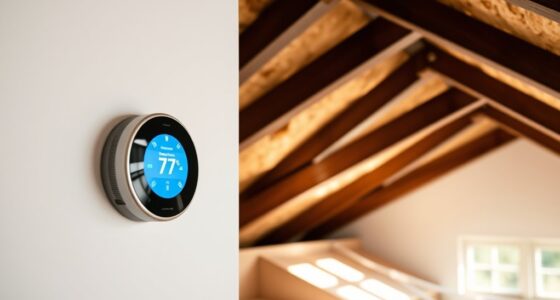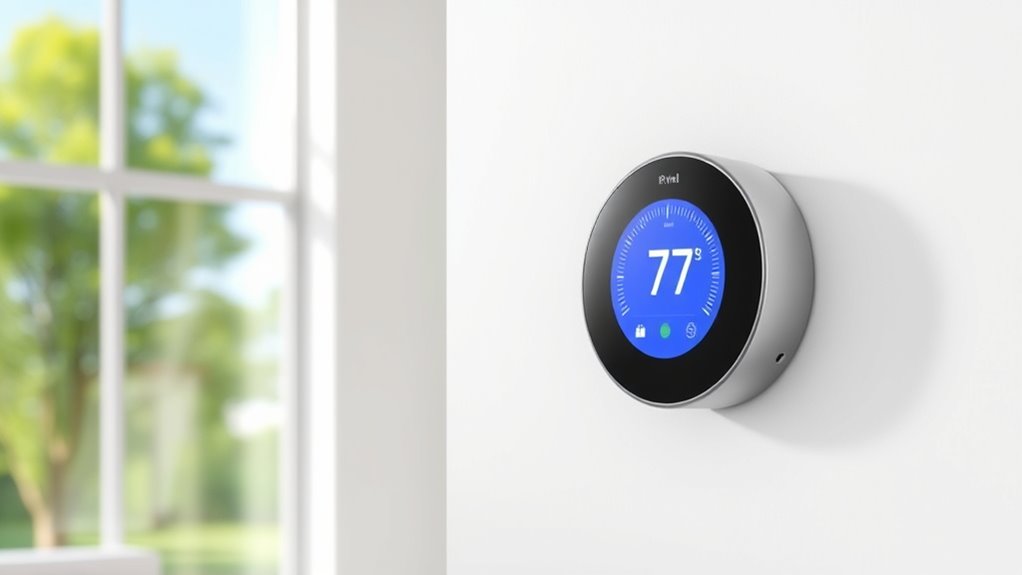

Smart thermostats help you save energy and support grid stability at the same time. By adjusting your home’s temperature based on real-time energy demand, they reduce strain on the power grid during peak times. This active load management prevents blackouts and makes the system more reliable. Plus, they learn your preferences to optimize comfort and efficiency. Keep exploring to see how this dual benefit can make your home smarter and the grid more resilient.
Key Takeaways
- Smart thermostats enable demand response by adjusting temperature settings to balance grid load during peak periods.
- They help prevent blackouts by actively managing home energy consumption based on real-time grid needs.
- These devices enhance energy efficiency, reducing overall demand and supporting grid stability.
- Integration with utilities allows homes to become flexible load resources, improving grid resilience.
- Smart thermostats promote a dual benefit of maintaining home comfort while contributing to a reliable, eco-friendly energy system.
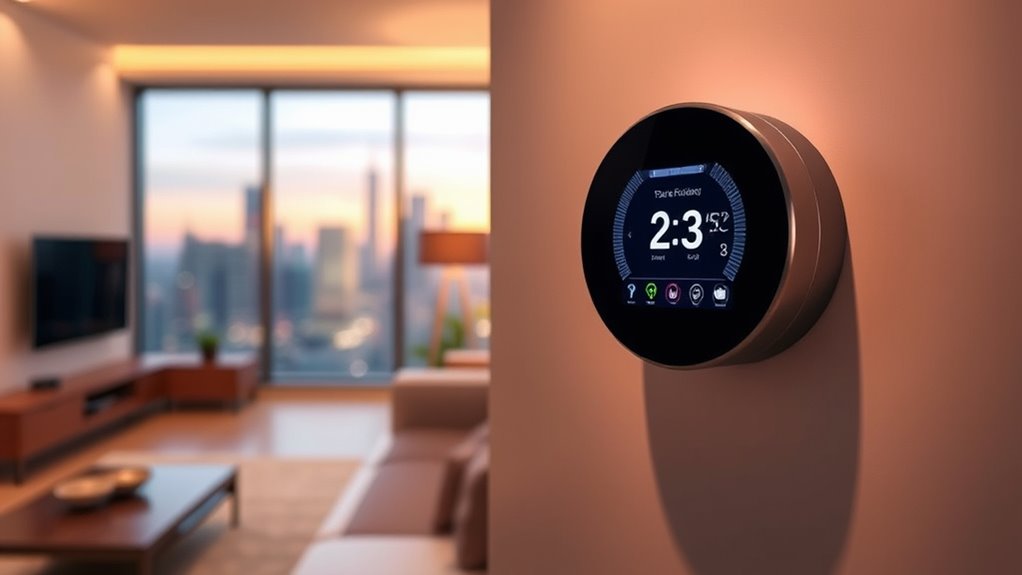
Smart thermostats are transforming how we manage energy consumption, directly impacting grid stability. By enabling demand response, these devices allow you to adjust your heating and cooling settings based on real-time grid needs. During periods of high demand, your thermostat can reduce energy use, easing strain on the power grid. This not only prevents blackouts but also helps utilities balance supply and demand more effectively. When you participate in demand response programs, you’re actively contributing to a more resilient and reliable energy system. This process benefits everyone by lowering the risk of grid overloads and reducing the need for costly backup power sources.
At the same time, smart thermostats critically enhance energy efficiency in your home. They learn your schedule, preferences, and even local weather patterns to optimize temperature settings. Instead of running your HVAC system unnecessarily or maintaining constant comfort levels, they find the sweet spot that conserves energy without sacrificing comfort. This precise control means you spend less on energy bills and reduce your carbon footprint. Over time, these savings add up, making your home more sustainable and less dependent on fossil fuels. Energy efficiency isn’t just good for your wallet; it’s a essential step toward a cleaner environment.
You also gain more control and flexibility. Many smart thermostats connect to your smartphone, allowing you to adjust settings remotely and monitor your energy use. This means you can fine-tune your home’s climate even when you’re away, ensuring you’re not wasting energy when nobody’s home. Additionally, some systems offer predictive features that anticipate your needs, further improving efficiency. As a result, you’re actively participating in grid stability efforts while enjoying personalized comfort and lower costs.
The integration of demand response capabilities into smart thermostats is a game-changer for the energy landscape. It turns your home into a fundamental part of the larger grid system, helping utilities manage peak loads without drastic measures like rolling blackouts. Meanwhile, the emphasis on energy efficiency means you’re reducing waste and making smarter choices about your energy consumption. Together, these benefits create a dual advantage: supporting a stable, resilient grid and making your home more sustainable. By embracing smart thermostats, you become part of the solution to modern energy challenges, contributing to a more reliable and eco-friendly future. Development of robust safety measures is essential to address potential vulnerabilities and ensure the security of interconnected energy systems.
Frequently Asked Questions
How Do Smart Thermostats Communicate With Energy Grids?
You’ll see that smart thermostats communicate with energy grids through grid communication protocols, like OpenADR or Zigbee, which allow them to send and receive signals. These devices integrate seamlessly with your home’s system, adjusting temperature settings based on grid demands. When there’s high energy demand, they can temporarily reduce consumption, helping stabilize the grid while saving you money and improving efficiency through effective device integration.
Can Smart Thermostats Predict Energy Demand Fluctuations?
Think of your smart thermostat as a weather vane, sensing shifts before they happen. It uses predictive analytics to forecast demand fluctuations, acting like a crystal ball for energy needs. By analyzing patterns, it predicts peak times, helping you save energy and costs. Demand forecasting allows it to adjust settings proactively, ensuring comfort while supporting the grid’s stability. You stay in control, riding the wave of energy demand with confidence.
Are There Privacy Concerns With Smart Thermostat Data Sharing?
Yes, there are privacy concerns with smart thermostat data sharing. You might worry about data security, as your usage patterns and personal habits could be exposed or misused if not properly protected. To safeguard your user privacy, confirm the manufacturer employs robust encryption and transparent data policies. Being aware of how your data is shared and requesting strong privacy controls can help you maintain control over your personal information.
What Are the Cost Implications of Installing Smart Thermostats?
Imagine saving money on energy bills by installing a smart thermostat. The initial installation expenses can range from $100 to $300, but many homeowners experience significant cost savings over time through improved efficiency. While the upfront costs are a consideration, the long-term benefits include reduced energy consumption and lower utility bills, making it a worthwhile investment. Plus, some utility companies offer rebates, further offsetting installation expenses.
How Do Smart Thermostats Adapt to Different Climate Zones?
Smart thermostats adapt to different climate zones by learning your local weather patterns and adjusting their settings accordingly. They use thermostat adaptation features to optimize heating and cooling, ensuring comfort while saving energy. When you set your thermostat, it considers your climate zone’s temperature fluctuations, automatically making adjustments. This way, you stay comfortable year-round, and your system operates efficiently, reducing energy costs and environmental impact.
Conclusion
By embracing smart thermostats, you’re not just gaining comfort—you’re helping prevent grid chaos that could dwarf any storm. When your thermostat adjusts intelligently, it smooths out energy demand spikes and keeps the power flowing smoothly for everyone. Imagine a world where blackouts are as rare as a unicorn—smart thermostats make that dream possible. So, take control today and be part of the revolution that keeps our grid stable and unstoppable!