In the right climate, night cooling works well because temperatures drop considerably after sunset, making outdoor air cooler than indoors. You can take advantage of this with natural airflow, opening windows and using good ventilation. Proper home design, like using thermal mass and insulation, further helps keep things cool at night. When temperature fluctuations are just right, you’ll see how simple strategies can make a big difference, and there’s more to discover about how to optimize this process.

Get home appliances delivered free with Prime
- Fast, free delivery on millions of items
- Prime Video, Amazon Music and more included
- Member-only deals all year
Key Takeaways
- Significant temperature drops at night in suitable climates allow outdoor air to naturally cool indoor spaces.
- Proper thermal mass absorbs heat during the day and releases it at night, stabilizing indoor temperatures.
- Well-designed homes with insulation and shading minimize daytime heat gain, enhancing nighttime cooling effectiveness.
- Natural ventilation through open windows efficiently cools interiors when outdoor air is cooler than indoor air.
- Climate-specific temperature fluctuations make night cooling a reliable, energy-efficient alternative to mechanical cooling.
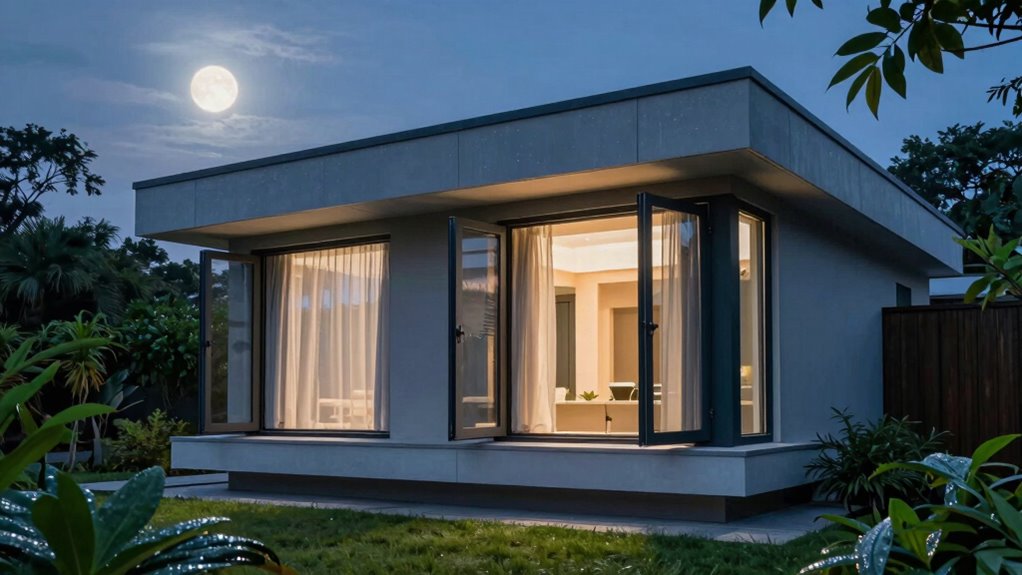
Night cooling can be an effective way to naturally regulate indoor temperatures, but it only works well in the right climate. When the outdoor air cools markedly at night, you can take advantage of this by letting cooler air flow into your home, reducing the need for air conditioning. This process relies heavily on the climate’s temperature fluctuations and your home’s ability to retain coolness overnight. If the temperature drops enough, you can open windows or use natural ventilation to cool your living space without extra energy use.
Utilize cooler night air to naturally lower indoor temperatures and reduce energy use when climate conditions permit.
Your home’s design plays a vital role here. Solar insulation, which involves managing the amount of solar heat that enters your house, is essential. Proper shading devices, reflective surfaces, or window treatments prevent excessive heat buildup during the day, ensuring your indoor environment remains cooler at night. When your home is well-insulated against solar gain, it stays cooler after sunset, making night cooling more effective. Conversely, if your home absorbs too much heat during the day, it’ll take longer to cool down, diminishing the benefits of nighttime ventilation.
Thermal mass is another key factor that influences night cooling’s effectiveness. Materials with high thermal mass, like concrete, brick, or stone, absorb heat during the day and slowly release it at night. If your home has substantial thermal mass, it acts like a heat bank, storing daytime warmth and releasing it gradually after the sun sets. This can be a double-edged sword—if not carefully managed, thermal mass might keep your home warm through the night. But, with proper design, thermal mass can also help stabilize indoor temperatures, preventing rapid temperature swings and making the cooling process more consistent. Additionally, understanding the climate’s temperature fluctuations is essential to determine how effective thermal mass will be in your specific environment. Recognizing local temperature patterns can help tailor your home’s design for optimal night cooling. Being aware of local climate conditions allows you to implement strategies that maximize the benefits of night cooling effectively. Moreover, selecting appropriate building materials that work well with your climate can further enhance the efficiency of night cooling strategies.
In climates where the temperature drops markedly at night—say, in desert or temperate zones—these strategies work best. In such environments, the combination of solar insulation and thermal mass creates a natural buffer, allowing cool outdoor air to lower indoor temperatures effectively. Properly managing thermal mass is crucial in these settings to prevent it from acting as a heat source during the night. The key is ensuring your home is well-sealed against unwanted heat gain during the day and that it’s capable of releasing heat at night. When these conditions align, night cooling becomes a reliable, energy-efficient way to keep your home comfortable without relying heavily on mechanical cooling systems. Overall, understanding your climate and optimizing your home’s design for solar insulation and thermal mass can make night cooling a practical, eco-friendly solution.
As an affiliate, we earn on qualifying purchases.
Frequently Asked Questions
How Does Humidity Affect Night Cooling Effectiveness?
Humidity impacts night cooling by making it less effective because high moisture levels reduce the temperature difference needed for cooling. When humidity is high, moisture control becomes harder, and the air feels warmer, decreasing cooling benefits. You’ll find night cooling works best in dry climates where low humidity allows heat to escape more easily, helping you save energy and maintain comfortable indoor temperatures without relying heavily on air conditioning.
Can Night Cooling Be Combined With Other Cooling Methods?
Yes, you can combine night cooling with other methods for better results. Using evaporative enhancement, you add moisture to increase cooling efficiency, while thermal buffering helps stabilize indoor temperatures. For example, you might use night cooling alongside shading or insulation to maximize comfort. This combination leverages natural cooling, reduces energy use, and maintains a more stable indoor environment, especially in climates suited for night cooling.
What Are the Environmental Benefits of Night Cooling?
Imagine night cooling as a gentle breeze that clears smog from a busy street. It helps you save energy by reducing reliance on air conditioning, which cuts down on power plant emissions. This process improves air quality, making your environment healthier. By embracing night cooling, you’re not just cooling your home—you’re also contributing to a cleaner planet, where cleaner air and conserved energy create a more vibrant, sustainable future for everyone.
How Does Building Design Influence Night Cooling Success?
Building design greatly influences night cooling success. You should prioritize good thermal insulation to keep heat out during the day, enabling cooler nighttime temperatures to lower indoor temperatures effectively. Incorporate window shading to reduce heat gain from sunlight, which enhances cooling efficiency. Properly designed ventilation also helps, but combining thermal insulation and window shading maximizes night cooling benefits, keeping your space comfortable without excessive energy use.
Is Night Cooling Suitable for All Climate Zones?
Night cooling isn’t suitable for all climate zones, especially where climate variability leads to unpredictable temperatures. For example, in desert regions with chilly nights, it works well, but in humid tropical zones, cooling limitations cause discomfort. You should assess your local climate patterns before relying on night cooling. If temperatures stay high or fluctuate unpredictably, this method may not provide enough relief, making it less effective in certain areas.
As an affiliate, we earn on qualifying purchases.
Conclusion
When you understand your climate, night cooling becomes your secret weapon, like a gentle breeze that whispers relief after a hot day. In the right conditions, it naturally cools your space without extra energy, making your home a cozy haven. Think of it as nature’s own air conditioner, quietly working behind the scenes. Embrace this smart approach, and you’ll find comfort in the cool night air, like a invigorating sip of water on a scorching day.
As an affiliate, we earn on qualifying purchases.
As an affiliate, we earn on qualifying purchases.
Halloween Picks
halloween
As an affiliate, we earn on qualifying purchases.