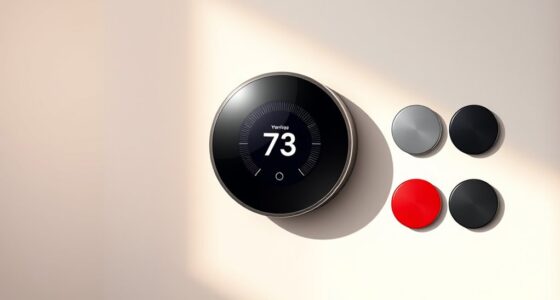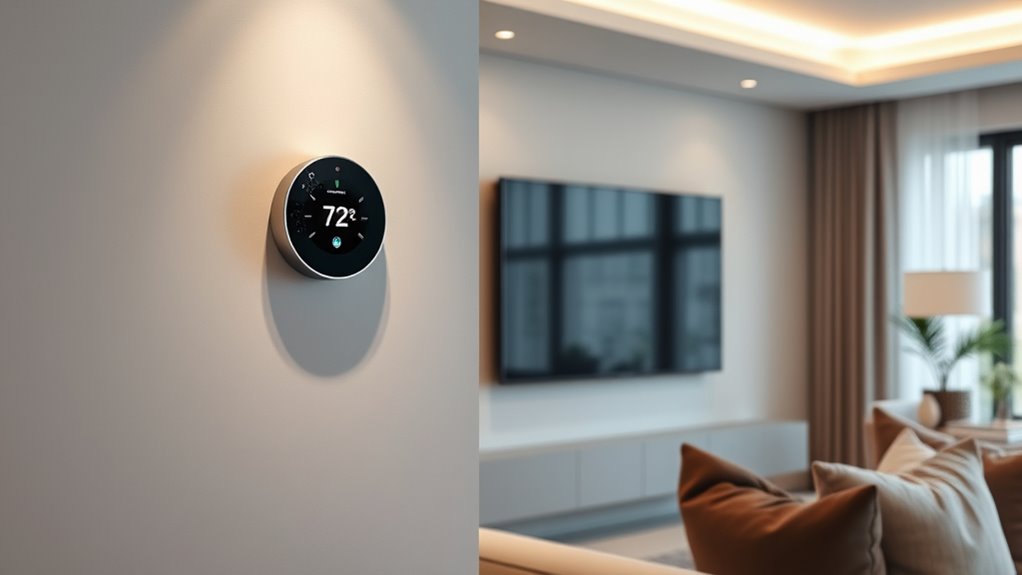

If you’re searching for a smart thermostat with Sonos integration, the key distinction is that thermostat-to-Sonos control may depend on a compatible voice assistant or smart-home platform rather than a direct Sonos connection. I’d start with the ecobee Smart Thermostat Premium as the best overall option for households that want built-in voice assistant support and broader smart-home features. The Google Nest Learning Thermostat (4th Gen) stands out for learning-based temperature control, while Amazon Smart Thermostat is a simpler choice for Alexa-centered homes. The tradeoffs are assistant compatibility, HVAC wiring and system support, and how much automation you actually need. Read on for the full comparison and ways to check whether your existing Sonos setup can work with your preferred controls.

Get home appliances delivered free with Prime
- Fast, free delivery on millions of items
- Prime Video, Amazon Music and more included
- Member-only deals all year
Complete the kit


Key Takeaways
- Sonos compatibility is not the same as native thermostat integration: voice control or a shared smart-home platform may be the link, so check the exact Sonos, assistant, and thermostat setup before buying.
- ecobee Premium is the most feature-rich fit in this list for voice-oriented households; its built-in Siri and Alexa support sets it apart from thermostats that rely more heavily on a separate hub or speaker.
- The two Meross Matter entries offer a standards-focused route, but Matter support alone does not promise direct control through every Sonos speaker or app.
- Honeywell’s lineup spans very different installation and control paths: the T6 Pro Z-Wave models suit compatible smart-home hubs, while its Wi-Fi color-screen models emphasize direct thermostat controls and app access.
- Room sensors, learning features, and touchscreen extras are not equally useful to every household; the strongest fit depends on whether you want better room-by-room comfort, simpler scheduling, or voice-based control.
| ecobee Smart Thermostat Essential, Wi-Fi, ENERGY STAR Certified |  | Best for Broad Smart-Home Compatibility | Connectivity: Wi-Fi | Display: 3.74-inch LCD touchscreen | Power: Battery powered | VIEW ON AMAZON | See Our Full Breakdown |
| Honeywell TH6320ZW2003 T6 Pro Series Z-Wave Thermostat for Smart Home |  | Best for Existing Z-Wave Setups | Connectivity: Z-Wave | Display: 2.3-inch touchscreen | Power: AC/DC; three AA batteries required | VIEW ON AMAZON | See Our Full Breakdown |
| Honeywell Home RTH9600WF Smart Color Wi-Fi Thermostat |  | Best for At-a-Glance Display Customization | Model: RTH9600WF | Connectivity: Wi-Fi | Display: Color LCD touchscreen | VIEW ON AMAZON | See Our Full Breakdown |
| Honeywell Home X8S Premium Smart Wi-Fi Thermostat, White |  | Best Premium Feature Set | Display: 5-inch touchscreen | Connectivity: Wi-Fi, 2.4 or 5 GHz | Smart-home compatibility: Matter, Amazon Alexa, Google Assistant, Apple Home | VIEW ON AMAZON | See Our Full Breakdown |
| Honeywell Home T6 Pro Z-Wave Programmable Touchscreen Thermostat |  | Best Flexible-Power Z-Wave Pick | Model: TH6320ZW2007/U | Connectivity: Z-Wave Plus v2 (Z-Wave 700) | Display: 3.5-inch backlit touchscreen | VIEW ON AMAZON | See Our Full Breakdown |
| ecobee Smart Thermostat Enhanced |  | Best Overall for Voice-Assisted Sonos Homes | Connectivity: Wi-Fi | Display: 4-inch LCD | HVAC compatibility: Air conditioner, boiler, furnace, heat pump, and humidifier | VIEW ON AMAZON | See Our Full Breakdown |
| Honeywell Home X7B Smart Wi-Fi Programmable Thermostat |  | Best for Matter-First Smart Homes | Connectivity: Wi-Fi and Matter | Display: 4.3-inch customizable touchscreen | HVAC compatibility: Up to 3 heat/2 cool heat pump with electric backup, or 2 heat/2 cool conventional | VIEW ON AMAZON | See Our Full Breakdown |
| Meross Matter Smart Wi-Fi Thermostat |  | Best for Broad Matter Platform Coverage | Connectivity: Wi-Fi and Matter | Compatible platforms: Apple Home, Amazon Alexa, Google Home, Home Assistant, Samsung SmartThings | HVAC compatibility: Suitable for 95% of HVAC systems; supports heat pump, air conditioner, furnace, boiler, dehumidifier, and humidifier | VIEW ON AMAZON | See Our Full Breakdown |
| Aqara Smart Thermostat W200 |  | Best Premium Smart-Home Control Panel | Display: 4-inch full-color touchscreen with curved glass | HVAC compatibility: Approximately 85% of systems; furnace, AC, heat pump, boiler, and PTAC | Connectivity: Dual-band Wi-Fi, Matter 1.4, Thread border router, and built-in Zigbee hub | VIEW ON AMAZON | See Our Full Breakdown |
| Honeywell TH9320WF5003 Wi-Fi 9000 Color Touchscreen Programmable Thermostat |  | Best for Straightforward Weekly Scheduling | Model: TH9320WF5003 | Connectivity: Wi-Fi | Display: 4.5-inch touchscreen | VIEW ON AMAZON | See Our Full Breakdown |
| Meross Matter Smart Wi-Fi Thermostat |  | Best for Matter-First Homes | Connectivity: Wi-Fi, Matter | Smart-home platforms: Apple Home, Amazon Alexa, Google Home, Home Assistant, Samsung SmartThings | Supported systems: Most HVAC systems, including heat pumps, air conditioners, furnaces, boilers, dehumidifiers, and humidifiers | VIEW ON AMAZON | See Our Full Breakdown |
| Google Nest Learning Thermostat (4th Gen) with Nest Temperature Sensor (2nd Gen), Obsidian |  | Best for Adaptive Comfort | Connectivity: Wi-Fi | Temperature control: Heating and cooling | Controller compatibility: Amazon Alexa, Android, Apple HomeKit, Google Assistant, iOS | VIEW ON AMAZON | See Our Full Breakdown |
| ecobee Smart Thermostat Premium with Wi-Fi, Smart Sensor, and Built-In Siri and Alexa |  | Best for Built-In Voice and Room Sensing | Connectivity: Wi-Fi | Built-in voice assistants: Siri and Alexa | Included sensor: SmartSensor | VIEW ON AMAZON | See Our Full Breakdown |
| Amazon Smart Thermostat with Alexa and Ring Compatibility |  | Best for Alexa and Ring Households | HVAC compatibility: Most 24V systems, including conventional forced air, heat pump, and radiant boiler | Power requirement: C wire or separately sold power adapter | Wi-Fi: 2.4 GHz, 802.11 b/g/n; does not support 5 GHz | VIEW ON AMAZON | See Our Full Breakdown |
| Sensi ST55 Smart Wi-Fi Thermostat |  | Best for Straightforward DIY Setup | Model: ST55 | Connectivity: Wi-Fi | Compatible platforms: Amazon Alexa, Apple HomeKit, Google Assistant, SmartThings, Vera | VIEW ON AMAZON | See Our Full Breakdown |
| smart thermostat with sonos integration | Connectivity | HVAC compatibility | Display |
|---|---|---|---|
| ecobee Smart Thermostat Essent | Wi-Fi | Most 24 VAC systems, including forced-air, heat pumps, and boilers | 3.74-inch LCD touchscreen |
| Honeywell TH6320ZW2003 T6 Pro | Z-Wave | — | 2.3-inch touchscreen |
| Honeywell Home RTH9600WF Smart | Wi-Fi | Forced-air, hot water, steam, and heat pumps with electric backup | Color LCD touchscreen |
| Honeywell Home X8S Premium Sma | Wi-Fi, 2.4 or 5 GHz | Up to 3 heat/2 cool heat pump with electric backup, or 2 heat/2 cool conventional systems | 5-inch touchscreen |
| Honeywell Home T6 Pro Z-Wave P | Z-Wave Plus v2 (Z-Wave 700) | Up to 3H/2C heat pump or 2H/2C conventional systems | 3.5-inch backlit touchscreen |
| ecobee Smart Thermostat Enhanc | Wi-Fi | Air conditioner, boiler, furnace, heat pump, and humidifier | 4-inch LCD |
| Honeywell Home X7B Smart Wi-Fi | Wi-Fi and Matter | Up to 3 heat/2 cool heat pump with electric backup, or 2 heat/2 cool conventional | 4.3-inch customizable touchscreen |
| Meross Matter Smart Wi-Fi Ther | Wi-Fi and Matter | Suitable for 95% of HVAC systems; supports heat pump, air conditioner, furnace, boiler, dehumidifier, and humidifier | — |
| Aqara Smart Thermostat W200 | Dual-band Wi-Fi, Matter 1.4, Thread border router, and built-in Zigbee hub | Approximately 85% of systems; furnace, AC, heat pump, boiler, and PTAC | 4-inch full-color touchscreen with curved glass |
| Honeywell TH9320WF5003 Wi-Fi 9 | Wi-Fi | — | 4.5-inch touchscreen |
| Meross Matter Smart Wi-Fi Ther | Wi-Fi, Matter | — | — |
| Google Nest Learning Thermosta | Wi-Fi | — | — |
| ecobee Smart Thermostat Premiu | Wi-Fi | Compatible with 95% of HVAC systems | — |
| Amazon Smart Thermostat with A | — | Most 24V systems, including conventional forced air, heat pump, and radiant boiler | — |
| Sensi ST55 Smart Wi-Fi Thermos | Wi-Fi | Air conditioner, boiler, furnace, heat pump | — |
More Details on Our Top Picks
ecobee Smart Thermostat Essential, Wi-Fi, ENERGY STAR Certified
For a roundup centered on Sonos, the key distinction is that this ecobee connects to major voice-assistant and smart-home ecosystems, but the supplied product details do not list a direct Sonos integration. I’d treat it as a thermostat that may fit into a broader connected-home setup, not as a confirmed Sonos control device. Its Wi-Fi connectivity, app control, touchscreen, and compatibility with Apple HomeKit, Google Assistant, and Alexa make it more flexible than the Z-Wave-only Honeywell T6 Pro models here. Auto-away and scheduling can reduce needless heating or cooling when routines change. The tradeoff is that installation is less straightforward if the home lacks a C-wire: the Power Extender Kit is sold separately, and room sensing also requires a separately purchased SmartSensor. It suits buyers who value ecosystem choice over verified Sonos-specific control.
Pros:- Supports Apple HomeKit, Google Assistant, and Amazon Alexa
- Offers touchscreen and mobile app control
- Auto-away and scheduling support routine-based energy management
- Designed for DIY installation across many 24 VAC HVAC systems
Cons:- Product details do not confirm direct Sonos integration
- Power Extender Kit is sold separately when a C-wire is absent
- SmartSensor for room-based temperature sensing is sold separately
Best for: Homeowners with a compatible 24 VAC HVAC system who want Wi-Fi control and a choice of Apple HomeKit, Google Assistant, or Alexa.
Not ideal for: Buyers who require confirmed direct Sonos integration, or households without a C-wire that want all installation power hardware included.
- Connectivity:Wi-Fi
- Display:3.74-inch LCD touchscreen
- Power:Battery powered
- Mounting:Wall mount
- HVAC compatibility:Most 24 VAC systems, including forced-air, heat pumps, and boilers
- Smart-home compatibility:Apple HomeKit, Google Assistant, Amazon Alexa
- Listed features:Auto-away, auto-scheduling, fan control, programmable temperature control, indoor humidity detection
Our verdict“Choose this ecobee for broad smart-home compatibility and flexible scheduling, but not if direct Sonos control is a must-have.”
Honeywell TH6320ZW2003 T6 Pro Series Z-Wave Thermostat for Smart Home
This T6 Pro makes the most sense when a Z-Wave hub already anchors the home. Its Z-Wave connectivity links with hubs such as SmartThings and Vera, allowing thermostat adjustments to sit alongside other hub-managed routines. That is a different path from the Wi-Fi ecobee Smart Thermostat Essential, which lists direct compatibility with several major smart-home platforms rather than relying on a Z-Wave hub. For the Sonos-focused buyer, neither product description confirms direct Sonos control, so I would not select this model on that assumption. The thermostat’s programmable schedules and cycle-learning claim may help align heating and cooling with regular household patterns. Its smaller 2.3-inch screen is functional, but less prominent than the 3.5-inch display on the Honeywell Home T6 Pro Z-Wave Programmable Touchscreen model. Hub dependence narrows its appeal.
Pros:- Z-Wave works with compatible hubs including SmartThings and Vera
- Programmable schedules support planned heating and cooling
- Touchscreen interface provides on-device control
- Product description lists Energy Star certification
Cons:- Smart-home control depends on a compatible Z-Wave hub
- Product details do not confirm direct Sonos integration
- The 2.3-inch screen is smaller than the Honeywell Home T6 Pro model in this roundup
Best for: Households already using a compatible Z-Wave hub, such as SmartThings or Vera, that want thermostat control inside existing routines.
Not ideal for: Buyers seeking a standalone Wi-Fi thermostat, a larger touchscreen, or confirmed Sonos integration.
- Connectivity:Z-Wave
- Display:2.3-inch touchscreen
- Power:AC/DC; three AA batteries required
- Voltage:24 volts
- Mounting:Wall mount
- Listed controllers:SmartThings, Vera
- Material:Acrylonitrile Butadiene Styrene (ABS)
Our verdict“Pick this T6 Pro if your home already runs on Z-Wave; choose a Wi-Fi model instead if you want fewer hub dependencies.”
Honeywell Home RTH9600WF Smart Color Wi-Fi Thermostat
The RTH9600WF is the display-led choice in this group: its customizable color touchscreen makes local temperature settings and status easier to read than the smaller screen on the Honeywell TH6320ZW2003. Wi-Fi app access, flexible schedules, remote temperature and humidity monitoring, and smart alerts add useful control when nobody is near the wall unit. Compatible assistants include Alexa and Google Assistant, but the listed integrations do not establish direct Sonos compatibility; I’d regard voice control as a separate smart-home feature, not proof of Sonos control. The main installation constraint is clear: this thermostat requires a C-wire or compatible power adapter. It also excludes electric baseboard heat, so buyers should check their system before choosing it. Compared with the X8S, it offers a simpler feature set and a smaller display, without the listed Matter support or indoor-air-quality controls.
Pros:- Customizable color touchscreen presents thermostat information clearly
- App supports remote temperature and humidity monitoring
- Flexible schedules and smart alerts provide remote oversight
- Works with Alexa, Google Assistant, Microsoft Cortana, and IFTTT
Cons:- Requires a C-wire or compatible power adapter
- Not compatible with electric baseboard heat
- Product details do not confirm direct Sonos integration
Best for: Homeowners with a C-wire and compatible forced-air, hot-water, steam, or heat-pump systems who want a customizable color display and remote monitoring.
Not ideal for: Homes with electric baseboard heat, no C-wire or compatible adapter, or buyers who need listed Matter or direct Sonos integration.
- Model:RTH9600WF
- Connectivity:Wi-Fi
- Display:Color LCD touchscreen
- Power requirement:C-wire required
- Voltage:24 volts
- HVAC compatibility:Forced-air, hot water, steam, and heat pumps with electric backup
- Smart-home compatibility:Amazon Alexa, Google Assistant, Microsoft Cortana, IFTTT
- Dimensions:1 x 4.75 x 3.5 inches
Our verdict“Choose the RTH9600WF for its customizable color display and remote monitoring if your wiring and HVAC system meet its requirements.”
Honeywell Home X8S Premium Smart Wi-Fi Thermostat, White
The X8S is the most feature-rich pick among these five: its 5-inch touchscreen, occupancy detection, indoor-air-quality monitoring and control, and app access go beyond the simpler schedule-and-remote-control approach of the RTH9600WF. It also lists Matter support alongside Alexa, Google Assistant, and Apple Home, giving it broader smart-home platform options than the Z-Wave-only T6 Pro models. That breadth still does not confirm direct Sonos integration, so buyers should verify the specific control path they intend to use. The larger display and sensor features make more sense for a household that will use the added information and connected equipment. The tradeoffs are a required C-wire and possible extra purchases: video doorbells and room sensors are sold separately, and some functions may need additional HVAC equipment or accessories. It also does not support 120–240V electric baseboard heat.
Pros:- Large 5-inch touchscreen supports a clear, information-rich interface
- Matter compatibility joins Alexa, Google Assistant, and Apple Home support
- Occupancy detection adds context to thermostat control
- Indoor-air-quality monitoring and control extend beyond temperature settings
Cons:- Requires a C-wire, with an adapter voucher offered if needed
- Some features may require additional HVAC equipment or accessories
- Video doorbells and room sensors are sold separately; direct Sonos integration is not confirmed
Best for: Smart-home households with a compatible C-wire-equipped HVAC system that want a large touchscreen, occupancy detection, and indoor-air-quality features.
Not ideal for: Buyers seeking a basic thermostat, homes with electric baseboard heat, or anyone relying on confirmed direct Sonos support.
- Display:5-inch touchscreen
- Connectivity:Wi-Fi, 2.4 or 5 GHz
- Smart-home compatibility:Matter, Amazon Alexa, Google Assistant, Apple Home
- HVAC compatibility:Up to 3 heat/2 cool heat pump with electric backup, or 2 heat/2 cool conventional systems
- Power:Corded electric
- C-wire:Required; product includes a voucher for a Honeywell Home C-Wire Adapter if needed
- Mounting:Wall mount
- Not compatible with:120–240V electric baseboard heat
Our verdict“Choose the X8S for its large display and broader sensing features if your HVAC setup supports it and you will use more than basic temperature control.”
Honeywell Home T6 Pro Z-Wave Programmable Touchscreen Thermostat
Compared with the TH6320ZW2003, this Honeywell Home T6 Pro gives buyers a larger 3.5-inch backlit touchscreen and more detail on supported schedules and HVAC configurations. Its Z-Wave Plus v2 connection can bring thermostat changes into compatible smart-home routines, while the ability to run on three AAA batteries or a C-wire gives some installations more power flexibility than a C-wire-required Wi-Fi model such as the RTH9600WF. The limitation is the same basic tradeoff as other Z-Wave picks: remote and voice features depend on network integration, and a compatible HVAC setup is still required. The supplied data lists Alexa, Google Assistant, and Cortana, but it does not confirm direct Sonos control. This is a practical fit for a Z-Wave home that wants programmable schedules and alerts, rather than for someone choosing primarily for Sonos.
Pros:- Z-Wave Plus v2 supports compatible smart-home routines and remote adjustments
- 3.5-inch backlit touchscreen is larger than the screen on the TH6320ZW2003
- Can use three AAA batteries or 24 VAC hardwired power via C-wire
- Smart Alerts can report system issues or temperature setpoints
Cons:- Remote and smart-home features depend on network integration
- Compatibility depends on HVAC wiring and system configuration
- Product details do not confirm direct Sonos integration
Best for: Z-Wave smart-home users with compatible HVAC wiring who want a larger touchscreen, scheduled periods, and a battery-power option.
Not ideal for: Buyers without a compatible Z-Wave network who want straightforward Wi-Fi app control or confirmed direct Sonos integration.
- Model:TH6320ZW2007/U
- Connectivity:Z-Wave Plus v2 (Z-Wave 700)
- Display:3.5-inch backlit touchscreen
- HVAC compatibility:Up to 3H/2C heat pump or 2H/2C conventional systems
- Power:Three AAA batteries or 24 VAC hardwired via C-wire
- Scheduling:Four weekday periods and three weekend periods
- Smart-home compatibility:Samsung SmartThings, IFTTT, Apple HomeKit
- Voice assistants:Amazon Alexa, Google Assistant, Cortana
Our verdict“Choose this T6 Pro for a Z-Wave setup that benefits from a larger display and flexible power, not for standalone Wi-Fi or guaranteed Sonos control.”
ecobee Smart Thermostat Enhanced
For a Sonos setup controlled through Alexa, the ecobee Smart Thermostat Enhanced is the strongest all-round fit in this group: it supports Alexa, Google Assistant, and Apple HomeKit, giving you several ways to connect climate control with a broader smart home. Its occupancy- and schedule-based adjustments can reduce unnecessary heating or cooling, while the included Power Extender Kit helps when your wall lacks a C-wire. Compared with the Meross Matter Smart Wi-Fi Thermostat, ecobee offers a clearer out-of-box power solution, though Meross lists broader Matter platform support and system alerts. Neither product is described as having native Sonos control, so plan on using a compatible voice assistant or smart-home routine rather than treating Sonos as a direct thermostat controller. Room sensors cost extra, and HVAC compatibility still needs checking.
Pros:- Supports Alexa, Google Assistant, Apple HomeKit, and SmartThings for flexible smart-home routines
- Automatically adjusts temperature using occupancy, schedules, and humidity
- Power Extender Kit is included for many homes without a C-wire
- Remote control is available through the ecobee app
Cons:- No direct Sonos integration is specified; voice-assistant or smart-home routines may be needed
- SmartSensors for room-by-room comfort are sold separately
- Specific HVAC compatibility should be checked before purchase
Best for: Households using Alexa with Sonos who want occupancy-based temperature control and an included option for installations without a C-wire.
Not ideal for: Buyers who want direct Sonos app control, room-by-room sensing included, or a thermostat they can install without checking HVAC compatibility.
- Connectivity:Wi-Fi
- Display:4-inch LCD
- HVAC compatibility:Air conditioner, boiler, furnace, heat pump, and humidifier
- Voice and platform compatibility:Amazon Alexa, Google Assistant, Apple HomeKit, Android, iOS
- Power:24 volts; corded electric
- Included accessories:Power Extender Kit and trim kit
- Energy certification:ENERGY STAR
- Warranty:3 years
Our verdict“Choose the ecobee Enhanced if you want broad voice-assistant support and occupancy-aware control alongside Sonos, and can accept separately purchased room sensors.”
Honeywell Home X7B Smart Wi-Fi Programmable Thermostat
The Honeywell Home X7B suits buyers building a Matter-based home around Sonos-compatible voice control: it supports Matter, Wi-Fi, Alexa, Google Assistant, and Apple Home. Its customizable 4.3-inch touchscreen makes local adjustments straightforward, while app and voice control add remote options. Compared with the Honeywell TH9320WF5003, the X7B offers Matter connectivity and a more clearly specified heat-pump range; the older Honeywell model instead lists 7-day programming and Alexa compatibility. The X7B does not list direct Sonos integration, so any connection would depend on supported assistant or smart-home routines. Its hardwired setup requires a C-wire, and it will not suit 120–240 V electric baseboard heat. Humidity monitoring may also call for extra compatible equipment.
Pros:- Matter connectivity supports integration across compatible smart-home platforms
- Customizable 4.3-inch touchscreen provides a clear local control option
- Offers app, touch, and voice control
- ENERGY STAR certified
Cons:- Requires a C-wire; an adapter voucher is included, but wiring needs planning
- Does not support 120–240 V electric baseboard heat
- Humidity monitoring may require additional equipment or accessories
Best for: Matter-focused households with compatible conventional or heat-pump HVAC, an available C-wire, and Alexa, Google, or Apple smart-home control.
Not ideal for: Owners of electric baseboard systems, homes without a C-wire, or buyers seeking confirmed native Sonos thermostat control.
- Connectivity:Wi-Fi and Matter
- Display:4.3-inch customizable touchscreen
- HVAC compatibility:Up to 3 heat/2 cool heat pump with electric backup, or 2 heat/2 cool conventional
- Control methods:App, touch, and voice
- Smart-home compatibility:Amazon Alexa, Google Assistant, Apple Home
- Power and wiring:Hardwired, 24 V; C-wire required
- Mounting:Wall mount
- Energy certification:ENERGY STAR
Our verdict“Pick the X7B if Matter support and a customizable touchscreen matter more to your Sonos-connected smart home than flexible wiring.”
Meross Matter Smart Wi-Fi Thermostat
The Meross Matter Smart Wi-Fi Thermostat makes sense for a mixed-platform household that wants one thermostat to work across Apple Home, Alexa, Google Home, Home Assistant, or SmartThings. That breadth can help when Sonos and other devices are managed through different smart-home ecosystems, although the listing does not claim direct Sonos integration. Custom schedules and remote app access cover everyday temperature changes, while filter-life and system alerts offer useful maintenance prompts. Compared with the Honeywell Home X7B, Meross names more compatible platforms and supported HVAC types, but wiring is less forgiving: a C-wire may be required and is not included. Its stated 95% HVAC coverage is not universal; electric baseboard, millivolt, and two-wire systems are excluded, so check the system before buying.
Pros:- Matter support spans Apple Home, Alexa, Google Home, Home Assistant, and SmartThings
- Customizable 24/7 schedules and remote app control
- Filter-life and system-malfunction alerts can help flag maintenance needs
- Supports several HVAC types, including heat pumps, boilers, and humidifiers
Cons:- A C-wire is required for some configurations and is not included
- Does not support 110–240 V electric baseboard, millivolt, or two-wire systems
- Direct Sonos integration is not specified
Best for: Smart-home households using multiple Matter platforms that want scheduling and system alerts, and have compatible HVAC wiring.
Not ideal for: Homes with electric baseboard, millivolt, or two-wire systems, or buyers who need an included C-wire solution or direct Sonos control.
- Connectivity:Wi-Fi and Matter
- Compatible platforms:Apple Home, Amazon Alexa, Google Home, Home Assistant, Samsung SmartThings
- HVAC compatibility:Suitable for 95% of HVAC systems; supports heat pump, air conditioner, furnace, boiler, dehumidifier, and humidifier
- Scheduling:Customizable 24/7 schedules
- Alerts:Filter life, system malfunctions, and long-term operation
- C-wire:Required for some configurations; not included
- Design:Glass panel; black or white
Our verdict“Choose Meross for broad Matter platform coverage and useful alerts if your HVAC system is supported and you can handle the wiring requirements.”
Aqara Smart Thermostat W200
The Aqara Smart Thermostat W200 is the most feature-rich control panel here, combining Matter support with a built-in mmWave presence sensor, Thread border router, and Zigbee hub. Its 4-inch color touchscreen can also display controls for compatible Aqara doorbells and locks, giving it a wider role than the ecobee Enhanced, which focuses more directly on comfort automation and includes a Power Extender Kit. The W200’s presence detection and Adaptive Temperature can support more responsive routines, but Adaptive Temperature requires an Apple Home hub and compatible iPhone or Apple Watch. The provided details name Apple Home, Google Home, Alexa, and SmartThings, not native Sonos control; use of Sonos would rely on the wider smart-home setup. A C-wire adapter and optional sensor are sold separately.
Pros:- Matter integration supports local control across several major smart-home platforms
- Built-in mmWave radar detects presence for responsive routines
- 4-inch touchscreen also serves as a panel for compatible Aqara doorbells and locks
- Includes Thread border router and Zigbee hub functions
Cons:- Adaptive Temperature requires an Apple Home hub and compatible iPhone or Apple Watch
- C-wire adapter and optional W100 sensor are sold separately
- Direct Sonos control is not specified, and Clean Energy Guidance is limited to the contiguous United States
Best for: Smart-home enthusiasts who want a Matter thermostat, local presence sensing, and an Aqara touchscreen panel, especially those already using Apple Home.
Not ideal for: Buyers seeking a simple thermostat, included wiring accessories, or Adaptive Temperature without an Apple Home hub and compatible Apple device.
- Display:4-inch full-color touchscreen with curved glass
- HVAC compatibility:Approximately 85% of systems; furnace, AC, heat pump, boiler, and PTAC
- Connectivity:Dual-band Wi-Fi, Matter 1.4, Thread border router, and built-in Zigbee hub
- Presence sensor:Built-in mmWave radar
- Smart-home integration:Apple Home, Google Home, Amazon Alexa, Samsung SmartThings, Home Assistant
- Additional hardware:C-wire adapter and optional W100 sensor sold separately
- Adaptive Temperature requirement:Apple Home hub and compatible iPhone or Apple Watch
Our verdict“Pick the W200 if you want a multi-purpose Aqara smart-home panel and presence sensing, and are prepared for its Apple-dependent features and separate accessories.”
Honeywell TH9320WF5003 Wi-Fi 9000 Color Touchscreen Programmable Thermostat
The Honeywell TH9320WF5003 is the straightforward choice for buyers who prioritize a familiar touchscreen and 7-day programming over newer Matter features. Wi-Fi access through the Total Connect Comfort app and Alexa support can fit a Sonos household that already uses Alexa voice routines, but the product details do not claim direct Sonos control. Compared with the Honeywell Home X7B, this model offers a larger 4.5-inch display and explicit weekly programming, while the X7B adds Matter connectivity and a broader stated heat-pump specification. The TH9320WF5003 requires a C-wire and may need professional installation; it also may not suit some dual-fuel heat pumps without a fossil fuel kit. Buyers seeking multi-platform Matter integration should look at the X7B or Meross instead.
Pros:- 7-day programming supports different schedules across the week
- 4.5-inch touchscreen offers a larger local interface than the X7B
- Remote monitoring and control are available through the Total Connect Comfort app
- Alexa compatibility, energy-saving mode, alerts, and reminders are included
Cons:- Requires a C-wire
- Some dual-fuel heat pumps may need a fossil fuel kit
- Professional installation may be needed, and direct Sonos integration is not specified
Best for: Homeowners with a C-wire who want weekly schedules, a large touchscreen, app access, and Alexa voice control.
Not ideal for: Buyers without a C-wire, households prioritizing Matter or broad smart-home platform support, and owners of unsupported dual-fuel heat pumps.
- Model:TH9320WF5003
- Connectivity:Wi-Fi
- Display:4.5-inch touchscreen
- Programming:7-day
- Control:Total Connect Comfort app and Alexa
- Power and wiring:Hardwired, 24 volts; C-wire required
- Mounting:Wall mount
- Dimensions:0.88 x 4.5 x 3.5 inches
Our verdict“Choose this Honeywell if weekly scheduling and a large touchscreen matter more than Matter support, and your wiring and HVAC system are compatible.”
Meross Matter Smart Wi-Fi Thermostat
Matter compatibility gives this Meross a wider smart-home reach than the Alexa-centered Amazon Smart Thermostat: it works with Apple Home, Alexa, Google Home, Home Assistant, and SmartThings. That flexibility is useful if your household mixes platforms or may change ecosystems later. It also covers many HVAC types and adds 24/7 scheduling, remote control, usage tracking, and system alerts, so it offers more than basic app adjustments.
The tradeoff is that Sonos integration is not listed as a direct feature; its value here is connecting through supported smart-home platforms, not controlling Sonos speakers. Check your wiring and system before buying: it excludes baseboard, millivolt, and two-wire systems, and some setups need a C wire. Compared with the Sensi ST55, Meross offers Matter but has more explicit system exclusions.
Pros:- Matter support spans several major smart-home platforms
- Flexible schedules and remote app control
- Filter-life and HVAC system alerts
- Supports a broad range of HVAC equipment
Cons:- Not compatible with baseboard heaters, millivolt systems, or two-wire systems
- Some wiring setups require a C wire
- Sonos control is not specified as a direct feature
Best for: Households using Matter-compatible devices across Apple, Google, Alexa, or Home Assistant that want one thermostat platform.
Not ideal for: Homes with electric baseboard, millivolt, or two-wire heating, or buyers seeking a stated direct Sonos integration.
- Connectivity:Wi-Fi, Matter
- Smart-home platforms:Apple Home, Amazon Alexa, Google Home, Home Assistant, Samsung SmartThings
- Supported systems:Most HVAC systems, including heat pumps, air conditioners, furnaces, boilers, dehumidifiers, and humidifiers
- Wiring:C wire required for some configurations
- Unsupported systems:Electric baseboard heaters (110V/120V/240V), millivolt systems, and two-wire systems
- Features:24/7 schedules, remote control, HVAC usage tracking, filter-life and system alerts
- Design:Glass panel; black or white
Our verdict“Choose Meross if cross-platform Matter support matters more than direct Sonos controls and your HVAC wiring is compatible.”
Google Nest Learning Thermostat (4th Gen) with Nest Temperature Sensor (2nd Gen), Obsidian
The Nest’s main distinction is its learning schedule: it can adapt heating and cooling to household routines instead of relying only on a schedule you build yourself. The included Temperature Sensor also lets you account for comfort in another room, a useful difference from the Amazon Smart Thermostat, whose listed package does not include a room sensor. Control runs through Google Home and compatible voice assistants.
For this Sonos-focused roundup, the limitation is clear: the supplied details do not identify direct Sonos integration, so buyers should treat this as a thermostat choice with smart-home voice control rather than a Sonos controller. It suits people who want reduced schedule maintenance, but buyers who prefer broad Matter platform support may find the Meross a better match. System compatibility still needs checking, even though a C wire is not required in most homes.
Pros:- Learns temperature preferences and adjusts to changing routines
- Includes a second-generation Nest Temperature Sensor
- Works with Google Home and compatible voice assistants
- C wire is not required in most homes
Cons:- HVAC compatibility must be checked for the specific system
- Some features depend on Google Home or compatible smart-home devices
- Direct Sonos integration is not specified
Best for: Google Home households that want a thermostat to learn routines and use a separate sensor for room comfort.
Not ideal for: Buyers who need stated direct Sonos integration, broad Matter compatibility, or manual control over every schedule change.
- Connectivity:Wi-Fi
- Temperature control:Heating and cooling
- Controller compatibility:Amazon Alexa, Android, Apple HomeKit, Google Assistant, iOS
- Power:Battery powered; 24 V system
- Display and mounting:Touchscreen; wall mount
- Material and color:Aluminum; Polished Obsidian
- Included accessory:Nest Temperature Sensor (2nd gen)
- Battery:1 CR2 battery included
Our verdict“Pick the Nest if adaptive scheduling and room sensing outweigh the need for confirmed Sonos control or Matter flexibility.”
ecobee Smart Thermostat Premium with Wi-Fi, Smart Sensor, and Built-In Siri and Alexa
Among these five, ecobee offers the most substantial built-in voice setup: Siri and Alexa are integrated, and an included SmartSensor can help balance comfort between rooms. That makes it a different proposition from the Meross Matter thermostat, which connects to voice ecosystems but does not list a built-in speaker. The air-quality monitor and alerts add another layer for households interested in indoor conditions, while the included Power Extender Kit can help where there is no C wire.
Still, the Sonos angle needs careful framing: built-in Siri or Alexa does not establish direct Sonos integration, and Siri requires an Apple home hub. The added sensing and speaker features also make this a more feature-heavy choice than the straightforward Sensi ST55. Some security and doorbell functions depend on extra equipment or a subscription, so I would skip it if you only want scheduled heating and cooling.
Pros:- Built-in Siri and Alexa voice assistants
- Included SmartSensor supports room-by-room comfort
- Air-quality monitoring with alerts and filter reminders
- Power Extender Kit and trim kit are included
Cons:- Siri requires an Apple home hub
- Some security features require an ecobee Smart Security subscription
- Doorbell camera features require a compatible ecobee Smart Doorbell Camera
Best for: Households wanting built-in voice assistance, room-level temperature sensing, and air-quality monitoring in one thermostat.
Not ideal for: Buyers seeking a simple thermostat, confirmed direct Sonos integration, or security and doorbell functions without extra equipment or subscriptions.
- Connectivity:Wi-Fi
- Built-in voice assistants:Siri and Alexa
- Included sensor:SmartSensor
- HVAC compatibility:Compatible with 95% of HVAC systems
- Installation accessories:Power Extender Kit and trim kit
- Additional features:Air-quality monitor, radar occupancy sensor, built-in speaker
- Certification:ENERGY STAR certified
- Warranty:3 years
Our verdict“Choose ecobee for integrated voice, room sensing, and air-quality features, but not on the assumption that it directly controls Sonos.”
Amazon Smart Thermostat with Alexa and Ring Compatibility
This Amazon thermostat makes the most sense in a home already organized around Alexa and Ring. It supports schedules, remote app control, presence-based adjustments, and humidity sensing, while its guided setup includes a wall plate and installation tool. Compared with the ecobee Premium, it is a simpler Alexa-centered option: there is no listed built-in speaker or included room sensor, but the controls and app features cover everyday heating and cooling needs.
That focused ecosystem is also its limitation for a Sonos-oriented buyer. The product data does not establish direct Sonos control, and voice operation requires a separate Alexa-enabled device. It also needs a C wire or separately sold adapter and only connects on 2.4 GHz Wi-Fi. I would favor Meross instead if cross-platform Matter support is a priority; choose Amazon when Alexa and Ring compatibility matter more than ecosystem breadth.
Pros:- Alexa app and compatible Alexa device control
- Schedules and automatic temperature adjustments using temperature or presence readings
- Guided installation with wall plate and installation tool
- ENERGY STAR and ECOLOGO Gold certifications
Cons:- Requires a C wire or separately sold power adapter
- Supports 2.4 GHz Wi-Fi but not 5 GHz
- Voice control requires a separate Alexa-enabled device
Best for: Alexa and Ring households that want app-based schedules and automatic temperature adjustments for a compatible 24V system.
Not ideal for: Homes without a C wire or power adapter, 5 GHz-only Wi-Fi networks, or buyers seeking confirmed Sonos integration or built-in voice hardware.
- HVAC compatibility:Most 24V systems, including conventional forced air, heat pump, and radiant boiler
- Power requirement:C wire or separately sold power adapter
- Wi-Fi:2.4 GHz, 802.11 b/g/n; does not support 5 GHz
- Voice control:Requires a compatible Alexa-enabled device
- Controls:Three touch buttons
- App features:Alexa and Ring app control, humidity sensing, schedules, emergency heat mode, vacation mode, energy dashboard
- Size:3.56 x 3.56 x 0.84 in (90.4 x 90.4 x 21.4 mm)
- Included items:Thermostat, installation tool, wall plate, cosmetic plate, quick start guide
Our verdict“Pick the Amazon thermostat for an Alexa-and-Ring home with compatible wiring, not for broad platform or confirmed Sonos integration.”
Sensi ST55 Smart Wi-Fi Thermostat
The Sensi ST55 earns its place as the practical, low-complexity pick: it offers app control, flexible schedules, usage reports, equipment alerts, and filter reminders without leaning on a built-in speaker or advanced room-sensing package. Its installation guidance, built-in level, and usual ability to work without a C wire make it a more approachable DIY choice than the Amazon Smart Thermostat, which requires a C wire or separate power adapter.
It supports Alexa, Apple HomeKit, Google Assistant, SmartThings, and Vera, but its listed connectivity is standard Wi-Fi rather than Matter. That leaves Meross ahead for buyers specifically seeking Matter-based cross-platform links. Neither the supplied Sensi details nor its voice-platform list confirm direct Sonos integration, so I would not choose it on that promise. It suits buyers who value straightforward scheduling and privacy assurances over built-in voice hardware or extra sensors.
Pros:- App instructions and built-in level support DIY installation
- C wire is not required in most applications
- Includes usage reports, HVAC alerts, and filter reminders
- Supports Alexa, Apple HomeKit, Google Assistant, SmartThings, and Vera
Cons:- C-wire needs vary by HVAC system
- Compatibility should be checked against the specific HVAC setup
- No Matter support or direct Sonos integration is specified
Best for: DIY-minded homeowners who want remote schedules and equipment alerts across common smart-home platforms, often without adding a C wire.
Not ideal for: Buyers who want built-in voice assistance, Matter connectivity, included room sensing, or stated direct Sonos control.
- Model:ST55
- Connectivity:Wi-Fi
- Compatible platforms:Amazon Alexa, Apple HomeKit, Google Assistant, SmartThings, Vera
- HVAC compatibility:Air conditioner, boiler, furnace, heat pump
- Power:24 V AC; two AA batteries included
- Controls:App, touch, voice, buttons
- Display and mounting:LED; wall mount
- C-wire requirement:Not required in most applications
Our verdict“Choose the Sensi ST55 for straightforward DIY scheduling and broad voice-platform support, rather than advanced sensors or confirmed Sonos features.”

How We Picked
I ranked these thermostats by how clearly they can fit into a Sonos-centered smart home, while separating confirmed product capabilities from assumptions about cross-brand compatibility. I weighed voice-assistant support, Wi-Fi, Matter or Z-Wave connectivity, app and on-device controls, and the practical steps a buyer may need to connect devices. Because Sonos features and control options vary across products and software versions, I treat indirect control through an assistant or platform as different from a dedicated Sonos integration.
I also considered HVAC compatibility, installation demands, temperature sensors, scheduling and automation features, and the amount of complexity each option adds. Models with more flexible voice or smart-home routes rank ahead when they offer a plausible path for a Sonos household, while simpler or hub-dependent picks are placed lower for buyers who may need extra equipment or setup. The lineup includes two Meross entries with the same product name; I treat them as separate listed entries, not as evidence of different capabilities.
Factors to Consider When Choosing Smart Thermostat With Sonos Integration
Before choosing, separate the thermostat decision from the Sonos-control decision. A thermostat can be a strong HVAC upgrade without offering a direct Sonos connection, and a voice assistant that works with one device may not expose every thermostat function on another. These checks can help prevent buying for a feature path that your existing equipment does not support.
Check What “Sonos Integration” Means for Your Setup
Start by defining the control you expect: changing the setpoint by voice, running a routine, or seeing thermostat status alongside other smart-home devices. Those are different capabilities, and a shared assistant or platform may support only some of them. Check the current compatibility details for your specific Sonos speakers, thermostat, phone ecosystem, and any hub before choosing. Do not assume that a thermostat with Alexa, Siri, Google Home, or Matter will automatically be controllable from every Sonos product. If voice control is the main goal, confirm the exact command and device path rather than relying on a general compatibility label.
Match the Thermostat to Your HVAC Wiring and Equipment
Smart thermostats are not universally compatible with every heating and cooling system. Before comparing displays or assistants, identify your system type, thermostat wires, and whether you have features such as a heat pump, multi-stage heating, or separate zones. A model that needs a C-wire or an adapter can turn a straightforward replacement into an installation project. Take a photo of the existing wiring and check the manufacturer’s compatibility tool or installation guide. If the system is unfamiliar or has multiple zones, confirm the fit with an HVAC professional before ordering.
Choose a Control Route You Already Use
A thermostat works best when its control method fits the household’s existing habits. Alexa-oriented homes may prefer an option with Alexa support, while Apple-focused buyers may value Siri compatibility; hub-based households should check whether their controller supports the relevant Z-Wave or Matter functions. A voice assistant can provide a bridge, but support may differ between basic temperature changes and more advanced schedules or modes. Avoid adding a new hub solely for a thermostat unless you also plan to use its broader smart-home features. Favor a setup that keeps everyday changes simple for everyone at home.
Decide Whether Room Sensors Solve a Real Comfort Problem
Extra sensors can help when a bedroom, upstairs room, or frequently used space stays uncomfortable even after the main thermostat reaches its target. They may let the system use temperature readings from another location, depending on the model and settings. Sensors do not fix poor airflow, insulation problems, or an incorrectly balanced HVAC system, so they should not be treated as a substitute for those remedies. Think about which rooms matter and when they are occupied before paying for a sensor bundle. If one central temperature reading already works well, a simpler thermostat may be easier to manage.
Compare Automation With the Work You Want to Do
Learning schedules and occupancy features can reduce manual adjustments, but they also add setup choices and may behave differently from a fixed schedule. Buyers who prefer predictable routines may be happier setting a schedule themselves rather than relying on adaptive behavior. Check whether the thermostat’s automation depends on location services, sensors, an internet connection, or an additional account. Consider who will maintain those settings if household routines change. Paying for more automation makes sense when it removes recurring effort, not simply because the feature list is longer.
Plan for Connectivity, Privacy, and Support
Thermostats with app and voice features rely on stable connectivity and may require a vendor account, cloud service, or linked assistant. Review what happens to basic heating and cooling control if the internet or a third-party service is unavailable. Also check the privacy settings for microphones, occupancy sensing, and voice assistants, especially when the thermostat is installed in a shared area. Matter can help devices from different brands work within supported ecosystems, but it does not guarantee every feature will be available everywhere. A dependable local control method and clear support documentation can matter more than a broad compatibility claim.
Frequently Asked Questions
Can I control a smart thermostat directly from a Sonos speaker?
Do not assume direct control is available just because both products are described as smart-home compatible. In many setups, a voice assistant or shared smart-home platform provides the connection, and the available commands depend on the exact thermostat, Sonos model, and linked services. Check the current compatibility documentation for each device and confirm whether it supports thermostat commands, not only discovery or status display. If direct voice control is essential, verify a working command path before replacing your thermostat.
Does Matter guarantee that a thermostat will work with Sonos?
No. Matter is a connectivity standard for supported smart-home devices and platforms, but it does not mean every Sonos product can control every Matter thermostat. The specific Sonos model, controller, software version, and thermostat features all affect what is available. Confirm that the platform you plan to use supports both devices and the functions you want, such as changing temperature or setting a mode. Treat Matter as a possible route to interoperability, not a promise of a direct Sonos feature.
Should I choose a Z-Wave thermostat or a Wi-Fi model for a Sonos household?
Choose based on the smart-home system you already operate, not on Sonos alone. A Z-Wave thermostat such as a T6 Pro model may make sense if you already have a compatible hub and want it to coordinate with other hub-based devices. A Wi-Fi model may be simpler for app control, though its connection to Sonos may still rely on an assistant or platform. Adding a hub only to connect one thermostat can increase setup and maintenance. Check which device will act as the controller and what commands it supports before deciding.
How can I tell whether a smart thermostat will fit my HVAC system?
Identify your system type and existing wiring before comparing smart features. Check the thermostat maker’s compatibility guide for your heating and cooling stages, heat-pump configuration, zones, and C-wire requirements. Some systems need an adapter or professional installation, and a wire label alone may not tell the whole story. Take a clear photo of the current wiring and consult an HVAC technician if the system has unusual controls or multiple thermostats. This check can prevent a feature-rich thermostat from being unusable in your home.
Is a thermostat with built-in voice control worth choosing for a Sonos setup?
It can be useful if you want a voice-control option near the thermostat or want fewer separate smart-home devices, but it does not automatically create Sonos integration. Built-in assistant support may be limited by region, account setup, or which assistant is enabled, and some households may prefer to keep microphones off. Compare the assistant you already use with the thermostat’s supported controls and Sonos compatibility. If voice control is only occasional, a simpler thermostat paired through an existing hub or phone app may be a better fit. Prioritize the control route you can confirm and will actually use.
Conclusion
For the broadest voice-oriented feature set in this roundup, I’d choose the ecobee Smart Thermostat Premium as the best overall and best premium pick, while confirming how its assistant options fit your Sonos setup. The Amazon Smart Thermostat is the best value-style choice for an Alexa-centered home that wants a simpler feature set, and the Google Nest Learning Thermostat (4th Gen) suits buyers who want learning-based scheduling. For beginners, I’d favor a model whose app, wiring requirements, and assistant path are easy to verify before installation rather than choosing by brand name alone. If your home already uses a Z-Wave hub, compare the Honeywell T6 Pro Z-Wave options; if you want a Matter-based route, examine the Meross and Aqara W200 entries, while checking supported Sonos control carefully. The best choice is the thermostat that fits your HVAC system and offers a confirmed control path—not simply the one with the longest list of smart features.