
TL;DR

Get home appliances delivered free with Prime
- Fast, free delivery on millions of items
- Prime Video, Amazon Music and more included
- Member-only deals all year
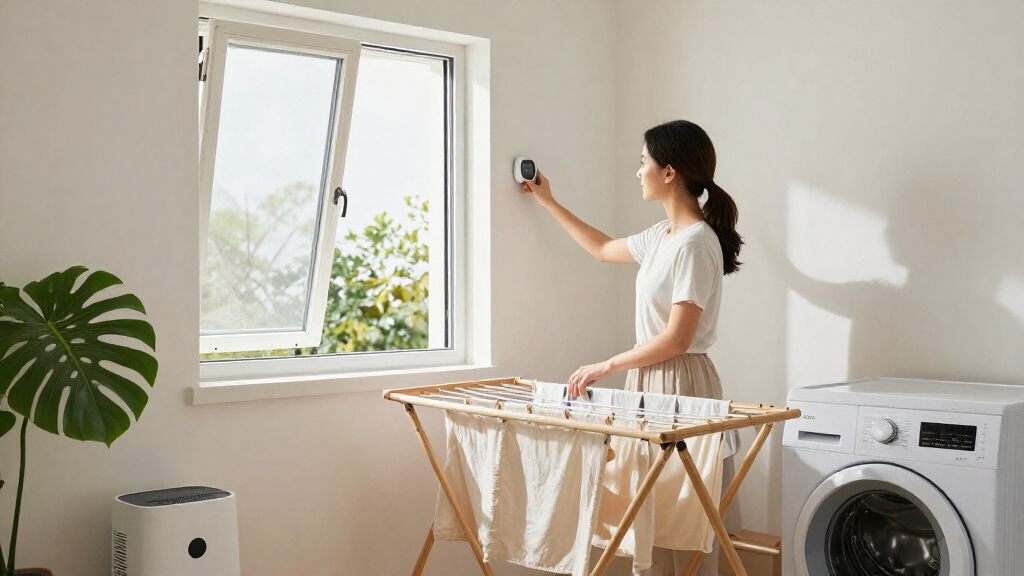
Ideal Home’s report outlines six practical habits for drying laundry indoors while limiting moisture build-up: spin clothes again, leave space on the rack, consider a heated airer, use a dehumidifier, position the rack for airflow and ventilate the room. The advice is intended to reduce the moisture released into a home, but results will depend on the room, laundry load and equipment.
Ideal Home has published six tips for drying laundry indoors while limiting moisture build-up, advising households to remove more water in the wash, leave room for air to circulate and ventilate the drying space. The guidance matters during cold or wet weather, when outdoor drying may be impractical and wet clothes can add moisture to indoor air.
The report recommends running an extra spin cycle before hanging clothes, provided the selected spin speed is suitable for the garments. Removing more water in the washing machine can shorten drying time and leave less moisture for the clothes to release indoors. The advice may be especially useful for heavier items such as towels, jeans and bedding, which can retain substantial water.
On the airer, the report advises leaving space between garments rather than packing the rack tightly. Spreading sleeves and opening shirts can help air move around fabric; turning heavier items partway through drying may also help prevent damp patches. Brabantia laundry expert Lauren Roelofs says avoiding an overcrowded rack is one of the simplest ways to help clothes dry more evenly.
The remaining recommendations focus on the equipment and the room: use a heated clothes airer if suitable, pair the rack with a dehumidifier, place the airer where air can circulate rather than directly against a wall, and ventilate the room. The report cautions that a heated airer warms laundry but does not itself remove moisture released into the room. Lakeland buying lead Catrin Parry recommends using a dehumidifier alongside an airer, particularly in older homes where condensation can be a concern.
Reducing Moisture While Clothes Dry
Wet laundry releases water into indoor air as it dries. If that moisture is not removed or dispersed, it can contribute to higher indoor humidity and condensation, the concern behind the report’s advice. Limiting the water left in clothes, allowing airflow and ventilating the space are practical ways to address different parts of the problem.
The recommendations are not a guarantee against damp or mould, which can have more than one cause. A dehumidifier may remove moisture from the room, while ventilation helps replace humid air; neither changes the need to dry clothes safely and follow equipment instructions. The article’s suggestions are household guidance, not a diagnosis or a substitute for addressing persistent damp.
Products Worth Considering

Dyson W1 PencilWash Cordless Wet and Dry Floor Cleaner with Dock

Shark HydroVac MessMaster Cordless Wet Dry Vacuum and Mop Combo, AW261

Levoit EverestAir-P Smart Air Purifier for Large Rooms
As an affiliate, we earn on qualifying purchases.
Indoor Drying in Cold Weather
The source report frames the advice around cold and wet weather, when outdoor drying may be less feasible. It notes that some households use a standard clothes airer because a tumble dryer is unavailable or costly to run. The article presents heated airers and dehumidifiers as optional equipment, alongside habits that do not require buying a new appliance.
The report includes product examples and expert comments, but the supplied material does not provide independent comparative testing for the six practices as a whole. Its central point is that water from wet washing has to go somewhere: drying time and the amount of moisture remaining indoors depend on the load, airflow, ventilation and the conditions in the room.
“One of the simplest ways to speed things up is to avoid overcrowding your drying rack. Leaving space between garments allows air to circulate, helping clothes dry more evenly.”
— Lauren Roelofs, laundry expert at Brabantia, as quoted by Ideal Home
Results Depend on Home Conditions
The supplied report does not quantify how much each measure reduces room humidity, drying time or the likelihood of mould. Its claims about drying more quickly are presented as practical advice and expert comments, not as a controlled comparison across homes. The result of using a heated airer or dehumidifier will vary with room conditions, laundry size and equipment.
The source also does not set out a ventilation schedule or identify a single best location for every home. It recommends ventilating the room and placing the airer where air can circulate, but the appropriate approach will depend on the property and weather. Persistent damp or mould may have causes beyond indoor laundry, which the article does not assess.
Practical Steps for the Next Wash
For the next indoor load, the report’s suggested sequence is to use a suitable extra spin, spread garments across the rack and position it away from walls where air can move around it. Households with a heated airer or dehumidifier can use those appliances according to their manufacturers’ instructions; ventilation remains part of the advice even when equipment is in use.
Readers should judge whether the approach is helping by watching for slow-drying clothes and condensation in the drying room. The source gives no scheduled follow-up or further announcement. Its guidance remains a set of household recommendations, with outcomes dependent on the home and the conditions during drying.
Key Questions
What are the six ways to dry laundry indoors with less moisture?
Ideal Home recommends an extra spin cycle, spacing clothes on the rack, using a heated airer, pairing the airer with a dehumidifier, positioning it for airflow and ventilating the room.
Does a heated clothes airer remove moisture from the room?
No. The report says a heated airer helps dry clothes but does not remove moisture released into the room. It recommends a dehumidifier to remove excess moisture from the air.
Why leave gaps between clothes on an airer?
Gaps allow air to circulate around garments, which Roelofs says can help clothes dry more evenly. The report also advises spreading sleeves and turning heavier items during drying.
Should you open a window while drying clothes indoors?
The report advises ventilating the room, but the supplied source does not specify how long to open a window or a schedule for doing so. Conditions in the home and outdoors will affect what is practical.
Source: idealhome.co.uk