TL;DR
A Nature Yardlife YouTube tutorial featured in Hunker shows how to turn an untreated cedar fence board into a small, roofed nesting house for mason bees. The project uses removable nesting tubes and calls for sheltered, east-facing placement; the report does not establish that the design has been tested or that it will attract bees in every yard.
A Nature Yardlife YouTube tutorial shows how to turn an untreated cedar fence board into a small, roofed nesting house for mason bees, offering gardeners a way to reuse spare lumber while adding nesting cavities to a yard. The project uses removable tubes and requires basic cutting and assembly; the source presents it as a DIY option, not as a guarantee that bees will move in.

Get home appliances delivered free with Prime
- Fast, free delivery on millions of items
- Prime Video, Amazon Music and more included
- Member-only deals all year
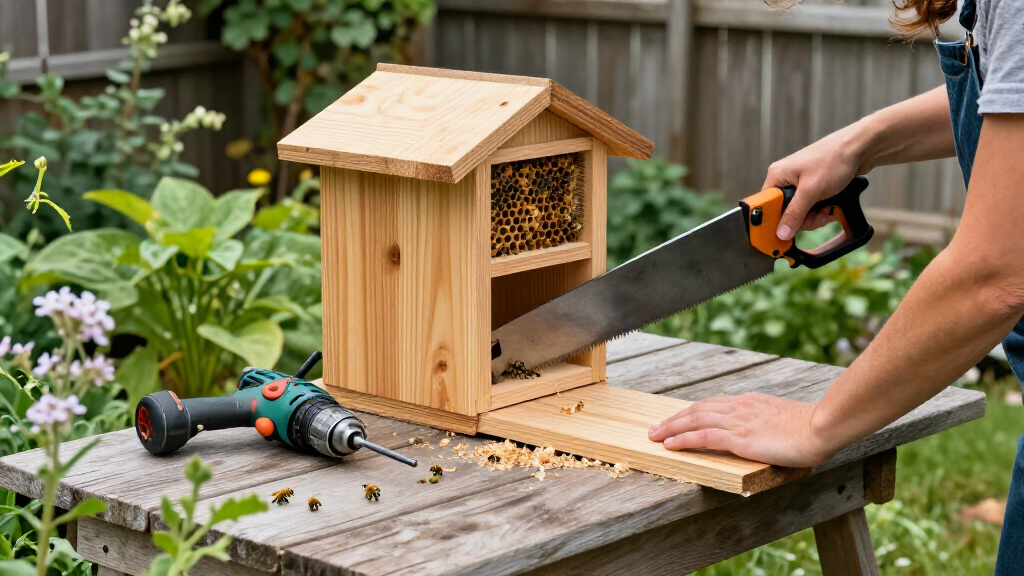
The finished design has angled side panels, an overhanging roof and an upper compartment for nesting tubes. The tutorial’s supply list includes an untreated cedar board, measuring and cutting tools, sandpaper, fasteners, mounting hardware and removable mason-bee tubes. Paper liners are optional. The report says the house’s dimensions depend on the board and recommends choosing the tubes before cutting so the compartment can be made deep enough to shelter them.
To assemble it, the maker cuts matching sides, with one side higher to create the roof angle, then cuts pieces for the back and floor. After sanding rough edges, the sides and back are fastened together and the floor and roof are attached. A scrap-wood strip on the back provides a mounting point. An optional divider can create a lower compartment; in the video, the maker uses that space for cocoons.
The tutorial recommends mounting the house firmly under cover and facing it east, where morning sun can warm it. It also advises using tubes that can be removed for seasonal maintenance. Hunker’s report warns that nesting materials reused without proper cleaning or replacement can allow parasites and disease to build up. Flowers and other bee-friendly landscaping are suggested as a source of food near the nesting site.
A Nesting Site Beyond the Flower Bed
The project focuses on a part of backyard habitat that can be overlooked: nesting space. Flowers can provide forage, but the report explains that mason bees also need cavities in which to raise their young. The house is designed to offer those cavities through tubes, rather than relying on a honeybee-style shared hive.
For readers, the practical appeal is its use of leftover lumber and a relatively short list of tools. The maintenance advice matters, too: a bee house is not simply a permanent decoration. Removable nesting materials allow seasonal inspection and replacement or cleaning, which the source identifies as a way to reduce the risk of parasites and disease accumulating.
The report does not provide measurements of bee activity, pollination effects or success rates for this particular design. Its significance is therefore as a garden DIY project with stated placement and upkeep guidance, not as evidence that one house will increase pollination or support a particular number of bees.
Products Worth Considering

Google Nest Learning Thermostat Pro Edition (4th Gen, 2024) with Temperature Sensor, Polished Silver

Philips Hue Bridge Pro Starter Kit with 4 A19 E26 Color Smart Bulbs

eufy Security SoloCam E42 4-Camera Kit, 4K Solar Security Camera System
As an affiliate, we earn on qualifying purchases.
How Mason Bees Use Nesting Tubes
The tutorial is aimed especially at solitary mason bees. Unlike honeybees, which live in colonies, these bees use existing cavities to lay eggs and raise their young, according to the Hunker report. The tubes in the wooden structure stand in for small spaces such as hollow stems that bees may seek out naturally.
This distinction shapes the design: the house is a set of individual nesting spaces, not a hive. The report says the tubes should be selected before construction because their length determines how deep the shelter needs to be. It also describes the optional lower compartment as a place the video maker uses for cocoons, while leaving that feature to the builder.
No Results Data for the Design
The supplied report does not state when the tutorial was published, give the bee house’s finished dimensions, or report whether bees occupied it. It also provides no measurements of pollination benefits, nesting capacity or survival rates. The suggestion that east-facing placement helps bees become active after a cool night is presented as guidance, but no supporting study or test of this particular house is cited.
It is also unclear how often the tubes should be cleaned or replaced, or which maintenance schedule suits local conditions. The source advises seasonal maintenance and warns against uncleaned reuse, but does not offer detailed region-specific instructions. Builders should not treat the tutorial as proof that the house will attract mason bees in every climate or garden.
Build, Mount and Maintain the House
The next steps for anyone following the tutorial are to select suitable removable tubes, measure the board around their length, and assemble the shelter with a roof that protects the entrance. The report recommends placing it firmly under cover, facing east, and pairing it with flowering plants. Those are the source’s project recommendations, not a guarantee of occupancy.
After installation, the guidance points to seasonal maintenance of the nesting materials. The supplied source does not announce a follow-up test or further reporting, so whether this particular build attracts bees or how well it performs over time remains unreported.
Key Questions
What is the fence-board bee house designed for?
It is designed to provide nesting cavities for solitary mason bees. Removable tubes sit in an upper compartment and serve as substitutes for small spaces such as hollow stems.
What materials and tools does the project call for?
The report lists an untreated cedar fence board, measuring and cutting tools, sandpaper, screws and a drill or a brad nailer with suitable fasteners, mounting hardware, and removable mason-bee tubes. Paper liners are optional.
Where does the tutorial recommend mounting the house?
It recommends a firm installation under cover and facing east, so the house receives morning sunlight. The source does not establish that this placement will work equally well in all locations.
Does the report show that the house attracts bees?
No results are provided. The report describes the design and its recommended use, but does not say whether bees occupied the featured house or give a success rate.
Why use removable nesting tubes?
Removable tubes allow seasonal maintenance. The report cautions that nesting materials reused without proper cleaning or replacement can accumulate parasites and disease, but does not specify a universal cleaning schedule.
Source: rss