TL;DR

Get home appliances delivered free with Prime
- Fast, free delivery on millions of items
- Prime Video, Amazon Music and more included
- Member-only deals all year
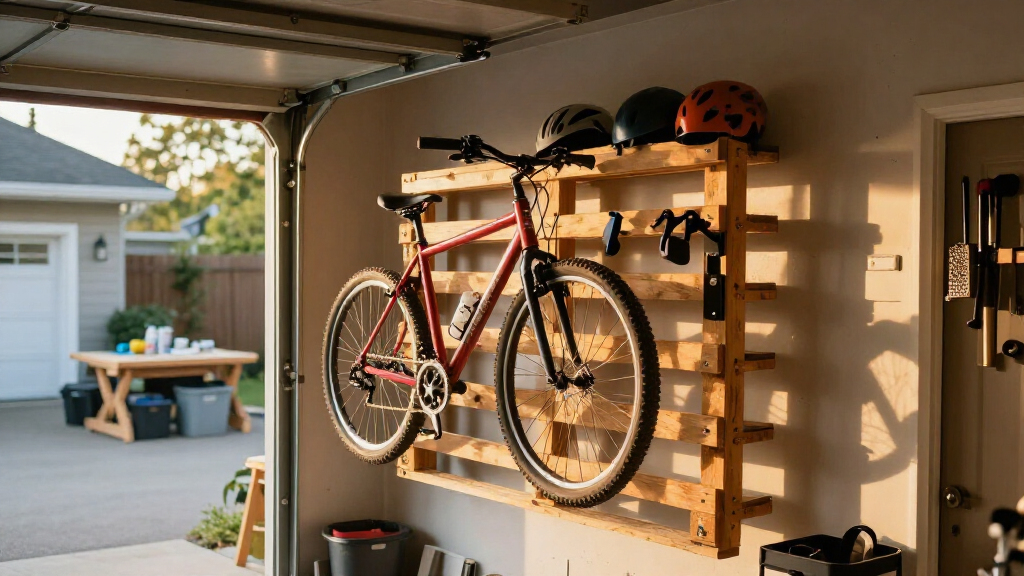
A Hunker report describes a DIY bike rack made by cutting a wood pallet lengthwise and repositioning its slats to create tire-sized parking spaces. Bikes with kickstands or training wheels can use the floor-level design; bikes without them need added vertical support and bracing.
A used wood pallet can be converted into a garage bike rack by cutting it lengthwise and repositioning its slats to hold bicycle tires, according to a project reported by Hunker. The floor-level design gives bikes individual parking spaces, while bikes without kickstands or training wheels need an added upright support to stay stable.
The project shared by YouTube user This Dad Goes to 11 starts with a pallet cut roughly in half lengthwise, close to one side of its center support. The resulting narrow section becomes the base. Slats are removed and moved so the gaps fit the tires: the report suggests leaving about a quarter-inch of clearance around a tire, allowing it to slide in without being so loose that it can tip or turn.
The rearranged slats can be fastened back onto the frame with suitable existing nails or with wood screws if nails are missing or damaged. The example used a wide pallet to hold five bikes, with slats on both sides of each tire. Capacity and spacing depend on the pallet and the bicycles. Hunker recommends sanding the finished rack to reduce the risk of splinters; sealing or finishing the wood is optional.
For bicycles that cannot stand using a kickstand or training wheels, Hunker describes a separate, reinforced configuration based on a tutorial by YouTube channel Your Own Adventure. The other pallet section is adapted into an upright tire support, attached to a strengthened base with brackets and diagonal braces. The upper slats must line up with the tire slots below. This version uses additional lumber and fasteners, so it is more involved than the floor-only rack.
A Low-Cost Way to Park Bikes
The rack offers households a way to organize bikes without buying a purpose-built storage system, provided they have a usable pallet and enough garage floor space. Individual tire slots can make it easier to return bikes to the same place and keep them from crowding other stored items. The source describes the project as a low-cost DIY option, but does not provide a measured price, tested load rating or evidence that it will fit every garage.
The main practical distinction is how each bike stands. The simple base is intended for bikes that can remain upright on their own. The reinforced upright design addresses bikes that need support, but its stability depends on sound wood, secure connections and suitable spacing. The project is a storage idea, not a tested commercial rack or a substitute for checking that bicycles are stable before leaving them unattended.
Products Worth Considering

Roborock Q7 M5+ Robot Vacuum and Mop

Ring Battery Doorbell (1st Gen), 2-Pack, Satin Nickel

LG C2 Series 65-Inch OLED evo 4K Smart TV (OLED65C2PUA, 2022)
As an affiliate, we earn on qualifying purchases.
How the Pallet Design Works
The design uses the pallet’s frame as a long floor base and its deck boards as adjustable dividers. Moving those boards changes the tire openings to suit the bikes being stored. The source says the remaining pallet section may be reused for the upright option, reducing waste, though that piece must be rebuilt and braced rather than simply stood up as-is.
The reported floor model is compatible with bikes that have a kickstand or training wheels. For bikes without those features, the upright assembly needs a matching set of tire openings and added reinforcement. Hunker also suggests labeling spaces with family members’ names as a way to make returning bikes to their assigned slots easier.
“The openings between slats might be too large to support your average bike tire.”
— Hunker, summarizing the floor-level project
Fit and Stability Depend on the Build
The report does not specify the pallet’s dimensions, wood condition, maximum load, or a tested number of bikes for all builds. Its five-bike example came from one extra-wide pallet; other pallets may hold fewer cycles or require different slot spacing. The source also does not establish that reclaimed pallets are free from chemical treatment or contamination, so the history and condition of the wood are not confirmed.
There is no independent stability test or safety certification for either configuration. In particular, the upright version’s performance will depend on the strength of its lumber, brackets, fasteners and diagonal supports. Builders should check the pallet for cracks, loose boards, protruding nails and other damage, and should not assume a finished rack is safe for heavy or unstable bikes without inspecting its connections.
Check the Rack Before Use
The source describes a DIY project rather than a product launch or formal testing program, and it lists no scheduled follow-up. Anyone adapting the design would need to measure their bicycles and pallet, set the tire gaps, and check that every slat and connection is secure before loading bikes. For bikes that cannot stand independently, the next step is to build and brace the upright support, then confirm the assembly does not wobble under the intended use.
Key Questions
Can an ordinary pallet hold several bicycles?
The Hunker report describes a wide pallet configured for five bikes, but capacity varies with pallet size, bike dimensions and slot spacing. The source does not give a universal capacity rating.
Which bicycles can use the floor-level version?
The simple base is intended for bikes with a kickstand or training wheels. Bikes that cannot stand on their own need an upright support and additional bracing, according to the report.
How wide should the tire openings be?
Hunker suggests roughly a quarter-inch of clearance around the tire so it can be inserted without excessive looseness. Measure the actual tires and adjust the slats to suit.
Does the pallet need to be sealed?
No finish is specified as required. The report says sealing is optional, while recommending that the rack be sanded to reduce splinters, especially if the pallet is in rough condition.
Is this a tested or certified bike rack?
The source presents it as a DIY project and provides no independent load test or safety certification. Builders should inspect the wood and fasteners and check the rack’s stability before use.
Source: hunker.com