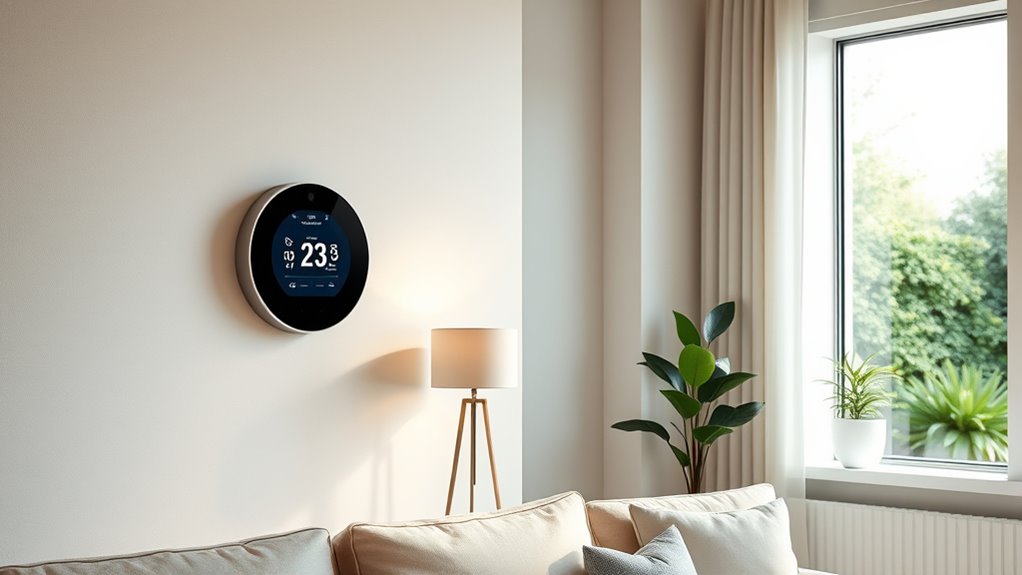

Smart thermostats help you cut energy use by optimizing heating and cooling, which lowers your household’s carbon footprint and reduces greenhouse gas emissions. They learn your schedule and adjust based on weather, so you waste less energy. These devices also support renewable energy sources and ease strain on power grids, contributing to a healthier environment. If you want to discover how smart thermostats can make your home more eco-friendly, keep exploring the benefits they offer.

Get home appliances delivered free with Prime
- Fast, free delivery on millions of items
- Prime Video, Amazon Music and more included
- Member-only deals all year
Key Takeaways
- Smart thermostats reduce energy consumption by optimizing heating and cooling schedules, leading to lower household carbon emissions.
- They decrease reliance on fossil fuel-powered energy sources, thereby reducing greenhouse gas emissions.
- Enhanced energy efficiency eases grid strain and supports renewable energy integration, promoting a sustainable energy system.
- Features that encourage mindful energy use help foster sustainable habits, decreasing overall household energy demand.
- Lower energy use from smart thermostats contributes to environmental conservation and helps combat climate change.
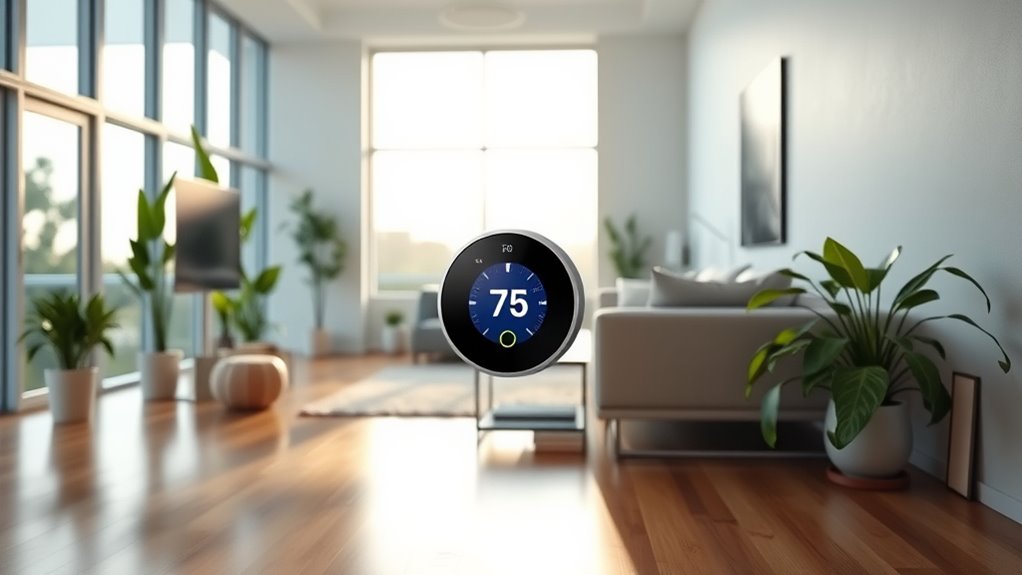
Smart thermostats are transforming how we manage energy in our homes, offering a convenient way to reduce waste and lower utility bills. When you install one, you’re taking a step toward more efficient energy use, which directly impacts your carbon footprint. These devices learn your schedule, preferences, and even adjust settings based on real-time weather data, ensuring your heating and cooling systems operate only when necessary. As a result, you experience considerable energy savings because your home isn’t being heated or cooled unnecessarily. Over time, these savings add up, making your household more environmentally friendly while also saving you money.
By optimizing your home’s temperature, smart thermostats help cut down on energy consumption, which is a key factor in reducing greenhouse gas emissions. Traditional thermostats often rely on fixed schedules or manual adjustments, leading to wasted energy when heating or cooling is applied when no one is home or during overnight hours. A smart thermostat detects these gaps and adjusts accordingly, ensuring your system isn’t running longer than needed. This precise control means you use less energy, which benefits the environment by lowering the demand on power plants—many of which still burn fossil fuels. Consequently, your household’s overall carbon footprint diminishes, helping combat climate change.
Smart thermostats reduce energy use and emissions by adjusting heating and cooling when no one is home.
The environmental benefits extend beyond just reducing emissions. Because smart thermostats promote energy efficiency, they lessen the strain on electrical grids, especially during peak usage times. This can lead to fewer power plant emissions and a more stable energy supply. Plus, many smart thermostats are compatible with renewable energy sources, allowing you to integrate solar or wind power systems more effectively into your home. When your home uses energy more efficiently, you contribute less to the pollution generated by energy production, making your lifestyle more sustainable. Additionally, AI-driven platforms are increasingly used to optimize energy consumption further, enhancing these benefits.
In addition, some smart thermostats include features that encourage sustainable habits. For example, they send reminders to adjust settings or suggest energy-saving tips based on your usage patterns. This awareness helps you make conscious decisions about your energy consumption, further reducing your environmental impact. Over time, these small adjustments can markedly decrease your household’s overall energy demand, leading to fewer emissions and a smaller carbon footprint.
Ultimately, investing in a smart thermostat empowers you to take control of your home’s energy use. It’s not just about saving money on utility bills but also about making a meaningful contribution to environmental conservation. By reducing unnecessary energy consumption, you help lower greenhouse gas emissions, fight climate change, and support a healthier planet for future generations. Smart thermostats are a simple yet powerful tool for making your home more efficient and environmentally responsible.
smart thermostat for energy savings
As an affiliate, we earn on qualifying purchases.
As an affiliate, we earn on qualifying purchases.
Frequently Asked Questions
Do Smart Thermostats Contain Hazardous Materials?
Smart thermostats do contain some hazardous components, including toxic materials like lead and mercury in certain parts. These materials are used in small quantities but can pose environmental and health risks if not properly recycled. You should handle and dispose of smart thermostats carefully, ensuring they go to certified e-waste facilities. Proper disposal helps prevent the release of toxic materials into the environment, protecting both ecosystems and human health.
How Do Smart Thermostats Affect Local Energy Grids?
Coincidences often reveal how your smart thermostat influences local energy grids. By optimizing your energy consumption patterns, it reduces peak load and helps balance grid demand response. When many users do the same, it smooths out demand spikes, preventing overloads. This coordination enhances grid stability, lowers energy costs, and promotes efficient resource use. So, your smart thermostat doesn’t just save you money—it actively supports a healthier, more resilient energy infrastructure.
Are There Privacy Concerns With Smart Thermostat Data?
Yes, there are privacy risks with smart thermostat data. You might worry about data security breaches that expose your personal habits and routines. Manufacturers collect detailed information to optimize energy use, but if not properly protected, this data could be accessed by hackers or used without your consent. To stay safe, guarantee your device has strong security features, and stay informed about how your data is being stored and shared.
What Is the Lifespan of a Typical Smart Thermostat?
A typical smart thermostat lasts about 8 to 12 years, depending on manufacturing durability and technological obsolescence. For example, you might upgrade your device after seven years because new features emerge or it stops receiving updates. To maximize lifespan, choose models from reputable brands known for quality, and consider future-proofing against obsolescence by selecting thermostats with regular software updates, ensuring your investment remains functional longer.
Can Smart Thermostats Be Recycled Sustainably?
Yes, smart thermostats can be recycled sustainably through proper end-of-life recycling and material recovery programs. When you recycle your device responsibly, valuable materials like metals and plastics are recovered and reused, reducing waste and environmental impact. Always check if your local recycling centers accept electronic waste and follow manufacturer guidelines for safe disposal. This helps minimize landfill contributions and promotes a circular economy for electronic components.
As an affiliate, we earn on qualifying purchases.
Conclusion
By switching to smart thermostats, you’re not just saving a few bucks—you’re making a massive impact on the environment. Every adjustment you make helps reduce energy waste, cutting down carbon emissions and fighting climate change. Imagine the collective power of millions like you taking action—it’s like turning a tiny pebble into an unstoppable avalanche. So, embrace smart technology and become a hero for the planet—your small change can create a world of difference.
smart thermostat compatible with solar panels
As an affiliate, we earn on qualifying purchases.
As an affiliate, we earn on qualifying purchases.
As an affiliate, we earn on qualifying purchases.
Fall yard work Picks
leaf blowers
As an affiliate, we earn on qualifying purchases.