
Many buyers believe all HEPA filters are equally effective, but that’s a common misconception. Not all HEPA filters meet strict standards, and some marketed as “HEPA-like” may only capture fewer particles. Higher-quality filters last longer and remove more pollutants, but others may let harmful particles slip through or degrade quickly. To make sure you’re getting the right protection, it’s important to understand these differences—there’s more to learn if you want truly cleaner air.

Get home appliances delivered free — and shop member deals
- Fast, free delivery on millions of items
- Access to Prime Big Deal Days deals on October 6–7
- Prime Video, Amazon Music and more included
Key Takeaways
- Many believe all HEPA filters are equally effective, but quality and standards vary significantly.
- Marketing terms like “HEPA-type” can mislead buyers into thinking filters meet strict standards.
- Not all filters labeled as HEPA meet government standards, affecting filtration performance.
- Cheaper HEPA filters may lose efficiency faster and require more frequent replacement.
- Understanding certification, construction, and maintenance is essential for selecting genuinely effective HEPA filters.

Many air purifier buyers are confused by the widespread myth that all HEPA filters are created equal. This misconception leads many to believe that any HEPA filter will deliver the same level of air filtration and clean indoor air effectively. In reality, not all HEPA filters are the same, and understanding the differences is vital for making an informed choice. Consumer misconceptions like this can cause people to overlook important factors such as filter quality, lifespan, and specific filtration capabilities. When shopping for an air purifier, you might assume that a HEPA filter guarantees the highest air quality, but that’s not always the case.
Not all HEPA filters are equal; understanding differences ensures better air quality choices.
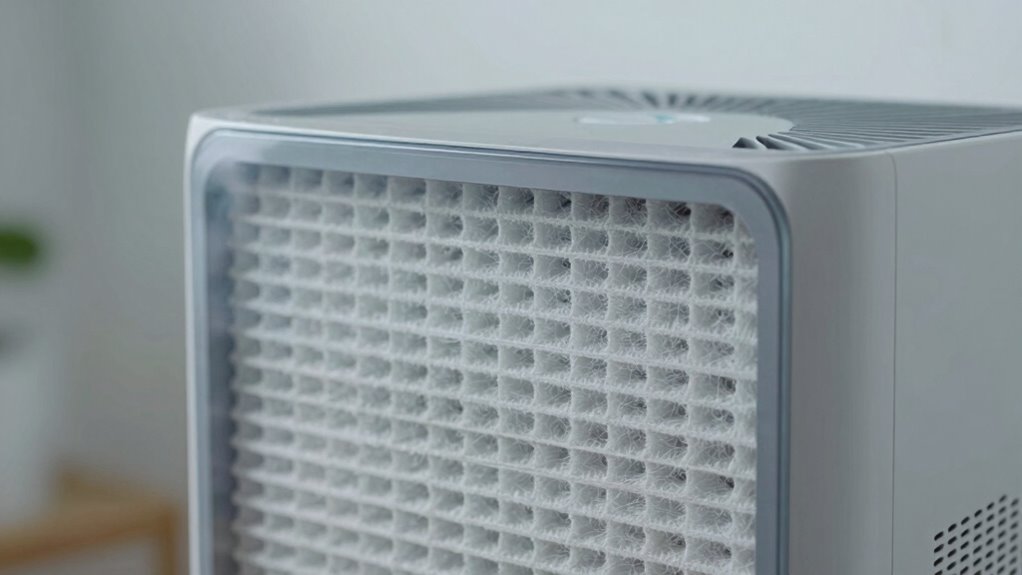
The truth is, HEPA filters come in different grades and standards. True HEPA filters, which meet strict government standards, can capture at least 99.97% of particles as small as 0.3 microns. This includes pollen, dust mites, pet dander, and smoke particles, making them highly effective for improving air quality. However, some products market “HEPA-type” or “HEPA-like” filters, which may not meet these exact standards. These alternatives often have lower efficiency and may not filter out tiny particles as effectively. As a consumer, it’s easy to be misled by marketing claims that sound similar but don’t deliver the same level of air filtration.
Another factor to consider is the quality and construction of the HEPA filter. Cheaper filters may lose their effectiveness sooner or allow some pollutants to pass through. Higher-quality filters tend to last longer and maintain their filtration efficiency over time, but they can be more expensive. You also need to pay attention to the filter’s maintenance and replacement schedule, as neglecting these can compromise air filtration and defeat the purpose of having an air purifier in the first place. Being aware of filter standards and grades can help ensure you select a product that truly meets your needs. Additionally, understanding filtration efficiency can help you choose a device that provides the level of air purification required for your environment. Moreover, choosing filters with proper certification ensures that you are investing in a product that genuinely meets industry standards. Recognizing the importance of filter lifespan can also help you plan for ongoing maintenance and replacement costs. Additionally, researching filter materials can give insights into how well a filter will perform over time and under different conditions.
Understanding consumer misconceptions about HEPA filters helps you make better decisions. Don’t assume that all filters labeled as HEPA are equal; look for products that specify they meet the U.S. Department of Energy or other strict standards. Check reviews and product specifications carefully, and consider your specific needs—whether it’s allergy relief, asthma management, or general air quality improvement. By being aware of the nuances in air filtration technology, you can select an air purifier that truly enhances your indoor environment and avoids falling for marketing myths that oversimplify what HEPA filters can do.
As an affiliate, we earn on qualifying purchases.
Frequently Asked Questions
Do All Air Purifiers With HEPA Filters Meet the Same Standards?
Not all air purifiers with HEPA filters meet the same standards. You should check their certifications, like those from the FDA or EPA, to guarantee quality. The filter material quality varies, affecting filtration efficiency. Some filters are true HEPA, capturing 99.97% of particles, while others are only HEPA-like. Always verify certifications and filter specifications to get the best air purification for your needs.
Can HEPA Filters Remove Gases and Odors Effectively?
Did you know that HEPA filters trap 99.97% of particles but don’t target gases or odors? They aren’t effective for removing gases and odors because chemical filtration and odor absorption require activated carbon or specialized media. So, if you want to eliminate smells or airborne chemicals, choose an air purifier with activated carbon filters to make certain those pollutants are properly addressed.
How Often Should HEPA Filters Be Replaced for Optimal Performance?
You should replace your HEPA filter every 6 to 12 months for peak performance, depending on your air quality and filter lifespan. Follow the replacement guidelines provided by the manufacturer, as they consider factors like usage and environment. Regularly check the filter’s condition; if it looks dirty or clogged sooner, replace it earlier. Doing so guarantees your air purifier continues to effectively trap particles and maintain clean indoor air.
Are HEPA Filters Effective Against Viruses and Bacteria?
Yes, HEPA filter technology effectively captures viruses and bacteria, thanks to its high virus capture efficiency. You can trust that a true HEPA filter traps particles as small as 0.3 microns, including many airborne pathogens. While it doesn’t eliminate all germs, it considerably reduces their presence in your environment. To maintain maximum effectiveness, replace filters regularly according to the manufacturer’s recommendations, ensuring consistent virus and bacteria removal.
Do HEPA Filters Work Equally Well in Large and Small Rooms?
HEPA filters work well in both large and small rooms, but their effectiveness depends on the filter material and airflow rate. In larger spaces, you need a purifier with a higher airflow rate to circulate air efficiently, ensuring the filter captures airborne particles effectively. Smaller rooms require less airflow, so a standard HEPA filter performs well. Always choose a purifier suited to your room size for maximum performance.
As an affiliate, we earn on qualifying purchases.
Conclusion
Don’t let the HEPA myth mislead you into overspending or settling for less effective air purifiers. Remember, HEPA filters are designed to trap 99.97% of particles as small as 0.3 microns, making them highly effective. In fact, studies show that HEPA filters can remove up to 85% of airborne allergens. By understanding the truth behind this myth, you can confidently choose an air purifier that truly improves your indoor air quality without unnecessary extra costs.
high efficiency air purifier filter
As an affiliate, we earn on qualifying purchases.
As an affiliate, we earn on qualifying purchases.
HEPA filter replacement for air purifier
As an affiliate, we earn on qualifying purchases.
As an affiliate, we earn on qualifying purchases.
Fall yard work Picks
leaf blowers
As an affiliate, we earn on qualifying purchases.