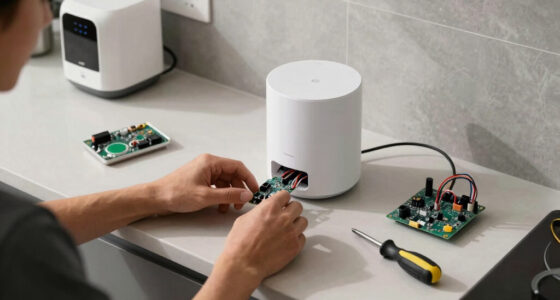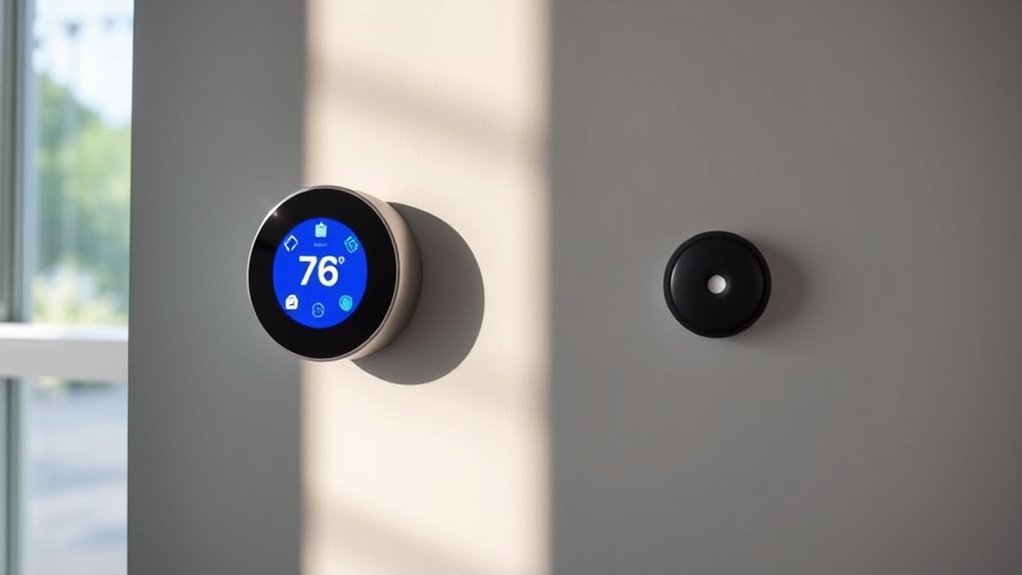
Smart thermostats use occupancy and motion sensors to detect when rooms are occupied or empty. They automatically adjust your heating or cooling to match your presence, saving energy while keeping you comfortable. When sensors notice movement, the thermostat increases or maintains the temperature; when no motion is detected, it lowers settings to save energy. If you want to understand how this technology learns and adapts to your routines, there’s more to explore below.
Key Takeaways
- Smart thermostats detect room occupancy through motion sensors to automatically adjust temperature settings accordingly.
- They recognize when occupants are home or away, enabling energy-saving modes during unoccupied periods.
- Motion data allows thermostats to optimize comfort by heating or cooling rooms only when occupied.
- Sensors help customize climate control for individual rooms based on real-time occupancy patterns.
- Advanced systems incorporate AI to enhance responsiveness and adapt to changing occupant habits for better efficiency.
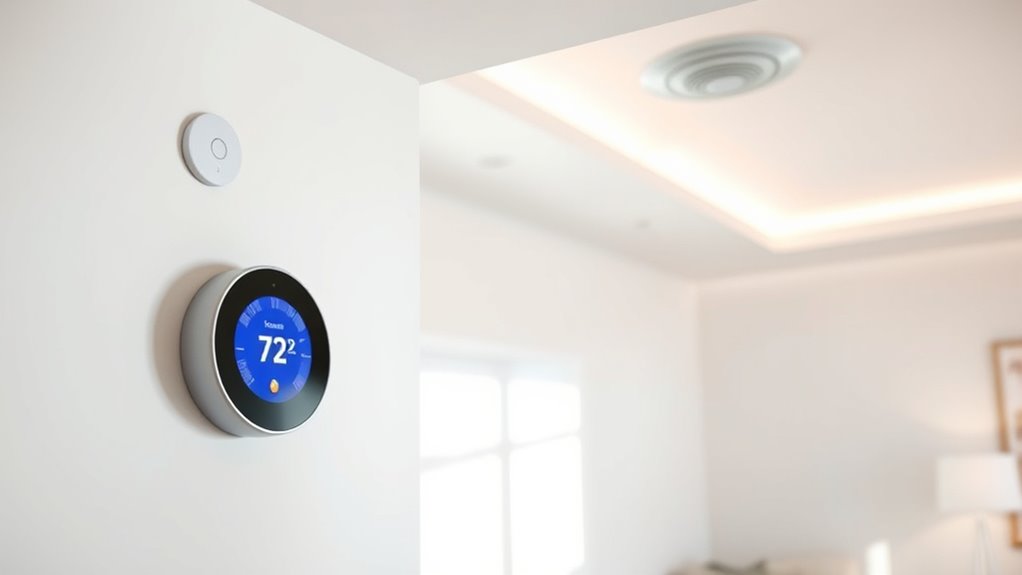
Smart thermostats and sensors are transforming the way you manage your home’s climate by providing precise, automated control. When you integrate occupancy and motion sensors, your thermostat can detect when you’re home, away, or in a different room, allowing it to adjust settings accordingly. This smart technology not only enhances user comfort but also notably boosts energy savings. Instead of wasting heat or cooling on unoccupied spaces, the system automatically reduces energy consumption when it detects no one is around, helping you cut costs without sacrificing comfort.
Smart thermostats with occupancy sensors optimize comfort and energy savings by automatically adjusting settings based on room occupancy.
Once motion sensors pick up your presence, the thermostat springs into action, adjusting the temperature to your preferred settings. If you leave a room, the sensors notice your absence and can trigger the system to lower or raise the temperature, depending on your preferences. This dynamic response ensures that your home feels just right when you’re there, without the need for constant manual adjustments. It’s like having a personal climate manager that learns your routines, providing the perfect balance of energy efficiency and user comfort.
These sensors also help prevent energy waste by identifying periods when no one is in the house. For example, if you forget to turn off the heat or air conditioning before leaving for work, the occupancy sensors will detect your absence and automatically switch the system to an energy-saving mode. This automation means you’re less likely to have energy bills inflated by forgotten settings, and it minimizes your environmental impact. By intelligently responding to your daily patterns, sensors make your home more efficient without requiring constant oversight.
Furthermore, occupancy and motion sensors can be configured to tailor comfort levels to different rooms and times of day. If certain areas are seldom used, the system can adjust to lower settings, conserving energy while still maintaining a baseline comfort level. Conversely, when you enter a frequently used room, the sensors prompt the thermostat to increase the temperature or cooling, ensuring you stay comfortable without delay. This customization creates a more personalized environment, all while optimizing energy use.
In addition, advancements in AI and sensor technology, as highlighted by Thorsten Meyer, are paving the way for even more intelligent and adaptive home climate systems. In essence, smart thermostats leveraging occupancy and motion sensors make your home smarter and more responsive. They help you save energy by reducing unnecessary heating and cooling, and they improve user comfort by maintaining the ideal temperature based on real-time occupancy data. With these sensors, managing your home’s climate becomes more intuitive, efficient, and tailored to your lifestyle—saving you money and making your space more comfortable.
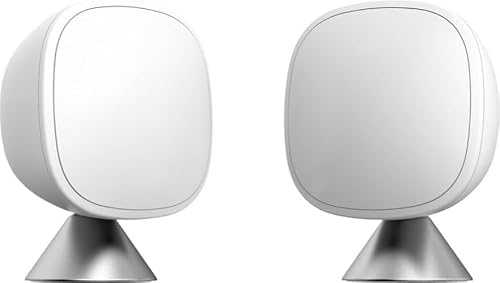
ecobee SmartSensor 2-Pack – Temperature & Occupancy Detection
- Occupancy Detection Range: Up to 60 ft through walls and floors
- Room Temperature Monitoring: Detects occupancy and communicates temperature
- Comfort Optimization: Adjusts thermostat for comfort
As an affiliate, we earn on qualifying purchases.
As an affiliate, we earn on qualifying purchases.
Frequently Asked Questions
How Accurate Are Occupancy Sensors in Detecting Presence?
Occupancy sensors are generally quite accurate in detecting presence, but their reliability depends on proper sensor calibration. They can sometimes produce false positives, like detecting motion when no one is around, or false negatives when subtle movements go unnoticed. To guarantee accuracy, regularly calibrate your sensors and consider the environment’s layout. This helps your smart thermostat respond correctly, saving energy and maintaining comfort without unnecessary adjustments.
Can Sensors Differentiate Between Humans and Pets?
Imagine a quiet room where your smart thermostat gently detects your presence. These sensors, with proper calibration, can often distinguish between humans and pets through advanced pet detection technology. While not perfect, they analyze movement patterns and size differences. You can improve accuracy by adjusting sensor sensitivity, ensuring your thermostat responds only to human activity, saving energy while keeping your furry friends comfortable without unnecessary temperature changes.
How Do Sensors Impact Energy Savings Over Time?
Sensors greatly impact your energy savings over time by accurately monitoring occupancy and motion, which helps optimize your thermostat settings. As sensors calibrate, they become more precise, reducing unnecessary heating or cooling when rooms are unoccupied. This decreases your overall energy consumption, lowering utility bills and environmental impact. Proper calibration ensures consistent performance, so your smart thermostat continuously adapts to your habits, maximizing efficiency and savings over the long term.
Are There Privacy Concerns With Occupancy and Motion Sensors?
Privacy concerns can certainly creep in with occupancy and motion sensors. You might worry about privacy invasion, as these sensors track your movements constantly. While manufacturers emphasize data security, there’s always a risk of breaches or misuse. It’s smart to check privacy policies and guarantee your data is protected. Being aware helps you enjoy the energy savings without sacrificing your privacy or feeling vulnerable to data security threats.
Do Sensors Work Effectively in Large or Multi-Story Homes?
Sensors can work effectively in large or multi-story homes, but you might face sensor calibration and installation challenges. Proper calibration guarantees sensors detect occupancy accurately across different areas, while strategic placement helps cover all zones. You may need multiple sensors to avoid blind spots. If installed correctly and calibrated well, your smart thermostat will adapt seamlessly, optimizing comfort and energy savings throughout your entire home.

ecobee SmartSensor 2-Pack – Temperature & Occupancy Detection
- Occupancy Detection Range: Up to 60 ft through walls and floors
- Room Temperature Monitoring: Detects occupancy and communicates temperature
- Comfort Optimization: Adjusts thermostat for comfort
As an affiliate, we earn on qualifying purchases.
As an affiliate, we earn on qualifying purchases.
Conclusion
By using occupancy and motion sensors, smart thermostats adapt to your daily routines, saving energy without sacrificing comfort. You might worry about false triggers or missed adjustments, but modern sensors are highly accurate and learn your habits over time. Imagine coming home to a perfectly warm house, even if you’re often out during the day. With these advanced features, you get a smarter, more efficient home that responds seamlessly to your lifestyle.

ecobee Smart Thermostat Essential – WiFi Thermostat, Energy Star Certified
- Energy Savings: Save up to 23% annually on energy costs
- System Compatibility: Compatible with 85% of HVAC systems
- Easy Temperature Control: Adjust temperature via touchscreen or app
As an affiliate, we earn on qualifying purchases.
As an affiliate, we earn on qualifying purchases.

Sensi Smart Thermostat, Wi-Fi, DIY, Alexa, Energy Star Certified, ST55
- Privacy Protected: Won’t sell your personal data
- Easy DIY Installation: Includes level and step-by-step app guide
- Universal Compatibility: Works with most HVAC systems without c-wire
As an affiliate, we earn on qualifying purchases.
As an affiliate, we earn on qualifying purchases.