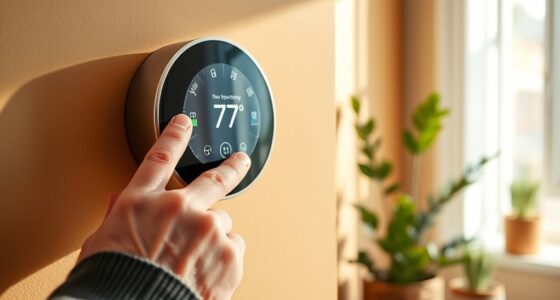
Understanding your HVAC system type is key to choosing the right thermostat. Single-stage systems work well with basic thermostats, while multi-stage or variable speed systems need advanced models that can manage multiple functions. Compatibility guarantees your thermostat communicates properly with your equipment, optimizing comfort and efficiency. If you want to learn more about how different systems work and how to select the best thermostat for yours, there’s more valuable details ahead.
Open a free Amazon Business account
Business pricing, bulk buying and tax-exempt orders.
As an affiliate, we earn on qualifying purchases.
Key Takeaways
- Different HVAC system types (single-stage, multi-stage, variable speed) require compatible thermostats to operate efficiently.
- Smart thermostats offer advanced features but must match your HVAC system’s specifications for full functionality.
- Compatibility ensures proper communication between thermostats, zone dampers, and controllers in zoning systems.
- Verifying manufacturer compatibility lists or tools helps select thermostats suited for your specific HVAC setup.
- Proper thermostat-system matching maximizes energy savings, home comfort, and system longevity.

Choosing the right HVAC system is essential for comfort and efficiency, but it’s just as important to guarantee your thermostat works with your specific setup. Your HVAC system’s compatibility with your thermostat directly impacts how well your home stays comfortable and how much energy you consume. For instance, if you have a zoning system, where different areas of your house are heated or cooled independently, you’ll need a thermostat designed to coordinate with that setup. Zoning systems often require specialized thermostats that can communicate with multiple zones, allowing you to set different temperatures for each area. Without the proper thermostat, your zoning system might not function correctly, leading to uneven temperatures or wasted energy.
Choosing the right thermostat ensures your zoning system functions correctly and maintains optimal home comfort.
Smart thermostats have revolutionized home climate control by offering advanced features like remote access, learning your schedule, and adjusting settings automatically. When considering a smart thermostat, you must check if it’s compatible with your HVAC system type. Some older systems or specific configurations may not support smart features, requiring you to upgrade your system or opt for a different thermostat. Modern smart thermostats often integrate seamlessly with various HVAC types, including systems with zoning, multi-stage heating and cooling, or variable speed units. This compatibility ensures you can maximize energy savings and maintain precise comfort levels throughout your home.
Additionally, understanding your HVAC system’s type helps determine what kind of thermostat you need. For example, single-stage systems are straightforward and work well with basic thermostats, while multi-stage systems benefit from thermostats that can handle multiple heating or cooling stages. Variable speed or inverter systems often require advanced thermostats that can communicate with the system’s variable output, helping optimize performance and efficiency.
Before purchasing a new thermostat, verify its compatibility with your system. Many manufacturers provide compatibility checkers or lists specifying which HVAC setups their thermostats support. If you have a zoning system, ensure the thermostat can manage multiple zones and communicate with zone dampers or controllers. For smart thermostats, confirm that your Wi-Fi network and home automation setup support the device’s requirements. Proper compatibility not only guarantees your system runs smoothly but also unlocks features like energy reports, scheduling, and remote adjustments, which enhance your overall comfort and savings.
HVAC compatible smart thermostat
As an affiliate, we earn on qualifying purchases.
As an affiliate, we earn on qualifying purchases.
Frequently Asked Questions
Can I Upgrade My Thermostat Without Changing My HVAC System?
Yes, you can upgrade your thermostat without changing your HVAC system. Thermostat installation is usually straightforward and doesn’t require HVAC upgrades, as long as your new thermostat is compatible with your existing system. Check your current thermostat’s wiring and compatibility. Upgrading your thermostat can improve efficiency and add smart features, making it a simple way to enhance comfort without costly system changes.
How Do I Know if My Thermostat Is Compatible With a New HVAC System?
You can determine if your thermostat is compatible with a new HVAC system by checking the thermostat wiring and matching it to your new system’s requirements. Look for labels or color codes on the wiring and compare them with the manufacturer’s compatibility charts. Also, verify that your thermostat supports your HVAC system type—whether it’s a heat pump, gas furnace, or electric. If unsure, consult your HVAC or thermostat manual for compatibility details.
Are Smart Thermostats Suitable for All HVAC Types?
Smart thermostats are like Swiss Army knives—they’re versatile but not universal. They work well with most HVAC systems, especially if they’re wireless compatible, but some older or specialized setups might need extra wiring or adapters. You’ll enjoy energy savings and better control, but double-check your system’s compatibility first. If your HVAC is compatible, a smart thermostat can make your home more efficient and convenient.
What Are the Signs My Thermostat Is Incompatible With My HVAC System?
If your thermostat shows no response, or if your heating or cooling doesn’t turn on, it’s likely incompatible. Compatibility issues often stem from incorrect thermostat wiring or missing wiring connections, which prevent proper communication with your HVAC system. You might also notice error messages or your thermostat repeatedly disconnects. To confirm, check your system’s wiring and compare it with your thermostat’s compatibility requirements, or consult a professional to avoid potential wiring mistakes.
Do Different HVAC Systems Require Different Wiring for Thermostats?
Did you know that incorrect wiring causes about 10% of thermostat compatibility issues? Different HVAC systems often require specific wiring standards, so yes, they do require different wiring for thermostats. You must verify your wiring matches your system’s specifications to avoid compatibility issues. Always check your system’s manual or consult an HVAC professional to confirm wiring standards before installing or upgrading a thermostat. Proper wiring ensures efficient, safe operation.
As an affiliate, we earn on qualifying purchases.
Conclusion
Understanding different HVAC system types and their thermostat compatibility is like assembling a puzzle—you need the right pieces to fit perfectly. When you choose the correct thermostat for your system, it’s like giving your home a well-orchestrated symphony of comfort and efficiency. So, take your time to learn about your system, and you’ll enjoy seamless climate control, just like a smooth ride on a perfectly paved road. Your comfort is worth the effort!
As an affiliate, we earn on qualifying purchases.
As an affiliate, we earn on qualifying purchases.
NFL season / tailgating Picks
team gear
As an affiliate, we earn on qualifying purchases.