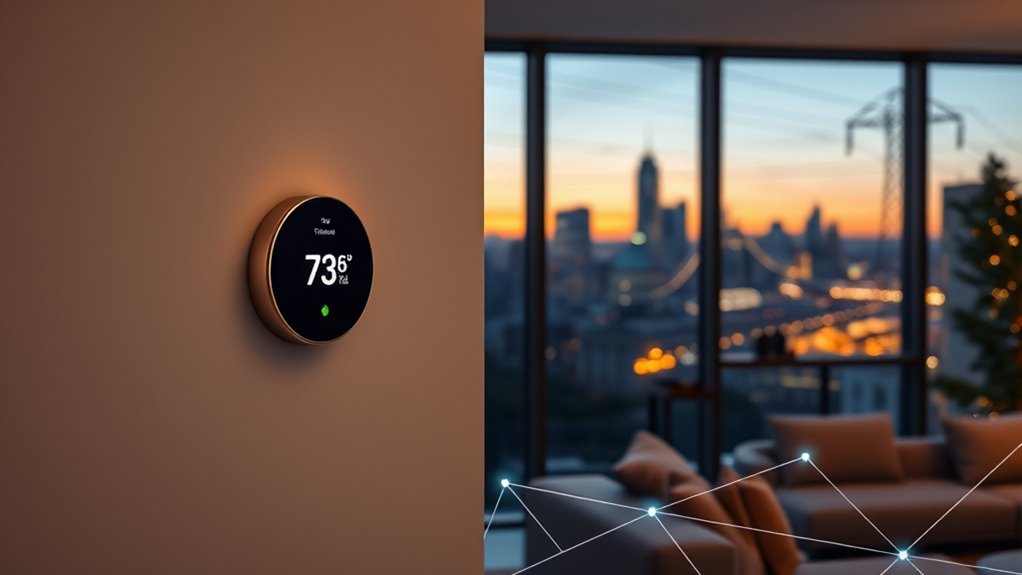

Smart thermostats help reduce utility grid demand by automatically adjusting your home’s heating and cooling based on your schedules, preferences, and real-time data. They spread energy use more evenly throughout the day, preventing peak overloads and lowering energy costs. By participating in demand response programs, they can temporarily shift your energy use during high-demand times, easing stress on the grid. Keep exploring to see how these devices make a real difference for both your home and the environment.
Open a free Amazon Business account
Business pricing, bulk buying and tax-exempt orders.
As an affiliate, we earn on qualifying purchases.
Key Takeaways
- Smart thermostats help balance energy demand by adjusting usage during peak periods, preventing grid overloads.
- They enable demand response programs, allowing utilities to reduce load during high-demand times through user participation.
- Widespread adoption spreads energy consumption more evenly, smoothing out peak demand and enhancing grid stability.
- Advanced features like occupancy sensing and weather forecasting optimize energy use, reducing unnecessary strain on the grid.
- Lower overall energy consumption from smart thermostat use decreases reliance on fossil fuel-powered peaking plants, supporting sustainable grid management.

Have you ever wondered how smart thermostats can help balance the demand on our utility grids? These devices are changing the way we manage energy consumption while keeping your home comfortable. By intelligently adjusting heating and cooling based on your schedule, preferences, and real-time data, smart thermostats can greatly reduce energy usage. This not only results in lower utility bills for you but also contributes to a more stable and efficient grid system. When many homes and buildings adopt these devices, the collective impact can be substantial, helping to flatten peak demand periods and prevent grid overloads.
One of the biggest advantages of smart thermostats is their ability to deliver energy savings without sacrificing user comfort. Instead of manually adjusting your thermostat throughout the day, these devices learn your routines and preferences, optimizing settings automatically. For example, they might lower the temperature slightly during your usual work hours and then ramp up cooling just before you return home. This ensures you stay comfortable while minimizing unnecessary energy use. Additionally, many smart thermostats can be controlled remotely via smartphone apps, giving you the power to tweak your settings if plans change, further enhancing your control over energy consumption.
Smart thermostats learn your routines to save energy without compromising comfort.
Smart thermostats also leverage advanced features like occupancy sensors and weather forecasting to fine-tune heating and cooling. By detecting when you’re home or away, they can adjust settings accordingly, avoiding waste when the house is empty. Weather data allows them to anticipate temperature changes and adapt proactively rather than reactively, maintaining comfort more efficiently. These smart adjustments spread out energy demand more evenly across the day, which helps utilities manage load more effectively and reduces the risk of blackouts or brownouts during peak times.
Another way smart thermostats influence grid demand is through their integration with utility programs and demand response initiatives. Utilities often offer incentives for consumers to participate in such programs, where your thermostat might temporarily adjust its settings during peak periods in exchange for discounts or rebates. This coordinated effort helps balance grid load, preventing stress on infrastructure and reducing reliance on fossil fuel peaking plants. As a user, you benefit from lower energy costs and a more reliable power supply, all while contributing to a more sustainable energy future. Additionally, the use of sustainable materials in smart devices supports broader environmental goals and eco-conscious consumption.
smart thermostat with occupancy sensors
As an affiliate, we earn on qualifying purchases.
As an affiliate, we earn on qualifying purchases.
Frequently Asked Questions
How Do Smart Thermostats Affect Electricity Rates During Peak Hours?
Smart thermostats help you reduce electricity rates during peak hours by enabling demand shifting, which lessens grid strain. When you set your thermostat to adjust during high-demand periods, you’re contributing to rate stabilization for everyone. This not only lowers your energy costs but also supports a more reliable, efficient grid. By using smart thermostats, you actively participate in managing demand, making peak pricing more manageable and fair for all consumers.
Can Smart Thermostats Integrate With Renewable Energy Sources?
Did you know that over 60% of smart thermostats can now seamlessly integrate with renewable energy sources? You can optimize renewable integration by adjusting your thermostat based on energy availability, which helps reduce reliance on fossil fuels. Additionally, smart thermostats work with energy storage systems, allowing you to store excess renewable energy for later use, boosting efficiency and supporting a cleaner, more sustainable grid.
What Privacy Concerns Arise From Smart Thermostat Data Collection?
You should be aware that smart thermostats collect data on your daily routines, which raises privacy concerns. If this data isn’t properly safeguarded, hackers could access your personal information, compromising your privacy. You need to ensure data security measures are in place and understand how your user privacy is protected by the manufacturer. Being cautious about what data you share helps prevent misuse and safeguards your personal information.
Are There Any Government Incentives for Installing Smart Thermostats?
Yes, many governments offer rebates and installation incentives to encourage you to install smart thermostats. These programs often provide financial assistance, reducing your upfront costs and making the upgrade more affordable. By taking advantage of government rebates, you can save money while optimizing your energy use. Check your local or national programs, as eligibility and available incentives vary by area, helping you make a smart, cost-effective choice.
How Do Smart Thermostats Impact Long-Term Energy Savings?
Imagine your home as a garden that flourishes with proper care. Smart thermostats foster behavior change and simplify technology adoption, leading to long-term energy savings. By adjusting temperatures based on your schedule, they optimize energy use and reduce waste. Over time, this consistent effort pays off, making your home more efficient and lowering costs. You’ll see that smart thermostat use helps you save money while contributing to a greener environment.
As an affiliate, we earn on qualifying purchases.
Conclusion
By installing smart thermostats, you can reduce your energy consumption and help ease grid demand. For example, during peak hours, these devices can cut household energy use by up to 15%, markedly lowering stress on the utility grid. This not only saves you money but also promotes a more sustainable energy future. Embracing smart thermostats empowers you to make a real impact—one degree at a time—while enjoying greater control and efficiency in your home.
smart thermostat for demand response programs
As an affiliate, we earn on qualifying purchases.
As an affiliate, we earn on qualifying purchases.
As an affiliate, we earn on qualifying purchases.
Flea & tick season Picks
flea and tick prevention
As an affiliate, we earn on qualifying purchases.