Air purifiers alone can’t solve ventilation problems because they only filter indoor air and do not bring in fresh outdoor air or remove stale indoor air effectively. They can’t improve air exchange rates or control humidity, which are essential for a healthy environment. To truly address ventilation issues, you need strategies that promote proper airflow and air exchange. If you want to understand how to best improve your indoor air quality, there’s more to discover.

Get home appliances delivered free with Prime
- Fast, free delivery on millions of items
- Prime Video, Amazon Music and more included
- Member-only deals all year
Key Takeaways
- Air purifiers do not increase or regulate air exchange with outdoor environments.
- They cannot remove indoor humidity issues or prevent mold growth.
- Purifiers do not supply fresh outdoor air to dilute indoor pollutants.
- They cannot address ventilation-related problems caused by poor airflow or sealed environments.
- Effective air quality requires combining purifiers with proper ventilation and humidity control strategies.
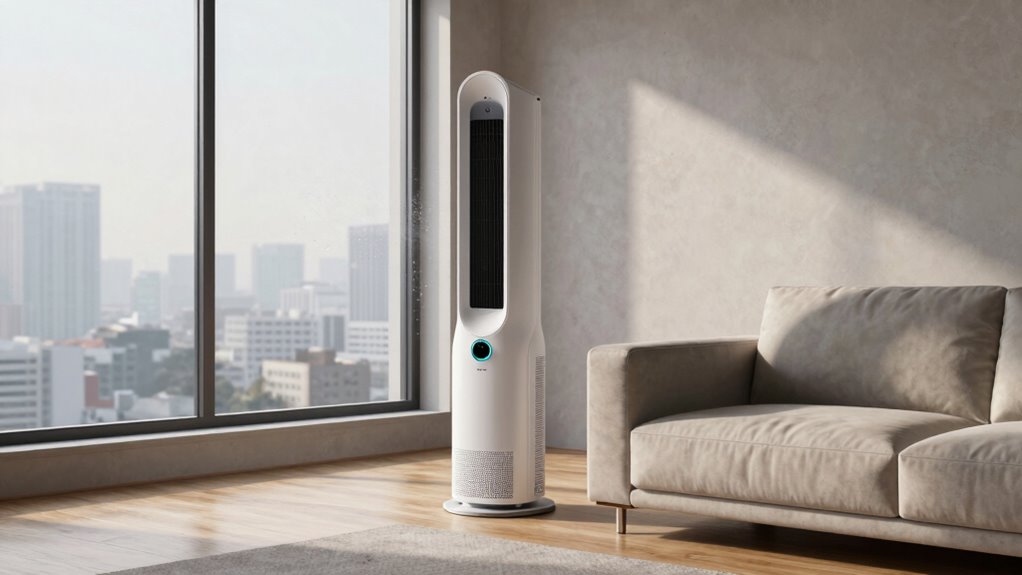
Air purifiers are popular for improving indoor air quality, but they can’t solve every ventilation issue. While they do a good job of filtering out dust, pollen, and other airborne particles, they aren’t designed to address the fundamental problems caused by poor ventilation. One key aspect they can’t improve on is air exchange. Proper air exchange involves replacing stale indoor air with fresh outdoor air, which helps dilute indoor pollutants and maintain a healthier environment. Without adequate ventilation, pollutants can linger, and air purifiers only recirculate filtered air within the space rather than bringing in new, clean air from outside. This means that even the best air purifier will struggle to fully improve air quality if your home or office isn’t properly ventilated.
Air purifiers alone can’t replace proper ventilation for fresh, healthy indoor air.
Humidity control is another vital factor that air purifiers can’t handle effectively on their own. Excess humidity can lead to mold growth, musty odors, and respiratory issues, while low humidity can cause dry skin and irritation. An air purifier doesn’t regulate humidity levels; it only filters the air. If humidity isn’t managed through proper ventilation or a dedicated humidifier or dehumidifier, issues like mold growth can persist despite the presence of a high-quality purifier. You need to guarantee that your space has a good balance of moisture, which often requires a combination of ventilation strategies and humidity-specific devices. Incorporating proper ventilation practices ensures that humidity levels stay within a healthy range, preventing both excess moisture and dryness. Additionally, air exchange is essential for maintaining overall indoor air quality, especially in tightly sealed environments where natural airflow is limited. Regularly checking and adjusting ventilation rates can significantly impact the effectiveness of your indoor air quality efforts.
Many people mistakenly think that running an air purifier alone will solve all indoor air quality problems. But in reality, it’s just one part of an all-encompassing approach. Good ventilation involves bringing fresh air in and exhausting stale air out, which reduces indoor pollutant buildup and helps maintain healthy humidity levels. If your space is tightly sealed for energy efficiency, you may need mechanical ventilation systems, such as HRVs or ERVs, to guarantee continuous air exchange. These systems work alongside air purifiers to provide cleaner, fresher air, while also controlling humidity, preventing the environment from becoming too damp or too dry. Ensuring proper ventilation is crucial because indoor air quality depends heavily on the exchange of air, not just filtration.
In essence, air purifiers are a valuable tool, but they’re not a substitute for proper ventilation practices. To truly improve indoor air quality, you need to focus on air exchange and humidity management. Relying solely on an air purifier leaves out these vital elements, which are essential for creating a healthy, comfortable indoor environment. Proper ventilation is the backbone of effective air quality management, and when combined with air purifiers, it provides a comprehensive solution that addresses the root causes of indoor pollution.
As an affiliate, we earn on qualifying purchases.
Frequently Asked Questions
Can Air Purifiers Remove All Airborne Viruses Effectively?
Air purifiers can’t remove all airborne viruses effectively on their own. While virus filtration through HEPA filters captures many airborne particles, they don’t improve air circulation or replace proper ventilation. To reduce airborne virus transmission, you need a combination of air purifiers, good ventilation, and air circulation strategies. Relying solely on purifiers isn’t enough; all-encompassing airflow management is essential for better protection.
How Often Should Ventilation Systems Be Inspected for Optimal Performance?
You should inspect your ventilation system at least twice a year to guarantee ideal airflow effectiveness and filter lifespan. Regular inspections help identify blockages or wear that can reduce performance. If your system operates in high-traffic or polluted areas, consider more frequent checks. Maintaining this schedule keeps your system efficient, improves air quality, and extends filter life, ensuring your indoor environment remains healthy and well-ventilated.
Are There Specific Room Sizes Best Suited for Air Purifiers?
Think of air purifiers as the Goldilocks of clean air—they work best when their room size matches their capacity. If your space is too big, the purifier’s power might feel like a whisper against the wind. For smaller rooms, a compact purifier with the right capacity will do the trick, like a cozy blanket. Always check the room size and purifier capacity to keep the air fresh and healthy.
Do Air Purifiers Work Equally Well in Humid and Dry Environments?
Air purifiers work differently in humid and dry environments because humidity levels affect their efficiency. In humid conditions, higher moisture can reduce the purifier’s ability to filter effectively and promote mold growth. Conversely, in dry environments, air circulation helps the purifier operate at its best, removing airborne particles. To maximize performance, adjust settings accordingly and guarantee good air circulation, especially in high humidity areas, for cleaner, healthier indoor air.
What Are the Long-Term Maintenance Costs of Air Purification Systems?
Did you know that filter replacement costs can make up 50% of an air purifier’s long-term expenses? The long-term maintenance costs vary, but generally, you’ll spend on filter replacements and occasional servicing. A good cost comparison shows that investing in higher-quality filters might be pricier upfront but saves you money over time. Regular maintenance guarantees your system runs efficiently, reducing the need for costly repairs and replacements down the line.
humidifier and dehumidifier combo
As an affiliate, we earn on qualifying purchases.
As an affiliate, we earn on qualifying purchases.
Conclusion
You might think an air purifier is enough to clear the air, but it’s like trying to sweep away a flood with a broom. Without proper ventilation, pollutants and stale air linger, no matter how many filters you add. To truly breathe easier, you need fresh air flowing in and out, just like a river constantly moving. So, don’t rely on air purifiers alone—think of them as part of a bigger picture for healthier indoor air.
mechanical ventilation systems for home
As an affiliate, we earn on qualifying purchases.
As an affiliate, we earn on qualifying purchases.
As an affiliate, we earn on qualifying purchases.
Fall Picks
fall essentials
As an affiliate, we earn on qualifying purchases.