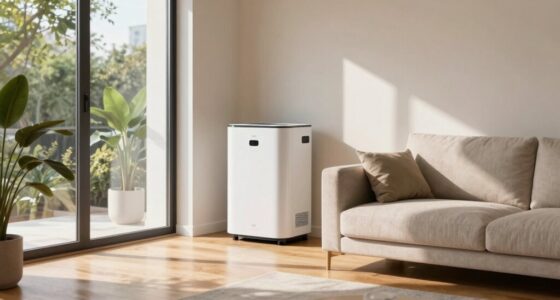
Smart thermostats improve your indoor air quality by automatically managing air filtration and humidity levels. They detect pollutants and moisture, adjusting air purifiers, humidifiers, or dehumidifiers to create a healthier environment. These devices also learn your habits and optimize settings for better air quality and energy efficiency. With continuous control, they help reduce allergens, mold, and dust mites, making your home safer and more comfortable. Discover how these smart features can transform your living space.

Get home appliances delivered free with Prime
- Fast, free delivery on millions of items
- Prime Video, Amazon Music and more included
- Member-only deals all year
Key Takeaways
- Smart thermostats enable automated air filtration by integrating with air purifiers and sensors, reducing airborne pollutants in real-time.
- They maintain optimal humidity levels, preventing mold and dust mites, which improves indoor air quality and respiratory health.
- Compatibility with humidifiers and dehumidifiers allows for comprehensive control of moisture, enhancing overall air environment.
- AI-driven algorithms optimize device operation based on indoor air quality data, ensuring efficient and effective air quality management.
- Continuous, automated regulation of air and humidity levels creates healthier spaces for sensitive populations and protects home infrastructure.

Smart thermostats have revolutionized how we manage indoor comfort, but their impact goes beyond just temperature control. These devices can considerably improve your indoor air quality by integrating features that support air filtration and humidity control. With a smart thermostat, you’re not only setting a preferred temperature but also creating a healthier environment for yourself and your family. Many models are compatible with air purifiers, enabling you to automate air filtration systems based on indoor air quality sensors. When pollutants or allergens are detected, the thermostat can trigger the purifier to run more frequently, reducing airborne particles and improving overall air cleanliness. This proactive approach means you don’t have to remember to turn on filters manually; your system responds in real-time, ensuring cleaner air at all times.
Humidity control is another essential aspect where smart thermostats excel. Proper humidity levels—generally between 30-50%—help inhibit mold growth, dust mites, and other allergens that thrive in overly humid environments. Smart thermostats often come with integrated humidity sensors or can connect to separate humidity control devices. By automatically adjusting your HVAC system, they maintain ideal moisture levels, preventing the air from becoming too dry or too damp. This balance not only enhances comfort but also reduces the risk of respiratory issues and skin irritation caused by dry air. Additionally, consistent humidity levels help preserve your home’s structure and contents, protecting furniture, electronics, and walls from moisture damage.
Furthermore, some smart thermostats utilize AI-driven analytics to optimize indoor air quality and energy efficiency by learning your habits and adjusting settings accordingly. You’ll appreciate how these features work seamlessly in the background. For example, when the thermostat detects high humidity, it can activate your dehumidifier or adjust the air conditioning to remove excess moisture. Conversely, during dry winter months, it can turn on a humidifier to add moisture back into the air. This intelligent regulation helps maintain a stable indoor environment, which is especially important for those with allergies, asthma, or sensitivities to airborne irritants.
Frequently Asked Questions
Do Smart Thermostats Improve Humidity Control?
Yes, smart thermostats improve humidity control by enhancing humidity regulation and moisture management. They monitor indoor conditions in real-time, allowing you to set precise humidity levels. This helps prevent issues like mold growth or dry air, creating a more comfortable environment. With automatic adjustments, you maintain ideal moisture levels effortlessly, ensuring better indoor air quality and comfort for you and your family.
Can Smart Thermostats Detect Mold or Airborne Pollutants?
Smart thermostats can’t directly detect mold or airborne pollutants, but some models integrate air quality sensors that monitor VOCs and particulate matter. Studies show that improved indoor air quality leads to a 20% reduction in respiratory issues. While they don’t specifically identify mold, these sensors help you spot airborne pollutants, enabling better ventilation and air purification strategies. Stay vigilant, and consider dedicated mold detection devices for exhaustive monitoring.
How Do Smart Thermostats Interact With Air Purifiers?
You can connect your smart thermostat with air purifiers to enhance energy efficiency and user convenience. When integrated, the thermostat can automatically turn on or adjust your purifier based on indoor air quality levels or your schedule. This seamless interaction guarantees cleaner air and optimized energy use, making your home healthier and more comfortable without manual adjustments. It’s a smart way to maintain fresh indoor air effortlessly.
Are Smart Thermostats Effective in Allergy-Prone Environments?
Yes, smart thermostats are effective in allergy-prone environments because they optimize temperature and humidity levels, reducing allergy triggers like mold and dust mites. By integrating with air filtration systems, they can automatically adjust settings to improve air quality. You’ll notice fewer allergy symptoms as the environment stays cleaner and more comfortable. Using a smart thermostat helps you maintain a healthier home, especially when combined with effective air filtration.
Do Smart Thermostats Require Special Ventilation Systems?
Smart thermostats don’t require special ventilation systems; they’re like the conductor of your home’s climate orchestra. However, understanding your ventilation requirements and ensuring system compatibility are vital for maximum performance. If your HVAC system is modern and well-maintained, the thermostat will integrate seamlessly. For older or complex systems, you might need professional advice to confirm compatibility, but no special ventilation is typically needed solely for the thermostat itself.
Conclusion
By now, you can see that smart thermostats considerably improve indoor air quality. They adapt heating and cooling to optimize comfort and reduce pollutants. Did you know that homes with smart thermostats can see up to a 15% reduction in indoor air pollutants? With this technology, you’re not just controlling temperature—you’re creating a healthier environment. So, investing in a smart thermostat could be one of the best steps you take toward cleaner, safer indoor air.
Cold & flu season Picks
humidifiers
As an affiliate, we earn on qualifying purchases.