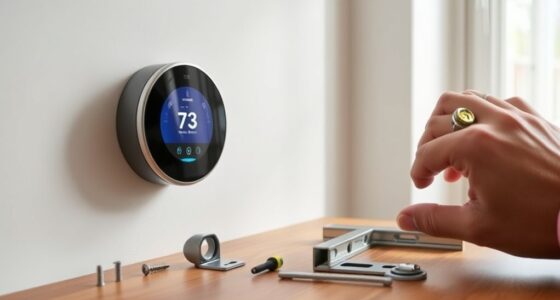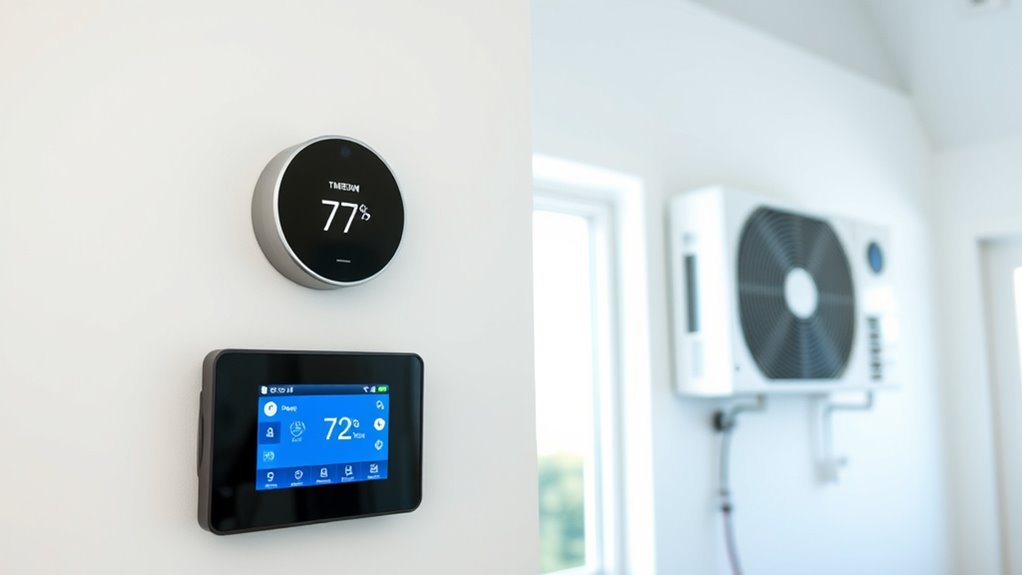
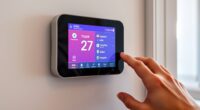
When installing a smart thermostat with your AC unit or heat pump, first verify your system is compatible and has the necessary wiring, like a C-wire for constant power. Be prepared to address potential compatibility issues with proprietary controls or multi-stage features. Confirm your Wi-Fi is strong enough for reliable connectivity. If you follow these important steps, you’ll be on your way to seamless control—continue exploring for detailed tips and common pitfalls to avoid.
Key Takeaways
- Verify system compatibility, including wiring, communication protocols, and feature support, before purchasing a smart thermostat.
- Ensure your AC or heat pump has a C-wire or plan for necessary upgrades or adapters.
- Consult the thermostat’s installation guide to correctly identify and connect wires, avoiding damage.
- Maintain a strong Wi-Fi connection to enable remote control, updates, and automation features.
- Consider professional installation for complex systems or wiring challenges to ensure safety and proper setup.

Smart thermostats have revolutionized the way you control your AC units and heat pumps, making it easier to save energy and stay comfortable. But before you immerse yourself in installation, it’s important to understand some of the common hurdles you might face, especially regarding installation challenges and compatibility considerations. These factors can influence how smoothly the process goes and whether the smart thermostat will work seamlessly with your existing system.
One of the primary installation challenges is ensuring that your current HVAC system supports a smart thermostat. Not all AC units or heat pumps are compatible out of the box. Older systems may lack the necessary wiring or communication protocols, which means you might need additional components or upgrades. For example, some units require a common wire (C-wire) to provide continuous power to the thermostat, and if your system doesn’t have one, you’ll need to retrofit or find a compatible model that doesn’t rely on a C-wire. Addressing these compatibility considerations upfront can save you time and frustration later on.
Ensuring your HVAC supports a smart thermostat prevents compatibility issues and saves installation time.
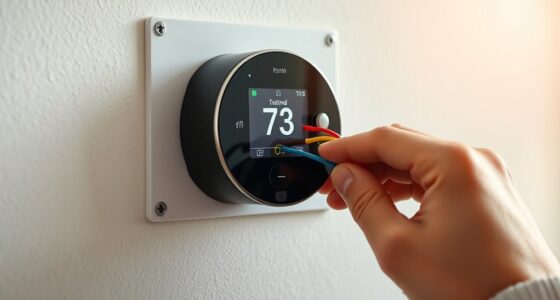
Another common challenge involves the wiring setup. Installing a smart thermostat typically requires connecting wires to designated terminals, but if your existing wiring is unfamiliar or outdated, you could encounter issues. Properly identifying each wire’s function and ensuring they’re correctly connected is vital for safe and reliable operation. If you’re unsure about the wiring, consulting the thermostat’s installation guide or seeking professional help can prevent mistakes that might damage your system or void warranties.
Compatibility considerations also extend to the features of your HVAC system. Some heat pumps and AC units have proprietary controls that don’t integrate well with certain smart thermostats. In these cases, you might need a specific model designed for your system type. It’s wise to verify whether the thermostat you’re considering supports features like multi-stage cooling, heating, or zoning controls that your system utilizes. This way, you won’t end up with a device that doesn’t match your system’s capabilities.
Additionally, consider your Wi-Fi setup. Smart thermostats rely on a stable internet connection for remote control and updates. If your home’s Wi-Fi is spotty or has limited bandwidth, you might experience connectivity issues that hinder the thermostat’s performance. Ensuring a strong, reliable Wi-Fi connection is just as important as compatibility with your HVAC system. Moreover, checking the insurer’s financial stability can influence your decision if you’re considering a warranty or extended service plan for your smart thermostat, ensuring that support will be available when needed.
Frequently Asked Questions
Can I Use a Smart Thermostat With Older HVAC Systems?
Yes, you can use a smart thermostat with older HVAC systems, but you should check if your legacy system’s wiring compatibility aligns with the thermostat’s requirements. Some older systems may lack the necessary wiring or compatibility features. Before purchasing, verify your system’s wiring setup and consult the thermostat’s compatibility guidelines to guarantee a smooth installation and peak performance.
Do Smart Thermostats Require Professional Installation?
You don’t always need a professional to install a smart thermostat, but it’s highly recommended—think of it as releasing a secret weapon for home comfort! Many models feature wireless connectivity and a user interface that’s easy to navigate, making DIY installation manageable. However, if your wiring is complex or you want to guarantee everything works perfectly, a professional can save you time and frustration, ensuring seamless integration.
How Do Smart Thermostats Impact Energy Savings?
Smart thermostats considerably boost your energy efficiency by optimizing heating and cooling patterns, which leads to substantial cost savings. They learn your schedule, adjust temperatures automatically, and can be controlled remotely, ensuring your system runs only when needed. This precise control reduces unnecessary energy use, helping you lower utility bills while maintaining comfort. Over time, these energy savings make smart thermostats a smart investment for your home.
Are Smart Thermostats Compatible With Multi-Zone Systems?
Yes, smart thermostats are compatible with multi-zone systems, acting like conductors guiding your home’s climate symphony. They seamlessly integrate zoning control, allowing you to set different temperatures for each area. With zoning integration, you gain precise control over your home’s comfort, making it feel just right. Just like a skilled conductor, your smart thermostat orchestrates energy efficiency and comfort across multiple zones effortlessly.
What Security Measures Protect Smart Thermostat Data?
Smart thermostats protect your data through robust security measures like data encryption, which secures your information during transmission and storage. User authentication ensures only authorized users access your device and data. You should also keep your firmware updated and use strong, unique passwords to further safeguard your system. These steps help prevent unauthorized access and keep your energy data private and secure.
Conclusion
By installing a smart thermostat, you’ll gently guide your AC or heat pump into a new rhythm, like a calm breeze whispering through a quiet forest. It’s a subtle shift that brings comfort and efficiency without a fuss, turning your home into a cozy sanctuary. Embrace this upgrade, and watch your energy savings bloom quietly, like flowers in spring. Soon, your space feels just right—effortless, peaceful, and perfectly in tune.