Installing a smart thermostat in your mobile or tiny home is straightforward and offers many benefits. You’ll enjoy better control over your heating and cooling, saving energy and reducing utility bills. These devices are easy to set up with minimal tools and connect seamlessly to Wi-Fi, allowing you to manage your climate remotely. Plus, they learn your habits for personalized comfort. Keep exploring to discover how to choose the best model for your space and needs.
Key Takeaways
- Verify thermostat compatibility with your mobile or tiny home’s HVAC system before installation.
- Choose a wireless, Wi-Fi-enabled smart thermostat for easy setup and remote control.
- Follow manufacturer instructions for simple installation, often requiring minimal tools and technical expertise.
- Ensure secure Wi-Fi connection and consider integrating with voice assistants for added convenience.
- Regularly update firmware and security settings to protect your smart thermostat and maintain safe operation.
Installing a smart thermostat in your mobile or tiny home can substantially improve comfort and energy efficiency. These devices allow you to monitor and control your heating and cooling systems more effectively, helping you save money while maintaining a cozy environment. With a smart thermostat, you can easily optimize your energy consumption by setting schedules that match your daily routines or adjusting the temperature remotely when you’re away. This flexibility ensures you’re not wasting energy heating or cooling an empty space, which is especially important in smaller homes where energy use has a more noticeable impact on your utility bills.
One of the key advantages of a smart thermostat is its remote control feature. You don’t have to be physically present to adjust your home’s temperature. Whether you’re at work, running errands, or relaxing elsewhere, you can access the thermostat through a smartphone app. This means you can turn down the heat during the day to save energy and crank it back up just before you return home, ensuring comfort without unnecessary energy expenditure. The convenience of remote control empowers you to manage your home’s climate proactively, avoiding energy waste and maintaining a consistent, comfortable environment at all times.
Control your home’s temperature remotely via smartphone for ultimate convenience and energy savings.
Because mobile and tiny homes often have limited space and unique heating and cooling needs, a smart thermostat helps you fine-tune your system for maximum efficiency. These devices typically learn your habits over time, automatically adjusting settings based on your preferences and schedule. For instance, if you usually turn down the heat at night, your thermostat will recognize this pattern and make those adjustments without you needing to intervene. This not only enhances energy efficiency but also reduces the workload on your HVAC system, potentially extending its lifespan and lowering maintenance costs.
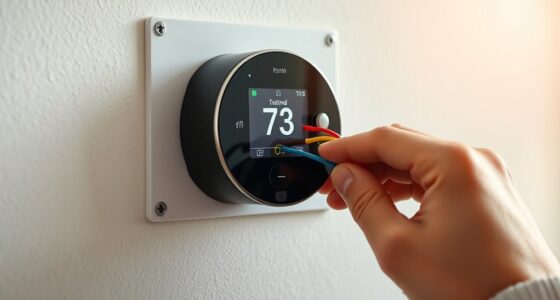
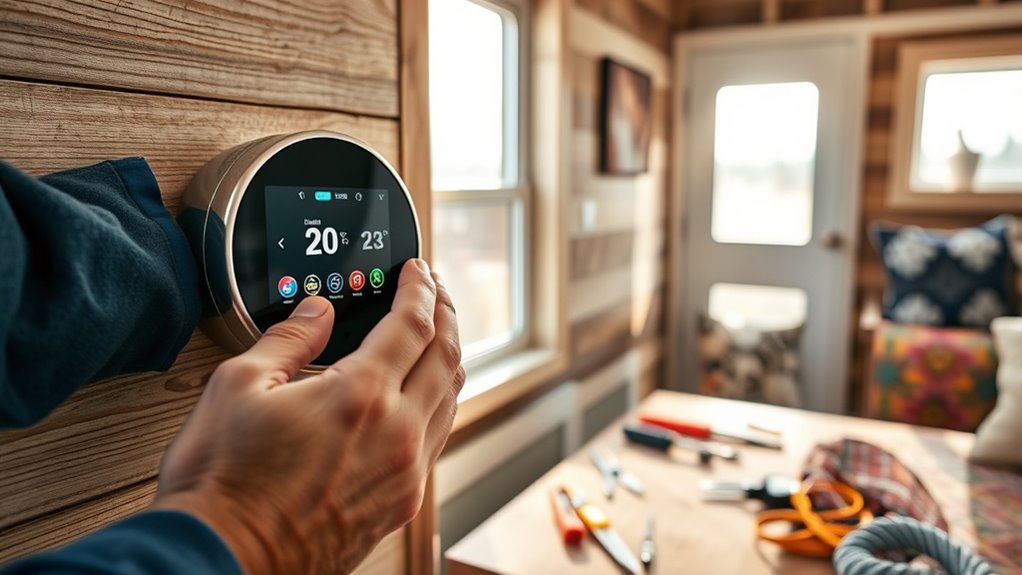
Installing a smart thermostat is straightforward and can be done with minimal tools and expertise. Most models are compatible with common HVAC systems found in mobile and tiny homes. Once installed, you’ll find it easy to navigate the interface, set schedules, and connect it to your Wi-Fi network. Many devices also offer integration with voice assistants like Alexa or Google Assistant, further streamlining control. Additionally, understanding the importance of AI security can help protect your smart home devices from cyber threats, ensuring your energy management remains safe and private. Overall, a smart thermostat is a smart investment that boosts your home’s energy efficiency, offers the convenience of remote control, and helps you enjoy a more comfortable, cost-effective living space in your mobile or tiny home.
Frequently Asked Questions
Can Smart Thermostats Work With Alternative Power Sources in Tiny Homes?
Yes, smart thermostats can work with alternative power sources in tiny homes. You need to check the power source compatibility of the thermostat, as some models run on standard AC power while others support batteries or low-voltage systems. Using alternative energy solutions like solar panels or battery banks can power your smart thermostat effectively, making it a sustainable choice for tiny home setups. Just guarantee your system supplies consistent, reliable power.
Are There Specific Models Suited for Mobile or Tiny Home Environments?
Yes, there are smart thermostats designed for mobile and tiny home environments. You should look for models with good mobile compatibility, allowing you to control your system remotely via your phone. Size considerations are important; opt for compact thermostats that fit easily into limited space without compromising functionality. Many models are specifically engineered for small or mobile setups, ensuring seamless integration and reliable performance in your tiny or mobile home.
How Do Smart Thermostats Impact Energy Savings in Small Spaces?
You’ll be surprised how much a smart thermostat boosts energy efficiency in small spaces. It automatically adjusts temperature settings based on your habits, preventing unnecessary heating or cooling. This precision reduces energy waste and leads to significant cost savings over time. Imagine cutting your utility bills while maintaining comfort — that’s the power of smart thermostats in tiny and mobile homes, where every bit of efficiency counts.
Can Smart Thermostats Be Integrated With Existing Mobile Home Systems?
Yes, you can integrate smart thermostats with your mobile home systems. First, check your mobile home wiring to guarantee compatibility, as most smart thermostats require a C-wire for constant power. Then, verify thermostat compatibility with your existing HVAC system. If your wiring or system isn’t compatible, consider professional installation or adapters to guarantee seamless integration, making your smart thermostat fully functional and energy-efficient.
What Security Features Protect Smart Thermostats From Hacking?
Think of your smart thermostat as a fortress guarding your home’s comfort. To keep hackers at bay, it employs strong encryption protocols that scramble your data and rigorous user authentication to verify your identity. These security features act like an unbreakable shield, ensuring your device remains protected and your personal information stays private. By staying vigilant and updating your system regularly, you strengthen this fortress, keeping your smart home safe and secure.
Conclusion
Installing a smart thermostat in your mobile or tiny home is like giving it a brain, making comfort effortless wherever you go. With simple steps and the right device, you’ll enjoy energy savings and cozy warmth at your fingertips. Think of it as turning your home into a living, breathing space that adapts to you. Embrace this upgrade, and watch your tiny home transform into a smart haven on wheels.