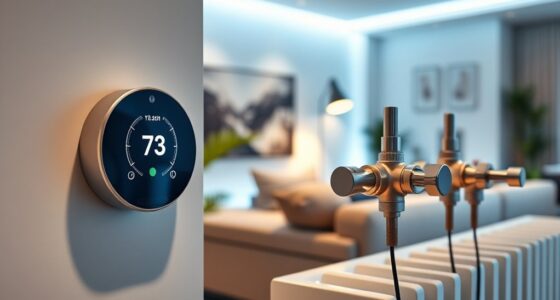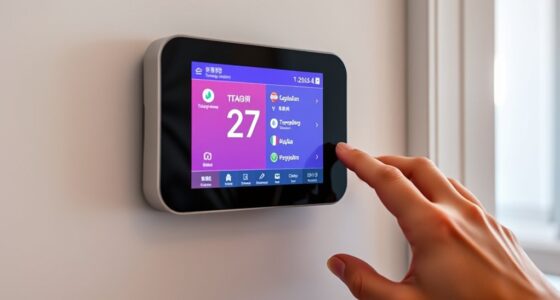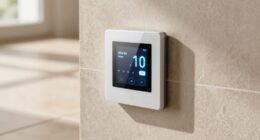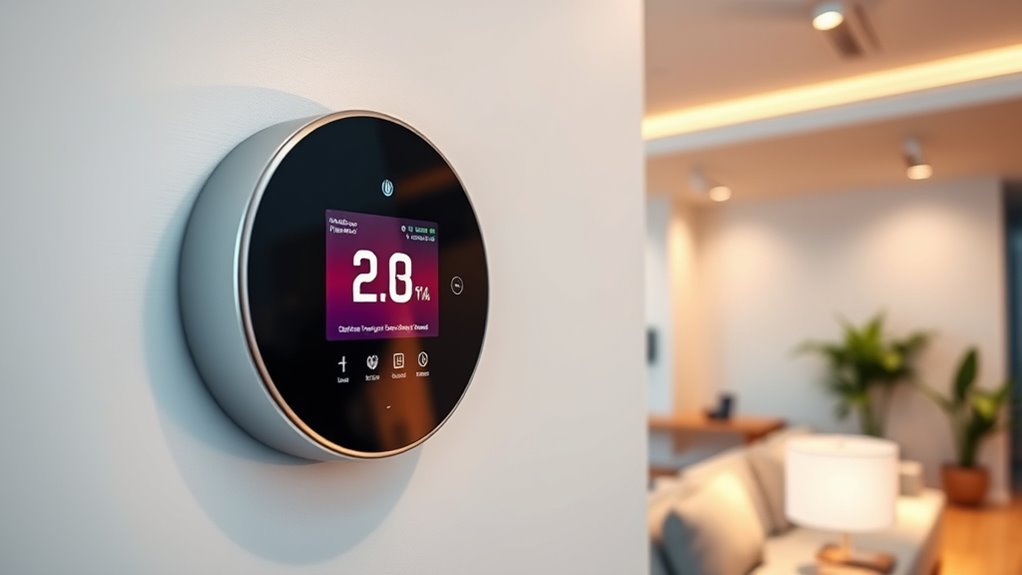
Integrating your smart thermostat with your security system allows you to control both from a single platform, boosting home comfort, safety, and energy savings. You can adjust temperatures remotely, respond instantly to security alerts, and prevent energy waste when you’re away. This seamless setup lets your systems work together automatically, providing peace of mind and efficient management. To discover how this integration works and the benefits it offers, explore more about creating a smarter, safer home environment.
Key Takeaways
- Integrating smart thermostats with security systems enables automatic temperature adjustments during security events for safety and energy efficiency.
- Unified control allows remote management of both climate and security settings via a single app or platform.
- Security triggers can prompt the thermostat to activate specific climate modes, preventing damage from incidents like fire or leaks.
- Automated responses enhance home safety by adjusting temperatures in response to intrusion alerts or sensor detections.
- Seamless integration reduces device complexity, providing peace of mind and streamlined home management.
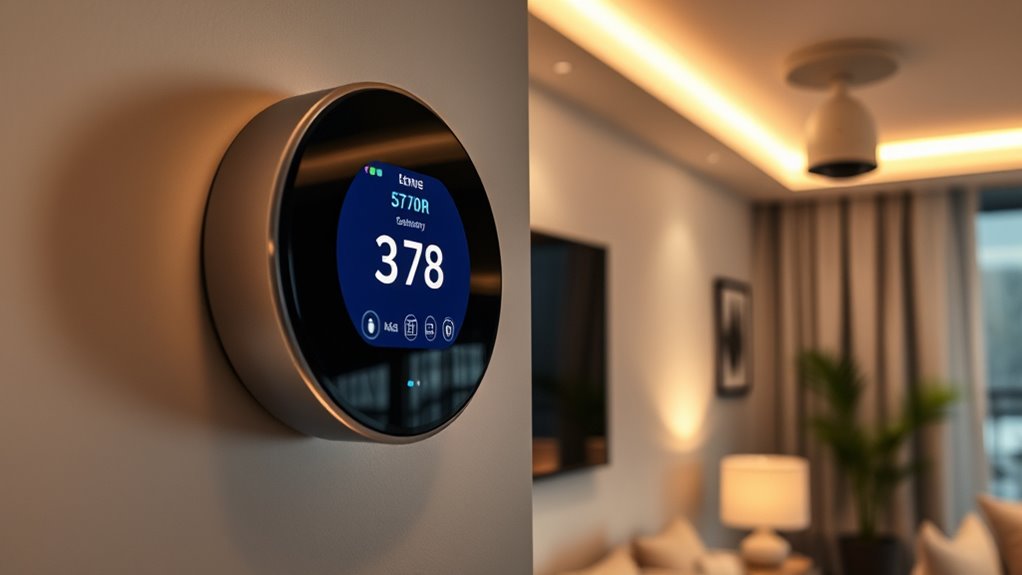
Smart thermostats with security systems are transforming the way homeowners manage comfort and safety. By integrating these systems, you gain more control over your home environment while also reducing energy costs. One of the biggest advantages is energy savings. When your thermostat is connected to your security system, it can automatically adjust the temperature based on whether you’re home, away, or asleep. This means you’re not wasting energy heating or cooling an empty house, which can considerably lower your utility bills. Plus, many smart thermostats learn your preferences over time, optimizing settings for maximum efficiency without sacrificing comfort. You don’t have to remember to change the thermostat manually; instead, the system adapts to your routines, ensuring you’re always comfortable while saving energy. Incorporating energy-efficient features further enhances the system’s ability to reduce overall consumption and promote sustainable living.
Smart thermostats connected to security systems automatically adjust settings, saving energy and enhancing comfort effortlessly.
Remote control is another key benefit of integrating smart thermostats with your security setup. With a smartphone app or web portal, you can adjust your home’s temperature from anywhere. Whether you’re at work, on vacation, or running errands, you can change the thermostat settings instantly. If you forgot to turn down the heat before leaving, you can do it remotely, preventing energy waste. This flexibility also enhances your safety; if you notice an unusual drop or spike in temperature, you can respond immediately. For example, if you’re away and hear about a potential fire or water leak, adjusting the temperature remotely can help mitigate damage or danger. The convenience of remote control means you’re always connected, ensuring your home is comfortable and secure no matter where you are.
Furthermore, integrating your smart thermostat with your security system provides a seamless management experience. When your security system detects an intrusion or a sensor is triggered, your thermostat can respond accordingly—such as turning off the HVAC system to conserve energy or activating specific climate settings to prevent further issues. This interconnected approach not only boosts energy savings but also enhances your home’s safety. You don’t have to juggle multiple apps or devices; everything works together intelligently, giving you peace of mind.
In essence, combining smart thermostats with security systems empowers you to manage your home more efficiently. You benefit from energy savings through automated adjustments and optimized settings, while remote control keeps you connected and in charge at all times. This integration simplifies home management, reduces waste, and enhances safety—making your home smarter, safer, and more energy-conscious.
Frequently Asked Questions
Can Smart Thermostats Be Integrated With Existing Security Systems?
Yes, smart thermostats can be integrated with your existing security system, enhancing your user experience and system customization. You can control temperature and security settings from one app, making it more convenient. Many smart thermostats are compatible with popular security platforms, allowing you to automate actions like adjusting the thermostat when you arm or disarm your security system. This integration simplifies your smart home management and improves overall efficiency.
What Security Risks Are Associated With Smart Thermostat Integration?
Did you know that 68% of data breaches involve unauthorized access? When you integrate smart thermostats with security systems, you risk exposing your home to vulnerabilities. Hackers could exploit weak passwords or security flaws, leading to unauthorized access and data breaches. Stay vigilant by updating firmware regularly, using strong, unique passwords, and enabling two-factor authentication to protect your smart devices and maintain your home’s security.
How Does Integration Affect Energy Savings and Security Monitoring?
By integrating smart thermostats with security systems, you enhance energy efficiency and user convenience. You can remotely control your home’s temperature, ensuring ideal comfort while reducing energy waste. Security monitoring benefits too, as alerts can notify you of unusual temperature changes or system breaches. This seamless integration simplifies managing your home environment, saving you money and providing peace of mind through improved security and efficient energy use.
Are There Compatibility Issues Between Different Smart Thermostat Brands?
Yes, you might face compatibility issues between different smart thermostat brands. Brand compatibility varies, and some devices may not work seamlessly together. Always check if your thermostat supports firmware updates, as these can improve compatibility and fix bugs. Before buying, research whether your chosen thermostat integrates well with your security system or other smart devices, ensuring smooth operation and avoiding frustration later.
What Privacy Measures Are in Place When Combining These Systems?
Like a fortress guarding secrets, privacy measures safeguard your data. When combining smart thermostats with security systems, companies implement strict privacy policies and data encryption to keep your information safe. These protocols act as digital locks, preventing unauthorized access and ensuring your personal details remain confidential. By choosing reputable brands, you guarantee your privacy stays intact, giving you peace of mind as your connected home functions seamlessly and securely.
Conclusion
Think of your smart thermostat and security system as a trusted lighthouse guiding your home safely through the night. When they work together, they create a seamless beacon of protection and comfort, illuminating potential threats and adjusting your environment to keep everything secure. By integrating these smart tools, you’re steering your home toward a future where safety and efficiency shine brightly, ensuring peace of mind just like a lighthouse standing tall against the dark, guiding you home.