When handling high-voltage systems with a smart thermostat, always turn off the power and confirm no current is present before starting work. Use insulated gloves and proper tools to avoid shocks, and follow the manufacturer’s wiring instructions carefully. Hiring a licensed electrician is recommended to guarantee safe, correct installation. While wireless features improve safety and convenience, paying close attention to safety measures is essential—if you want to learn more, keep exploring the best practices for secure setup.

Get home appliances delivered free with Prime
- Fast, free delivery on millions of items
- Prime Video, Amazon Music and more included
- Member-only deals all year
Key Takeaways
- Turn off power at the breaker and verify zero voltage before working on high-voltage wiring.
- Follow manufacturer instructions carefully and avoid bypassing safety features during installation.
- Use insulated tools and wear protective gloves to prevent electrical shocks when handling wiring.
- Consult a licensed electrician for wiring connections to ensure safe and correct integration.
- Utilize wireless connectivity features for remote monitoring and alerts, enhancing safety and system management.
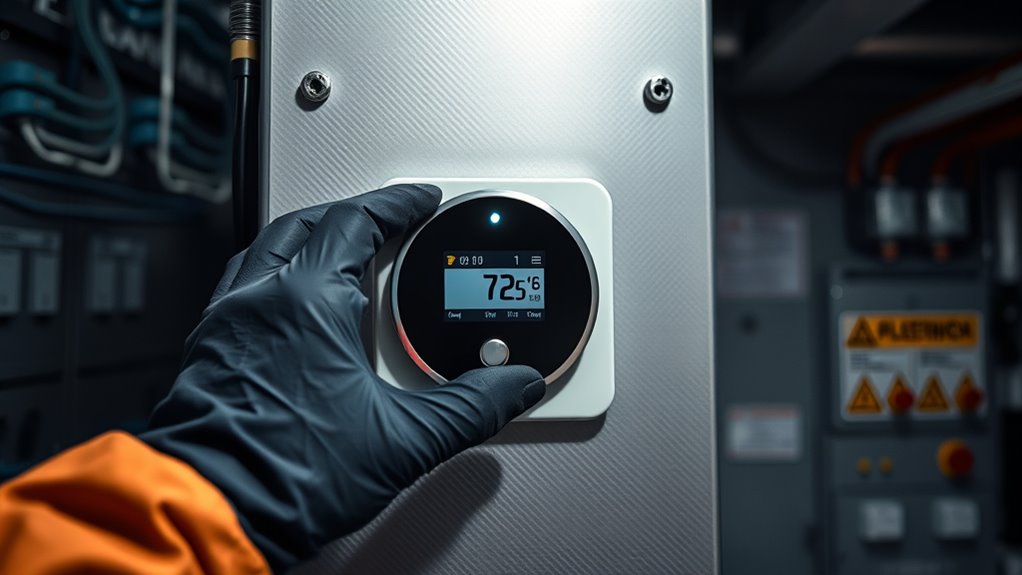
Smart thermostats have revolutionized home climate control, but when it comes to high-voltage systems, you need to approach with caution. These systems carry significant electrical power, and improper handling can lead to serious injury or damage. Before attempting any installation or adjustments, it’s essential to understand how wireless connectivity features can aid you, but also to recognize the importance of safety precautions. Wireless connectivity allows you to control your smart thermostat remotely, receive updates, and troubleshoot issues without directly interacting with high-voltage components. However, this convenience doesn’t eliminate the risks associated with working around high-voltage wiring.
Handling high-voltage systems requires caution; wireless features enhance control but safety precautions remain essential.
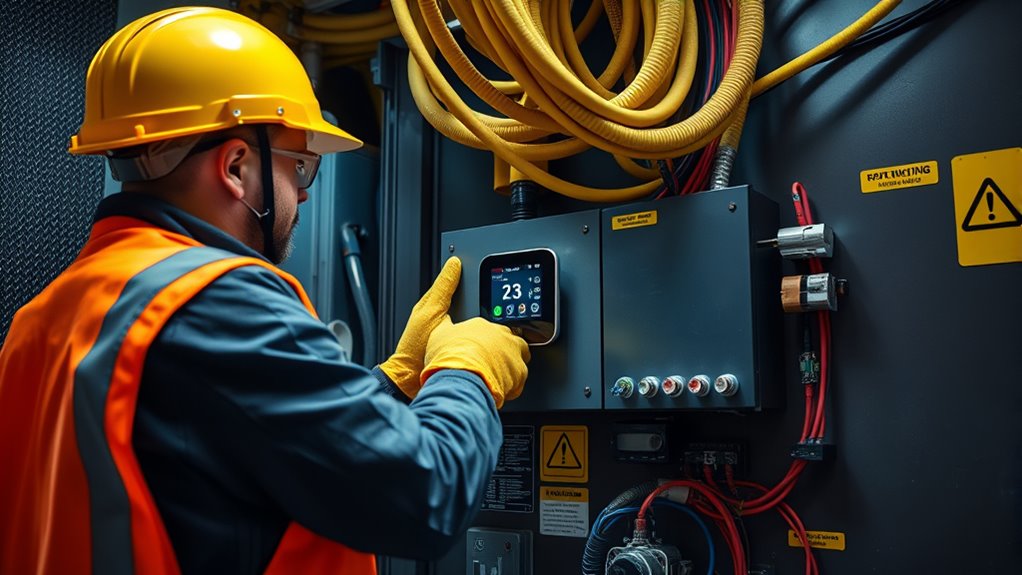
The first safety precaution you should take is turning off the power supply at the breaker box. Even if the thermostat is disconnected, residual voltage can still pose a hazard. Use a voltage tester to confirm that no current is present before touching any wires. When working with high-voltage systems, it’s necessary to wear insulated gloves and use tools with rubber handles to reduce the risk of electrical shock. Never attempt to handle high-voltage wiring with bare hands or without proper protective equipment.
Understanding the wiring setup is also essential. High-voltage systems often involve complex configurations, and miswiring can damage your smart thermostat or create safety hazards. Consult the manufacturer’s instructions carefully, and if you’re unsure about any connections, consider hiring a licensed electrician. They will have the expertise to safely integrate the smart thermostat into your high-voltage system, ensuring proper wiring and grounding. Additionally, being aware of common issues like faulty wiring or improper grounding can help you prevent potential hazards.
Incorporating wireless connectivity features adds another layer of safety. You can set up remote alerts for system malfunctions or voltage irregularities, allowing you to respond promptly without physically accessing potentially dangerous wiring. These features also enable you to monitor your system’s health and receive firmware updates that improve safety and performance. Always make sure your Wi-Fi network is secure to prevent unauthorized access, which could compromise your system’s safety.
Lastly, never bypass safety features or attempt to modify high-voltage wiring to fit your smart thermostat. Doing so can void warranties, cause electrical faults, or lead to dangerous situations. Stick to manufacturer-approved installation procedures and safety guidelines. If at any point you feel unsure, stop and consult a professional. Handling high-voltage systems with smart thermostats requires respect for electrical safety, proper planning, and adherence to precautions—your safety and the longevity of your system depend on it.
Frequently Asked Questions
Can Smart Thermostats Control Other High-Voltage Appliances Safely?
Smart thermostats are generally designed for voltage safety, meaning they can control high-voltage appliances safely if properly installed. However, you shouldn’t rely on them for controlling other high-voltage devices unless they’re specifically rated for such use. Always check the appliance control specifications and verify the thermostat meets safety standards. If unsure, consult a professional to prevent electrical hazards and ensure safe, effective operation.
Are There Specific Safety Certifications for High-Voltage Smart Thermostats?
Yes, high-voltage smart thermostats must meet specific safety standards and certification requirements to guarantee safe operation. You should check for certifications like UL, CE, or other relevant safety standards, which verify that the device complies with industry safety regulations. These certifications help protect you from electrical hazards and ensure the thermostat is built to handle high-voltage systems safely. Always verify these certifications before installation.
How Does High Voltage Affect Smart Thermostat Installation Procedures?
Think of high voltage as a storm threatening to shake your installation. You need to guarantee voltage compatibility to prevent damage and safety hazards. High voltage requires careful wiring modifications, like rerouting or upgrading wiring, to handle the increased power safely. Skipping these steps risks shorts or fires, so proceed with caution. Always follow manufacturer guidelines and consult a professional to keep your smart thermostat functioning smoothly amidst the electrical storm.
What Are the Troubleshooting Steps for High-Voltage Thermostat Malfunctions?
When troubleshooting high-voltage thermostat malfunctions, start with voltage testing to verify proper power levels. Next, inspect the wiring thoroughly for any damage, loose connections, or incorrect wiring that could cause issues. Confirm that the thermostat is compatible with your system and reset it if necessary. If problems persist, consult a professional to avoid safety hazards and ensure your high-voltage system operates safely and efficiently.
Is Professional Installation Required for High-Voltage Smart Thermostat Systems?
Yes, professional installation is highly recommended for high-voltage smart thermostat systems. High voltage safety is essential, and a trained technician ensures the wiring is done correctly and safely, preventing potential hazards. Attempting to install these systems yourself can lead to electric shocks or equipment damage. By hiring a professional, you guarantee the system operates efficiently and safely, giving you peace of mind and long-term reliability.
Conclusion
Handling high-voltage systems with smart thermostats might seem intimidating at first, but with careful attention and respect for the system’s complexity, you’ll find it’s quite manageable. Think of it as gently guiding a delicate instrument to work harmoniously with modern technology. By staying cautious and following best practices, you’ll enjoy the comfort of smart control without worry. Embrace the process, and you’ll discover that even the most intricate systems can become a seamless part of your home.
Fall yard work Picks
leaf blowers
As an affiliate, we earn on qualifying purchases.