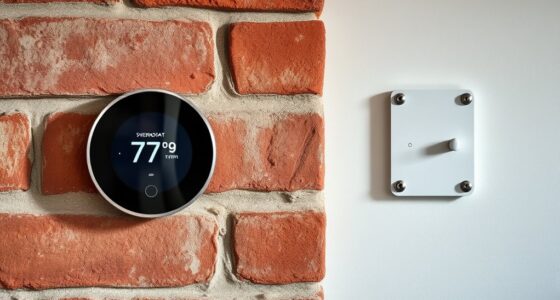
To connect a smart thermostat to a dual-fuel HVAC system, turn off power first, then identify and label your existing wires, such as R, C, Y, W, and O/B. Connect these to the corresponding terminals on your thermostat, ensuring the W and O/B wires match your system’s configuration for heat pump and furnace control. Proper wiring allows the thermostat to coordinate both energy sources effectively. Keep exploring further steps to optimize your system’s performance and efficiency.
Key Takeaways
- Turn off power and carefully remove the old thermostat, noting existing wiring connections for reference.
- Identify and label wires: R, C, Y, W, O/B, G, and auxiliary, matching them to the new thermostat terminals.
- Connect each wire to the corresponding terminal on the smart thermostat, ensuring secure and correct attachment.
- Configure the thermostat’s settings to enable dual-fuel operation, allowing automatic switching between heat pump and furnace.
- Follow the thermostat-specific setup instructions to finalize installation and optimize system performance.

Connecting a smart thermostat to a dual-fuel HVAC system can considerably improve your home’s energy efficiency and comfort. To do this successfully, you need to understand thermostat wiring and how it interacts with your system’s components. The wiring process determines how your smart thermostat communicates with both the heat pump and the furnace, guaranteeing seamless operation and ideal energy use. Proper wiring is essential because it allows your thermostat to switch intelligently between fuel sources, maximizing efficiency and reducing energy waste.
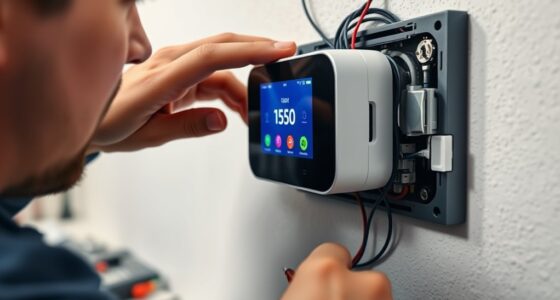
Start by turning off the power to your HVAC system to prevent any electrical hazards. Remove the old thermostat and carefully examine the wiring. Most thermostats use color-coded wires, but double-check your system’s wiring diagram to confirm each connection’s purpose. When wiring your smart thermostat, pay close attention to the terminals: R (power), C (common), Y (cooling), W (heating), and sometimes O/B (reversing valve). For dual-fuel systems, additional wires like G (fan) and auxiliary terminals may also be involved. Correctly connecting these wires assures that your smart thermostat can control the heat pump and furnace effectively.
Turn off power, remove old thermostat, and verify wiring with the diagram before connecting terminals.
A key step is connecting the thermostat’s wiring to the correct terminals, which allows it to coordinate the dual-fuel operation. The thermostat’s wiring setup communicates with both the heat pump and the furnace, enabling it to decide when to switch fuel sources based on temperature and efficiency factors. This intelligent control is what makes your system more energy-efficient, as it prevents unnecessary operation of either fuel source. If your system includes auxiliary heat or multiple stages, make certain these wires are properly connected to allow smooth transitions and better climate control.
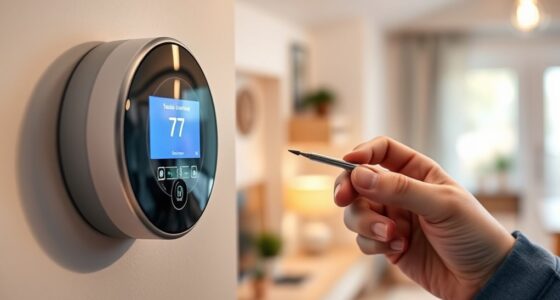
Once wired correctly, follow the smart thermostat’s installation instructions to configure the system. Many models include setup steps that allow you to specify your dual-fuel preferences and set energy-saving modes. Proper thermostat wiring not only assures reliable operation but also enhances your home’s energy efficiency by enabling precise control over heating and cooling cycles. Additionally, understanding the system components involved helps ensure correct installation and optimal performance. A well-installed smart thermostat learns your scheduling habits and adjusts operation accordingly, further reducing energy consumption.

Smart Home Energy Monitor with 16 50A Circuit Level Sensors, Real-Time Power Usage & Electricity Cost Tracking, Ideal for Rental Homes & Shared Apartments, App History, Compatible with Home Assistant
- Easy Installation: Clamp-on sensors for most circuit panels
- Real-Time Power Monitoring: Track power usage anytime, anywhere
- Electricity Cost Tracking: Monitor costs and energy consumption
As an affiliate, we earn on qualifying purchases.
Frequently Asked Questions
Can I Upgrade My Existing Thermostat to a Smart Model?
You can definitely upgrade your existing thermostat to a smart thermostat. This HVAC upgrade allows you to control your home’s temperature remotely, improve energy efficiency, and add convenience. Just check if your current wiring and system are compatible with the smart model you’re considering. Many smart thermostats are designed for easy installation, so you can usually do it yourself or hire a professional for a seamless upgrade experience.
What Safety Precautions Are Necessary During Installation?
During installation, you need to prioritize electrical safety by turning off the power to avoid shocks. Make sure your system is properly grounded to prevent electrical faults. Use insulated tools and wear protective gear. Double-check all wiring connections before turning the power back on. If you’re unsure, it’s best to consult a professional. These precautions guarantee your safety and proper functioning of your smart thermostat.
How Does a Dual-Fuel System Benefit Energy Efficiency?
A dual-fuel system boosts energy savings by switching between your heat pump and furnace for peak efficiency. This reduces energy consumption and lowers your utility bills. You also minimize environmental impact by using less fossil fuel, making your home more eco-friendly. With smart thermostat control, you can fine-tune this process, ensuring your system operates at peak efficiency, ultimately benefiting both your wallet and the environment.
Will Connecting a Smart Thermostat Affect My HVAC Warranty?
Imagine you’re stepping into the future—connecting a smart thermostat won’t necessarily void your HVAC warranty if you follow proper installation guidelines. Typically, as long as you use compatible equipment and adhere to manufacturer instructions, warranty implications remain minimal. However, it’s wise to check with your HVAC provider beforehand, as improper installation could affect warranty coverage. Staying informed helps you enjoy smart benefits without risking your system’s protection.
What Troubleshooting Steps if the Thermostat Doesn’t Control the System Properly?
If your thermostat isn’t controlling your system properly, start by checking the thermostat wiring to verify all connections are secure and correct. Next, verify the system calibration settings to match your HVAC system’s specifications. If issues persist, reset the thermostat and reconfigure the settings. Sometimes, updating the firmware or contacting a professional for calibration can resolve control problems, ensuring your dual-fuel system operates smoothly.
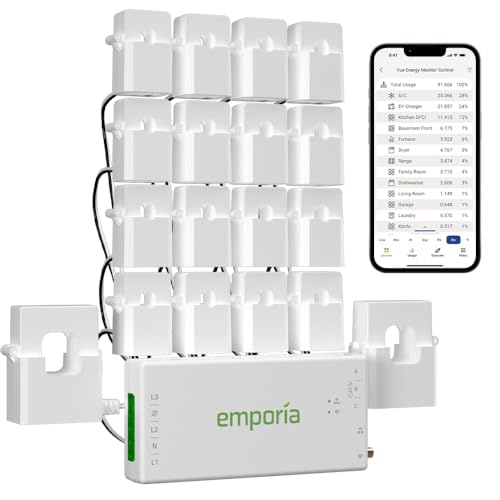
Emporia Vue 3 Home Energy Monitor - Smart Home Automation Module and Real Time Electricity Usage Monitor, Power Consumption Meter, Solar and Net Metering for UL Certified Safe Energy Monitoring
- UL Certified for Safety: Certified for electrical safety in US and Canada
- Easy Installation: Fits in most circuit panels with clamp-on sensors
- Supports Various Systems: Compatible with single, split-phase, and 3-phase systems
As an affiliate, we earn on qualifying purchases.
Conclusion
Connecting a smart thermostat to your dual-fuel HVAC system might seem complex, but with patience, you’ll master it effortlessly. Once set up, you’ll enjoy seamless climate control that feels like having a personal weather wizard at your command. This upgrade transforms your home’s comfort, making it smarter and more efficient than you ever imagined. Embrace the process, and soon you’ll experience a level of control so refined, it’s practically a symphony of modern convenience.

Meross Smart Home Energy Monitor, Real-Time Power & Cost Tracking
- Safe and Reliable Certification: ETL-certified and UL compliant for safety
- Easy Clamp-On Installation: Quick, tool-free setup with invertible CT readings
- Universal Compatibility: Works with most US home electrical systems
As an affiliate, we earn on qualifying purchases.