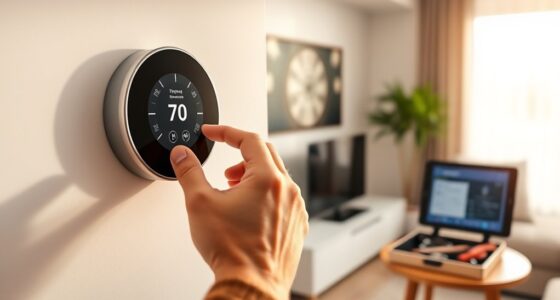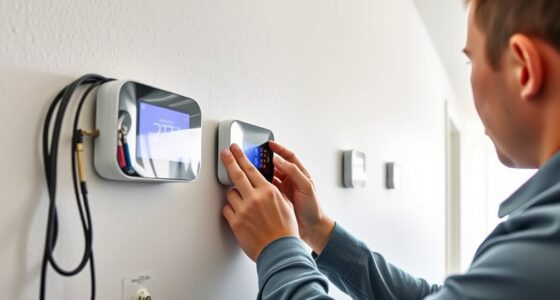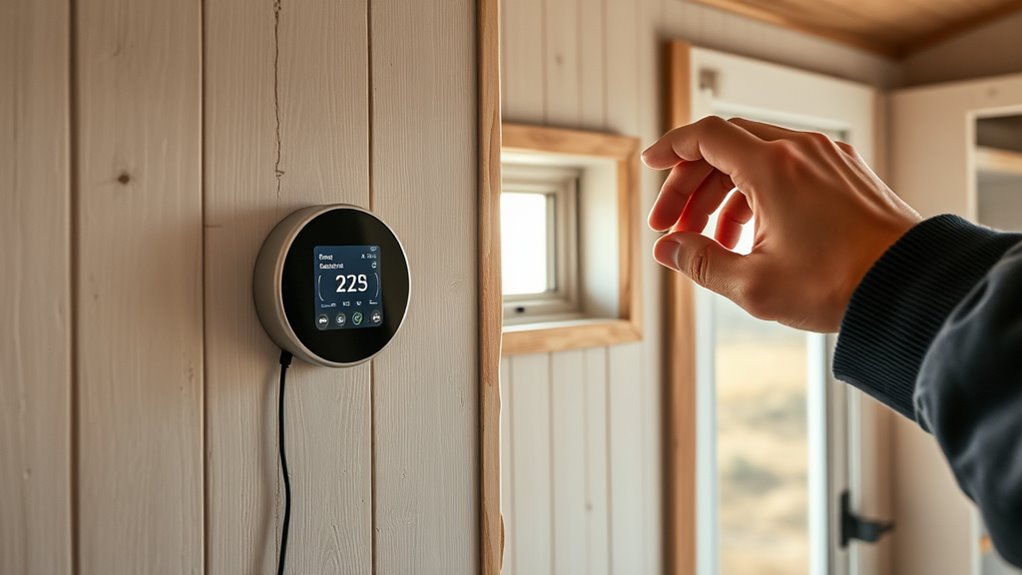
Installing a smart thermostat in your mobile home can be challenging due to limited electrical capacity, fixed layouts, and zoning restrictions. You’ll need to verify your electrical system supports the thermostat and ensure wiring is compatible, possibly consulting an electrician. Properly zoning your space improves control and energy efficiency. Keep in mind, some models support battery power if wiring is limited. For detailed steps and tips to overcome these hurdles, continue exploring how to optimize your setup effectively.
Key Takeaways
- Mobile homes require careful zone planning to optimize comfort and energy efficiency within fixed layouts.
- Compatibility checks are essential to ensure the thermostat supports multi-zone configurations.
- Verify electrical wiring and power sources, considering limited wiring options and potential need for alternative power.
- Ensure the electrical system can handle the additional load of the smart thermostat safely.
- Consulting an electrician can help address wiring, power, and safety concerns specific to mobile home setups.
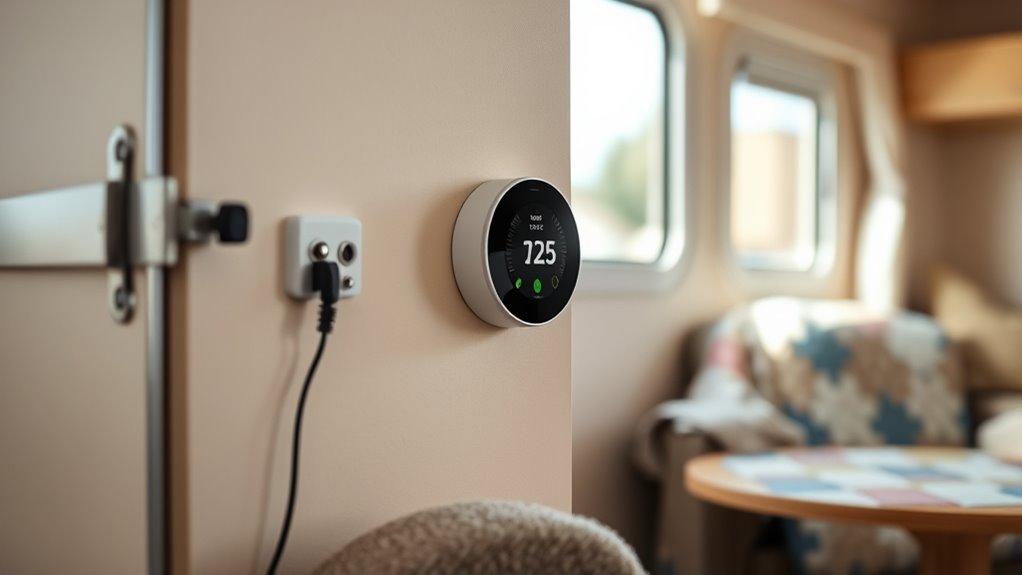
Setting up a smart thermostat in your mobile home can considerably enhance comfort and energy efficiency. However, mobile homes present unique challenges that you need to address carefully. One of the first things to consider is zoning considerations. Unlike traditional houses, mobile homes often have less flexible layouts, so dividing your space into manageable zones can be tricky. You’ll want to identify different areas that need separate temperature controls, such as living spaces, bedrooms, and perhaps a workspace. Proper zoning allows you to optimize comfort and save energy by avoiding heating or cooling unoccupied sections. It’s essential to plan these zones during installation, ensuring your smart thermostat system can support multiple zones if needed. Many modern thermostats can handle multi-zone configurations, but check compatibility beforehand.
Another critical aspect is understanding your power source options. Mobile homes typically have limited electrical setups compared to larger houses, so your choice of power source becomes vital. Most smart thermostats rely on a standard 24V power supply, which is common in HVAC systems. Before installation, verify that your mobile home’s electrical system can support the thermostat and that you have accessible wiring or power outlets. Some models offer alternative power options, such as batteries, which can be useful if your home’s wiring isn’t suitable or if you want a more straightforward installation. Keep in mind that battery-powered thermostats might require more frequent replacements and may have limited features compared to wired models. If your mobile home has an existing HVAC wiring setup, ensure it’s compatible with your chosen thermostat. If not, you might need to install additional wiring or consider models that support alternative power sources.
Additionally, you should evaluate whether your mobile home’s electrical system can handle the additional load of a smart thermostat, especially if you plan to add other smart devices. It’s advisable to consult an electrician if you’re uncertain about the wiring or power capacity. Properly evaluating your power source options ensures your smart thermostat functions reliably without risking electrical issues.
Frequently Asked Questions
How Do Mobile Home Insulation Issues Affect Smart Thermostat Installation?
Insulation barriers in mobile homes can substantially impact smart thermostat installation by causing temperature inconsistencies. You might find your thermostat struggles to maintain a steady temperature because poor insulation allows heat to escape or enter unevenly. This means you’ll need to choose a thermostat with advanced sensors and controls that can adapt to these fluctuations. Properly addressing insulation issues ensures your smart thermostat works effectively, providing comfort and energy savings.
Can Existing Mobile Home Wiring Support Advanced Smart Thermostats?
While your current wiring might seem straightforward, it could be a bit shy when it comes to supporting advanced smart thermostats. You’ll want to check the wireless compatibility and thermostat compatibility of your existing setup. If your wiring isn’t ready, consider options like a compatible relay or a Wi-Fi-enabled thermostat that can work with minimal wiring changes. This way, you guarantee seamless integration without overhauling your electrical system.
Are There Specific Smart Thermostats Designed for Mobile Home Environments?
You might wonder if there are mobile-specific thermostats designed for mobile home compatibility. Yes, some smart thermostats are tailored for mobile homes, offering features like simplified wiring and compatibility with mobile-specific HVAC systems. These thermostats are built to handle unique electrical setups and guarantee reliable operation. Look for models labeled as mobile home compatible to ensure easy installation and peak performance in your mobile environment.
How Does Mobile Home Size Impact Thermostat Placement and Coverage?
Your mobile home size directly impacts thermostat placement and coverage. Larger mobile homes with greater dimensions require strategic placement to make certain of proper thermostat reach across all areas. You should position the thermostat centrally, avoiding heat sources or drafts, to maximize efficiency. Understanding mobile home dimensions helps you select the right location, ensuring even temperature control and preventing hot or cold spots throughout your space.
What Are the Energy Savings Benefits of Smart Thermostats in Mobile Homes?
Smart thermostats help you save energy by optimizing your mobile home’s heating and cooling schedules. You’ll notice energy conservation because these devices learn your routines and adjust settings accordingly, reducing unnecessary energy use. This leads to significant cost reduction over time, as you spend less on utility bills. Plus, remote control features let you manage temperature from anywhere, ensuring comfort while keeping energy consumption low.
Conclusion
Setting up a smart thermostat in your mobile home might seem tricky at first, but with patience, you’ll master it faster than you ever imagined. Remember, addressing those unique challenges is like solving a puzzle—once you find the right pieces, everything falls perfectly into place. With a little effort, you’ll enjoy seamless temperature control and energy savings, transforming your mobile home into a cozy sanctuary that’s smarter and more comfortable than ever before.