When using smart thermostats with data privacy controls, you can manage and limit how your voice commands and personal information are stored and shared. By reviewing privacy settings, enabling options like auto-deletion of recordings, and disabling voice control if needed, you strengthen your privacy. Securing your Wi-Fi network with strong passwords and keeping firmware updated helps protect against hacking. To learn smart ways to keep your data safe while enjoying these features, keep exploring the available options.
Key Takeaways
- Review and adjust privacy settings on your thermostat platform to limit voice data collection and storage.
- Enable automatic deletion of voice recordings after a specified period to protect your privacy.
- Disable voice recognition features if you prefer to prevent voice data from being sent to cloud servers.
- Secure your Wi-Fi network with strong passwords and encryption to prevent unauthorized access to your device.
- Keep firmware and software updated to address security vulnerabilities and maintain control over data privacy.
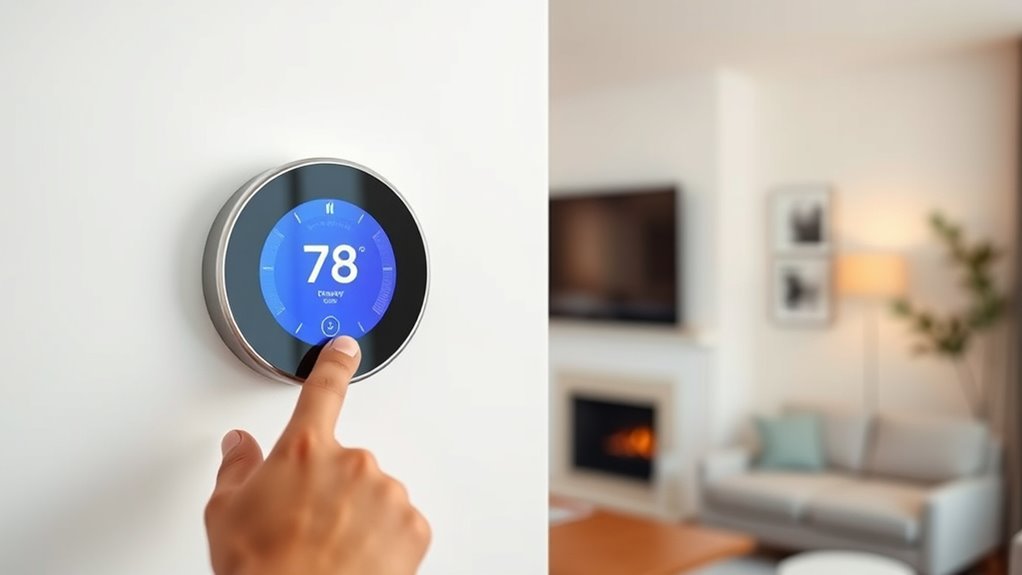
Smart thermostats have become a popular way to save energy and customize your home environment, but they also raise important privacy concerns. When you choose a smart thermostat, you’re not just gaining control over your home’s temperature—you’re also enabling features like voice control that make managing your climate more convenient. Voice control allows you to adjust your thermostat hands-free, using simple commands through platforms like Alexa, Google Assistant, or Siri. This feature can lead to significant energy savings because it encourages more frequent adjustments and helps you fine-tune your system to operate efficiently. However, it also means your voice data is being transmitted and recorded, which raises questions about how your personal information is stored and used.
As you set up your smart thermostat, you should be aware that voice control requires enabling voice recognition features that send your commands to cloud servers for processing. This process, while seamless, involves sharing your voice data with third-party companies, which could potentially be accessed or exploited if not properly secured. To protect your privacy, it’s important to review the privacy policies of your device manufacturer and voice assistant provider. Look for options that allow you to delete recorded voice data or limit what information is stored. Many platforms offer settings to automatically delete recordings after a certain period, giving you more control over your data.
Energy savings are a primary reason many people adopt smart thermostats, but they shouldn’t come at the expense of privacy. When you enable features like voice control, your device learns your routines and preferences to optimize heating and cooling schedules. While this personalized data helps improve energy efficiency, it also creates detailed profiles of your habits. To maintain privacy, you can disable voice control if you’re uncomfortable with the data sharing aspect. Alternatively, you can restrict data collection to only what’s necessary for your thermostat to function effectively, and regularly review privacy settings.
You should also consider network security. Since smart thermostats connect to your Wi-Fi, ensure your home network is secure by using strong passwords and enabling encryption. Regular firmware updates from the manufacturer can patch security vulnerabilities, helping prevent unauthorized access. When you take these steps, you protect your personal information while still enjoying the benefits of a smart thermostat, including voice control and energy savings. Additionally, research suggests that the integration of sound waves can influence brainwave patterns, which is an emerging area of sound healing science that may eventually impact how we optimize home environments for relaxation and health. Ultimately, balancing convenience with privacy requires awareness and proactive management of your device’s settings and data-sharing practices.
Frequently Asked Questions
Can I Use a Smart Thermostat Without an Internet Connection?
Yes, you can use a smart thermostat without an internet connection through offline operation and local control. Many models offer manual adjustments and local access via touchscreen or physical controls, allowing you to set temperatures without Wi-Fi. Keep in mind, some features like remote control, software updates, and data privacy options may require an internet connection. But basic temperature management remains possible offline, giving you control without connectivity.
How Secure Are Smart Thermostats Against Hacking Attempts?
Smart thermostats are generally secure against hacking attempts thanks to strong cybersecurity threats protections like data encryption. You might worry about vulnerabilities, but manufacturers regularly update firmware to patch security flaws. By enabling privacy controls and using strong passwords, you markedly reduce risks. Imagine your home’s climate control system shielded like a vault—preventing unauthorized access and keeping your data safe from cyber threats.
Do Smart Thermostats Share Data With Third-Party Advertisers?
Smart thermostats can share data with third-party advertisers, impacting your advertising privacy. You might not always be aware when your data is shared, which can lead to targeted ads based on your usage patterns. To protect yourself, check your device’s privacy settings and opt out of third-party data sharing when possible. Staying informed helps you control your data and maintain your advertising privacy.
Can I Delete My Data History From a Smart Thermostat?
Think of your data as a garden; you can prune and clear it. You can delete your data history from a smart thermostat by accessing privacy settings and choosing data removal options. Many devices offer data anonymization features, which protect your identity while retaining useful insights. Regularly reviewing and adjusting privacy settings helps you stay in control, ensuring your personal information remains private and your digital landscape stays tidy.
What Are the Legal Rights Regarding My Data Privacy With Smart Thermostats?
Your privacy rights with smart thermostats are protected by privacy legislation, which requires companies to obtain your clear user consent before collecting or sharing data. You have the right to access, correct, or delete your data, and companies must honor these requests. Always review the privacy policies and controls available, so you can manage your data privacy settings confidently and ensure your information is handled responsibly.
Conclusion
By taking control of your smart thermostat’s privacy settings, you’re steering your home’s data like a captain at the wheel. Remember, safeguarding your information isn’t just a choice—it’s a shield protecting your privacy from unseen eyes. Think of these controls as your personal gatekeeper, keeping your data safe and secure. Stay vigilant and proactive, so your smart home remains a cozy haven, not a open book for prying eyes.