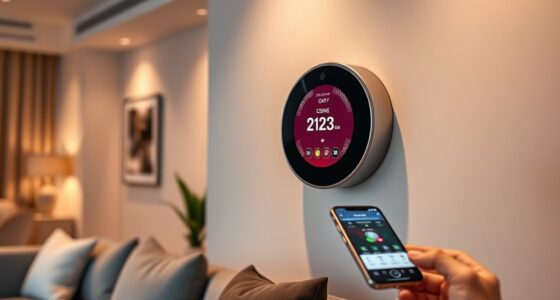
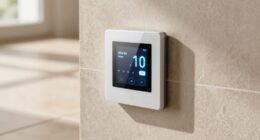
Integrating your smart thermostat with an energy management dashboard helps you monitor and control your home’s temperature efficiently. You can see real-time energy consumption, adjust settings remotely, and create personalized schedules that optimize comfort and reduce waste. These dashboards often offer insights and recommendations to boost savings, detect issues early, and track your progress over time. Keep exploring how this seamless connection can enhance your energy savings and home comfort even further.
Key Takeaways
- Integrate smart thermostats with energy dashboards to monitor and analyze real-time consumption and efficiency metrics.
- Enable remote control and automation of thermostat settings through dashboard insights.
- Use dashboards to identify energy waste, optimize space usage, and adjust schedules for better efficiency.
- Receive alerts and maintenance notifications linked to thermostat performance via the dashboard interface.
- Track long-term savings and set energy reduction goals with comprehensive data visualization tools.

Integrating a smart thermostat into your home system can considerably enhance comfort and energy efficiency. When you set up your smart thermostat, you gain access to features like remote sensors and customizable programming schedules that maximize your heating and cooling. Remote sensors allow you to monitor temperature and occupancy in different areas of your home, giving you a more detailed picture of how spaces are used. This means your thermostat can adjust heating or cooling based on real-time data from various rooms, rather than relying on a single, central temperature reading. As a result, you avoid wasting energy cooling or heating empty rooms, which saves you money and reduces your carbon footprint.
Smart thermostats with remote sensors optimize comfort and energy savings by adjusting based on real-time room data.
Programming schedules are another critical aspect of smart thermostat integration. Instead of manually adjusting your thermostat throughout the day, you can create tailored schedules that align with your daily routines. For example, you might set the system to lower the temperature during work hours when you’re not home and ramp it up just before you return. This automation ensures your home remains comfortable when needed while conserving energy during unoccupied periods. Many smart thermostats also learn your preferences over time, automatically adjusting schedules based on your habits, further enhancing efficiency without requiring constant input.
When you connect your smart thermostat to an energy management dashboard, you gain a detailed overview of your energy usage. These dashboards compile data from your thermostat, remote sensors, and other connected devices, providing insights into consumption patterns. With this information, you can identify areas where you might improve efficiency or detect unusual energy spikes that could indicate issues with your HVAC system. The dashboard often offers recommendations or allows you to set specific goals for reducing energy use, making it easier to stay on track and see tangible results over time.
Moreover, integrating your smart thermostat with an energy management dashboard creates a centralized control point. You can adjust settings remotely via your smartphone or computer, ensuring that you’re never out of the loop. Whether you’re at work, on vacation, or just relaxing at home, you have the power to fine-tune your comfort and energy savings with a few clicks. Notifications from the dashboard can alert you about maintenance needs or unusual activity, helping you maintain ideal system performance and prevent costly repairs. Additionally, maximizing space and organization within your home environment can facilitate easier access to thermostats and sensors, ensuring they operate optimally and contribute to overall efficiency.
Frequently Asked Questions
How Secure Is the Data Transmitted Between Thermostats and Dashboards?
The data transmitted between your smart thermostat and dashboards is generally secure thanks to strong data encryption. This encryption helps safeguard your user privacy by preventing unauthorized access or interception. Manufacturers often implement additional security measures like regular updates and secure communication protocols. However, you should still stay vigilant, use strong passwords, and keep software up to date to ensure your data remains safe and your privacy intact.
Can Smart Thermostats Be Integrated With Existing Home Automation Systems?
Yes, you can integrate smart thermostats with your existing home automation systems. Many models support voice control, allowing you to adjust settings effortlessly. They also offer remote access, so you can manage your thermostat from anywhere via smartphone or tablet. Compatibility varies, so check your system’s specifications. Integration enhances convenience and energy efficiency, making it easier to customize your home’s climate and control it seamlessly through your home automation setup.
What Are the Compatibility Requirements for Different Energy Management Dashboards?
To guarantee compatibility with energy management dashboards, you need to check device interoperability, making sure your smart thermostat supports standard protocols like Zigbee or Z-Wave. Keep firmware updates current, as they often add new features and fix bugs that improve integration. Confirm that the dashboard’s software is compatible with your thermostat’s brand and model, and follow manufacturer guidelines for seamless setup and reliable performance.
How Does Integration Affect the Energy Savings and Cost Reduction?
Think of integration as a well-orchestrated symphony where your smart thermostat and energy dashboard play in harmony. This synergy boosts efficiency improvements, allowing you to fine-tune heating and cooling with precision. As a result, you’ll enjoy significant cost savings, reducing energy waste and lowering bills. By aligning these systems, you create a smart ecosystem that maximizes savings and efficiency, turning your energy management into a finely tuned masterpiece.
Are There Any Privacy Concerns With Continuous Data Collection?
You should be aware that continuous data collection poses privacy risks, as sensitive information about your habits could be exposed. To protect yourself, guarantee the system uses data encryption, which secures your data from unauthorized access. Regularly review privacy settings and data policies to stay informed about how your information is used. Being proactive helps you mitigate privacy concerns while enjoying the benefits of smart thermostat integration.
Conclusion
By integrating your smart thermostat with energy management dashboards, you gain control and insight that transform your home’s comfort into efficiency. It’s like having both a comfort coach and a financial advisor in one device—one keeps you cozy, the other saves you money. Together, they work seamlessly, turning the mundane act of adjusting temperature into a smart move for your wallet and the environment. Embrace this fusion of convenience and sustainability, and watch your energy habits evolve effortlessly.