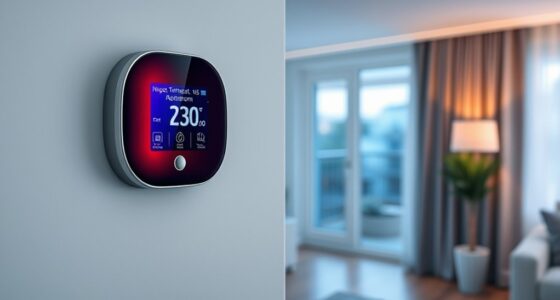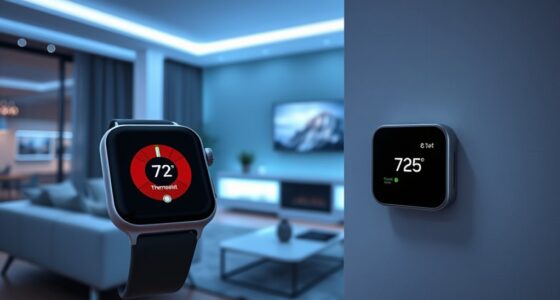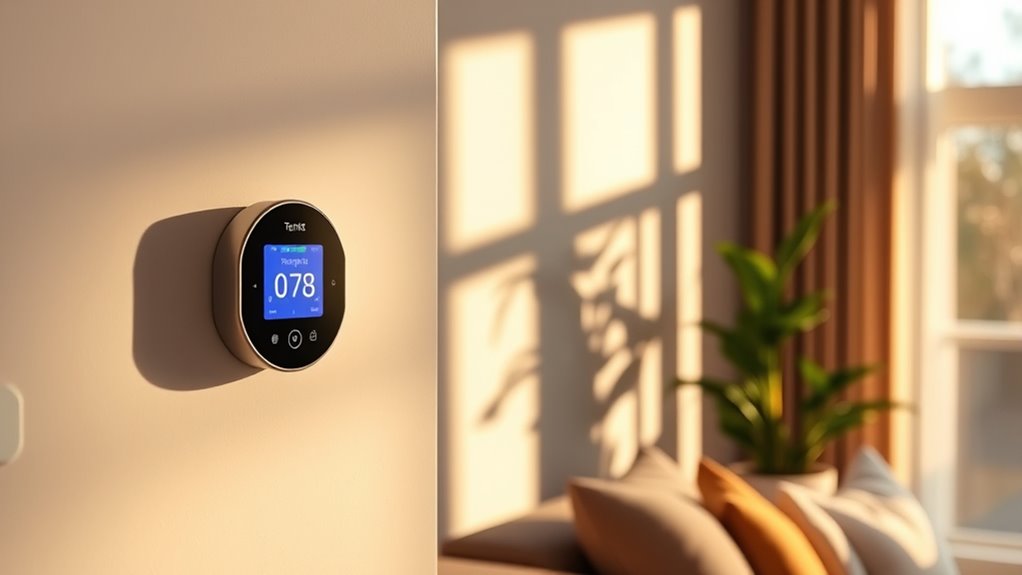
By combining smart thermostats with motion sensors, you create an intuitive home climate system that adapts to your routines and occupancy. The sensors detect movement in different rooms, prompting the thermostat to adjust temperatures automatically—saving energy and enhancing comfort. Over time, the system learns your habits for even smarter responses, while remote control options add convenience. Keep exploring to discover how this setup can make your home more efficient and personalized.
Key Takeaways
- Motion sensors enable smart thermostats to automatically adjust temperatures based on occupancy, enhancing comfort.
- Combining these technologies reduces energy waste by heating or cooling only occupied spaces.
- The system learns routines over time, optimizing comfort while minimizing manual adjustments.
- Remote control capabilities allow users to monitor and modify climate settings from anywhere.
- Integration offers a seamless, personalized living environment with minimal effort and increased convenience.
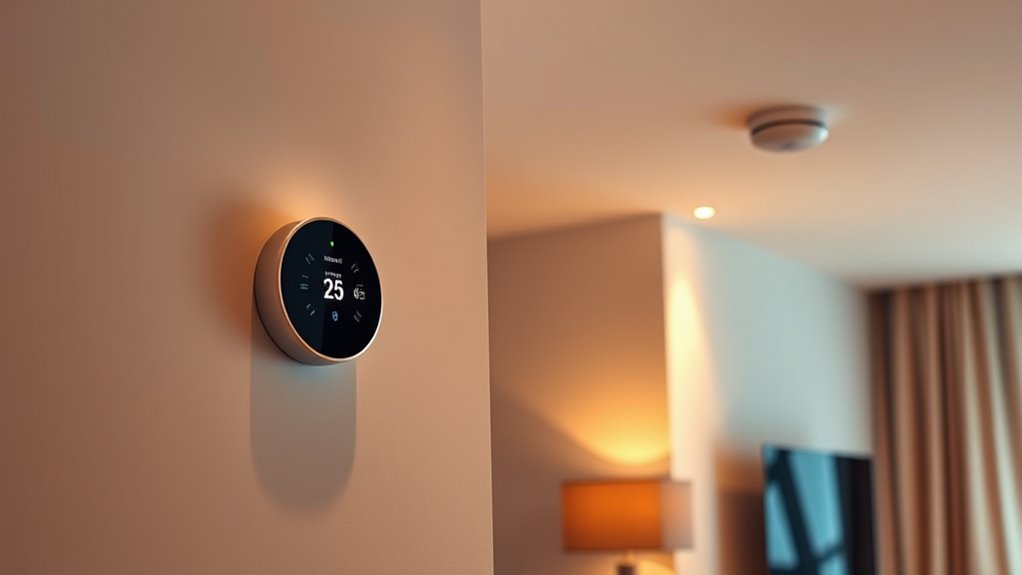
Smart thermostats and motion sensors are transforming the way you manage your home’s comfort and energy use. When you combine these two technologies, you create a system that adapts seamlessly to your daily routines, offering both energy savings and user convenience. Instead of manually adjusting the thermostat or worrying about wasting heat or cooling when rooms are empty, your home now responds intelligently. Motion sensors detect movement in different areas, signaling your smart thermostat to adjust the temperature accordingly. If you leave the room, the sensors recognize your absence and can lower the heating or cooling, conserving energy without sacrificing comfort. When you return, the sensors pick up your presence, and the thermostat ramps back up to a comfortable temperature. This dynamic interaction means you’re not only reducing wasted energy but also enjoying a more personalized living environment.
The real advantage lies in how these devices work together to optimize your home’s climate. You no longer need to set schedules or manually change the thermostat throughout the day. Instead, your system learns your habits over time, adjusting settings automatically based on when and where you move. For instance, if you tend to spend mornings in the living room, the sensors can ensure that space is warm or cool just before you arrive. During periods of inactivity, the system can switch to energy-saving modes, reducing your utility bills without you having to lift a finger. This automation promotes energy efficiency, which benefits both your wallet and the environment. Additionally, many smart thermostats are compatible with online platforms, allowing you to monitor and control your home’s climate remotely.
User convenience skyrockets with this setup because it minimizes the effort involved in maintaining a comfortable home. You don’t have to think about turning the thermostat up or down or remembering to switch off the AC when you leave a room. The sensors do it for you, creating a more intuitive experience. Plus, many smart thermostats come with apps or voice command compatibility, so you can control or override settings remotely if needed. This flexibility means you’re always in control, even when you’re away from home, adding an extra layer of convenience.
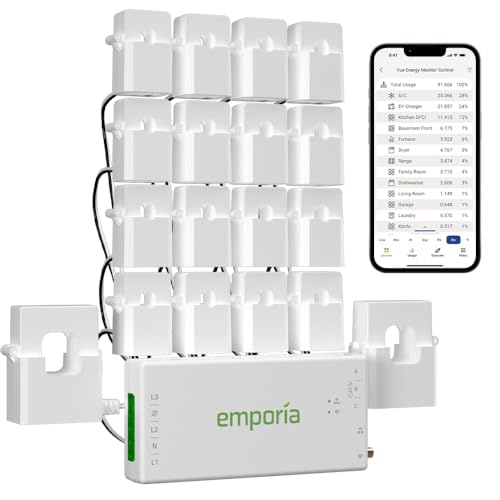
Emporia Vue 3 Home Energy Monitor - Smart Home Automation Module and Real Time Electricity Usage Monitor, Power Consumption Meter, Solar and Net Metering for UL Certified Safe Energy Monitoring
- UL Certified for Safety: Certified for electrical safety in US and Canada
- Easy Installation: Fits in most circuit panels with clamp-on sensors
- Supports Various Systems: Compatible with single, split-phase, and 3-phase systems
As an affiliate, we earn on qualifying purchases.
Frequently Asked Questions
Can Motion Sensors Detect Pets and Avoid False Triggers?
Yes, motion sensors with pet detection features help prevent false triggers. They distinguish between humans and pets, ensuring your thermostat only responds to actual occupancy changes. This false trigger prevention keeps your home comfortable without unnecessary temperature adjustments caused by your furry friends moving around. By using pet detection, you get better energy efficiency and avoid constant thermostat toggling, making your smart system more reliable and tailored to your household’s needs.
How Does the System Learn Occupant Preferences Over Time?
Your system learns occupant preferences over time through advanced learning algorithms that adapt quickly, like a brain on hyperdrive. It tracks your habits, temperature choices, and movement patterns, constantly refining its comfort settings. With each interaction, it becomes smarter, customizing the environment to suit your needs perfectly. This occupant adaptation guarantees your space stays cozy and efficient, making you feel like the system anticipates your desires before you even realize them.
Is Professional Installation Required for Integrated Systems?
Professional installation isn’t always necessary for integrated systems, but it’s highly recommended for ideal system integration. Skilled technicians ensure your smart thermostat and motion sensors are correctly set up, calibrated, and connected to your home network. This helps prevent issues, maximizes efficiency, and ensures seamless operation. If you’re comfortable with DIY projects, some systems offer easy installation, but professional help guarantees your system functions smoothly and provides the most comfort and energy savings.
Can Multiple Users Customize Their Comfort Settings?
Yes, multiple users can customize their comfort settings. Most smart thermostats allow you to set user preferences and control customization for each individual. You can easily create personalized schedules and temperature preferences, ensuring everyone feels comfortable. With app controls, each user can adjust their settings remotely, making it simple to manage comfort levels for multiple people in the home without conflicts.
What Are the Energy Savings Associated With This Setup?
Think of your home as a well-tuned orchestra, where every instrument plays in harmony. By integrating smart thermostats with motion sensors, you optimize energy efficiency, reducing unnecessary heating or cooling when rooms are empty. This setup leads to significant cost reduction over time, as you avoid wasteful energy use. You’ll enjoy a cozy home while saving money, like a conductor skillfully balancing the symphony for maximum impact.

Smart Home Energy Monitor with 16 50A Circuit Level Sensors, Real-Time Power Usage & Electricity Cost Tracking, Ideal for Rental Homes & Shared Apartments, App History, Compatible with Home Assistant
- Easy Installation: Clamp-on sensors for most circuit panels
- Real-Time Power Monitoring: Track power usage anytime, anywhere
- Electricity Cost Tracking: Monitor costs and energy consumption
As an affiliate, we earn on qualifying purchases.
Conclusion
By combining smart thermostats with motion sensors, you create a seamless, energy-efficient home that responds to your needs. Imagine walking into your living room on a cold evening, and as you enter, the sensors detect your presence, instantly warming the space to your preferred temperature. This smart setup not only boosts comfort but also saves energy, making your home both cozy and eco-friendly. Embrace this technology to transform your living experience effortlessly.

Meross Smart Home Energy Monitor, Real-Time Power & Cost Tracking
- Safe and Reliable Certification: ETL-certified and UL compliant for safety
- Easy Clamp-On Installation: Quick, tool-free setup with invertible CT readings
- Universal Compatibility: Works with most US home electrical systems
As an affiliate, we earn on qualifying purchases.

Refoss Smart Home Energy Monitor with Open API, Home Assistant, No Cloud
- Local Data Access: Web UI, Open API, MQTT support
- Privacy & Control: Data stays within your home network
- Offline Functionality: Operates without internet connection
As an affiliate, we earn on qualifying purchases.