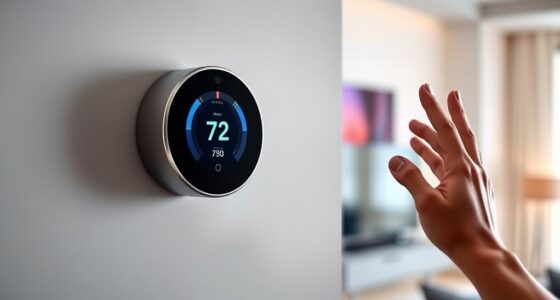
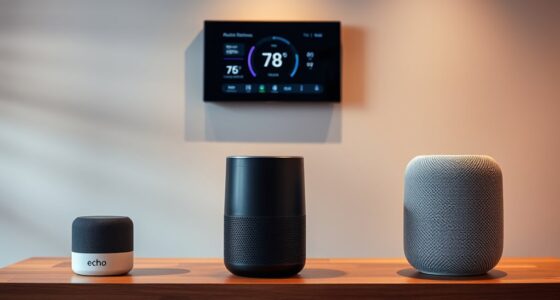
Combining smart thermostats with temperature sensors in each room helps you create a more comfortable and energy-efficient home. With this setup, your system learns your routines and adjusts heating or cooling based on real-time room temperatures. It targets specific areas that need climate control, preventing energy waste and maintaining consistent comfort. If you keep exploring, you’ll discover how this smart integration can optimize your home’s heating and cooling even further.
Key Takeaways
- Integrating sensors with smart thermostats enables real-time, room-specific temperature data for precise climate control.
- The system learns routines and adjusts heating or cooling based on individual room needs and occupancy patterns.
- Targeted sensors prevent energy waste by avoiding unnecessary heating or cooling in unoccupied or already comfortable areas.
- Granular control maintains consistent comfort across rooms, accommodating different occupant preferences.
- This combination reduces temperature fluctuations, improves energy efficiency, and enhances overall home comfort and system longevity.

Have you ever wondered how your home stays comfortably warm or cool? It all comes down to how well your thermostat and temperature sensors work together. When you combine smart thermostats with temperature sensors placed in each room, you create a system that adapts seamlessly to your needs. This integration boosts energy efficiency because it guarantees that heating or cooling only occurs where it’s needed, rather than wasting energy on unoccupied spaces. At the same time, it elevates user comfort by maintaining a consistent, personalized environment throughout your home.
Smart thermostats are designed to learn your routines and preferences, adjusting their settings automatically to save energy while keeping you comfortable. But when paired with sensors in every room, they gain an even higher level of precision. These sensors send real-time temperature data directly to the thermostat, allowing it to make smarter decisions about when and where to heat or cool. For example, if the living room is already at the perfect temperature, the system will skip heating that area while focusing on colder rooms. This targeted approach prevents overconditioning, reducing energy waste and lowering your utility bills.
The beauty of this setup lies in its responsiveness. Instead of relying solely on a single thermostat that measures the overall house temperature, you get granular control. If a bedroom becomes uncomfortably warm or cold, sensors detect it immediately, and the system adjusts accordingly. This means you don’t have to compromise on comfort or accept uneven temperatures throughout your home. Instead, each room maintains its ideal climate, which is especially beneficial if you have family members with different comfort preferences.
Moreover, the use of multiple sensors helps prevent common issues like overheating or overcooling, which can happen with traditional thermostats. As a result, you experience fewer temperature fluctuations, creating a more stable and pleasant environment. This stability considerably improves user comfort because it eliminates the frustration of inconsistent room temperatures. Plus, knowing that your system is smart enough to adapt to your daily patterns and occupancy further enhances your overall home experience. Additionally, understanding the importance of asset management ensures your systems are maintained efficiently for long-term performance.
Frequently Asked Questions
Can Multiple Sensors Cause Conflicting Temperature Readings?
Yes, multiple sensors can cause conflicting temperature readings, especially if their placement isn’t ideal or calibration frequency isn’t maintained. You should place sensors away from heat sources or drafts to get accurate readings, and regularly calibrate them to prevent discrepancies. Proper sensor placement and consistent calibration ensure your smart thermostat makes the best decisions, reducing conflicts and maintaining comfortable temperatures throughout your home.
How Do Sensors Impact Overall Energy Savings?
You instantly see the benefits when sensor accuracy improves, boosting energy efficiency. Sensors provide precise temperature data, so your smart thermostat adjusts heating and cooling more effectively, saving you money. When sensors work well together, they prevent energy waste by avoiding unnecessary heating or cooling. Think of it as hitting the bullseye—accurate sensors keep your home comfortable while cutting down on energy costs.
Are There Compatibility Issues With Existing HVAC Systems?
You might face some HVAC compatibility issues when integrating smart thermostats and sensors, especially if your system is older. Check if your HVAC system supports smart technology and verify proper sensor calibration for accurate readings. Compatibility varies by brand and system type, so it’s wise to review manufacturer guidelines or consult a professional. Proper calibration and matching compatible components help optimize performance and prevent issues.
How Secure Is the Data Collected by Sensors?
The data collected by sensors is generally secure, but you should stay vigilant about sensor data privacy and device security. Manufacturers often implement encryption and secure communication protocols to protect your information. However, it’s important to regularly update your devices’ firmware and use strong, unique passwords. This way, you minimize risks and guarantee your sensor data remains private, keeping your smart home safer from potential cyber threats.
Do Sensors Require Frequent Calibration or Maintenance?
Sensors generally don’t require frequent calibration, but their lifespan varies depending on the model and usage. You should check the manufacturer’s recommendations, as some sensors need calibration every year or two to maintain accuracy. Regular maintenance, like cleaning and ensuring proper placement, helps extend sensor longevity and performance. By staying on top of calibration frequency and routine upkeep, you ensure your smart system remains dependable and efficient.
Conclusion
By combining smart thermostats with temperature sensors in every room, you’re turning your home into a finely tuned orchestra of comfort. This setup acts like a symphony conductor, ensuring each space gets just the right temperature without wasting energy. You’ll enjoy a cozy, efficient home that responds to your needs, making your environment feel like a warm hug on a cold day. Embrace this smart duo and watch your comfort level rise to new heights.