
Connecting your smart thermostat with shades and blinds creates a seamless system that boosts energy efficiency and comfort. You can link compatible devices through dedicated apps or a central smart home hub, enabling automated routines like lowering blinds during hot afternoons or adjusting temperature when you leave. This integration responds to your habits and natural resources, saving energy and reducing costs. Keep exploring how to set up these connections for a smarter, more efficient home environment.
Key Takeaways
- Use compatible smart home platforms or hubs to link thermostats and shades for centralized control.
- Create automation routines or rules that adjust shades and temperature based on time, sunlight, or occupancy.
- Utilize dedicated apps or device settings to establish communication between smart thermostats and window treatments.
- Enable geofencing features to automatically optimize shading and temperature when leaving or returning home.
- Ensure all devices are updated and compatible to facilitate seamless integration and reliable automation.

Smart thermostats, shades, and blinds are transforming the way you control your home’s comfort and energy efficiency. When you connect these devices, you create a seamless system that responds intelligently to your habits and preferences, maximizing comfort while minimizing energy waste. The key benefit is energy efficiency, which you achieve through user automation—letting your smart devices work together to adjust temperature and shading based on time of day, occupancy, or sunlight levels. Instead of manually adjusting your thermostat or blinds, you set your preferences once, and your system handles the rest, optimizing your home’s climate with minimal effort on your part.
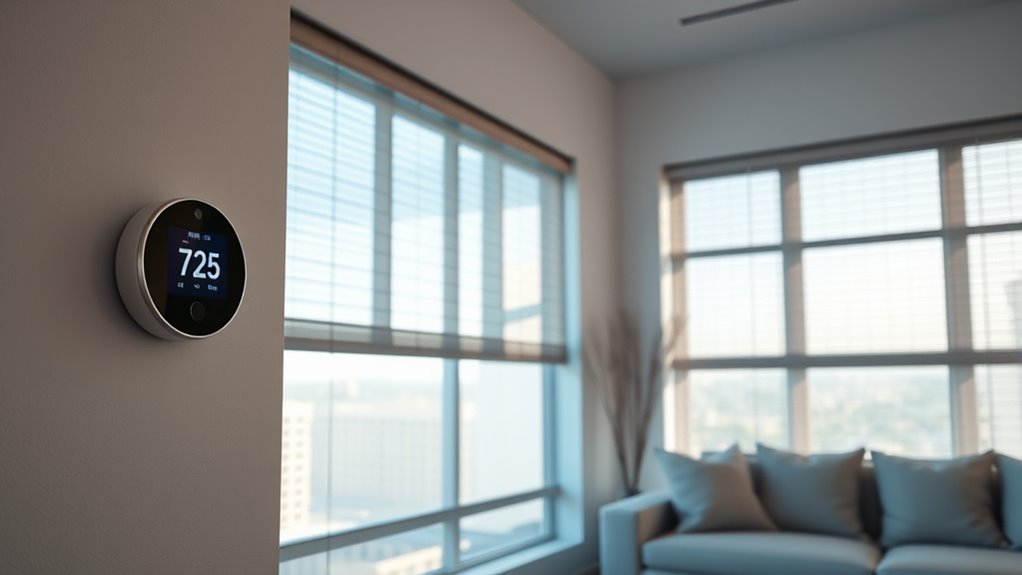
By integrating your smart thermostat with shades and blinds, you gain a new level of control over natural light and temperature regulation. During winter mornings, your system can automatically raise the shades to let in sunlight, warming your space naturally and reducing heating costs. Conversely, on hot summer afternoons, the shades can lower to block out excess heat, easing the load on your air conditioning. This coordinated automation helps you conserve energy by leveraging natural resources, reducing reliance on HVAC systems, and keeping your utility bills in check.
Automate shades to optimize natural light, reduce energy use, and lower your utility bills effortlessly.
Connecting these devices is straightforward with compatible smart home platforms. You typically start by linking your thermostat and shades through a dedicated app or a central hub. Once connected, you can set rules or routines that trigger specific actions. For example, you might create a schedule where, at sunrise, your shades open and the thermostat adjusts to a cozy temperature, ensuring your home is comfortable and energy-efficient from the moment you wake up. In the evenings, the system can close the shades and lower the thermostat slightly, maintaining comfort while reducing energy usage.
User automation plays a crucial role here, allowing your devices to learn your patterns over time. As your system gets smarter, it can anticipate your needs—like lowering blinds when the sun is at its peak or adjusting temperature settings when you leave the house. These automated responses ensure your home remains comfortable without constant manual input, saving you time and effort. Plus, you can customize the automation rules to suit your lifestyle, whether that means setting specific schedules or enabling geofencing that activates routines when you arrive or leave.
In essence, connecting your smart thermostat to smart shades and blinds transforms your home into an intelligent environment. You gain better control over energy efficiency, reduce waste, and enjoy a more comfortable living space—all driven by user automation that adapts to your daily routines. This interconnected approach not only simplifies home management but also helps you save money and contribute to a greener, more sustainable lifestyle. Additionally, understanding the battery technologies that power these devices can help you choose options that are reliable and long-lasting, further enhancing your smart home experience.
Frequently Asked Questions
Can Smart Shades and Blinds Operate Manually Without Disrupting Automation?
Yes, smart shades and blinds can operate manually without disrupting automation. Most smart systems allow you to perform manual operation, such as adjusting or opening blinds, without interrupting the automation settings. When you do this, the automation usually pauses temporarily but doesn’t get disrupted permanently. Once you finish manual operation, the system often resumes its scheduled or automated functions, ensuring seamless control without affecting overall automation.
Are There Compatibility Issues Between Different Brands of Smart Thermostats and Shades?
You might encounter compatibility issues between different brands of smart thermostats and shades due to brand compatibility and protocol integration. Not all devices use the same communication protocols, which can cause syncing problems. To avoid this, verify each device’s compatibility with your smart home hub or platform. Using devices that support common protocols like Zigbee or Z-Wave can help ensure smooth operation and better brand compatibility.
How Secure Is the Data Transmitted Between Smart Thermostats and Window Coverings?
The data transmitted between your smart thermostat and window coverings is generally secure, thanks to data encryption and robust wireless protocols like Zigbee or Z-Wave. These security measures protect your information from unauthorized access during transmission. However, always keep your device firmware updated and use strong, unique passwords to enhance security. Being proactive helps ensure your smart home remains private and safe from potential cyber threats.
What Is the Typical Installation Time for a Fully Integrated System?
The installation duration for a fully integrated system usually takes around 2 to 4 hours, depending on your home’s setup and the complexity of system configuration. You’ll need to connect the smart thermostat and shades or blinds, configure the automation settings, and make sure everything communicates seamlessly. It’s best to have a professional handle the installation for smooth setup, but basic configurations can sometimes be completed by tech-savvy homeowners in less time.
Can These Systems Be Controlled Remotely When Away From Home?
Think of your smart system as a vigilant lighthouse keeper, always watching over your home. Yes, you can control your smart thermostat and shades remotely, giving you remote access wherever you are. However, stay cautious of security concerns—use strong passwords and secure networks to prevent unauthorized access. With proper safeguards, you can enjoy the convenience and peace of mind knowing your home adapts to your needs, even from afar.
Conclusion
By connecting your smart thermostats with smart shades and blinds, you can optimize your home’s comfort and energy efficiency effortlessly. Did you know that smart window treatments can reduce energy bills by up to 20%? This seamless integration not only saves you money but also enhances your daily living experience. Embrace this smart automation to enjoy a more comfortable, eco-friendly home—it’s easier and more rewarding than you might think.