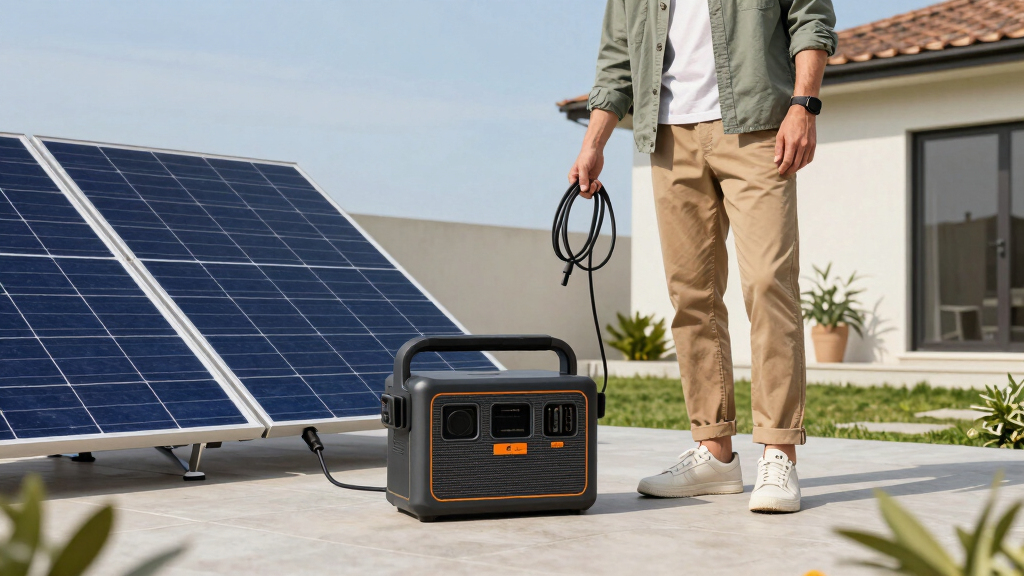

Preparing for extended power outages requires reliable, solar-compatible power stations that can sustain essential devices over time. The best overall pick is the Jackery Explorer 1000 v2, thanks to its robust capacity and versatile solar input options. For those on a tighter budget, the ZeroKor 300W offers solid performance at a lower price point, while the Lipower 2400W stands out for its high power output suitable for demanding needs. Each option balances capacity, solar integration, and portability differently, making tradeoffs inevitable—larger capacity often means increased weight, and higher power stations can be more complex to operate. Continue reading for a detailed breakdown to match your prep priorities.

Get home appliances delivered free with Prime
- Fast, free delivery on millions of items
- Prime Video, Amazon Music and more included
- Member-only deals all year
Complete the kit


Key Takeaways
- The top picks balance solar compatibility with battery capacity to ensure long-term outage readiness.
- Larger capacity stations tend to be heavier and less portable, but provide more run-time for critical devices.
- Integrated solar panels simplify setup but often limit maximum input wattage, affecting recharging speed.
- Budget options generally sacrifice capacity or solar input power, so consider your essential power needs carefully.
- Ease of use and build quality are key for long-term reliability in emergency scenarios.
| MARBERO 237Wh Portable Power Station with 60W Solar Panel |  | Best Compact and Affordable Solar-Ready Power Station | Battery Capacity: 237Wh / 64,000mAh | Battery Type: Lithium-ion | AC Output: 300W rated, 375W peak | VIEW LATEST PRICE | See Our Full Breakdown |
| Jackery Explorer 1000 v2 Solar Generator with Two 100W Solar Panels |  | Best High-Capacity, Long-Run Power for Off-Grid Living | Battery capacity: 1,070Wh | Battery type: LiFePO4 | AC output: 1,500W | VIEW LATEST PRICE | See Our Full Breakdown |
| ZeroKor 300W Portable Power Station with 60W Solar Panel | 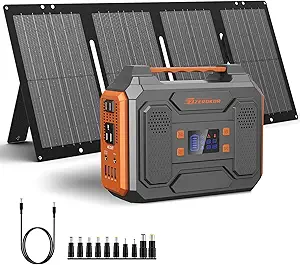 | Best for Small Devices and Emergency Use | Maximum output: 300W | Included solar panel: 60W monocrystalline | AC outlets: 2 | VIEW LATEST PRICE | See Our Full Breakdown |
| Lipower 2400W Portable Power Station, 2150Wh |  | Best for Heavy-Duty Home Backup and Off-Grid Use | Battery capacity: 2150Wh | Battery type: LiFePO4 | Continuous output: 2400W | VIEW LATEST PRICE | See Our Full Breakdown |
| BROWEY 1600W Portable Power Station with Built-In 40W Solar Panel and 120W Solar Panel |  | Best for Versatile Solar Charging and Moderate Power Needs | Battery capacity: 1024Wh | Battery type: LiFePO4 | Running output: 1600W | VIEW LATEST PRICE | See Our Full Breakdown |
| BLAVOR 1600W Solar Generator with 1024Wh Battery and Built-In 40W Solar Panel |  | Best Overall for Long Outages with Versatile Recharging | Battery Capacity: 1024Wh | Peak Output: 3200W | Battery Type: LiFePO4 | VIEW LATEST PRICE | See Our Full Breakdown |
| Westinghouse iGen400s Portable Power Station, 400W Peak, 183Wh |  | Best for Lightweight, Indoor Use During Power Outages | Peak Output: 400W | Running Output: 200W | Battery Capacity: 183Wh | VIEW LATEST PRICE | See Our Full Breakdown |
| BLUETTI Elite 30 V2 Portable Power Station, 288Wh, 600W |  | Best for Portable Power with Fast Charging and UPS | Capacity: 288Wh | Continuous Output: 600W | Peak Output: 1500W | VIEW LATEST PRICE | See Our Full Breakdown |
| DaranEner 300W Portable Power Station with 30W Solar Panel |  | Best Compact and Affordable for Short-Term Outages | Battery Capacity: 192Wh | Output Wattage: 300W | Battery Type: LiFePO4 | VIEW LATEST PRICE | See Our Full Breakdown |
| ZeroKor 100W Portable Power Station with 40W Foldable Solar Panel |  | Best for Small Electronics and Emergency Use in Compact Form | Power Station Output: 100W | Solar Panel: 40W, foldable | Battery Capacity: 100Wh | VIEW LATEST PRICE | See Our Full Breakdown |
| EnginStar 300W Portable Power Station with 60W Foldable Solar Panel |  | Best Compact and Versatile Power Backup | Battery capacity: 296Wh (80,000mAh) | AC output: 300W | AC outlets: 2 x 110V pure sine wave | VIEW LATEST PRICE | See Our Full Breakdown |
| OUPES Mega 1 Solar Generator with 100W Solar Panel |  | Best for High Capacity and Long-Term Outage Prep | Battery capacity: 1024Wh, expandable to 5120Wh | Battery type: LiFePO4 | AC output: 2000W | VIEW LATEST PRICE | See Our Full Breakdown |
| solar-ready power stations for long outage prep | Battery Capacity | Weight | Battery Type |
|---|---|---|---|
| MARBERO 237Wh Portable Power S | 237Wh / 64,000mAh | — | Lithium-ion |
| Jackery Explorer 1000 v2 Solar | 1,070Wh | 23.8 lbs | LiFePO4 |
| ZeroKor 300W Portable Power St | — | — | — |
| Lipower 2400W Portable Power S | 2150Wh | 48 lbs | LiFePO4 |
| BROWEY 1600W Portable Power St | 1024Wh | 26 lbs | LiFePO4 |
| BLAVOR 1600W Solar Generator w | 1024Wh | — | LiFePO4 |
| Westinghouse iGen400s Portable | 183Wh | 5 lbs | — |
| BLUETTI Elite 30 V2 Portable P | — | 9.5 lbs | — |
| DaranEner 300W Portable Power | 192Wh | 5.84 lbs | LiFePO4 |
| ZeroKor 100W Portable Power St | 100Wh | 3.3 lbs | — |
| EnginStar 300W Portable Power | 296Wh (80,000mAh) | 6.5 lbs | — |
| OUPES Mega 1 Solar Generator w | 1024Wh, expandable to 5120Wh | 27.8 lbs | LiFePO4 |
More Details on Our Top Picks
MARBERO 237Wh Portable Power Station with 60W Solar Panel
This model stands out for its portability and affordability, making it ideal for light outdoor use and emergency backup when solar is available. Unlike the Jackery Explorer 1000, it offers a much smaller capacity, limiting its runtime and appliance support, but it compensates with a foldable solar panel that is easy to carry. Its pure sine wave AC ensures safe operation for sensitive devices, though the 300W output restricts larger appliances. The included 60W solar panel supports recharging in good sunlight, but the brief runtime of about an hour means it’s best suited for quick power boosts rather than prolonged outages. This makes it a good choice for those who prioritize mobility and simplicity over long-term power needs, but not for users expecting sustained backup power.
Pros:- Includes a foldable 60W solar panel for easy portability
- Offers multiple outputs including AC, USB-A, USB-C, and DC
- Pure sine wave AC for safe powering of sensitive electronics
Cons:- Limited to 237Wh capacity, restricting runtime and device support
- Only 300W maximum output, unsuitable for high-wattage appliances
- Runtime listed as just 1 hour, indicating limited power duration
Best for: Campers, hikers, or emergency kits needing a lightweight, solar-compatible power source for small devices
Not ideal for: Home backup during extended outages or powering high-wattage appliances, due to limited capacity and output
- Battery Capacity:237Wh / 64,000mAh
- Battery Type:Lithium-ion
- AC Output:300W rated, 375W peak
- AC Outlets:2
- USB-A QC3.0 Ports:2, up to 18W each
- USB-C Port:1, 18W PD
- Included Solar Panel:60W foldable
- Solar Conversion Rate:21.5–23.5%
Our verdict“This power station fits buyers seeking a compact, solar-compatible backup for small devices and short outings.”
Jackery Explorer 1000 v2 Solar Generator with Two 100W Solar Panels
This pick makes the most sense for those who need substantial energy reserves and fast recharging, especially compared to smaller options like the Lipower 2400W. Its impressive 1,070Wh capacity paired with a 1,500W continuous AC output can sustain multiple devices for hours, making it suitable for longer outages and home backup. The inclusion of two 100W solar panels enables efficient recharging in direct sunlight, though the panels and generator ship separately, adding to setup complexity. The LiFePO4 battery promises over 4,000 charge cycles, ensuring durability over years of use. While the one-hour recharge claim is optimistic and depends heavily on sunlight, this model is better suited for users who prioritize capacity and reliability over portability or minimal weight.
Pros:- Large 1,070Wh capacity with 1,500W continuous output
- Includes two foldable 100W solar panels for quick recharging
- App control and monitoring for ease of use
Cons:- Solar panels ship separately, increasing setup effort
- Weight of nearly 24 pounds may be cumbersome for some users
- Recharge time depends on sunlight intensity, may not always be 1 hour
Best for: Homeowners and RV travelers seeking reliable, high-capacity solar backup with fast recharge times
Not ideal for: Light campers or those with limited space who need lightweight, compact power stations
- Battery capacity:1,070Wh
- Battery type:LiFePO4
- AC output:1,500W
- Surge output:3,000W
- USB-C output:100W
- Charging panels:Two 100W panels
- Recharge time:1 hour (claimed)
- Weight:23.8 lbs
Our verdict“This is an excellent choice for those who need dependable power with ample capacity for extended outages or off-grid living.”
ZeroKor 300W Portable Power Station with 60W Solar Panel
This model is well-suited for users who prioritize portability and safety features, like an SOS flashlight, over high power output. Its 300W maximum output limits it to small electronics, similar to the MARBERO but with a slightly lower capacity and fewer advanced features. The included 60W solar panel supports recharging in good sunlight, but the product recommends maintaining a charge level between 60% and 80%, which could complicate long-term use during outages. Compared to the Lipower 2400W, it offers less power but is more lightweight at around 10 pounds, making it easier to carry for quick emergency needs. The safety protections and multiple recharging options add peace of mind, but it’s not suited to powering larger appliances.
Pros:- Includes a 60W solar panel for recharging
- Supports multiple device types via AC, DC, and USB outputs
- Built-in safety features and SOS flashlight
Cons:- Limited to 300W maximum, restricting larger device use
- Solar panel junction box is not waterproof, limiting outdoor durability
- Requires maintaining specific charge levels for optimal performance
Best for: Emergency preparedness kits or short outdoor trips requiring small device charging and portability
Not ideal for: Extended outages or powering appliances over 300W, due to limited capacity and output
- Maximum output:300W
- Included solar panel:60W monocrystalline
- AC outlets:2
- USB ports:3 USB ports and 1 quick-charge USB
- Recharge methods:AC, solar, or car
- Safety features:Short-circuit, over-current, over-voltage, overload, overheating
Our verdict“This power station is ideal for light, portable emergency setups needing quick device charging in a compact form.”
Lipower 2400W Portable Power Station, 2150Wh
This model is a powerhouse designed for users who need substantial continuous power and long-term reliability, especially for home backup, camping, or RV use. Its 2150Wh capacity and 2400W continuous output surpass most portable options, including the Jackery 1000, making it suitable for multiple appliances and longer outages. The inclusion of solar, AC, and car charging options provides flexible recharging, although the solar panels are sold separately. The 10ms UPS switchover is a key feature for critical devices, and the LiFePO4 battery ensures over 3500 cycles. Its weight of 48 pounds makes it less portable but ideal for stationary backup or off-grid scenarios where weight isn’t a concern. This is best for users prioritizing capacity and stability over portability.
Pros:- Huge 2150Wh capacity with 2400W continuous power
- Multiple charging options including solar, AC, and car
- 10ms UPS switchover and pass-through charging for critical devices
Cons:- Solar panels are sold separately, increasing setup cost
- Heavy at 48 pounds, less suited for frequent moving
- Price may be prohibitive for casual users
Best for: Homeowners, RVers, or off-grid enthusiasts seeking reliable, high-capacity backup power
Not ideal for: Light campers or those needing a lightweight, portable solution for short outings
- Battery capacity:2150Wh
- Battery type:LiFePO4
- Continuous output:2400W
- Surge output:4000W
- UPS switchover:10ms
- Solar input:Up to 800W
- Charge cycles:Over 3500
- Weight:48 lbs
Our verdict“This station is the best pick for those who need dependable, high-capacity power at home or off-grid, willing to handle its weight and cost.”
BROWEY 1600W Portable Power Station with Built-In 40W Solar Panel and 120W Solar Panel
This model offers a balanced combination of built-in and external solar panels, making it a flexible choice for moderate power needs during outages or outdoor activities. Its 1024Wh LiFePO4 battery supports 1600W continuous output, which is ample for most camping and backup scenarios. Compared to the Lipower 2400W, it’s lighter at 26 pounds and includes both a built-in 40W solar panel and an additional 120W panel, enabling quicker recharging and greater solar flexibility. However, the 1600W output may be insufficient for high-demand appliances, and the battery cycles are rated at 3000+, slightly lower than premium models. Its moderate weight and dual solar inputs make it suitable for users who want a versatile, mid-range power station for off-grid or emergency use without excessive bulk.
Pros:- Includes both built-in 40W and external 120W solar panels
- Supports multiple recharging methods including AC, solar, and car
- LiFePO4 battery with over 3000 cycles for durability
Cons:- Limited to 1600W continuous output, restricting some appliances
- Weighs 26 pounds, which is manageable but less portable than smaller options
- Battery lifespan slightly below top-tier models
Best for: Campers, RV travelers, or small household backup users wanting flexible solar options with decent capacity
Not ideal for: Users needing to run high-wattage appliances or requiring the longest possible battery lifespan
- Battery capacity:1024Wh
- Battery type:LiFePO4
- Running output:1600W
- Peak output:3200W
- Built-in solar panel:40W
- Additional solar panel:120W
- Charge cycles:3000+
- Weight:26 lbs
Our verdict“This power station offers a flexible, moderate-capacity solar solution suited for outdoor enthusiasts and small backup needs.”
BLAVOR 1600W Solar Generator with 1024Wh Battery and Built-In 40W Solar Panel
This option stands out for integrating a built-in 40W solar panel with a robust 1024Wh LiFePO4 battery, supporting multiple recharging methods including wall, car, and external solar input. Compared with the Westinghouse iGen400s, it offers significantly higher capacity and peak output, making it better suited for powering larger appliances during extended outages. Its LiFePO4 chemistry promises over 4,000 cycles, ensuring longevity. However, the external solar panel must be purchased separately, which could add to costs. The 1600W continuous output supports a wide range of devices, but appliances must stay within rated limits. This makes it ideal for those who want an all-in-one, reliable power source capable of long-term use, with flexible recharging options. The main tradeoff is the higher weight and price relative to smaller, less capable models.Pros:- Built-in 40W solar panel included, ready to use right out of the box
- LiFePO4 battery rated for over 4,000 cycles ensures durability
- Supports four recharging methods for maximum flexibility
- High peak output of 3200W supports large appliances
Cons:- External solar panel sold separately, adding upfront cost
- Relatively heavy at 26 pounds, less portable
Best for: Preppers seeking a high-capacity, long-term power station with integrated solar for extended outages
Not ideal for: Casual campers or users who need a lightweight, budget-friendly backup power option
- Battery Capacity:1024Wh
- Peak Output:3200W
- Battery Type:LiFePO4
- Built-In Solar Panel:40W
- Maximum External Solar Input:200W
- Recharging Methods:Wall outlet, car socket, built-in and external solar
Our verdict“This power station is best for those who need reliable, long-term backup power with flexible solar recharging and high capacity.”
Westinghouse iGen400s Portable Power Station, 400W Peak, 183Wh
The Westinghouse iGen400s emphasizes portability with a compact 183Wh capacity and a lightweight design, making it ideal for indoor emergency use or short-term outages. Its 200W continuous output can run small appliances and devices, but it falls short for higher-power needs compared to the BLAVOR or Bluetti models. The multiple charging ports—including USB-C, USB-A, and DC—support versatile device charging, and the built-in LED flashlight adds emergency value. Unlike the BLAVOR, it doesn’t include a solar panel or AC charger, which limits its standalone utility. This pick makes sense for users who prioritize portability and quiet operation, but it’s less suited for long outages or powering larger appliances. Its main tradeoff is capacity, which restricts runtime for more demanding devices.Pros:- Lightweight at only 5 pounds for easy carrying
- Multiple ports support a variety of devices
- Fume-free, quiet operation suitable for indoor use
- Includes emergency flashlight and safety protections
Cons:- Limited capacity of 183Wh restricts runtime for larger devices
- No included solar panel or AC charger, necessitating additional purchases
Best for: Individuals needing a portable, silent backup power source for small electronics during short outages or camping
Not ideal for: Preppers looking for a high-capacity solution to power larger appliances over multiple days
- Peak Output:400W
- Running Output:200W
- Battery Capacity:183Wh
- Ports:Multiple AC, USB-C, USB-A, DC
- Weight:5 lbs
- Recharging:No included charger or solar panel
Our verdict“This portable power station excels for quick, indoor, or camping use but isn’t suitable for powering larger appliances over extended outages.”
BLUETTI Elite 30 V2 Portable Power Station, 288Wh, 600W
The BLUETTI Elite 30 V2 balances weight and power, with 288Wh capacity and a robust 600W continuous output, making it suitable for smaller appliances and electronics during outages. Its support for multiple charging methods—including solar, car, and AC—plus the ability to charge from 0% to 80% in just 45 minutes, is a major advantage over the Westinghouse, which takes longer to recharge. The UPS feature with transfer times under 10ms adds reliability for sensitive electronics. However, its capacity limits runtime for high-power appliances, and the 600W output restricts use to compatible devices. This makes it an ideal choice for those who want quick, portable backup power with fast recharging and surge protection, but not for running large appliances continuously.Pros:- Supports multiple recharging options, including solar and car
- Fast 0–80% charging in under an hour
- Supports UPS transfer for critical electronics
- Lightweight at 9.5 pounds for easy transport
Cons:- Limited capacity of 288Wh limits runtime for larger devices
- Peak power of 1500W is only in Power Lifting Mode, not continuous
Best for: Preppers needing a portable, fast-charging backup for essential electronics and sensitive devices during outages
Not ideal for: Users requiring long-term power for high-wattage appliances or extended outages
- Capacity:288Wh
- Continuous Output:600W
- Peak Output:1500W
- Weight:9.5 lbs
- Charging Methods:AC, solar, car
- Recharging Time:0–80% in 45 min
Our verdict“This unit offers quick, versatile backup power for essential devices but isn’t designed for sustained high-wattage appliance use.”
DaranEner 300W Portable Power Station with 30W Solar Panel
The DaranEner 300W offers a lightweight, compact solution with 192Wh capacity and a 300W pure sine wave inverter, making it suitable for basic electronics or small appliances. Its LiFePO4 battery ensures over 3,500 cycles, promising durability over many recharges. The included 30W solar panel supports recharging in off-grid scenarios, similar to the BLAVOR but with less capacity. Compared to the ZeroKor 100W, this unit supports slightly higher loads and longer runtime, but with less portability. It’s a good fit for those who want a reliable, portable backup that can handle small devices over a few days, but it won’t run high-power appliances or support extensive power needs during prolonged outages.Pros:- LiFePO4 battery with 3,500+ cycles supports long-term use
- Includes a 30W foldable solar panel for flexible recharging
- Pure sine wave outlets safe for sensitive electronics
- Lightweight at under 6 pounds for portability
Cons:- Limited to 300W output, unsuitable for high-power devices
- Solar panel rated at only 30W, slower recharge times
Best for: Campers, hobbyists, or light preppers with modest power needs during outages or outdoor trips
Not ideal for: Preppers with high-wattage appliance needs or extended outage scenarios
- Battery Capacity:192Wh
- Output Wattage:300W
- Battery Type:LiFePO4
- Included Solar Panel:30W
- Cycle Life:3,500+ cycles
- Weight:5.84 lbs
Our verdict“This compact, durable power station is ideal for light use and outdoor adventures, but limited in high-wattage or long-duration applications.”
ZeroKor 100W Portable Power Station with 40W Foldable Solar Panel
The ZeroKor 100W is designed for minimal power needs, with a modest 100W power station and a 40W foldable solar panel, making it perfect for charging small devices like phones, tablets, and small cameras during power outages or outdoor activities. Its lightweight of just over 3 pounds and compact size make it highly portable, especially for camping or emergency kits. The device supports multiple recharge options, including wall, car, and solar, and includes a range of ports supporting various small electronics. However, devices drawing more than 100W could damage the unit, and the solar panel isn’t waterproof, limiting outdoor durability. It’s best suited for users who need a compact backup for low-power electronics rather than running larger appliances.Pros:- Lightweight, easy to carry at around 3.3 pounds
- Includes a foldable 40W solar panel for off-grid charging
- Multiple ports support a variety of small electronics
- Built-in safety protections for device safety
Cons:- Limited to 100W output, restricting device compatibility
- Not waterproof or highly durable outdoors
Best for: Campers, hikers, or emergency kits where space and weight are limited and power needs are small
Not ideal for: Preppers or homeowners wanting to power larger appliances or run devices over 100W for extended periods
- Power Station Output:100W
- Solar Panel:40W, foldable
- Battery Capacity:100Wh
- Weight:3.3 lbs
- Recharging Methods:Wall, car, solar
- Protection Features:Over-voltage, over-current, short circuit
Our verdict“This compact power station is excellent for small electronics on the go but isn’t suitable for powering larger devices or long-term outages.”
EnginStar 300W Portable Power Station with 60W Foldable Solar Panel
This power station stands out for its balance of portability and multi-source charging options, making it ideal for emergency use and outdoor adventures. Compared to the ZeroKor 100W Portable Power Station, it offers a higher wattage output and more diverse charging ports, but its 300W limit might restrict powering larger appliances. Its included 60W foldable solar panel enhances solar recharging, though its solar capacity is modest relative to larger panels, and some descriptions suggest the panel isn’t always included, which could cause confusion. The built-in protections add peace of mind during prolonged outages. While not suitable for running high-wattage appliances like refrigerators or HVAC units, it handles smaller devices, laptops, and some lights well. Its small size and lightweight design make it easy to carry, but the limited wattage output can be a bottleneck for more demanding appliances.
Pros:- Includes a foldable 60W solar panel for flexible recharging
- Multiple output options: AC, DC, USB-A, USB-C
- Rechargeable via solar, wall outlet, or car socket
- Built-in protections safeguard against common electrical issues
Cons:- Limited to 300W output, restricting larger appliance use
- Some listings lack clarity on whether the solar panel is included
Best for: Campers and families needing a lightweight, versatile power source for small devices and moderate emergency backup.
Not ideal for: Homeowners seeking to run large appliances or entire home circuits during extended outages.
- Battery capacity:296Wh (80,000mAh)
- AC output:300W
- AC outlets:2 x 110V pure sine wave
- DC outputs:2 regulated 12V/24V outputs
- USB outputs:USB-A 5V/3.1A max; USB-C 18W
- Solar panel:60W monocrystalline, 23% conversion efficiency
- Charging methods:Solar, AC wall outlet, 12V car socket
- Recharge time:About 3 hours
- Weight:6.5 lbs
Our verdict“This model makes the most sense for outdoor enthusiasts and small-scale emergency users who prioritize portability and multiple charging options over high power output.”
OUPES Mega 1 Solar Generator with 100W Solar Panel
This generator is designed for serious outage preparedness, with a massive 1024Wh LiFePO4 battery and 2000W pure sine wave AC output, making it suitable for running multiple devices or even small appliances. Unlike the EnginStar 300W station, which is limited in power, the OUPES Mega 1 can support larger loads, though it requires additional batteries to reach its maximum expansion capacity of 5120Wh—adding cost and complexity. Its included 100W solar panel provides quicker solar recharging, and the device supports up to 800W solar input, but reaching this maximum requires additional panels. The app monitoring and UPS backup features are significant advantages for long outage scenarios. While heavy at nearly 28 pounds, it offers extensive port options and rapid AC charging, but its higher price and need for extra batteries for full capacity limit its immediate plug-and-play appeal.
Pros:- Massive 1024Wh expandable battery capacity
- Supports dual charging: AC and solar with fast recharge times
- Includes a 100W solar panel for quick solar input
- Multiple ports, app control, and UPS backup
Cons:- Reaching maximum solar input requires additional panels
- Expansion batteries and full capacity setup add to cost and complexity
- Relatively heavy, less portable for casual outdoor use
Best for: Preppers and homeowners planning for extended outages who need the ability to run multiple devices or small appliances continuously.
Not ideal for: Travelers or users with limited space who want a lightweight, portable solution for occasional use.
- Battery capacity:1024Wh, expandable to 5120Wh
- Battery type:LiFePO4
- AC output:2000W
- Surge output:4500W
- Solar panel included:100W
- Maximum solar input:800W
- AC charging time:0–80% in 36 minutes
- Ports:13 total: 4 AC, 2 USB-C, 4 USB-A, 2 DC5521, 1 car socket
- Weight:27.8 lbs
Our verdict“This generator is best suited for those who need a high-capacity, long-term power source capable of supporting multiple devices during extended outages, despite its weight and initial setup cost.”

How We Picked
We evaluated each power station based on a combination of capacity, solar input compatibility, build quality, portability, and ease of use. A higher battery capacity extends runtime during outages, but must be balanced with weight and size for practical deployment. Solar input wattage impacts how quickly the station can recharge with solar panels—higher wattage generally means faster recharging. We also considered features like multiple output ports, user interface simplicity, and durability, as these factors influence usability during prolonged outages. Our rankings favor stations that offer a strong combination of high capacity, reliable solar compatibility, and user-friendly design, ensuring they meet the demands of long-term emergency prep without overwhelming the user with complexity or weight.| solar-ready power stations for long outage prep | Battery Type |
|---|---|
| MARBERO 237Wh Portable Power S | Lithium-ion |
| Jackery Explorer 1000 v2 Solar | LiFePO4 |
| ZeroKor 300W Portable Power St | — |
| Lipower 2400W Portable Power S | LiFePO4 |
| BROWEY 1600W Portable Power St | LiFePO4 |
| BLAVOR 1600W Solar Generator w | LiFePO4 |
| Westinghouse iGen400s Portable | — |
| BLUETTI Elite 30 V2 Portable P | — |
| DaranEner 300W Portable Power | LiFePO4 |
| ZeroKor 100W Portable Power St | — |
| EnginStar 300W Portable Power | — |
| OUPES Mega 1 Solar Generator w | LiFePO4 |
Factors to Consider When Choosing Best Solar-ready Power Stations For Long Outage Prep
Choosing the right solar-ready power station for long outage prep involves understanding several key factors. Not all stations are equal in capacity, solar input, portability, or ease of use. Being aware of these differences helps prevent common pitfalls, such as underestimating power needs or selecting a model that’s too cumbersome for your situation. In the following sections, I’ll outline the most important considerations to help you make an informed decision tailored to your specific emergency preparedness goals.Capacity and Runtime
Capacity, typically measured in watt-hours (Wh), determines how long your station can power essential devices. For long outages, aim for at least 500Wh if you need to run small gadgets, but 1000Wh or more is preferable for larger appliances or multiple devices. Remember, higher capacity usually results in increased weight, which can affect portability. Balancing capacity with your mobility needs is critical—if you plan to move your station frequently, lighter models with slightly less capacity may be better suited.
Solar Panel Compatibility and Input Power
The ability to recharge via solar panels is the defining feature of these stations. Look for models with higher maximum solar input wattage (e.g., 100W or more) to reduce recharging time during daylight hours. Integrated panels can simplify setup but often limit input wattage, slowing recharges. Conversely, stations that accept multiple external panels offer flexibility but require additional setup. Always verify the type of solar port compatibility and whether the station supports the voltage and current your panels provide.
Port Selection and Charging Options
A diverse array of output ports (AC outlets, USB-C, USB-A, 12V) ensures you can power a range of devices, from phones to small refrigerators. For long outages, prioritize stations with multiple AC outlets and sufficient USB ports. Some models also include car port inputs or inverter features, expanding versatility. Charging options beyond solar—such as AC wall outlets or car adapters—are also valuable for faster recharging when solar isn’t available or practical.
Build Quality and Durability
Durability matters when deploying your power station in outdoor or unpredictable environments. Look for rugged cases, weather-resistant features, and reliable battery chemistry that withstands repeated cycles and temperature fluctuations. Cheaper or lighter models may sacrifice robustness, risking damage or failure over time. Investing in a well-built unit can greatly improve long-term reliability, especially if you plan to store it in a garage, shed, or outdoor space for extended periods.
Ease of Use and Portability
Long outage prep often requires quick setup and straightforward operation. Features like clear displays, simple controls, and lightweight design enhance usability. While larger capacity stations tend to be heavier, some brands incorporate wheels or handles to aid transport. Consider how often you’ll need to move your station—if portability is a priority, select a model that balances size with power capacity, and check for features like foldable solar panels or compact form factors.
Frequently Asked Questions
Can I leave a solar power station outside during a storm?
While many solar power stations are built with durable cases and weather-resistant features, prolonged exposure to rain, snow, or high winds can cause damage. If you need to leave it outdoors temporarily, ensure it is in a sheltered location, protected from direct elements. For long-term outdoor storage, it’s best to keep the station in a sealed, dry environment and only use it outside during favorable weather conditions to prolong its lifespan and maintain reliability.
How fast can a solar power station recharge with panels during a long outage?
The recharge rate depends on the solar input wattage and sunlight conditions. For example, a station with a 100W input can theoretically recharge at around 80-90Wh per hour under optimal sunlight. This means a 1000Wh capacity station could take roughly 10-12 hours of full sun to fully recharge. Keep in mind that weather, panel orientation, and shading can significantly impact actual recharge times, so choosing a station with higher solar input capacity can reduce downtime in emergencies.
Are higher-capacity power stations worth the extra weight?
Higher-capacity stations do tend to be heavier, which can make transportation and setup more challenging, especially in outdoor scenarios. However, they provide significantly longer runtime for critical devices, reducing the need for frequent recharging. If your priority is long-term outage preparedness and you don’t anticipate frequent movement, investing in a larger capacity model can be worthwhile. Conversely, if portability is vital, a lighter, smaller station may better suit your needs—though you may need to accept shorter run-times.
Should I get a station with built-in solar panels or external panels?
Built-in solar panels offer convenience and easier setup, making them suitable for quick deployment. However, they often come with lower wattage and less flexibility in placement. External panels typically provide higher wattage potential and more flexible positioning to maximize sunlight exposure, but they add to the overall setup complexity. Your choice depends on how much solar recharging you need and how much space you have available. For more versatile and faster solar input, external panels are generally preferable.
Is it better to focus on capacity or solar input power for long outage prep?
Both are important, but the priority depends on your specific needs. High capacity provides longer runtime, which is essential for extended outages, but without sufficient solar input, recharging can take days or be impractical. Conversely, a station with high solar input can recharge faster during sunlight hours, but if its capacity is limited, you may run out of power sooner. Ideally, choose a model that balances both high capacity and strong solar input to ensure continuous power availability without frequent recharges or capacity limitations.