
Smart home learning thermostats go beyond simple scheduling — they study your habits, adjust temperatures automatically, and trim energy bills without constant tinkering. In this comparison, the Google Nest Learning Thermostat (4th gen) earned the top spot for its genuinely hands-free learning, included remote temperature sensor, and polished app experience. Two alternatives stand out: the ecobee Smart Thermostat Premium for buyers who want built-in voice control and multi-room sensor support, and the Amazon Smart Thermostat for anyone who wants basic smart control at a fraction of the price. The main tradeoff in this category is real learning intelligence versus simple programmability — true learning models cost $200 or more, while budget options mostly just offer app control and schedules. There’s also the compatibility question: some models need a C-wire, others don’t. Keep reading for the full breakdown of all 15 models and which one fits your home and budget.
Open a free Amazon Business account
Business pricing, bulk buying and tax-exempt orders.
Create a free accountAs an affiliate, we earn on qualifying purchases.
Complete the kit



Key Takeaways
- Only four models in this lineup — the three Nest Learning Thermostat variants and, to a lesser degree, the ecobee Premium — do genuine self-programming; most ‘smart’ thermostats here are programmable rather than truly learning.
- The Nest Learning Thermostat 4th gen is sold in four nearly identical bundles (Silver, Polished Gold, Obsidian, and sensor-packs) — pick by finish and price, not features, since the hardware is the same.
- The ecobee models separated themselves on remote sensors included in the box, while Nest sells extra sensors separately — a hidden cost that can add $30–$60 for multi-room homes.
- Budget picks under $100 (Amazon Smart Thermostat, Sensi Lite, ecobee Essential) all rely on basic schedules and geofencing rather than learning, which is fine for predictable routines but weaker for irregular schedules.
- Both Honeywell color touchscreen models require a C-wire, which rules them out for many older homes unless you’re willing to install a power extender — the single most common compatibility mistake in this category.
| Amazon Smart Thermostat |  | Best Budget Pick | Size: 3.56 x 3.56 x 0.84 in | Weight: 3.86 oz | Model number: S6ED3R | VIEW LATEST PRICE | See Our Full Breakdown |
| Google Nest Thermostat – Smart Wi-Fi Programmable Thermostat for Home – Snow |  | Best for Google Homes | Connectivity: Wi-Fi | Wi-Fi frequency: 2.4 GHz and 5 GHz | Compatibility: Most HVAC systems; works without C wire in most homes, accessories may be needed | VIEW LATEST PRICE | See Our Full Breakdown |
| Sensi Smart Thermostat ST55 |  | Best Traditional Design | Connectivity: Wi-Fi | Compatibility: Most home HVAC systems | Energy Star certified: Yes | VIEW LATEST PRICE | See Our Full Breakdown |
| Google Nest Thermostat – Smart Wi-Fi Programmable Thermostat – Sand |  | Best Design Flexibility | Color: Sand | Energy Star certified: Yes | Compatibility: Most HVAC systems, iOS/Android devices | VIEW LATEST PRICE | See Our Full Breakdown |
| ecobee Smart Thermostat Enhanced |  | Best Overall Value for Learning Features | Compatibility: Most 24 VAC HVAC systems including gas, oil, electric, dual fuel, heat pump, and boilers | Connectivity: Wi-Fi | Included kits: Power Extender Kit (PEK), Trim Kit | VIEW LATEST PRICE | See Our Full Breakdown |
| Google Nest Learning Thermostat (4th gen) + Nest Temperature Sensor (2nd gen) – Silver |  | Best Overall | Model: 4th gen | Included Sensor: Nest Temperature Sensor (2nd gen) | Display: 60% larger than previous gen | VIEW LATEST PRICE | See Our Full Breakdown |
| ecobee Smart Thermostat Premium – WiFi, Siri & Alexa Built-In, Smart Sensor |  | Best Premium Features | Energy Star Certified: Yes | Included SmartSensor: Yes | Compatibility: Most 24VAC HVAC systems | VIEW LATEST PRICE | See Our Full Breakdown |
| Honeywell Home RTH9600WF Smart Color Thermostat ENERGY STAR Wi-Fi Programmable Touchscreen Alexa Ready |  | Best Display Customization | Energy Star Certified: Yes | Display: High-definition color touchscreen, customizable colors | Compatibility: Forced air, hot water, steam, heat pumps with electric backup | VIEW LATEST PRICE | See Our Full Breakdown |
| Sensi Lite Smart Thermostat, WiFi, Alexa, DIY, Energy Star Certified, ST25 | 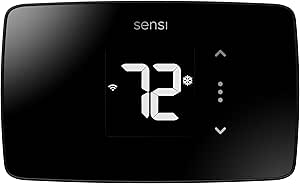 | Best Value for Beginners | Connectivity: Wi-Fi | Compatibility: Air conditioner, boiler, furnace, heat pump | Voice Assistants: Alexa, Google Assistant, SmartThings | VIEW LATEST PRICE | See Our Full Breakdown |
| Google Nest Learning Thermostat (4th Gen, 2024) with Nest Temperature Sensor – Polished Gold |  | Best Design Statement | Model: 4th Gen, 2024 | Color: Polished Gold | Display: 60% larger | VIEW LATEST PRICE | See Our Full Breakdown |
| Google Nest Thermostat – Smart Thermostat for Home – Programmable Wi-Fi Thermostat – Charcoal |  | Best Budget Smart Pick | Connectivity: Wi-Fi 802.11 b/g/n 2.4 GHz, 802.11 a/n 5 GHz; Bluetooth Low Energy | Compatibility: Works without C wire in most homes; check system compatibility online | Certification: ENERGY STAR certified | VIEW LATEST PRICE | See Our Full Breakdown |
| Google Nest Thermostat – Programmable Smart Learning Thermostat with Easy Installation and Trim Kit Bundle, White |  | Best for First-Time Installers | Connectivity: Wi-Fi | Compatibility: 95% of heating and cooling systems | Display: Frosted background display | VIEW LATEST PRICE | See Our Full Breakdown |
| ecobee Smart Thermostat Essential – WiFi Thermostat, Energy Star Certified |  | Best Ecosystem Flexibility | Energy Star Certified: Yes | Compatibility: Most 24 VAC HVAC systems including gas, oil, electric, dual fuel, heat pump, boilers | Control: Color touchscreen, ecobee app, Apple HomeKit, Google Assistant, Alexa | VIEW LATEST PRICE | See Our Full Breakdown |
| Google Nest Learning Thermostat (4th gen) + Nest Temperature Sensor (2nd gen) – Obsidian |  | Best Overall | Model: 4th gen | Includes: Nest Temperature Sensor (2nd gen) | Compatibility: Most 24V systems; no C wire required in most homes | VIEW LATEST PRICE | See Our Full Breakdown |
| Honeywell Home RTH9585WF Wi-Fi Smart Color Thermostat, 7-Day Programmable, Touch Screen, Energy Star, Alexa Ready |  | Best for Traditional Schedulers | Color: Gray with customizable screen colors | Programmable: 7-day scheduling | Connectivity: Wi-Fi | VIEW LATEST PRICE | See Our Full Breakdown |
| smart home learning thermostat | Compatibility | Connectivity |
|---|---|---|
| Amazon Smart Thermostat | Most 24V HVAC systems (forced air, heat pump, radiant boiler) | — |
| Google Nest Thermostat | Most HVAC systems; works without C wire in most homes, accessories may be needed | Wi-Fi |
| Sensi Smart Thermostat ST55 | Most home HVAC systems | Wi-Fi |
| Google Nest Thermostat | Most HVAC systems, iOS/Android devices | Wi-Fi, Google Home app, voice control |
| ecobee Smart Thermostat Enhanc | Most 24 VAC HVAC systems including gas, oil, electric, dual fuel, heat pump, and boilers | Wi-Fi |
| Google Nest Learning Thermosta | Most 24V systems, no C-wire needed | Wi-Fi, Matter, Google Home app |
| ecobee Smart Thermostat Premiu | Most 24VAC HVAC systems | — |
| Honeywell Home RTH9600WF Smart | Forced air, hot water, steam, heat pumps with electric backup | Wi-Fi, Alexa, Google Assistant, Cortana |
| Sensi Lite Smart Thermostat | Air conditioner, boiler, furnace, heat pump | Wi-Fi |
| Google Nest Learning Thermosta | Gas, electric, oil, forced air, heat pump, radiant (most 24V) | Wi-Fi, Matter compatible |
| Google Nest Thermostat | Works without C wire in most homes; check system compatibility online | Wi-Fi 802.11 b/g/n 2.4 GHz, 802.11 a/n 5 GHz; Bluetooth Low Energy |
| Google Nest Thermostat | 95% of heating and cooling systems | Wi-Fi |
| ecobee Smart Thermostat Essent | Most 24 VAC HVAC systems including gas, oil, electric, dual fuel, heat pump, boilers | — |
| Google Nest Learning Thermosta | Most 24V systems; no C wire required in most homes | Wi-Fi, Matter compatible |
| Honeywell Home RTH9585WF Wi-Fi | Forced air, hot water, steam, heat pumps with electric backup | Wi-Fi |
More Details on Our Top Picks
Amazon Smart Thermostat
At a fraction of the price of the ecobee Smart Thermostat Enhanced, this option proves that basic smart scheduling doesn’t have to be expensive. What you get is solid programmable scheduling, Alexa app control, and automatic adjustments when you leave home — enough to trim energy bills without touching learning algorithms. Compared with the Sensi ST55, it offers a sleeker look and deeper Alexa integration, but it lacks the Sensi’s maintenance reports and traditional thermostat feel. The tradeoff is real: there’s no built-in microphone, so voice control only works through a separate Echo device, and it’s locked to 2.4 GHz Wi-Fi. You’ll also need a C-wire or an adapter, which adds hidden cost. This pick makes the most sense for Alexa-household newcomers who want smart control without the smart price.
Pros:- Very low price for full app and voice control
- Guided DIY installation through the Alexa app
- Programmable schedules with presence-based auto adjustments
- ENERGY STAR certified with potential utility rebates
Cons:- No built-in microphone — voice control requires a separate Alexa device
- C-wire or power adapter required, and the adapter is sold separately
- No self-learning automation or detailed energy reporting
Best for: Alexa households on a budget who want app and voice scheduling without paying premium prices
Not ideal for: Homes without a C-wire or an Echo device, and anyone wanting true learning automation or richer energy reports
- Size:3.56 x 3.56 x 0.84 in
- Weight:3.86 oz
- Model number:S6ED3R
- Compatibility:Most 24V HVAC systems (forced air, heat pump, radiant boiler)
- Power requirement:C-wire or power adapter (sold separately)
- Network connectivity:2.4 GHz, 802.11 b/g/n Wi-Fi
- Certifications:ENERGY STAR, ECOLOGO Gold
Our verdict“Buy this if you live in an Alexa home and want the cheapest credible path to remote temperature control; skip it if you want learning features or standalone voice control.”
Google Nest Thermostat – Smart Wi-Fi Programmable Thermostat for Home – Snow
This model stands out as the natural choice for anyone already running Google speakers, cameras, or displays, thanks to tight Google Home app integration and quick Assistant voice control. Unlike the Amazon Smart Thermostat, it works without a C-wire in most homes — a genuine installation advantage that saves both money and frustration. The mirror-finish display and auto shut-off when you’re away give it a more polished feel than the Sensi ST55, though it stops short of the true learning behavior of the Nest Learning Thermostat (4th gen). Tradeoffs exist: certain HVAC systems still need an accessory, its alerts are informational rather than diagnostic, and there’s no remote room sensor in the box like ecobee includes. For Google-centric households that mostly want scheduling and remote control, this option hits the sweet spot.
Pros:- Works without a C-wire in most homes
- Usually installs in about 30 minutes as a DIY project
- Works with both Google Assistant and Alexa
- Auto shut-off when you’re away trims energy waste
Cons:- Some HVAC systems require additional accessories
- Programmable rather than self-learning, unlike the Nest Learning line
- System alerts are informational only, not a professional diagnosis
Best for: Google Home ecosystem users who want clean design, Assistant voice control, and no C-wire hassle
Not ideal for: Buyers who want genuine learning automation or multi-room temperature sensing — step up to the Nest Learning Thermostat 4th gen instead
- Connectivity:Wi-Fi
- Wi-Fi frequency:2.4 GHz and 5 GHz
- Compatibility:Most HVAC systems; works without C wire in most homes, accessories may be needed
- Energy Star certified:Yes
- App control:Google Home app
- Voice assistants:Google Assistant, Alexa
Our verdict“The default choice for Google households that want simple scheduling and remote control at a mid-range price.”
Sensi Smart Thermostat ST55
Not everyone wants a glowing glass rectangle on the hallway wall, and the Sensi ST55 answers that with a familiar thermostat design hiding smart internals. Its standout claim is roughly 23% savings on HVAC energy costs, backed by usage reports and maintenance reminders — more reporting depth than the Amazon Smart Thermostat offers. Installation is genuinely DIY-friendly with step-by-step in-app guidance, and in most cases no common wire is needed, putting it on par with the Nest Thermostat for setup ease. Where it lags is polish: there’s no sleek display, no occupancy sensing, and advanced smart-home users will find the feature set basic compared with the ecobee Enhanced’s learning routines. This model is better suited to renters and conservative buyers who want app control plus a thermostat that still looks and behaves like the one it replaced.
Pros:- Energy Star certified with roughly 23% HVAC energy savings
- Step-by-step guided DIY installation, usually without a common wire
- Maintenance reminders and detailed usage reports
- Familiar design blends into any home
Cons:- A common wire is still required in some installations
- Limited compatibility with certain HVAC systems
- Feature set is basic compared with learning thermostats
Best for: Renters and traditionalists who want remote control and energy reports while keeping a classic thermostat look
Not ideal for: Smart-home enthusiasts wanting occupancy sensing, learning automation, or a modern touchscreen interface
- Connectivity:Wi-Fi
- Compatibility:Most home HVAC systems
- Energy Star certified:Yes
- Installation:DIY, no common wire required in most cases
- Key features:Remote access, usage reports, maintenance alerts
- Voice control:Alexa compatible
Our verdict“The pick for buyers who prioritize a low-key design and solid energy reporting over cutting-edge automation.”
Google Nest Thermostat – Smart Wi-Fi Programmable Thermostat – Sand
Functionally, this Sand-colored Nest mirrors the Nest Thermostat in Snow — same scheduling, remote control, and HVAC monitoring — so the choice between them is largely aesthetic. The warm Sand finish suits homes where stark white hardware clashes with wood tones or warmer palettes, an advantage no other entry in this lineup matches at the same price. Compared with the Sensi ST55, it delivers a far more refined interface and works within the broader Google ecosystem, though the Sensi counters with stronger usage reporting. Buyers should do a compatibility check before purchasing, since some systems need a C-wire or accessory, and full functionality depends on a steady Wi-Fi connection. This pick makes the most sense for design-conscious Google users who want their thermostat to complement the room rather than dominate it.
Pros:- Distinctive Sand finish that complements warm interiors
- Programmable scheduling with HVAC monitoring alerts
- Remote control via smartphone or tablet from anywhere
- Works with Google Assistant and other smart home platforms
Cons:- May require additional accessories for certain HVAC systems
- Requires compatibility verification before purchase
- Full feature set depends on a reliable Wi-Fi connection
Best for: Style-minded homeowners in the Google ecosystem who want a thermostat that matches warm interior palettes
Not ideal for: Buyers with unusual HVAC setups who can’t verify compatibility, or anyone wanting learning automation — the Learning Thermostat 4th gen fits better
- Color:Sand
- Energy Star certified:Yes
- Compatibility:Most HVAC systems, iOS/Android devices
- Connectivity:Wi-Fi, Google Home app, voice control
- C-wire requirement:Works without C wire in most homes; some systems need one or an accessory
- Control options:App, voice, on-device
Our verdict“Choose this over the Snow model purely for the finish — the smart features are identical, so let your decor decide.”
ecobee Smart Thermostat Enhanced
This option stands out as the strongest balance of intelligence and price in this batch. Its occupancy sensing and preference learning put it closer to true automation than anything else here — the Nest Thermostat and Sensi ST55 offer scheduling, but the ecobee actively adapts to when rooms are actually in use. Claimed savings of up to 26% annually top the Sensi’s 23%, and the bundled Power Extender Kit solves the C-wire problem that trips up cheaper options like the Amazon Smart Thermostat. Control extends to smartphones, tablets, and even Apple Watch, which no other product in this group matches. The tradeoffs: it still needs a compatibility check for unusual systems, and remote features die without Wi-Fi. Compared with the ecobee Premium, you give up built-in Siri and Alexa speakers — but you also skip that higher price. This is the thinking buyer’s default.
Pros:- Saves up to 26% annually on heating and cooling
- Occupancy sensing learns routines instead of just following schedules
- Power Extender Kit and trim kit included in the box
- Control via smartphone, tablet, and Apple Watch
Cons:- Compatibility check required for specific HVAC systems
- No built-in voice assistant, unlike the ecobee Premium
- Remote features depend entirely on Wi-Fi connectivity
Best for: Homeowners who want genuine learning and occupancy-based automation without paying Premium-tier prices
Not ideal for: Buyers wanting built-in voice assistants or bundled remote sensors — the ecobee Smart Thermostat Premium covers both
- Compatibility:Most 24 VAC HVAC systems including gas, oil, electric, dual fuel, heat pump, and boilers
- Connectivity:Wi-Fi
- Included kits:Power Extender Kit (PEK), Trim Kit
- Control options:Smartphone, tablet, Apple Watch
- Key features:Occupancy sensing, preference learning, humidity adjustment
- Energy savings:Up to 26% annually
Our verdict“The best all-around pick for buyers who want adaptive, occupancy-driven comfort at a mid-tier price.”
Google Nest Learning Thermostat (4th gen) + Nest Temperature Sensor (2nd gen) – Silver
The Google Nest Learning Thermostat (4th gen) stands out as the most complete package in this roundup because it genuinely learns your schedule rather than asking you to program one. Compared with the Honeywell Home RTH9600WF, which leans on Smart Response tweaks, Nest builds a full routine automatically — that’s the difference between a thermostat that adapts to you and one you configure. The 60% larger display makes glanceable temperature checks effortless, and the bundled Nest Temperature Sensor lets you prioritize a specific room, something the Sensi Lite can’t match at any price. The tradeoff: it sits at the premium end of the market, and full functionality depends on a stable Wi-Fi connection.
Pros:- Genuinely learns your schedule for automatic energy savings up to 31%
- Included Nest Temperature Sensor enables room-specific comfort
- Large, customizable display that’s easy to read across a room
- Works with Alexa, Siri, Google Assistant, and Matter
Cons:- Premium price compared to basic smart thermostats
- Setup and compatibility verification can be involved for some users
- Offline functionality is limited without Wi-Fi
Best for: Homeowners who want a set-it-and-forget-it thermostat that builds its own schedule and multi-room temperature control out of the box
Not ideal for: Budget-focused buyers or anyone with an unusual HVAC setup — the premium price and compatibility checks make cheaper options like the Sensi Lite more sensible
- Model:4th gen
- Included Sensor:Nest Temperature Sensor (2nd gen)
- Display:60% larger than previous gen
- Compatibility:Most 24V systems, no C-wire needed
- Connectivity:Wi-Fi, Matter, Google Home app
- Voice Assistants:Alexa, Siri, Google Assistant
- Energy Savings:Up to 31%
- Finish:Silver
Our verdict“This pick makes the most sense for buyers who want the deepest learning automation and don’t mind paying for it.”
ecobee Smart Thermostat Premium – WiFi, Siri & Alexa Built-In, Smart Sensor
Where the ecobee Smart Thermostat Premium separates itself from the Nest Learning Thermostat is sensing: built-in air quality monitoring and radar-based occupancy detection mean it responds to whether you’re actually home, not just a geofence guess. Voice control runs natively on the device with Siri and Alexa built in, so you don’t need a separate speaker in the hallway. Installation is friendlier than most rivals here thanks to the included Power Extender Kit and Trim Kit, which the C-wire-dependent Honeywell RTH9600WF can’t offer. The catch is the Apple tax of sorts: Siri features demand an Apple home hub, and buyers without one lose a headline feature.
Pros:- Up to 26% annual savings on heating and cooling
- Built-in air quality monitor and occupancy sensing
- Siri and Alexa voice control without a separate speaker
- Power Extender Kit removes C-wire headaches
Cons:- Siri functionality requires an Apple home hub
- Advanced sensing features add cost over simpler models
Best for: Smart home enthusiasts who want air quality data, occupancy automation, and speaker-free voice control in one wall unit
Not ideal for: Apple-curious buyers without a HomePod or Apple TV — Siri features won’t work, and the extra sensors go unused if you just want basic scheduling
- Energy Star Certified:Yes
- Included SmartSensor:Yes
- Compatibility:Most 24VAC HVAC systems
- Display:Large, vibrant cinematic interface
- Built-in Sensors:Air quality monitor, occupancy, radar
- Voice Assistants:Siri, Alexa (built-in)
- Installation Extras:Power Extender Kit, Trim Kit
Our verdict“Choose this if you want the most sensor-rich thermostat on the wall and already live in a Siri or Alexa household.”
Honeywell Home RTH9600WF Smart Color Thermostat ENERGY STAR Wi-Fi Programmable Touchscreen Alexa Ready
The Honeywell Home RTH9600WF is the pick for buyers who care how the thermostat looks on the wall — the high-definition color touchscreen with customizable display colors lets you match it to your decor, something the fixed-finish Nest and ecobee units don’t allow. Its Smart Response technology learns how long your home takes to reach a target temperature and adjusts start times, a lighter-touch learning approach than Nest’s full schedule building. Broad HVAC compatibility — forced air, hot water, steam, and heat pumps with electric backup — covers homes that other models here skip. The real friction is the mandatory C-wire, and electric baseboard (120-240V) systems are out entirely.
Pros:- Customizable HD color display to match any decor
- Smart Response learning adjusts to your home’s heating and cooling pace
- Broad compatibility including steam, hot water, and heat pumps
- Energy Star certified with app and voice control
Cons:- C-wire required, adding cost or complexity for many homes
- No electric baseboard (120-240V) support
- Installation can be tricky for first-timers
Best for: Design-conscious homeowners with conventional HVAC who want a color-matched touchscreen and flexible 7-day programming
Not ideal for: Renters and owners of electric baseboard homes — the C-wire requirement and 120-240V incompatibility rule it out
- Energy Star Certified:Yes
- Display:High-definition color touchscreen, customizable colors
- Compatibility:Forced air, hot water, steam, heat pumps with electric backup
- Connectivity:Wi-Fi, Alexa, Google Assistant, Cortana
- C-Wire Required:Yes
- Learning Feature:Smart Response technology
Our verdict“This model is better suited to style-focused buyers with standard 24V systems who can handle the C-wire requirement.”
Sensi Lite Smart Thermostat, WiFi, Alexa, DIY, Energy Star Certified, ST25
The Sensi Lite proves you don’t need to spend Nest money to get a competent smart thermostat. Its built-in level and step-by-step instructions make it the easiest install in this lineup — friendlier than the Honeywell RTH9600WF, which assumes more DIY confidence and demands a C-wire outright (the Sensi can run on batteries on compatible systems). What you give up versus the Nest Learning Thermostat is genuine schedule learning; here you program it yourself, though the app makes that straightforward. The data privacy emphasis is a quiet differentiator for buyers wary of cloud-heavy ecosystems. Just know the LCD display is basic and the whole experience depends on Wi-Fi stability.
Pros:- Easiest installation in the roundup with built-in level and guided steps
- Energy Star certified programmable scheduling
- Strong data privacy posture
- Runs on batteries or C-wire depending on your system
Cons:- No self-learning capability — you build the schedule yourself
- Basic LCD display lacks the polish of color touchscreen rivals
- C-wire still required on some HVAC systems
Best for: First-time smart thermostat buyers and budget-conscious homeowners who want a painless DIY install
Not ideal for: Automation hobbyists wanting true self-learning schedules or room sensors — the Sensi Lite is programmable, not autonomous
- Connectivity:Wi-Fi
- Compatibility:Air conditioner, boiler, furnace, heat pump
- Voice Assistants:Alexa, Google Assistant, SmartThings
- Power Source:Battery (2 AAA included) or C-wire
- Display:LCD
- Energy Star Certified:Yes
- Scheduling:Automatic or programmable
Our verdict“The smart choice for anyone who wants app and voice control on a budget without installation headaches.”
Google Nest Learning Thermostat (4th Gen, 2024) with Nest Temperature Sensor – Polished Gold
Functionally, this Polished Gold Nest Learning Thermostat (4th Gen) mirrors its Silver sibling: same self-learning schedule, same 60% larger display, same bundled Nest Temperature Sensor for room-specific comfort. The reason to choose it over the Sensi Lite or Honeywell RTH9600WF is that none of those can double as wall jewelry — the gold finish turns a utility device into a design element. Compatibility spans gas, electric, oil, forced air, heat pump, and radiant systems without a C-wire, and Matter support keeps it future-proof across platforms. The tradeoffs are the same as any Nest Learning: a premium price and internet dependence for its smarter features.
Pros:- Full self-learning schedule automation for maximum energy savings
- Polished Gold finish doubles as a design accent
- Includes Nest Temperature Sensor for room-specific control
- Broad system compatibility with Matter support and no C-wire needed
Cons:- Premium price over non-learning thermostats
- Smart features degrade without internet connectivity
- Finish choice is purely aesthetic at identical cost to other colors
Best for: Homeowners who want flagship learning performance in a finish that complements warm-toned or upscale interiors
Not ideal for: Value hunters — if you don’t care about the gold finish, the same internals cost the same in plainer colors, and the Sensi Lite covers basics for far less
- Model:4th Gen, 2024
- Color:Polished Gold
- Display:60% larger
- Compatibility:Gas, electric, oil, forced air, heat pump, radiant (most 24V)
- Included Sensor:Nest Temperature Sensor (2nd gen)
- Connectivity:Wi-Fi, Matter compatible
- Voice Assistants:Alexa, Siri, Google Assistant
Our verdict“Pick this over other Nest colors only if the gold finish matters — the learning performance is identical and excellent either way.”
Google Nest Thermostat – Smart Thermostat for Home – Programmable Wi-Fi Thermostat – Charcoal
The charcoal Google Nest Thermostat is the least expensive way into the Nest ecosystem, and that’s exactly its appeal. Compared with the Nest Learning Thermostat (4th gen), it skips true auto-learning and the large display, instead relying on manual scheduling and app-based automation — a fair trade at roughly a third of the price. This option stands out for renters and first-time smart thermostat buyers who want remote control, ENERGY STAR savings, and HVAC monitoring without a big upfront spend.
The tradeoffs are real, though. There’s no lock feature, the plastic build feels less premium than ecobee’s glass models, and homeowners wanting self-programming behavior will need to step up to a learning model.
Pros:- Most affordable entry into the Nest ecosystem
- ENERGY STAR certified with energy-saving scheduling and HVAC monitoring
- Remote control via smartphone and voice control with Google Assistant and Matter assistants
- Works without a C wire in most homes
Cons:- No true auto-learning — schedules must be programmed manually
- Lock feature not available, a security concern for rentals or shared spaces
- Some HVAC systems may need additional wiring or accessories
Best for: Budget-conscious buyers and renters who want app control and energy savings without paying learning-thermostat prices
Not ideal for: Homeowners who want the thermostat to build its own schedule automatically — this model requires you to program it yourself
- Connectivity:Wi-Fi 802.11 b/g/n 2.4 GHz, 802.11 a/n 5 GHz; Bluetooth Low Energy
- Compatibility:Works without C wire in most homes; check system compatibility online
- Certification:ENERGY STAR certified
- Voice Control:Google Assistant and Matter-enabled assistants
- Features:Energy-saving scheduling, HVAC monitoring, remote app control
- Learning:Manual programming only (no auto-learning)
Our verdict“A smart choice for anyone who wants Nest convenience on a budget and doesn’t mind setting schedules themselves.”
Google Nest Thermostat – Programmable Smart Learning Thermostat with Easy Installation and Trim Kit Bundle, White
This bundle takes the standard Nest Thermostat and solves its most common installation headache: the included trim kit covers gaps left by old thermostats, so a DIY swap looks clean instead of patched together. Compared with the standalone Charcoal Nest above, the 30-60 minute typical install and Home/Away Assist make this the friendlier starting point for someone upgrading from a basic programmable unit for the first time.
It still isn’t a full learning thermostat like the 4th-gen model — scheduling leans on app guidance rather than pure self-learning — and the frosted display is more utilitarian than premium. Wi-Fi dependency means a dead router leaves you with a fairly dumb thermostat.
Pros:- Trim kit included for a clean, professional-looking DIY installation
- Home/Away Assist adjusts temperatures automatically
- Compatible with 95% of heating and cooling systems
- Typical install time of 30-60 minutes
Cons:- Requires a constant Wi-Fi connection for smart features
- Setup can be challenging for less tech-savvy users
- Frosted display is basic compared with premium touchscreen rivals
Best for: DIY beginners replacing an old thermostat who want a clean-looking install and a little schedule intelligence
Not ideal for: Buyers expecting fully autonomous learning — the 4th-gen Learning Thermostat does that job better
- Connectivity:Wi-Fi
- Compatibility:95% of heating and cooling systems
- Display:Frosted background display
- Installation Time:Typically 30-60 minutes
- Included Accessories:Trim kit
- Smart Features:Home/Away Assist, app scheduling
Our verdict“The easiest Nest to install yourself, best suited to first-timers who value a tidy finished look over advanced learning.”
ecobee Smart Thermostat Essential – WiFi Thermostat, Energy Star Certified
The ecobee Smart Thermostat Essential earns its spot by refusing to pick sides: unlike the Nest models, which work best inside Google’s ecosystem, this one plays equally well with Apple HomeKit, Alexa, and Google Assistant. Compared with the ecobee Enhanced, the Essential adds a color touchscreen and Schedule Assistant while keeping the platform-agnostic strengths.
Its claimed up to 23% savings on heating and cooling comes from features like Time of Use preheating, which warms or cools ahead of peak-rate windows. The catch is the add-on economics: SmartSensors and the Power Extender Kit are sold separately, so a home without a C-wire or wanting room-level temperature balancing will pay more than the sticker suggests.
Pros:- Works with Apple HomeKit, Alexa, and Google Assistant equally well
- Up to 23% savings on heating and cooling costs
- Color touchscreen with indoor humidity detection
- Time of Use preheating/cooling shifts energy use to cheaper hours
Cons:- SmartSensor and Power Extender Kit sold separately
- System compatibility must be verified before purchase
- Room sensors cost extra, unlike the bundled Nest 4th-gen package
Best for: Multi-platform smart homes, especially Apple HomeKit users or households mixing Alexa and Google devices
Not ideal for: C-wire-free homes on a strict budget — the required Power Extender Kit costs extra
- Energy Star Certified:Yes
- Compatibility:Most 24 VAC HVAC systems including gas, oil, electric, dual fuel, heat pump, boilers
- Control:Color touchscreen, ecobee app, Apple HomeKit, Google Assistant, Alexa
- SmartSensor Compatibility:Yes (sold separately)
- Indoor Humidity Detection:Yes
- Schedule Assistant:Yes
- Time of Use Preheating/Cooling:Yes
- Installation:DIY; no C-wire needed with Power Extender Kit (sold separately)
Our verdict“The best choice for households that refuse to commit to one smart home platform and want real energy-rate savings.”
Google Nest Learning Thermostat (4th gen) + Nest Temperature Sensor (2nd gen) – Obsidian
This is the pick that justifies the roundup’s title. The Nest Learning Thermostat (4th gen) is the only model here that genuinely learns your habits and builds its own schedule — no manual programming, no app hand-holding. Compared with the budget Charcoal Nest, the difference is autonomy: set it and forget it for a week, and it takes over. The included 2nd-gen Temperature Sensor adds room-level balancing that even the ecobee Essential can’t match without buying accessories separately.
The 60% larger Dynamic Farsight display lights up with useful info as you approach, and Matter support keeps it future-proof across platforms. The premium price is the obvious drawback, plus installation can get involved with multi-wire systems.
Pros:- True auto-learning builds a schedule without manual programming
- Includes a 2nd-gen Nest Temperature Sensor for whole-home comfort
- 60% larger display with Dynamic Farsight
- Matter compatible and works with Google Assistant, Alexa, and Siri
Cons:- Highest price in this lineup
- Installation can be complex on some multi-stage HVAC systems
- Full feature set requires constant Wi-Fi
Best for: Homeowners who want a genuinely self-programming thermostat with zone control and don’t mind paying premium prices
Not ideal for: Renters or budget buyers — the price is hard to justify when the standard Nest handles scheduling adequately for far less
- Model:4th gen
- Includes:Nest Temperature Sensor (2nd gen)
- Compatibility:Most 24V systems; no C wire required in most homes
- Display:60% larger with Dynamic Farsight
- Connectivity:Wi-Fi, Matter compatible
- Control:Google Home app, Alexa, Siri, Google Assistant
- Learning:Automatic schedule learning
Our verdict“If you want a thermostat that truly thinks for itself and balances multiple rooms, this is the one worth paying extra for.”
Honeywell Home RTH9585WF Wi-Fi Smart Color Thermostat, 7-Day Programmable, Touch Screen, Energy Star, Alexa Ready
Not everyone wants a thermostat that learns. The Honeywell Home RTH9585WF is built for people who like setting a 7-day schedule themselves and trusting it to run exactly as written — a deliberate contrast to the Nest 4th gen’s autopilot approach. Its customizable screen colors let it match your décor, something no Nest or ecobee model offers, and it handles heating types others skip, including hot water, steam, and forced air systems.
The rigidity of a fixed weekly schedule is the flip side: no learning, no presence detection. It also requires a C-wire, unlike the Nest models that often work without one, and electric baseboard heat is off the table.
Pros:- Full 7-day programmable scheduling with flexible options
- Customizable display colors to match home décor
- Compatible with steam, hot water, and heat pump systems with electric backup
- Works with Alexa and Google Home for voice and app control
Cons:- C-wire required for installation
- No learning or presence detection features
- Not compatible with electric baseboard heat
Best for: Owners of steam, hot water, or forced-air systems who prefer setting their own weekly schedule over algorithmic learning
Not ideal for: Homes without a C-wire and anyone who wants the thermostat to adapt automatically — this one stays exactly where you program it
- Color:Gray with customizable screen colors
- Programmable:7-day scheduling
- Connectivity:Wi-Fi
- Energy Star:Yes
- Touch Screen:Yes
- Compatibility:Forced air, hot water, steam, heat pumps with electric backup
- C-Wire Required:Yes
- Voice Control:Alexa ready, Google Home
Our verdict“A dependable, schedule-first pick for traditional heating systems and buyers who want control, not algorithms.”

How We Picked
My ranking logic starts with one question: how well does this thermostat actually learn? Since the roundup’s lens is learning thermostats, models that self-program from your behavior — the Nest Learning line, for example — ranked above models that only offer manual schedules and app control. From there I weighed sensor ecosystems (does the box include remote sensors, and how much do extras cost?), smart home compatibility (Alexa, Google Home, Siri, and Matter support), and installation complexity, since C-wire requirements and DIY difficulty vary widely across the lineup.
Price-to-value was the final filter. A $250 thermostat with genuine learning can justify itself through energy savings within two heating seasons, but a $250 thermostat that behaves like a $90 one cannot. I also factored in warranty length, app quality, and Energy Star certification, since these affect long-term ownership far more than the spec sheet suggests. Duplicate hardware — like the four Nest 4th gen finishes — is grouped by value rather than listed as four separate breakthroughs.
| smart home learning thermostat | Connectivity |
|---|---|
| Amazon Smart Thermostat | — |
| Google Nest Thermostat | Wi-Fi |
| Sensi Smart Thermostat ST55 | Wi-Fi |
| Google Nest Thermostat | Wi-Fi, Google Home app, voice control |
| ecobee Smart Thermostat Enhanc | Wi-Fi |
| Google Nest Learning Thermosta | Wi-Fi, Matter, Google Home app |
| ecobee Smart Thermostat Premiu | — |
| Honeywell Home RTH9600WF Smart | Wi-Fi, Alexa, Google Assistant, Cortana |
| Sensi Lite Smart Thermostat | Wi-Fi |
| Google Nest Learning Thermosta | Wi-Fi, Matter compatible |
| Google Nest Thermostat | Wi-Fi 802.11 b/g/n 2.4 GHz, 802.11 a/n 5 GHz; Bluetooth Low Energy |
| Google Nest Thermostat | Wi-Fi |
| ecobee Smart Thermostat Essent | — |
| Google Nest Learning Thermosta | Wi-Fi, Matter compatible |
| Honeywell Home RTH9585WF Wi-Fi | Wi-Fi |
Factors to Consider When Choosing Smart Home Learning Thermostats
Choosing a smart home learning thermostat comes down to matching the technology to your routine, your wiring, and your existing smart home ecosystem. These are the factors that actually change how satisfied you’ll be two years from now.True Learning vs. Programmable Scheduling
The most common mistake buyers make is paying for ‘smart’ features they’ll never use — or expecting learning from a thermostat that doesn’t have it. True learning thermostats build a schedule by observing when you leave, sleep, and adjust the temperature, then handle everything automatically. Programmable smart thermostats still need you to set the schedule yourself; the app just makes it easier. If your weekly routine is predictable, a cheaper programmable model may save you just as much energy, because a well-built manual schedule rivals algorithmic learning. If your schedule is erratic — work-from-home some days, travel others — genuine learning capability pays for itself. Check the product’s description for language like ‘self-programming’ or ‘learns your schedule,’ not just ‘smart’ or ‘Wi-Fi.’
C-Wire Compatibility and Installation
Before falling in love with any model, check your HVAC wiring. Many thermostats — including both Honeywell models in this roundup — require a C-wire (common wire) to power their displays and Wi-Fi radios. Homes built before the mid-2000s often lack one, and without it, these thermostats can cycle erratically or drain their batteries. Some brands bundle a power-extender kit that solves this without new wiring, but you (or an electrician) still have to install it at the furnace control board. If you want the simplest path, choose a model that runs without a C-wire or ships with the extender in the box. Spending ten minutes at your thermostat photographing the wire labels before buying can prevent a full return-and-repurchase cycle.
Remote Sensors and Multi-Room Balance
A thermostat only knows the temperature at the wall where it’s mounted — usually a hallway that represents nothing about your living room or bedroom. Remote temperature sensors let the system average readings or prioritize specific rooms, which fixes the classic problem of a cold bedroom and a stuffy living room. This is where real price differences hide: some premium models include a sensor in the box, while others charge $30–$40 per add-on, and a three-bedroom home might want two or three of them. Sensor support also varies in sophistication — some systems average readings automatically, while others let you tell the thermostat which room matters at which time of day. If your home has hot or cold spots, budget for sensors as part of the total system cost, not as an afterthought.
Ecosystem Lock-In: Alexa, Google, Siri, and Matter
The thermostat you buy today becomes part of your smart home for five to ten years, so ecosystem compatibility matters more than any single feature. Google Nest thermostats integrate deepest with Google Home, ecobee plays especially well with Alexa and even builds Siri into its Premium model, and Honeywell’s models are ‘Alexa ready’ but weaker as ecosystem hubs. If you already own Google speakers, a Nest will feel seamless; if your household mixes assistants, prioritize Matter support or a brand-agnostic app. Also consider who makes the app you’ll actually open: a thermostat with beautiful hardware but a clunky, ad-filled app becomes frustrating fast. Voice control built into the thermostat itself is a nice premium perk, but it’s redundant if you already have smart speakers in the same room.
Energy Savings Reality Check
Manufacturers advertise 15–25% energy savings, but the fine print assumes you were previously wasteful — heating an empty house all day or never adjusting at night. A learning thermostat saves money by catching the hours you’d forget, so the savings scale with how inefficient your current habits are. If you already program a thermostat diligently, expect modest gains; if you leave the heat at 70°F around the clock, the payback can be fast. Energy Star certification is a useful floor-level signal, but every serious model in this roundup carries it, so it doesn’t differentiate picks. The honest math: a $250 learning thermostat might save $100–$150 per year in a cold climate, less in a mild one. Run that against your climate and habits before assuming the premium model is ‘free’ over time.
When to Pay More — and When Not To
Premium thermostats justify their price through three things: learning intelligence, included sensors, and hardware polish like metal rings and color displays. If a model offers none of those and still costs over $150, you’re paying for brand name. Pay more if you have an irregular schedule, a multi-story home with temperature imbalances, or want built-in voice control and air quality monitoring. Pay less if your routine is fixed, your home is compact and evenly heated, or you’re a renter who wants to take the thermostat to the next apartment. There’s also a middle tier worth watching: mid-priced models with optional sensors hit a sweet spot for many buyers. Finally, check HVAC system support — multi-stage systems, heat pumps, and dual-fuel setups sometimes need the premium tier for full functionality.
Frequently Asked Questions
Is the Nest Learning Thermostat 4th gen worth the extra cost over the standard Nest Thermostat?
The difference comes down to who builds the schedule. The Learning model creates its own schedule automatically after a week or two of observing your habits, while the standard Nest Thermostat expects you to set schedules yourself and offers only basic learning assistance. The 4th gen Learning also supports remote temperature sensors and adds radar-based occupancy detection, letting it tell the difference between you sitting still and being away — a real edge for work-from-home households. If your routine varies day to day, that gap justifies the higher price. If you leave and return at the same times daily, the standard model’s manual schedules will perform nearly as well for significantly less money.
Can I install a smart thermostat myself if I don’t have a C-wire?
Often yes, but it depends on the model and your comfort level. Several options in this roundup, including the Sensi models and Amazon Smart Thermostat, are designed to work without a C-wire in many HVAC systems, drawing power in a way that doesn’t require that extra wire. Others ship with a power-extender kit that connects at your furnace’s control board — a job that takes most DIYers 20 to 30 minutes with a screwdriver and a YouTube video. The risk of skipping a required C-wire is intermittent Wi-Fi dropouts and, worse, short-cycling that strains your HVAC compressor. If your system is unusual — dual fuel, multi-stage, or a proprietary setup — a $150 professional install visit is cheaper than frying a control board.
Do ecobee or Nest thermostats work better with a mix of Alexa and Google devices?
Both brands support both assistants, but ecobee is generally the more flexible choice for mixed households. The ecobee Smart Thermostat Premium has Alexa and Siri built directly into the unit, so it works as a speaker for either assistant, and its app is platform-neutral. Nest thermostats respond to Alexa voice commands fine, but their deepest integrations — routines, home/away detection, and dashboard control — live in the Google Home app, and some advanced features behave best there. If your household runs Google speakers throughout, Nest feels more cohesive. If you’re split between ecosystems or plan to switch assistants someday, ecobee’s neutrality protects your investment, since you won’t be re-buying a thermostat when you change smart home platforms.
Will a learning thermostat actually save me money if I already program my current thermostat?
Honestly, not much — and that’s the most oversold claim in the category. Learning algorithms primarily capture savings you’d otherwise miss: heating an empty house, forgetting to set back at night, or failing to adjust for seasonal changes. If you already maintain a disciplined schedule, expect savings closer to 5–8% than the advertised 20%+. Where learning models still add value for disciplined users is fine-grained optimization — pre-heating based on how long your specific house takes to warm, reacting to real occupancy instead of a fixed clock, and adapting automatically when seasons change. If pure savings is your only goal and your habits are already good, a budget smart thermostat with geofencing achieves most of the benefit for a third of the price.
Which thermostat should I choose for a home with hot and cold spots between rooms?
Prioritize remote sensor support above everything else, because a thermostat mounted in a hallway can’t fix a cold bedroom it can’t feel. ecobee models handle this best out of the box — the Premium ships with a Smart Sensor, and the system can be told which room to prioritize at which time, like the bedroom at night and the living room during the day. Nest’s 4th gen Learning Thermostat also supports its second-gen temperature sensors and averages readings across them, though sensors beyond the bundled one cost extra. Budget models like the Sensi or Amazon thermostats generally lack remote sensor support entirely, which means they’ll keep your hallway comfortable while your problem rooms stay unbalanced. For uneven homes, sensor capability matters more than learning capability — a learning thermostat without sensors is just learning your hallway’s temperature.
Conclusion
The right pick depends less on specs and more on your home and habits. For best overall, the Google Nest Learning Thermostat (4th gen) delivers the most complete package in this lineup: genuine self-programming, radar occupancy sensing, and a bundled remote sensor — choose the Silver, Obsidian, or Polished Gold finish purely on aesthetics and price. For best premium, the ecobee Smart Thermostat Premium justifies its price with built-in Alexa and Siri, air quality monitoring, and the strongest multi-room sensor ecosystem, making it the smarter buy for unevenly heated homes. For best value, the Amazon Smart Thermostat handles app control, schedules, and Alexa integration at a price that pays for itself in a single season, while the ecobee Smart Thermostat Essential is the value pick if you want remote sensors later.
For beginners and renters, the Sensi Smart Thermostat ST55 stands out with genuinely simple DIY installation, forgiving wiring requirements, and an app that doesn’t overwhelm — the Sensi Lite is the even cheaper sibling for basic needs. For style-focused buyers who want a color touchscreen and detailed 7-day programming, the Honeywell Home RTH9585WF earns its place, provided your home has a C-wire. If you take one thing from this comparison: true learning costs real money, so buy it only if your schedule is irregular — otherwise a well-programmed budget model will keep you just as comfortable for far less.
NFL season / tailgating Picks
team gear
As an affiliate, we earn on qualifying purchases.