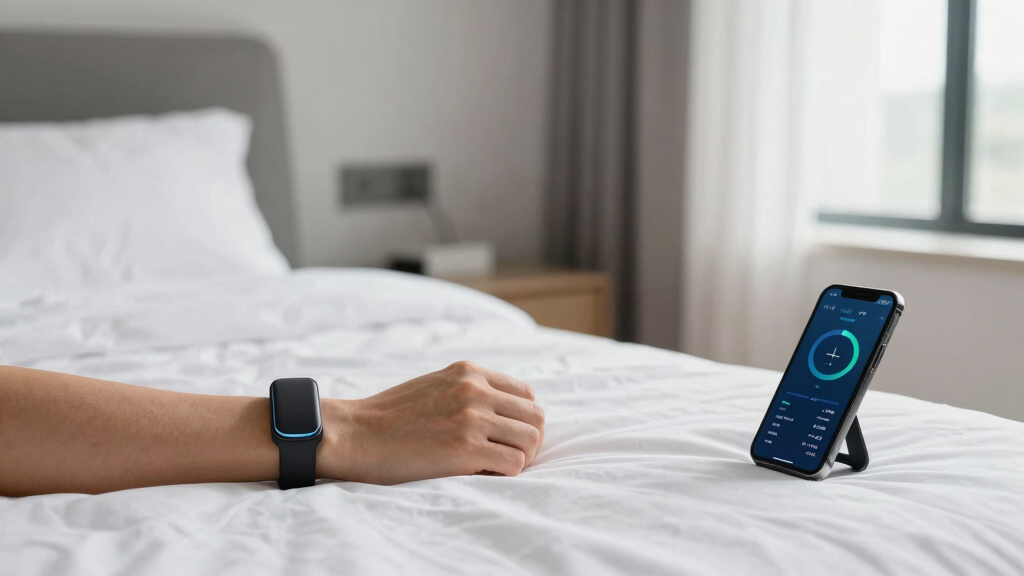
The best sleep tracking devices balance useful overnight insights with a setup and format you can live with. I rank the Withings Sleep first for hands-off, under-mattress tracking, while the Fitbit Inspire 3 is a wearable standout for people who also want daytime activity data, and the Hatch Sleep Clock suits readers focused on a calmer bedtime routine. The main tradeoff is between contactless convenience and wearable sensors, which may offer more health and activity metrics but require sleeping with a device. Membership costs, app features, and how much you value coaching also separate these picks. Read on for the full breakdown and guidance on choosing the right type for your sleep habits.

Get home appliances delivered free with Prime
- Fast, free delivery on millions of items
- Prime Video, Amazon Music and more included
- Member-only deals all year
Complete the kit


Key Takeaways
- Format is the first dividing line: Withings Sleep and SOMNDEEP track from the bed, while the bands, ring, Fitbit, and WHOOP require an overnight wearable.
- Withings Sleep is the strongest hands-off fit: Its under-mattress design avoids nightly charging and skin contact, but it is tied to one sleeping location.
- Wearable picks serve different priorities: Fitbit Inspire 3 pairs sleep data with everyday activity tracking, while WHOOP adds coaching and longer battery life alongside a membership commitment.
- Hatch is a sleep-routine device, not a like-for-like sensor substitute: Its light and sound features may help shape bedtime habits, but buyers should distinguish that purpose from detailed wearable tracking.
- Unfamiliar brands require extra scrutiny: For the SOMNDEEP, Shark ring, screenless band, and MorePro, check app support, measurement explanations, and return terms before relying on their health metrics.
| Withings Sleep – Sleep Tracking Pad Under The Mattress With Sleep Cycle Analysis |  | Best for Hands-Off Bedside Tracking | Placement: Under the mattress, between mattress and bed platform or box spring | Supported mattress thickness: 4 to 15 inches | Sleep metrics: Deep, light, and REM sleep; interruptions | VIEW LATEST PRICE | See Our Full Breakdown |
| SOMNDEEP Contactless Smart Sleep Tracker |  | Best Contactless Radar Pick | Technology: 60GHz millimeter-wave radar | Connectivity: 2.4GHz Wi-Fi | Tracking: Sleep routines, heart rate, and breathing patterns | VIEW LATEST PRICE | See Our Full Breakdown |
| Screenless Fitness Tracker Smart Band with Sleep, HRV, Heart Rate, and SpO2 Monitoring |  | Best Long-Battery Wearable | Battery life: 20–30 days | Battery capacity: 180mAh | Weight: 25g | VIEW LATEST PRICE | See Our Full Breakdown |
| Free Shark Smart Ring with Sleep Monitoring, Heart Rate, and Blood Oxygen Tracking |  | Best Compact Wearable | Color: Rose Gold | Size: 8 | Battery life: Up to 5 days on ring; 30+ days with charging case | VIEW LATEST PRICE | See Our Full Breakdown |
| Google Fitbit Inspire 3 – Midnight Zen/Black – Small and Large Bands |  | Best for Beginners | Sleep features: Automatic sleep tracking, daily Sleep Score, sleep mode | Alarm: Smart-wake vibrating alarm | Heart-rate tracking: 24/7 heart rate | VIEW LATEST PRICE | See Our Full Breakdown |
| WHOOP 5.0/MG Activity Tracker – 12 Month Membership |  | Best for Sleep and Recovery Coaching | Included membership: 12 months | Battery life: 14+ days | Display: Screenless | VIEW LATEST PRICE | See Our Full Breakdown |
| MorePro AIR2 Fitness Tracker with Heart Rate, Blood Pressure, and 2 Bands |  | Best for Feature-Rich Everyday Tracking | Model: AIR2 | Display: 1.57-inch touchscreen | Battery life: Up to 7 days | VIEW LATEST PRICE | See Our Full Breakdown |
| Hatch Sleep Clock Bedside Sleep Tracker, Smart Light, Sound Machine, Putty |  | Best Contactless Sleep Routine Tracker | Tracking style: Contactless, bedside sleep tracking | Mounting type: Tabletop | Power source: Corded electric | VIEW LATEST PRICE | See Our Full Breakdown |
| sleep tracking device | Connectivity | Battery life |
|---|---|---|
| Withings Sleep | Wi-Fi | — |
| SOMNDEEP Contactless Smart Sle | 2.4GHz Wi-Fi | — |
| Screenless Fitness Tracker Sma | — | 20–30 days |
| Free Shark Smart Ring with Sle | — | Up to 5 days on ring; 30+ days with charging case |
| Google Fitbit Inspire 3 | — | — |
| WHOOP 5.0/MG Activity Tracker | — | 14+ days |
| MorePro AIR2 Fitness Tracker w | Bluetooth LE 5.2 | Up to 7 days |
| Hatch Sleep Clock Bedside Slee | Bluetooth and Wi-Fi | — |
More Details on Our Top Picks
Withings Sleep – Sleep Tracking Pad Under The Mattress With Sleep Cycle Analysis
Withings Sleep suits people who want nightly sleep information without wearing a tracker or charging one. The pad sits beneath the mattress and tracks sleep phases, interruptions, heart rate, breathing disturbances, and snoring; automatic Wi-Fi syncing means there is no bedtime routine beyond getting into bed. Compared with the Fitbit Inspire 3, it avoids wrist wear but focuses on sleep rather than delivering a broader wearable activity experience. The tradeoff is that its data is tied to one bed, so it is less useful for travel or for someone who changes sleeping spots. It also requires a compatible mattress setup and access to the Health Mate app. I’d choose it over a ring or band for a dedicated, low-fuss home sleep station, but not for portable tracking.
Pros:- Tracks sleep without anything worn on the body
- Records sleep phases, interruptions, heart rate, and breathing disturbances
- Automatic Wi-Fi syncing to the Health Mate app
- Snoring detection adds a sleep-related signal not listed for the Fitbit Inspire 3
Cons:- Stays with one bed, making it less useful for travel or changing sleep locations
- Requires placement beneath a mattress tested at 4 to 15 inches thick
- Depends on the app for reviewing sleep data
Best for: People who sleep in one bed consistently and want automatic sleep, snoring, and heart-rate tracking without wearing or charging a device.
Not ideal for: Frequent travelers, people who switch beds, or buyers who want a wearable that tracks daytime activity alongside sleep.
- Placement:Under the mattress, between mattress and bed platform or box spring
- Supported mattress thickness:4 to 15 inches
- Sleep metrics:Deep, light, and REM sleep; interruptions
- Additional tracking:Heart rate, breathing disturbances, snoring
- Connectivity:Wi-Fi
- App:Health Mate
- Smart-home integration:IFTTT
Our verdict“Choose Withings Sleep if you want automatic, wearable-free tracking from a fixed bed and can accept that it is not portable.”
SOMNDEEP Contactless Smart Sleep Tracker
SOMNDEEP is aimed at sleepers who want contactless tracking but prefer a radar monitor to a pad beneath the mattress. Its 60GHz millimeter-wave radar tracks sleep routines, heart rate, and breathing patterns without a camera or a wearable, so there is no device to charge or wear overnight. Compared with Withings Sleep, it uses a different sensing approach and is described as an app-connected monitor rather than an under-mattress sensor. The supplied description does not specify mattress placement or sleep-stage detail, so buyers seeking a clearly defined setup or explicit stage reporting may find Withings easier to evaluate. SOMNDEEP also lacks blood-oxygen monitoring and only supports 2.4GHz Wi-Fi; a 5GHz-only network will not work. It makes sense for privacy-minded households comfortable with its network requirement.
Pros:- Contactless tracking avoids overnight wear and charging
- 60GHz radar tracks sleep routines, heart rate, and breathing patterns
- No camera or video recording
- Includes a Type-C extension cable and mounting hardware
Cons:- Does not support blood-oxygen monitoring
- Connects only to 2.4GHz Wi-Fi
- Placement details and specific sleep-stage tracking are not provided in the supplied product information
Best for: People who dislike wrist or finger wear and want camera-free tracking of sleep, heart rate, and breathing through a contactless radar monitor.
Not ideal for: Buyers whose home network is 5GHz-only, or those who specifically need blood-oxygen data or a clearly specified sleep-stage breakdown.
- Technology:60GHz millimeter-wave radar
- Connectivity:2.4GHz Wi-Fi
- Tracking:Sleep routines, heart rate, and breathing patterns
- Camera:No camera or video recording
- App syncing:Automatic data syncing via app
- Included components:Sleep monitor, Type-C extension cable, magnetic plate, metal plate, 3M adhesive pads
- Warranty:2-year manufacturer warranty
Our verdict“Pick SOMNDEEP for camera-free, wearable-free monitoring if your Wi-Fi supports 2.4GHz and you do not need blood-oxygen readings.”
Screenless Fitness Tracker Smart Band with Sleep, HRV, Heart Rate, and SpO2 Monitoring
This screenless smart band is the wearable pick for people who want sleep data alongside a wide set of wellness measures, without a display to distract them. It tracks sleep, heart rate, HRV, SpO2, and stress, and its stated 20–30-day battery life can mean fewer charging interruptions than the Fitbit Inspire 3. The companion app is described as free, while the band also adds more than 170 sports modes and connected GPS for daytime use. That breadth makes it more of an all-day tracker than the bed-focused Withings Sleep, but sleep results require a wrist-worn device and phone-based app review. Its GPS depends on a smartphone, and readings are for reference rather than medical use. I’d favor it for long battery life and varied metrics, not for a dedicated contactless sleep setup.
Pros:- Stated battery life of 20 to 30 days per charge
- Tracks sleep, HRV, heart rate, SpO2, and stress
- No subscription is required for the companion app
- IP68 water resistance and a lightweight 25g design
Cons:- Screenless design requires a smartphone to review detailed data
- GPS relies on a connected smartphone rather than built-in hardware
- Readings are for reference and the product is not a medical device
Best for: Wearable-comfortable users who want sleep, HRV, SpO2, and stress tracking with infrequent charging and no app subscription.
Not ideal for: People who dislike sleeping with a wristband, want an on-device screen, or need built-in GPS or medical-grade readings.
- Battery life:20–30 days
- Battery capacity:180mAh
- Weight:25g
- Water resistance:IP68
- Health tracking:Sleep, heart rate, HRV, SpO2, stress
- Sports modes:170+
- GPS:Connected GPS via smartphone
- Compatibility:Android 4.4+ and iOS 9.0+
- Charging time:Approximately 2 hours
Our verdict“Choose this band if you want a long-lasting wearable with broad sleep and wellness tracking, and are comfortable checking results on your phone.”
Free Shark Smart Ring with Sleep Monitoring, Heart Rate, and Blood Oxygen Tracking
Free Shark Smart Ring packs sleep, heart-rate, and blood-oxygen tracking into a small wearable, making it a more discreet alternative to the screenless smart band. It also tracks steps, works with iOS and Android, and lists full app access without a subscription. Its stated 80-meter water resistance suits buyers who want to keep a tracker on through swimming and everyday water exposure. The main compromise is fit: a ring needs careful finger measurement, and a poor fit can make this less comfortable or practical than a band. Battery life is up to 5 days on the ring, with the charging case extending the stated use to 30-plus days. Unlike Withings Sleep, it travels with you, but it must be worn and charged.
Pros:- Compact ring design is less prominent than a wristband
- Tracks sleep, heart rate, blood oxygen, and steps
- No subscription required for full app features
- 80-meter water-resistance rating and charging-case support
Cons:- Requires careful finger measurement to get a suitable fit
- Ring battery life is stated at up to 5 days without relying on the case
- Does not offer the wearable-free setup of Withings Sleep
Best for: People who want a discreet finger-worn sleep tracker with heart-rate and blood-oxygen features, no subscription, and iOS or Android compatibility.
Not ideal for: Buyers who cannot confirm a comfortable ring fit, prefer a device-free bed sensor, or want longer use between charges without carrying a case.
- Color:Rose Gold
- Size:8
- Battery life:Up to 5 days on ring; 30+ days with charging case
- Compatibility:iOS and Android
- Subscription:Not required for full app features
- Tracking features:Sleep, heart rate, blood oxygen, step counting, GPS tracking
- Water resistance:80 meters
Our verdict“Choose the Free Shark ring if you want portable, discreet sleep and health tracking and can find a comfortable fit.”
Google Fitbit Inspire 3 – Midnight Zen/Black – Small and Large Bands
Fitbit Inspire 3 is the accessible choice for someone who wants sleep tracking as part of a familiar wrist-worn activity tracker. Automatic sleep tracking, a daily Sleep Score, sleep mode, and a vibrating smart-wake alarm give sleep features a clear place in the broader experience. It also tracks heart rate and activity, with stress tools and SpO2 among its listed wellness features. Compared with the Withings Sleep, Inspire 3 is portable and useful beyond the bedroom, but it requires overnight wrist wear; compared with the screenless band in this roundup, the supplied description does not state its battery life. Its value here is an approachable mix of sleep and daytime functions, not contactless sensing or a dedicated sleep-only setup. Buyers should also check the listed phone requirements before choosing it.
Pros:- Automatic sleep tracking with a daily Sleep Score
- Smart-wake vibrating alarm and sleep mode
- Combines sleep features with all-day heart-rate and activity tracking
- Includes stress-management and SpO2 features in its listed wellness tools
Cons:- Requires wrist wear overnight, unlike Withings Sleep
- Compatible only with Apple iOS 16.4 or higher and Android OS 11.0 or higher
- Battery life is not specified in the supplied product information
Best for: Beginners who want automatic sleep tracking, a daily sleep summary, and daytime activity and wellness features in one wrist-worn device.
Not ideal for: People who dislike wearing a tracker overnight, want an under-mattress or contactless monitor, or use a phone below the stated operating-system requirements.
- Sleep features:Automatic sleep tracking, daily Sleep Score, sleep mode
- Alarm:Smart-wake vibrating alarm
- Heart-rate tracking:24/7 heart rate
- Exercise modes:40+
- Additional wellness features:Stress Management Score, mindfulness and breathing sessions, SpO2, menstrual health tracking, resting heart rate
- iOS compatibility:iOS 16.4 or higher
- Android compatibility:Android OS 11.0 or higher
- Included bands:Small and large bands
Our verdict“Choose Inspire 3 if you want an approachable wrist tracker that pairs a daily sleep summary with broader activity and wellness features.”
WHOOP 5.0/MG Activity Tracker – 12 Month Membership
WHOOP 5.0 is the coaching-focused choice for readers who want sleep data connected to training, recovery, and daily habits rather than a simple nightly summary. Its screenless design and stated 14+ day battery life suit continuous wear, while the app combines sleep insights with recovery metrics, personalized guidance, and a journal for tracking more than 300 behaviors. Compared with the Fitbit Inspire 3, WHOOP places more emphasis on individualized coaching and performance context than on a conventional wristband display. That focus brings a tradeoff: the included package is tied to a 12-month membership, and the lack of a screen means you’ll rely on the app to view results. Choose it for ongoing behavior feedback; skip it if you only want straightforward sleep tracking without a membership commitment.
Pros:- Sleep insights are presented alongside recovery, strain, and health metrics.
- Personalized coaching uses more than 140 metrics to shape sleep and activity guidance.
- Screenless design avoids display notifications during continuous wear.
- Stated battery life of 14+ days supports fewer charging interruptions.
Cons:- The included device package comes with a 12-month membership commitment.
- No screen means sleep information and guidance must be checked in the app.
- Its broad performance focus may be more than needed for buyers seeking sleep data alone.
Best for: Athletes and habit-focused sleepers who want sleep insights linked to recovery, training load, and daily routines.
Not ideal for: Buyers who want a one-time device purchase, on-device readouts, or sleep tracking without a 12-month membership.
- Included membership:12 months
- Battery life:14+ days
- Display:Screenless
- Included wearable:WHOOP 5.0 device with SuperKnit band
- Included charger:Waterproof Wireless PowerPack
- Tracked insights:Sleep, strain, recovery, VO2 max, menstrual cycle, heart rate, and stress
- Habit tracking:WHOOP Journal supports 300+ daily behaviors
- Integrations:Apple Health, Google Health Connect, Strava, and Natural Cycles
Our verdict“Choose WHOOP 5.0 if you want sleep tracking woven into ongoing recovery and habit coaching, and are comfortable with a membership-based setup.”
MorePro AIR2 Fitness Tracker with Heart Rate, Blood Pressure, and 2 Bands
The MorePro AIR2 suits buyers who want sleep tracking inside a general-purpose fitness watch, rather than a device devoted mainly to sleep and recovery. Its touchscreen, notifications, 112 sports modes, and heart-rate, blood-pressure, and blood-oxygen monitoring give it broader day-to-day utility than the Hatch Sleep Clock, which stays on the nightstand and focuses on sleep routines. The AIR2’s up to 7-day battery life and two included bands make it practical for regular wear, though that runtime is shorter than WHOOP 5.0’s stated 14+ days. The tradeoff is that sleep is one feature among many, and the product explicitly is not a medical device; its blood-pressure readings should not replace clinical measurement. Pick it for an accessible mix of watch functions and sleep tracking, not medical-grade health assessment.
Pros:- Combines smart sleep tracking with heart-rate, blood-pressure, and blood-oxygen monitoring.
- Touchscreen and call/text notifications add everyday watch functionality.
- Includes both silicone and nylon bands for different wear preferences.
- IP68 water resistance and 112 sports modes suit active daily use.
Cons:- Up to 7 days of battery life is shorter than the stated runtime of WHOOP 5.0.
- The product is explicitly not a medical device, so readings are not a substitute for clinical assessment.
- Does not support iPads, tablets, or PCs.
Best for: Android or iPhone users who want a touchscreen fitness tracker with sleep monitoring, notifications, and interchangeable bands.
Not ideal for: Buyers who want contactless tracking without wearing a device, need tablet or PC compatibility, or expect medical-grade readings.
- Model:AIR2
- Display:1.57-inch touchscreen
- Battery life:Up to 7 days
- Water resistance:IP68
- Connectivity:Bluetooth LE 5.2
- Compatibility:Android 7.0+ and iOS 13.0+
- Sports modes:112
- Included bands:Silicone band and nylon band
- Watch faces:200+
Our verdict“Choose the AIR2 if you want sleep tracking as part of a versatile wrist-worn fitness watch, but not if you need contactless sleep monitoring or clinical measurements.”
Hatch Sleep Clock Bedside Sleep Tracker, Smart Light, Sound Machine, Putty
Hatch Sleep Clock takes a different route to sleep tracking: it sits on your nightstand, using contactless sensing to track sleep patterns while pairing insights with light, sound, bedtime reminders, and a sunrise alarm. That makes it a better fit than the MorePro AIR2 for someone who dislikes wearing a tracker to bed and wants help shaping a consistent routine, not daytime fitness stats. It also offers a sound library and personalized suggestions based on sleep patterns. The tradeoff is that this is a corded bedside device requiring Bluetooth for setup and stable 2.4GHz Wi-Fi for ongoing use; it cannot travel with you like WHOOP 5.0. The listing includes a 30-day Hatch+ trial, with continued access to that membership’s library requiring a subscription afterward. Choose Hatch for bedroom-based guidance, not portable all-day monitoring.
Pros:- Tracks sleep without requiring anything to be worn overnight.
- Combines sleep insights with light, sound, reminders, and a sunrise alarm.
- Offers personalized sleep suggestions rather than relying only on a sleep score.
- Functions as a bedside sound machine as well as a sleep tracker.
Cons:- Requires a power outlet and stable 2.4GHz Wi-Fi for ongoing use.
- Bedside placement makes it less suitable than WHOOP 5.0 for travel or tracking away from home.
- Hatch+ content is available through a trial, with continued membership access requiring a subscription.
Best for: Sleepers who dislike wearing a watch or band overnight and want contactless tracking combined with bedtime sounds, smart light, and a sunrise alarm.
Not ideal for: Frequent travelers, people without stable 2.4GHz Wi-Fi, or buyers who want a wearable for daytime health and activity tracking.
- Tracking style:Contactless, bedside sleep tracking
- Mounting type:Tabletop
- Power source:Corded electric
- Connectivity:Bluetooth and Wi-Fi
- Wi-Fi requirement:Stable 2.4GHz Wi-Fi for ongoing use
- Additional functions:Smart light, sound machine, bedtime reminders, and sunrise alarm
- Included accessories:Power adapter and instruction manual
- Hatch+ trial:30 days included
Our verdict“Choose Hatch if you want contactless sleep tracking that also helps build a bedtime routine, and skip it if portable wearable tracking is your priority.”

How We Picked
I ranked these devices by how well their design matches the job implied by sleep tracking: collecting useful overnight information with minimal friction. I weighed the tracking approach, comfort while sleeping, setup demands, battery or power routine, the usefulness of companion features, and whether the device can support habits beyond a single nightly score. I also treated clear role differences as a strength: a bed sensor should not be judged by the same priorities as a wearable or a bedside sleep aid.
The order favors practical fit and a clear use case over a long feature list. Withings Sleep leads for contactless, bed-based tracking; Fitbit Inspire 3 follows as a more versatile wearable option, and WHOOP ranks higher for buyers who actively want coaching and accept its membership model. The other products suit narrower preferences, such as avoiding a wrist display or adding sound and light to a bedtime routine. I give less weight to broad health claims when the product details do not clarify how a measurement is collected or how its results should guide decisions.
Factors to Consider When Choosing Best Sleep Tracking Devices
Before choosing, decide what you want the device to change: your awareness of sleep patterns, your bedtime routine, or your broader health and activity tracking. That answer can matter more than the number of metrics shown in an app.
Choose Between Bed-Based and Wearable Tracking
A bed sensor can suit anyone who dislikes sleeping with a watch, band, or ring, but it usually tracks only where it is installed. A wearable can travel with you and may combine sleep records with daytime activity, though comfort and charging become part of the nightly routine. Think about how often you sleep away from home, share a bed, or change sleeping positions before choosing a fixed sensor. A device that stays on the nightstand can be more comfortable, yet less useful if your routine regularly changes. Do not assume that contactless tracking and wearable tracking measure or present sleep in the same way. Pick the format you are most likely to use consistently, rather than the one with the longest feature list.
Separate Sleep Insights From Medical Measurements
Sleep stages, oxygen readings, heart rate, and blood pressure are not interchangeable forms of evidence. A consumer tracker can help reveal patterns, but its numbers should not be treated as a diagnosis or a replacement for clinical testing. Before choosing a device that advertises many health metrics, check what it measures overnight, how it explains uncertainty, and whether it distinguishes estimates from medical readings. A crowded dashboard may look informative while leaving you unsure what to do next. If you have a health concern, use a tracker as a record to discuss with a clinician, not as a reason to change treatment on your own. Clear, repeatable trend reporting can be more useful than a larger set of unexplained metrics.
Account for Charging, Power, and Memberships
Battery life affects whether a wearable can collect data every night, especially if you forget to charge during the day. A bedside or under-mattress device avoids charging on your body, though it may depend on a cable, outlet, or permanent setup. Check whether core sleep history and insights remain available without a paid membership, and what features stop if a subscription ends. This matters most when the product emphasizes coaching or personalized analysis. Compare the ongoing commitment with the features you will actually use, not just the length of a trial or the presence of a companion app. If you want simple records, a membership-led service may offer more than you need.
Prioritize Comfort and Fit Over Extra Sensors
A tracker that feels intrusive can interrupt sleep or end up unused, making its potential data less valuable. Wristbands, rings, and screenless bands each have different pressure points, sizing needs, and adjustment routines. If you are sensitive to tight accessories, favor a format that does not touch your skin; if you choose a ring, check sizing and return conditions before committing. A screenless design can reduce bedtime distractions, but it may also make quick status checks less convenient. More sensors do not automatically mean better sleep guidance, especially if the app offers little context. Choose the least disruptive format that still gives you the information you want.
Look for Reports You Can Act On
Daily scores can be easy to scan, but the more useful question is whether the device helps you spot patterns over time. Check whether its app connects bedtime, wake time, interruptions, or routine changes to understandable summaries. If you want to adjust habits, guidance should be specific enough to support a small experiment, such as changing your wind-down schedule, without claiming certainty from one night’s data. If you mainly want a record, straightforward history may be enough. A bedside sound and light device can support a routine even if it is not your main source of biometric data. Match the reporting style to whether you want observation, coaching, or help creating a sleep environment.
Check Compatibility, Privacy, and Support Before Buying
Sleep tracking depends on a functioning app and a stable way to sync, so check phone compatibility and account requirements before choosing. Read what data the app collects, whether you can export or delete your history, and what happens if the company changes its service. These details can matter more over years of nightly records than a small difference in listed sensors. For lesser-known products, look for clear instructions, firmware support, and a usable return policy, especially when sizing or setup could be difficult. Avoid assuming that a device will integrate with your existing health platform unless the manufacturer confirms it. Reliable support and understandable data policies can make a modest tracker a better long-term choice than a feature-heavy alternative.
Frequently Asked Questions
Is an under-mattress tracker a better choice than a wearable?
It depends on whether comfort or portability matters more to you. An under-mattress tracker can record sleep without anything on your wrist or finger, which may suit people who dislike wearing accessories overnight. A wearable can travel with you and may pair sleep records with daytime activity, but you need to keep it charged and comfortable. If you often sleep in different beds, a wearable is usually easier to take along. If you sleep in the same bed most nights and want hands-off tracking, a bed sensor may fit your routine better.
Can I trust sleep stages, blood oxygen, or blood pressure readings from these devices?
Use consumer-device readings as estimates and trend information, not as a medical diagnosis. Results can vary with fit, movement, sensor design, and the way an app processes its data. A metric listed in a product description does not by itself show how accurate or clinically validated it is. If a reading worries you or you have symptoms, seek guidance from a qualified clinician rather than relying on a tracker. For everyday use, focus on consistent patterns and how clearly the app explains its limits.
Should I pay for a sleep tracker that requires a membership?
A membership may make sense if you will use ongoing coaching, personalized reports, or other features that are not available without it. It is less compelling if your goal is simply to see nightly records or spot basic trends. Before buying, check which features remain available when a membership ends and whether your history stays accessible. Consider how long you expect to use the service, not just what is included at signup. If you prefer a one-time device purchase, prioritize options whose core tracking does not depend on a recurring plan.
Can I use a bedside sleep device instead of a sleep tracker?
A bedside device can support a wind-down routine with light or sound, while a tracker’s main job is to record sleep-related signals. Those goals overlap, but they are not the same: a calmer bedtime routine does not automatically provide detailed biometric tracking. Decide whether you want help changing your sleep environment, data about your nights, or both. If you need tracking, confirm that the bedside product provides the kind of reports you expect before treating it as a substitute for a wearable or bed sensor. Some buyers may prefer a bedside aid alongside a separate tracker.
What should I check before buying a lesser-known sleep tracker?
Start with the basics: phone compatibility, app availability, clear setup instructions, and a return policy that covers fit or connection problems. Then look for plain explanations of each metric and whether the company distinguishes estimates from medical measurements. Check how data is stored, whether you can export or delete it, and whether core features rely on a paid plan. For wearables, confirm sizing and charging expectations; for bed-based devices, check placement and power needs. If those details are hard to find, treat that uncertainty as part of the buying tradeoff rather than assuming the feature list tells the whole story.
Conclusion
For most readers who want sleep tracking without wearing a device, I recommend Withings Sleep as the best overall; its fixed bed setup is the main tradeoff. For a versatile wearable with sleep and everyday activity tracking, choose Fitbit Inspire 3, while WHOOP is the best premium-style pick for people who want ongoing coaching and are comfortable with a membership. Buyers seeking an accessible, screen-free wearable can compare the simpler band options, but should verify app details and support before purchase. For a first step toward tracking, Hatch is best for beginners focused on bedtime habits, not for those seeking a full substitute for biometric tracking. If you want contactless tracking with a different smart-sensor approach, consider SOMNDEEP; for a ring or a tracker with extra advertised metrics, check fit, reporting clarity, and return terms closely. Choose the format you will use consistently, then weigh its reporting and ongoing requirements against the kind of sleep insight you actually want.