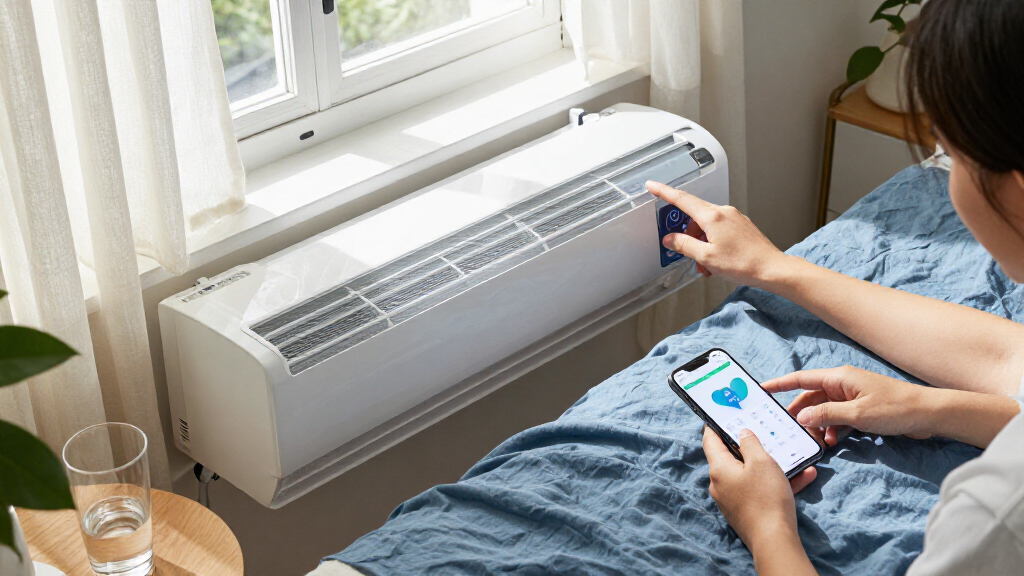

Smart window air conditioners pair room cooling with app or Wi-Fi controls, but the right choice depends on room size, electrical setup, and how much you value efficiency or extra features. I rank the LG 10,000 BTU Smart Dual Inverter as the best overall balance in this lineup, while the Midea 8,000 BTU Smart Inverter with Supplemental Heat stands out for shoulder-season flexibility and the LG 23,500 BTU Dual Inverter for large spaces. The main tradeoff is between compact, lower-capacity units and powerful models that need more space and specialized electrical service. Smart features also vary in value: remote scheduling can be useful, but it cannot compensate for a poor capacity or window fit. Read on for how I ranked all eight and which model best matches your room and setup.

Get home appliances delivered free with Prime
- Fast, free delivery on millions of items
- Prime Video, Amazon Music and more included
- Member-only deals all year
Complete the kit


Key Takeaways
- The LG 10,000 BTU Dual Inverter ranks first for balancing mid-size room capacity with inverter operation and connected controls, rather than chasing the highest output.
- Large-room cooling comes with installation constraints: the 23,500 BTU Dual Inverter and 24,500 BTU LG both use 230/208V power, so buyers should check their circuit before choosing either.
- The Midea 8,000 BTU model is the only listed option with supplemental heat, giving it a distinct role for mild weather changes without replacing a primary heating system.
- Renewed listings affect the value equation: the 8,000 BTU LG and 12,000 BTU U-shaped Midea may appeal to value-minded shoppers, but condition, included parts, and return terms deserve extra attention.
- Not every smart pick has the same control proposition: the 6,000 BTU LG is a simpler Wi-Fi choice for smaller rooms, while higher-capacity inverter units better suit buyers prioritizing broader cooling and quieter operating potential.
| LG LW8024RSMY Smart Window Air Conditioner, 8,000 BTU, White (Renewed) | 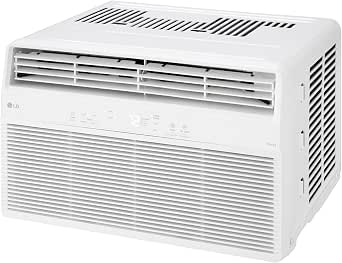 | Best Smart Pick for Small Rooms | Cooling capacity: 8,000 BTU | Recommended room area: 350 square feet | Condition: Renewed | VIEW LATEST PRICE | See Our Full Breakdown |
| LG 24,500 BTU Smart Window Air Conditioner (230/208V) |  | Best for Very Large Rooms | Cooling capacity: 24,500 BTU | Coverage area: Up to 1,560 square feet | Voltage: 230/208 V | VIEW LATEST PRICE | See Our Full Breakdown |
| LG 23,500 BTU Dual Inverter Smart Window Air Conditioner, 230V, White |  | Best Quiet High-Capacity Inverter | Cooling capacity: 23,500 BTU | Coverage area: Up to 1,440 square feet | Inverter: Dual inverter | VIEW LATEST PRICE | See Our Full Breakdown |
| Midea 8,000 BTU Smart Inverter Window Air Conditioner with Supplemental Heat |  | Best for Year-Round Room Control | Cooling capacity: 8,000 BTU | Recommended room size: Up to 350 square feet | Modes: Heat, auto, cool, dry, fan | VIEW LATEST PRICE | See Our Full Breakdown |
| Midea 12,000 BTU U-Shaped Smart Inverter Window Air Conditioner, 550 Sq. Ft., Renewed |  | Best for Quiet Cooling and an Openable Window | Cooling capacity: 12,000 BTU | Coverage area: Up to 550 square feet | Noise level: As low as 32 dBA | VIEW LATEST PRICE | See Our Full Breakdown |
| LG 6,000 BTU Wi-Fi Window Air Conditioner with Remote, White (LW6024RSMX) |  | Best for Smaller Rooms | Cooling capacity: 6,000 BTU | Recommended room size: Up to 250 sq. ft. | Connectivity: Wi-Fi; LG ThinQ | VIEW LATEST PRICE | See Our Full Breakdown |
| LG 10,000 BTU Smart Dual Inverter Window Air Conditioner |  | Best for Quiet, Mid-Size Rooms | Cooling capacity: 10,000 BTU | Coverage area: Up to 450 sq. ft. | Technology: Dual Inverter | VIEW LATEST PRICE | See Our Full Breakdown |
| GE 12,000 BTU Smart Window Air Conditioner, White |  | Best for Larger Rooms | Cooling capacity: 12,000 BTU | Recommended room size: Up to 550 sq. ft. | Connectivity and control: Wi-Fi; SmartHQ app; remote control | VIEW LATEST PRICE | See Our Full Breakdown |
| smart window air conditioner | Cooling capacity | Noise level | Smart control | Voltage |
|---|---|---|---|---|
| LG LW8024RSMY Smart Window Air | 8,000 BTU | — | LG ThinQ; Amazon Alexa and Google Assistant | 115 V |
| LG 24,500 BTU Smart Window Air | 24,500 BTU | 50 dB in low mode; 61 dB operational | LG ThinQ, Amazon Alexa, Google Assistant | 230/208 V |
| LG 23,500 BTU Dual Inverter Sm | 23,500 BTU | As low as 44 dB in sleep mode | LG ThinQ, Amazon Alexa, Google Assistant | 230 V |
| Midea 8,000 BTU Smart Inverter | 8,000 BTU | As low as 45 dBA | — | 115 V |
| Midea 12,000 BTU U-Shaped Smar | 12,000 BTU | As low as 32 dBA | MSmartHome app, Alexa, Google Assistant, remote | 115 V |
| LG 6,000 BTU Wi-Fi Window Air | 6,000 BTU | 52 dB | — | — |
| LG 10,000 BTU Smart Dual Inver | 10,000 BTU | As low as 44 dB in sleep mode | LG ThinQ; Amazon Alexa; Hey Google | — |
| GE 12,000 BTU Smart Window Air | 12,000 BTU | 59 dB | — | — |
More Details on Our Top Picks
LG LW8024RSMY Smart Window Air Conditioner, 8,000 BTU, White (Renewed)
For a bedroom or living room up to 350 square feet, this renewed LG pairs everyday cooling and dry mode with ThinQ app and voice control. That lets you change settings remotely or ask Alexa or Google Assistant to adjust them, while Sleep mode and a 24-hour timer help with overnight routines. Its four-way airflow gives you more control over where the cool air goes than a basic fixed-direction setup. Compared with the Midea 8,000 BTU Smart Inverter, this LG offers a similar room-size target but skips supplemental heat and inverter technology; the Midea is the more versatile choice if those matter. The tradeoff here is a renewed, non-inverter unit, so buyers should weigh condition and efficiency priorities against its useful smart controls and automatic features.
Pros:- ThinQ app control works with Alexa and Google Assistant for remote adjustments.
- Cool, fan, and dry modes cover routine cooling and humid conditions.
- Four-way air direction helps distribute air around the room.
- Sleep mode, timer, Energy Saver, Auto Clean, and Auto Restart support scheduled use.
Cons:- Renewed condition may not suit buyers who prefer a new appliance.
- Non-inverter design lacks the variable-speed operation offered by the Midea 8,000 BTU Smart Inverter.
- Requires a compatible standard double-hung window.
Best for: Buyers who want app and voice control in a bedroom or living room up to 350 square feet and are comfortable choosing a renewed unit.
Not ideal for: Shoppers seeking inverter operation, supplemental heat, or a unit for a room larger than 350 square feet.
- Cooling capacity:8,000 BTU
- Recommended room area:350 square feet
- Condition:Renewed
- Smart control:LG ThinQ; Amazon Alexa and Google Assistant
- Modes:Cool, fan, dry
- Voltage:115 V
- Wattage:730 W
- Dimensions:16.41 × 19.54 × 12.33 in. (D × W × H)
Our verdict“Choose this renewed LG for smart, feature-rich cooling in a room up to 350 square feet if inverter performance and supplemental heat are not priorities.”
LG 24,500 BTU Smart Window Air Conditioner (230/208V)
When the room is too large for the smaller units in this lineup, this LG brings 24,500 BTU of cooling for spaces listed up to 1,560 square feet. ThinQ, Alexa, and Google Assistant control make remote operation practical, and its washable filter is easier to maintain than a disposable-filter setup. The 50 dB low-mode rating gives buyers a quieter setting, though the listed operational level reaches 61 dB. Compared with the LG 23,500 BTU Dual Inverter, this model has a slightly higher stated capacity and broader listed coverage, but it gives up inverter technology and the other LG lists sleep-mode sound as low as 44 dB. Its 132-pound weight and 230/208V requirement are substantial constraints: installation and outlet availability may rule it out before its cooling capacity does.
Pros:- 24,500 BTU capacity is suited to spaces listed up to 1,560 square feet.
- ThinQ, Alexa, and Google Assistant allow app and voice control.
- Low mode is rated at 50 dB.
- Washable filter and power-failure auto-restart simplify routine upkeep and recovery.
Cons:- At 132 pounds, installation may require substantial help.
- Requires a 230/208V outlet, limiting where it can be installed.
- Non-inverter operation compares unfavorably with the LG 23,500 BTU Dual Inverter for buyers prioritizing variable-speed efficiency.
Best for: Owners of a very large room or open area with a compatible 230/208V outlet and help available for installing a heavy window unit.
Not ideal for: People with standard 115V outlets, smaller rooms, or a preference for lighter installation and inverter operation.
- Cooling capacity:24,500 BTU
- Coverage area:Up to 1,560 square feet
- Voltage:230/208 V
- Noise level:50 dB in low mode; 61 dB operational
- Fan speeds:3
- Smart control:LG ThinQ, Amazon Alexa, Google Assistant
- Weight:132 lb
- Dimensions:28.11 × 25.98 × 17.68 in. (D × W × H)
Our verdict“Pick this LG for a very large space when its high capacity fits your electrical setup and you can manage its weight.”
LG 23,500 BTU Dual Inverter Smart Window Air Conditioner, 230V, White
This LG is the high-capacity option for buyers who want inverter technology alongside smart controls, rather than simply choosing the largest BTU figure. Its 23,500 BTU rating covers areas up to 1,440 square feet, and the listed 44 dB sleep-mode sound level is a useful distinction for a large room used overnight. ThinQ, Alexa, and Google Assistant provide remote control, while four cooling and fan speeds and four-way air deflection let you tune operation to the space. Compared with the 24,500 BTU LG Smart Window Air Conditioner, this model has slightly less capacity and listed coverage but adds dual-inverter operation and a lower stated sleep-mode noise figure. It still needs a 230V supply, and its 112-pound body and specified window dimensions make installation a serious planning task.
Pros:- Dual-inverter design pairs high cooling capacity with variable-speed operation.
- Sleep mode is rated as low as 44 dB.
- ThinQ, Alexa, and Google Assistant support app and voice control.
- Four speeds, four-way air deflection, timer, and washable filter offer useful operating flexibility.
Cons:- Requires a 230V power supply.
- Weighs 112 pounds and needs careful installation.
- Has less listed cooling capacity and coverage than the 24,500 BTU LG model.
Best for: Buyers cooling a large bedroom or living area who have 230V power and value quieter sleep-mode operation with inverter technology.
Not ideal for: People with only 115V power, narrow or short windows outside the listed fit range, or no practical way to install a 112-pound unit.
- Cooling capacity:23,500 BTU
- Coverage area:Up to 1,440 square feet
- Inverter:Dual inverter
- Voltage:230 V
- Noise level:As low as 44 dB in sleep mode
- Smart control:LG ThinQ, Amazon Alexa, Google Assistant
- Window opening:26–41 in. wide; 17–17.71 in. high
- Weight:112 lb
Our verdict“Choose this LG over the higher-capacity non-inverter LG if quieter sleep-mode operation and dual-inverter control matter more than maximum coverage.”
Midea 8,000 BTU Smart Inverter Window Air Conditioner with Supplemental Heat
Among the compact choices, this Midea adds something the LG LW8024RSMY does not: supplemental heat alongside cooling, dry, fan, and auto modes. Its 8,000 BTU capacity is listed for rooms up to 350 square feet, making it a fit for the same general room size as that LG, while inverter technology and an Energy Star certification distinguish its operating approach. App, Alexa, and Google Assistant controls are joined by a remote and onboard panel, so smart control is not the only way to adjust it. Noise is listed as low as 45 dBA. The main limitation is seasonal: the heat pump does not operate at outdoor temperatures of 41°F or below, so this is not a substitute for cold-weather heating. It also requires a double-hung window within its specified dimensions.
Pros:- Cooling, dehumidifying, and supplemental heat cover more seasonal needs than the LG LW8024RSMY.
- Inverter technology and Energy Star certification support an efficiency-focused choice.
- App, voice, remote, and panel controls offer several ways to operate the unit.
- Noise is listed as low as 45 dBA.
Cons:- Heat pump does not operate when outdoor temperatures are 41°F or below.
- Fits only double-hung windows within the specified size range.
- Its 8,000 BTU capacity is intended for rooms up to 350 square feet, not larger spaces.
Best for: People cooling a room up to 350 square feet who also want shoulder-season supplemental heat and app or voice control.
Not ideal for: Buyers who need reliable heat below 41°F, have a window outside the stated fit range, or want a renewed or compact alternative without heat functionality.
- Cooling capacity:8,000 BTU
- Recommended room size:Up to 350 square feet
- Modes:Heat, auto, cool, dry, fan
- Inverter:Yes
- Noise level:As low as 45 dBA
- Voltage:115 V
- Window fit:24–38.5 in. wide; 14.5 in. minimum vertical opening
- Heat pump limitation:Does not operate at outdoor temperatures of 41°F or below
Our verdict“Choose this Midea over the LG 8,000 BTU model if you want inverter operation and supplemental heat, provided your winter temperatures and window fit suit it.”
Midea 12,000 BTU U-Shaped Smart Inverter Window Air Conditioner, 550 Sq. Ft., Renewed
The U-shaped design is the main reason to choose this Midea: it lets the window open while the unit remains installed, and its layout helps separate the compressor from the room. With inverter operation and noise as low as 32 dBA, it is the quiet-focused pick in this group, while 12,000 BTU capacity is listed for spaces up to 550 square feet. App control, Alexa, Google Assistant, and a remote give it the same kind of flexible operation as the LG smart models, but its 115V requirement avoids the special outlet needed by the large LG units. Compared with the Midea 8,000 BTU inverter model, this one serves a larger area and offers the U-shaped window benefit, but it has no listed supplemental heat. It is renewed, and its stated 90-day warranty for authorized purchases is a shorter protection window.
Pros:- U-shaped design allows the window to open while the unit is installed.
- Inverter operation and a 32 dBA low-noise rating suit noise-sensitive rooms.
- Wi-Fi app, Alexa, Google Assistant, and remote provide several control options.
- 12,000 BTU capacity covers more space than the 8,000 BTU Midea inverter model.
Cons:- Renewed condition may not suit buyers who prefer a new appliance.
- The stated warranty is 90 days for authorized purchases.
- Requires a window 22–36 inches wide with at least 13.75 inches of height.
Best for: Buyers cooling a room up to 550 square feet who prioritize quiet operation, app control, and the ability to open the window after installation.
Not ideal for: Shoppers who want a new unit, longer stated warranty coverage, supplemental heat, or a window outside the listed size range.
- Cooling capacity:12,000 BTU
- Coverage area:Up to 550 square feet
- Noise level:As low as 32 dBA
- Inverter:Yes
- Smart control:MSmartHome app, Alexa, Google Assistant, remote
- Voltage:115 V
- Window fit:22–36 in. wide; 13.75 in. minimum height
- Condition and stated warranty:Renewed; 90 days for authorized purchases
Our verdict“Pick this renewed Midea for quiet, smart cooling in a room up to 550 square feet if its window fit and short stated warranty work for you.”
LG 6,000 BTU Wi-Fi Window Air Conditioner with Remote, White (LW6024RSMX)
For a bedroom or home office up to 250 square feet, this LG adds app and voice control without the greater capacity of the larger options here. Its LG ThinQ Wi-Fi connection works with Alexa and Google Assistant, while the included remote gives you a straightforward alternative to using a phone. Compared with the LG 10,000 BTU Smart Dual Inverter, it is sized for smaller spaces and has fewer fan speeds; the larger model is a better fit for broad coverage and quieter sleep operation. This one’s washable filter reminder and auto-restart help with routine upkeep and power interruptions. The tradeoff is limited reach: it is not suited to larger, open-plan rooms, and installation requires a compatible double-hung window.
Pros:- LG ThinQ app control works with Alexa and Google Assistant.
- Includes both a remote and an LED display for local operation.
- Washable filter has a reminder light to prompt maintenance.
- Auto-restart restores prior settings after a power interruption.
Cons:- 6,000 BTU capacity is intended for rooms up to 250 square feet.
- Two cooling and fan speeds offer fewer adjustments than the LG 10,000 BTU model’s four.
- Requires a compatible double-hung window opening.
Best for: People cooling a bedroom, study, or other enclosed room of up to 250 square feet who want app and voice control.
Not ideal for: Households cooling a large or open-plan area, or anyone whose window is not a compatible double-hung style.
- Cooling capacity:6,000 BTU
- Recommended room size:Up to 250 sq. ft.
- Connectivity:Wi-Fi; LG ThinQ
- Voice assistant compatibility:Amazon Alexa; Google Assistant
- Cooling and fan speeds:2
- Noise level:52 dB
- Power:115 V; 540 W
- Dimensions:12.83 in. D × 17.32 in. W × 11.14 in. H
Our verdict“Choose this LG for smart control in a smaller room; pick the LG 10,000 BTU model if you need wider coverage and more speed settings.”
LG 10,000 BTU Smart Dual Inverter Window Air Conditioner
This LG is the smart pick for a room that needs more capacity than the 6,000 BTU LW6024RSMX can provide, but does not call for the GE’s 12,000 BTU output. It covers up to 450 square feet and pairs Dual Inverter technology with a sleep-mode noise level as low as 44 dB, making it better suited to bedrooms than the GE, listed at 59 dB. LG ThinQ app control and compatibility with Alexa and Hey Google let you adjust settings remotely, while four fan and cooling speeds and four-way air deflection offer more control than the smaller LG. The tradeoffs are practical: this 63-pound unit can be awkward to install, and its window opening must be 22–36 inches wide and 13 inches high.
Pros:- Dual Inverter operation reaches a listed 44 dB in sleep mode.
- LG ThinQ works with Amazon Alexa and Hey Google.
- Four cooling and fan speeds plus four-way air deflection allow flexible airflow.
- Removable, washable filter supports routine cleaning.
Cons:- At 63 pounds, the unit may be difficult to lift and position during installation.
- Requires a window opening 22–36 inches wide and at least 13 inches high.
- Its 450-square-foot coverage is less than the GE 12,000 BTU model’s stated 550-square-foot reach.
Best for: People cooling a bedroom or living area up to 450 square feet who value quieter sleep operation and app or voice control.
Not ideal for: Buyers with a narrow or short window opening, or anyone who wants a lighter unit that is easier to position during installation.
- Cooling capacity:10,000 BTU
- Coverage area:Up to 450 sq. ft.
- Technology:Dual Inverter
- Noise level:As low as 44 dB in sleep mode
- Smart control:LG ThinQ; Amazon Alexa; Hey Google
- Cooling and fan speeds:4
- Window opening requirements:22–36 in. wide; 13 in. high
- Dimensions and weight:24.5 × 19.6 × 12.5 in. (D × W × H); 63 lb
Our verdict“Pick this LG for quieter smart cooling in a mid-size room, but choose the GE if your space needs more capacity and you can accept higher listed noise.”
GE 12,000 BTU Smart Window Air Conditioner, White
Among these three, the GE is the capacity-first option: its 12,000 BTU rating is designed for rooms up to 550 square feet, out-reaching both LG models. The SmartHQ app, included remote, and Alexa or Google Assistant compatibility offer several ways to control it, while Eco Mode cycles the compressor as needed to help reduce energy use. That makes it a stronger match for a larger living area than the 6,000 BTU LW6024RSMX, but it gives up the LG 10,000 BTU model’s Dual Inverter design and lower listed sleep-mode noise. GE lists this unit at 59 dB, and its 63.6-pound weight can make installation a two-person job. Check the window dimensions before choosing: it fits a specific double-hung opening range.
Pros:- 12,000 BTU capacity is rated for rooms up to 550 square feet.
- SmartHQ app control works alongside the remote and Alexa or Google Assistant.
- Eco Mode cycles the compressor as needed to help reduce energy use.
- Slide-out washable filter and included window installation kit simplify routine care and setup.
Cons:- Listed noise level is 59 dB, higher than the LG 10,000 BTU model’s 44 dB sleep-mode figure.
- At 63.6 pounds, it may be difficult to handle during installation.
- Requires a double-hung window 25–36.63 inches wide and at least 14.56 inches high.
Best for: Households cooling a larger room of up to 550 square feet that want Wi-Fi, voice control, and an included installation kit.
Not ideal for: Light sleepers prioritizing quiet operation, or buyers with a window outside the specified double-hung size range.
- Cooling capacity:12,000 BTU
- Recommended room size:Up to 550 sq. ft.
- Connectivity and control:Wi-Fi; SmartHQ app; remote control
- Voice assistant compatibility:Amazon Alexa; Google Assistant
- Modes and fan speeds:3 cooling modes; 3 fan speeds; Eco Mode
- Noise level:59 dB
- Power:115 V; 1,030 W
- Window compatibility:Double-hung; 25–36.63 in. wide; 14.56 in. high
Our verdict“Choose the GE for smart cooling across a larger room, but favor the LG 10,000 BTU Dual Inverter if quieter sleep operation matters more than extra capacity.”
How We Picked
I compared the eight models by cooling capacity and likely room fit, smart-control usefulness, energy-conscious design, installation requirements, and special features that change how a unit fits into daily life. I gave weight to whether a product offers inverter operation, supplemental heat, or a distinctive window design, but treated those features as useful only when they match a buyer’s space and priorities. Electrical requirements and the renewed designation also matter: a high-output unit can be the wrong purchase if the room lacks the right circuit, and a renewed unit calls for closer checks on condition and included hardware.
The ranking favors balanced choices over raw BTU output. The LG 10,000 BTU Dual Inverter takes the lead as a strong middle ground; the Midea heat model and larger LG inverter models rank for more specific needs. Smaller LG models suit compact rooms or buyers seeking straightforward connected cooling, while the GE and U-shaped Midea offer alternatives at 12,000 BTU. I ranked each option by how clearly its features serve a distinct buyer, not by treating every model as interchangeable.
| smart window air conditioner | Smart control | Coverage area |
|---|---|---|
| LG LW8024RSMY Smart Window Air | LG ThinQ; Amazon Alexa and Google Assistant | — |
| LG 24,500 BTU Smart Window Air | LG ThinQ, Amazon Alexa, Google Assistant | Up to 1,560 square feet |
| LG 23,500 BTU Dual Inverter Sm | LG ThinQ, Amazon Alexa, Google Assistant | Up to 1,440 square feet |
| Midea 8,000 BTU Smart Inverter | — | — |
| Midea 12,000 BTU U-Shaped Smar | MSmartHome app, Alexa, Google Assistant, remote | Up to 550 square feet |
| LG 6,000 BTU Wi-Fi Window Air | — | — |
| LG 10,000 BTU Smart Dual Inver | LG ThinQ; Amazon Alexa; Hey Google | Up to 450 sq. ft. |
| GE 12,000 BTU Smart Window Air | — | — |
Factors to Consider When Choosing Smart Window Air Conditioners
Before choosing a smart window unit, I would settle the room and installation questions first. An app-controlled air conditioner still needs suitable capacity, a compatible window, and the right electrical supply; smart features come after those basics.
Match Capacity to the Room and Its Conditions
BTU is a starting point, not a room-size guarantee. Sun exposure, ceiling height, cooking heat, open doorways, and the number of occupants can all make a room feel larger than its floor area suggests. Oversizing can lead to short cooling cycles and uneven comfort, while undersizing can leave a unit running hard without reaching the set temperature. Measure the space and check the manufacturer’s room guidance rather than choosing the biggest number in the lineup. For open-plan areas, think about the area the cold air can actually reach, not just the total square footage on a floor plan.
Check Voltage, Circuit, and Window Fit Before Ordering
Electrical compatibility can rule out a model before its features matter. The high-capacity LG options in this roundup specify 230/208V, so buyers should verify their outlet and circuit rather than assume a standard household receptacle will work. Measure the window opening, sill depth, and nearby clearance, then compare those dimensions with the installation manual. A unit that fits the opening may still block a storm window, interfere with blinds, or be difficult to secure. For heavier models, plan for the lifting and support required instead of treating installation as a one-person task.
Decide Which Smart Functions You Will Actually Use
Wi-Fi is most useful when it solves a routine problem, such as turning cooling on before arriving home or changing a schedule without reaching the unit. Check app compatibility, setup requirements, and whether the controls you need remain available on the unit itself. A remote or control panel can matter if household members do not use the same phone or if the network goes down. Do not assume every connected model offers identical voice-assistant support or automation; confirm the exact product listing and manufacturer documentation. If remote control is only an occasional convenience, prioritize room fit and operating needs over a longer feature list.
Weigh Inverter Operation Against Upfront Complexity
Inverter models adjust compressor output instead of relying only on repeated full-power starts and stops. That approach can support steadier temperatures and may reduce operating energy under suitable conditions, but real results depend on room load, thermostat settings, insulation, and how long the unit runs. A buyer who cools a room briefly may value simplicity more than potential savings during longer use. Compare the model’s energy label and operating information rather than assuming the word inverter guarantees a particular bill reduction. Also check noise specifications where available if the unit will sit near a bed or work area.
Treat Renewed Condition as Part of the Purchase
A renewed air conditioner can be appealing, but the listing’s condition and protections are part of the product decision. Check whether mounting hardware, remote, side panels, and installation instructions are included, since missing parts can complicate setup. Review the seller’s return window and warranty terms before buying, and inspect the unit promptly for damage or signs of poor storage. For a window appliance, shipping condition matters because bent fins, a damaged casing, or missing seals can affect installation and performance. If predictable support matters more than potential savings, a new model may be the more comfortable choice.
Choose Extra Heat or a Window Design Only When It Fits Your Routine
Supplemental heat may help during cool mornings or mild seasonal weather, but it should not be treated as a substitute for a home’s primary heating system unless the manufacturer specifies that use. A U-shaped design can preserve more of the window opening and may change how much outdoor sound reaches the room, but it brings its own installation and fit requirements. Consider whether you open the window often, need an unobstructed view, or have restrictions on exterior appearance. Special features are most valuable when they solve a recurring problem; otherwise, a conventional smart unit with a better capacity match may be the more practical pick. Confirm that the chosen design works with your window type before ordering.
Frequently Asked Questions
Can I install the 23,500 or 24,500 BTU LG models in a room with a standard outlet?
These two listings specify 230/208V, so I would not assume they work with a standard 120V outlet. Check the exact model’s electrical requirements and compare them with the outlet and circuit available at the installation location. Avoid using an improvised adapter or extension cord to bridge a mismatch. If the required supply is not already available, ask a qualified electrician about the work and cost before choosing one of these high-capacity units. A smaller compatible model may be a simpler fit for the home.
Is a renewed smart window air conditioner a sensible choice?
It can be, if the listing clearly explains the unit’s condition, included accessories, warranty, and return process. For the renewed LG 8,000 BTU and Midea 12,000 BTU U-shaped options here, confirm that the mounting kit and other installation pieces are present before relying on the advertised design. Check the casing, fins, seals, and controls soon after delivery, while return options remain available. A renewed model may suit a buyer comfortable checking those details, but shoppers who want straightforward support may prefer a new unit. I would compare the full ownership terms, not just the product name.
Should I choose a higher-BTU air conditioner to cool an open-plan area?
Not automatically. Cooling depends on the layout, airflow paths, sunlight, insulation, and whether doors or hallways separate the target area. A high-capacity unit in one window may cool the nearby zone well while leaving distant rooms warm. Before selecting a 12,000 BTU or larger model, estimate the area it can serve and check the manufacturer’s guidance for that space. If the home has several distinct zones, separate appropriately sized units may provide more even comfort than one oversized window unit.
Does an inverter model make sense if I only run the air conditioner occasionally?
Inverter operation is often most relevant when a unit runs for extended periods and needs to maintain a steady temperature. If you only cool a room for short bursts, the potential energy and comfort advantages may matter less than capacity, controls, and installation fit. Your climate, insulation, thermostat habits, and electricity use all affect the result, so no feature alone guarantees lower bills. Compare energy information for the exact models and think about how many hours the unit will typically run. A simpler model may suit intermittent use if it still meets your cooling needs.
When is supplemental heat useful in a window air conditioner?
Supplemental heat is most relevant when a room needs occasional warmth during mild weather, such as a cool morning between heating seasons. The Midea 8,000 BTU model is the only option in this roundup that lists this feature. Check the manufacturer’s heating capacity and operating limits, and do not assume it can replace central heat or a dedicated heater during severe cold. Also consider whether you will use both modes often enough to justify choosing a combined unit. If cooling is your only need, a model focused on that job may be a better match.
Conclusion
For most shoppers, I recommend the LG 10,000 BTU Smart Dual Inverter as the best overall choice because it balances connected control, inverter operation, and a mid-range capacity. For best value, compare the renewed LG 8,000 BTU or renewed Midea 12,000 BTU U-shaped unit only after checking condition, included parts, and return terms. The best premium, high-capacity pick is the LG 23,500 BTU Dual Inverter for buyers with a large area and compatible 230/208V service; the 24,500 BTU LG is another high-output option without the listed dual-inverter feature. For beginners or smaller rooms, the 6,000 BTU LG offers a simpler Wi-Fi-equipped starting point, while the Midea 8,000 BTU with supplemental heat suits buyers who want mild-weather heating too. Choose the GE 12,000 BTU if a conventional smart unit at that capacity fits your room and installation needs, and make the final call only after checking window dimensions and electrical compatibility.