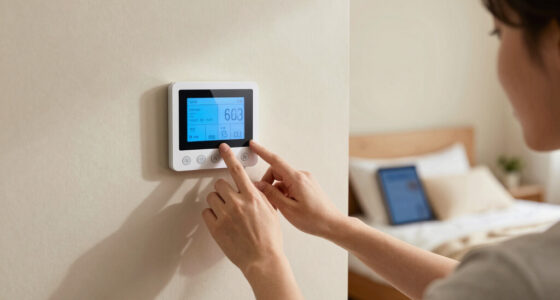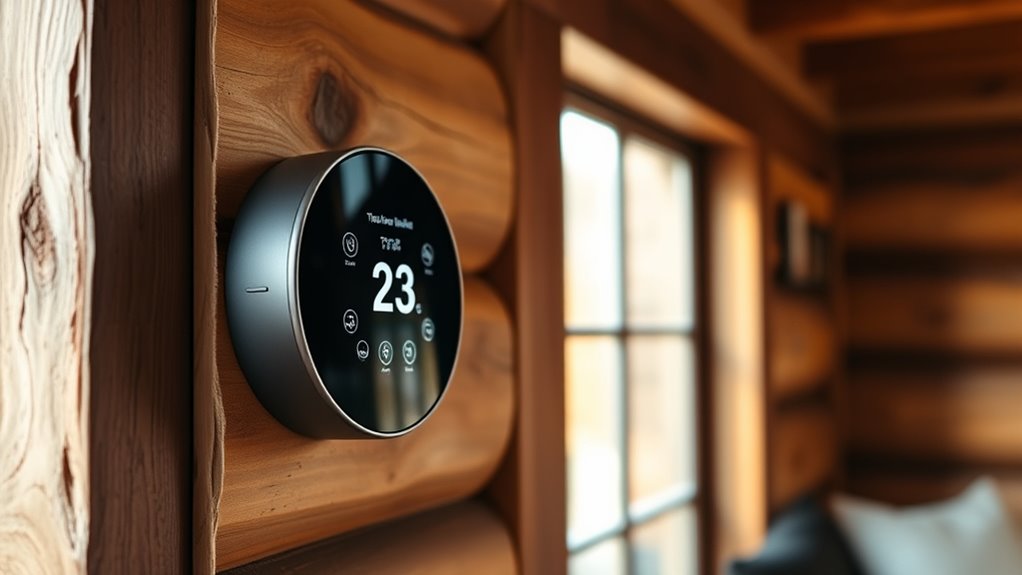

For a smart thermostat in a cabin with no C-wire, my best overall pick is the Sensi Lite ST25 because it is a straightforward option for compatible systems that can run without a dedicated C-wire. The MoesGo Wi-Fi thermostat is a stronger fit if you want a C-wire adapter and remote sensor in the package, while the battery-powered Tuya Zigbee model suits cabins where low-power operation matters more than direct Wi-Fi control. The main tradeoffs are wiring compatibility, reliable remote connectivity, and whether you want a hub or adapter as part of the setup. A thermostat that powers on without a C-wire may still be unsuitable for your heating system or internet conditions. Read on for the full comparison and guidance on matching each option to your cabin.

Get home appliances delivered free with Prime
- Fast, free delivery on millions of items
- Prime Video, Amazon Music and more included
- Member-only deals all year
Complete the kit


Key Takeaways
- The Sensi Lite ST25 leads for straightforward no-C-wire setups, but buyers still need to confirm that their HVAC system is compatible with its wiring requirements.
- MoesGo stands out for included installation flexibility because its C-wire adapter and remote sensor address two common cabin setup needs.
- The Tuya Zigbee thermostat is the battery-powered choice; its Zigbee-based approach may call for a compatible hub and is not interchangeable with a Wi-Fi thermostat.
- The two Hamwesh models prioritize a color LCD and Wi-Fi features, so screen preference and exact wiring support deserve closer scrutiny before choosing between them.
- The Sensi ST55 is a different Sensi option from the Lite ST25; compare its compatibility and setup needs rather than assuming the same no-C-wire fit.
- No single option solves every cabin constraint: HVAC type, seasonal internet access, and whether the property has a C-wire can change which pick makes the most sense.
| Sensi Lite Smart Thermostat (ST25) | 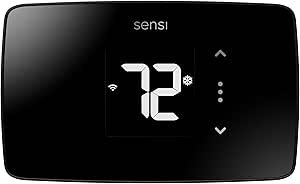 | Best for DIY Setup—If Your Wiring Fits | Model: ST25 | Connectivity: Wi-Fi; 2.4 GHz required | Power: Battery or C-wire | VIEW ON AMAZON | See Our Full Breakdown |
| MoesGo Programmable Wi-Fi Smart Thermostat with C-Wire Adapter and Remote Sensor |  | Best Included Wiring Kit | Model: 06-O0VS-LMKK | System compatibility: Conventional (2H/2C); heat pump (4H/2C) | Connectivity: 2.4 GHz Wi-Fi | VIEW ON AMAZON | See Our Full Breakdown |
| Hamwesh Wi-Fi Smart Thermostat with LCD Color Screen |  | Best Screen-Forward No-C-Wire Option | Model: Hamweshkub72cgp9x | Connectivity: Wi-Fi | C-wire requirement: Described as no C wire required | VIEW ON AMAZON | See Our Full Breakdown |
| Tuya Zigbee Smart Thermostat, Battery Powered |  | Best for Cabins Without Wi-Fi Thermostat Wiring | Connectivity: Zigbee | Power: Three 1.5 V batteries | Gateway requirement: Tuya Zigbee gateway required | VIEW ON AMAZON | See Our Full Breakdown |
| Hamwesh Wi-Fi Programmable Thermostat with LCD Color Screen | | Best for Heating-Only and Floor-Heating Buyers | Model: Hamweshkfxvo48l17 | Connectivity: Wi-Fi | C-wire requirement: Described as no C wire required | VIEW ON AMAZON | See Our Full Breakdown |
| Sensi ST55 Wi-Fi Smart Thermostat |  | Best for Broad Smart-Home Compatibility | Brand and model: Sensi ST55 | Connectivity: Wi-Fi | Compatible systems: Air conditioner, boiler, furnace, heat pump | VIEW ON AMAZON | See Our Full Breakdown |
| smart thermostat for cabins with no cwire | Connectivity | Model | Power | Included components |
|---|---|---|---|---|
| Sensi Lite Smart Thermostat | Wi-Fi; 2.4 GHz required | ST25 | Battery or C-wire | — |
| MoesGo Programmable Wi-Fi Smar | 2.4 GHz Wi-Fi | 06-O0VS-LMKK | — | C-wire adapter, temperature sensor |
| Hamwesh Wi-Fi Smart Thermostat | Wi-Fi | Hamweshkub72cgp9x | — | Smart thermostat, cable, screws, user manual |
| Tuya Zigbee Smart Thermostat | Zigbee | — | Three 1.5 V batteries | — |
| Hamwesh Wi-Fi Programmable The | Wi-Fi | Hamweshkfxvo48l17 | — | Cable, screws, user manual |
| Sensi ST55 Wi-Fi Smart Thermos | Wi-Fi | — | Corded electric; two AA batteries included | — |
More Details on Our Top Picks
Sensi Lite Smart Thermostat (ST25)
The Sensi Lite is the clearest fit here for cabin owners who want app scheduling and remote temperature control without a complicated setup. Its DIY instructions and built-in level can help with installation, while geofencing and usage reports add useful controls for a property that sits empty between visits. It can run on batteries or a C-wire, but that does not make it a universal no-C-wire choice: the listed requirements call for a C-wire on heat pumps and heat/cool-only systems. Compared with the MoesGo, it has fewer included wiring aids, but its stated privacy policy and ENERGY STAR certification offer different reasons to choose it. Check your system type and Wi-Fi band before buying; it requires 2.4 GHz Wi-Fi.
Pros:- DIY installation guidance includes a built-in level and step-by-step instructions.
- App features include remote control, scheduling, geofencing, and usage reports.
- ENERGY STAR certified.
- Privacy policy states that personal data is not sold to third parties.
Cons:- A C-wire is required for heat-pump and heat/cool-only systems.
- Wi-Fi connection requires a 2.4 GHz network.
- Does not include the C-wire adapter and remote sensor listed with the MoesGo.
Best for: Cabin owners with a compatible conventional system who want a familiar app, scheduling, and DIY installation guidance.
Not ideal for: Owners of heat-pump or heat/cool-only systems without a C-wire, since those configurations are listed as requiring one.
- Model:ST25
- Connectivity:Wi-Fi; 2.4 GHz required
- Power:Battery or C-wire
- C-wire note:Required for heat pump and heat/cool-only systems
- Voice assistants:Amazon Alexa, Google Assistant
- Display and mounting:LCD; wall mount
- Batteries:2 AAA batteries included
- Warranty:3 years
Our verdict“Choose the Sensi Lite for a compatible system when DIY guidance and remote scheduling matter more than an included adapter or sensor.”
MoesGo Programmable Wi-Fi Smart Thermostat with C-Wire Adapter and Remote Sensor
The MoesGo stands out for pairing a C-wire adapter with a remote temperature sensor, two inclusions that can address common cabin installation and room-temperature concerns. Its 7-day schedule and Tuya or Smart Life app control let owners set routines and adjust settings remotely; Alexa and Google Assistant voice control are also supported. Compared with the Sensi Lite, MoesGo is more appealing when an adapter and sensor are useful, but its compatibility limits need close attention: it excludes two-wire and high-voltage systems, along with certain heating-only setups. It is specified for compatible conventional and heat-pump systems, not every cabin furnace or radiant setup. It also needs 2.4 GHz Wi-Fi, so it is a poor match for a property without a suitable network.
Pros:- Includes a C-wire adapter and a remote temperature sensor.
- Supports 7-day programmable schedules.
- Remote control is available through Tuya or Smart Life.
- Works with Amazon Alexa and Google Assistant voice control.
Cons:- Does not support two-wire or high-voltage systems.
- Some heating-only systems are unsupported.
- Requires a 2.4 GHz Wi-Fi connection.
Best for: Cabin owners with a compatible 24 VAC conventional or heat-pump system who want an included adapter, remote sensor, and weekly scheduling.
Not ideal for: Owners of two-wire, high-voltage, or unsupported heating-only systems, or cabins without 2.4 GHz Wi-Fi.
- Model:06-O0VS-LMKK
- System compatibility:Conventional (2H/2C); heat pump (4H/2C)
- Connectivity:2.4 GHz Wi-Fi
- Voltage:24 VAC
- Scheduling:7-day programmable
- Included components:C-wire adapter, temperature sensor
- Voice assistants:Amazon Alexa, Google Assistant, Google Home
- Display and mounting:Digital display; wall mount
Our verdict“Pick MoesGo when your cabin system is confirmed compatible and the included adapter and sensor are more useful than Sensi Lite’s stated privacy features.”
Hamwesh Wi-Fi Smart Thermostat with LCD Color Screen
The Hamwesh Wi-Fi Smart Thermostat is a candidate for cabin owners drawn to a color LCD and app, touch, and voice controls, with product information describing it as requiring no C-wire. That claim is relevant to this roundup, but the available details do not spell out supported wiring configurations, voltage, Wi-Fi band, or voice platforms. I would treat compatibility as unconfirmed until the seller or manufacturer verifies the exact heating and cooling system. Unlike the MoesGo, it is not documented with a C-wire adapter or remote sensor, so buyers get less detail about installation support and room sensing. The included cable, screws, and manual may help with setup, but they do not resolve system-fit questions. Its strongest case is a confirmed-compatible installation where screen visibility matters.
Pros:- Product information describes it as requiring no C-wire.
- Color LCD screen provides an on-device temperature display.
- Offers app, touch, and voice control.
- Includes a cable, screws, and user manual.
Cons:- Supported wiring configurations and voltage are not specified in the supplied details.
- Wi-Fi band and compatible voice assistants are not identified.
- No remote sensor or C-wire adapter is listed, unlike the MoesGo.
Best for: Cabin owners with a confirmed-compatible heating and cooling system who want a color display and controls on the device as well as remotely.
Not ideal for: Buyers who need clearly documented wiring compatibility, a specified Wi-Fi band, or a known voice-assistant ecosystem before ordering.
- Model:Hamweshkub72cgp9x
- Connectivity:Wi-Fi
- C-wire requirement:Described as no C wire required
- Display:LCD color screen
- Control methods:App, touch, voice
- Features:Programmable; temperature display
- Included components:Smart thermostat, cable, screws, user manual
Our verdict“Consider this Hamwesh model only after confirming system compatibility, especially if a color screen is a priority.”
Tuya Zigbee Smart Thermostat, Battery Powered
This battery-powered Zigbee thermostat takes a different route from the Wi-Fi models: it avoids separate AC wiring for its own power and connects through a Tuya Zigbee gateway. That can suit a cabin where a compatible gateway and network are already part of the setup, but battery power alone does not establish that every heating system is compatible or eliminate the need to verify wiring at the thermostat. The Smart Life/Tuya app, voice control, and flexible weekly schedules provide remote-management options, while the listed temperature precision is ±1°C. Compared with the Sensi Lite, this pick depends on a dedicated gateway rather than direct Wi-Fi. Its battery requirement and extra hub make it less appealing for someone seeking the simplest single-device setup.
Pros:- Battery-powered design does not require separate AC wiring for thermostat power.
- Remote adjustment is available through the Smart Life/Tuya app.
- Supports voice control and several weekly schedule patterns.
- Lists temperature precision of ±1°C.
Cons:- Requires a Tuya Zigbee gateway.
- Batteries must be supplied and replaced as needed.
- The supplied product details do not specify supported heating-system configurations.
Best for: Cabin owners who already use a Tuya Zigbee gateway and want a battery-powered thermostat with app scheduling.
Not ideal for: Buyers without a Tuya Zigbee gateway or those seeking a direct Wi-Fi thermostat with clearly listed heating-system compatibility.
- Connectivity:Zigbee
- Power:Three 1.5 V batteries
- Gateway requirement:Tuya Zigbee gateway required
- Temperature precision:±1°C
- Controls:Touchscreen, app, voice
- Programming:5+2, 6+1, or 7-day schedules
- Mounting type:Surface mount
- Protection grade:IP20
Our verdict“Choose this model when you already have a Tuya Zigbee gateway and have independently confirmed that it matches your cabin’s heating system.”
Hamwesh Wi-Fi Programmable Thermostat with LCD Color Screen
This Hamwesh programmable thermostat is described as intended for heating systems, including floor heating, and as requiring no C-wire. That makes it more targeted than the other Hamwesh model in this list, which is described for heating and cooling. Still, the available specifications do not explain supported system types or wiring, so cabin owners should confirm a match before ordering—especially for floor heating, where controls can vary. App, touch, and voice control plus programmable scheduling offer remote adjustments for an intermittently occupied property. Compared with the MoesGo, this model may better suit buyers seeking a heating-focused control, but MoesGo provides more explicit conventional and heat-pump compatibility along with an adapter and sensor. The color screen is a useful interface, not a substitute for system-fit documentation.
Pros:- Described as requiring no C-wire.
- Intended for heating systems, including floor heating.
- Supports programmable schedules and remote temperature management.
- Provides app, touch, and voice controls with a color LCD.
Cons:- Specific supported heating and cooling configurations are not provided.
- Voice-assistant platforms and Wi-Fi band are not identified.
- Does not list a C-wire adapter or remote sensor, both included with the MoesGo.
Best for: Cabin owners with a confirmed-compatible heating-only or floor-heating system who want scheduling and app-based temperature adjustment.
Not ideal for: Owners who need documented compatibility with a specific furnace, heat pump, or cooling setup, or who want an included C-wire adapter or sensor.
- Model:Hamweshkfxvo48l17
- Connectivity:Wi-Fi
- C-wire requirement:Described as no C wire required
- Intended systems:Heating systems, including floor heating
- Display:LCD color screen
- Control methods:App, touch, voice
- Features:Programmable scheduling; temperature display
- Included components:Cable, screws, user manual
Our verdict“This is a possible match for floor-heating cabins, but confirm the exact system and wiring before choosing it over the more fully specified MoesGo.”
Sensi ST55 Wi-Fi Smart Thermostat
The Sensi ST55 is a strong fit for cabin owners who want a familiar Wi-Fi thermostat without assuming every installation needs a C-wire. It does not require one in most applications, but wiring needs depend on the HVAC setup, so check compatibility before buying. Its standout difference from the Tuya Zigbee Battery Powered Thermostat is platform reach: the ST55 works with Alexa, Apple HomeKit, Google Assistant, SmartThings, and Vera, while also offering app access and physical controls. DIY instructions and a built-in level can make wall installation less intimidating, and scheduling, usage reports, and maintenance alerts help manage a cabin remotely. The tradeoff is that connected features depend on Wi-Fi, which may be unreliable at a remote property. Compared with the Sensi Lite ST25, this model is the better fit for buyers prioritizing wider smart-home integration, but it still needs an HVAC-specific C-wire check.
Pros:- C-wire is not required in most applications, subject to HVAC compatibility
- Supports Alexa, Apple HomeKit, Google Assistant, SmartThings, and Vera
- DIY app instructions and built-in level support installation
- Scheduling, remote access, usage reports, and maintenance alerts aid remote HVAC management
Cons:- C-wire requirements vary by HVAC system, so some cabins may need additional wiring or another solution
- Wi-Fi is required for connected features, limiting usefulness where cabin connectivity is unreliable
- The 24 V AC system requirement excludes incompatible HVAC equipment
Best for: Cabin owners with reliable Wi-Fi who want app control and compatibility with several major smart-home platforms, while avoiding a C-wire where their HVAC setup permits.
Not ideal for: Owners of remote cabins with weak or absent Wi-Fi, or buyers whose HVAC wiring requires a C-wire and who do not want to verify compatibility before installation.
- Brand and model:Sensi ST55
- Connectivity:Wi-Fi
- Compatible systems:Air conditioner, boiler, furnace, heat pump
- Voice assistants and platforms:Amazon Alexa, Apple HomeKit, Google Assistant, SmartThings, Vera
- Voltage:24 V AC
- Display:LED, 5-inch screen
- Controls:Buttons, app, touch, voice
- Power:Corded electric; two AA batteries included
- Mounting and color:Wall mount; white
Our verdict“Choose the ST55 if your cabin has reliable Wi-Fi and compatible HVAC wiring and you want broader smart-home support than the Sensi Lite ST25 offers.”

How We Picked
I ranked these thermostats around the problems that matter most in a cabin without a C-wire: whether the product has a plausible power path for that setup, how much installation complexity it may add, and whether its connectivity fits a property that may be unattended. I also weighed practical features such as remote sensors, display usability, battery operation, and the need for a hub or adapter. Because compatibility varies by heating equipment and wiring, I treated product names and feature claims as a starting point—not proof that a thermostat will work with every cabin system.
The Sensi Lite ST25 ranks first for the clearest fit among the listed options for buyers seeking a simpler no-C-wire route. MoesGo follows for its adapter-and-sensor bundle, which can be useful but adds setup considerations. The Tuya model earns a distinct place for battery power, while the Hamwesh thermostats and Sensi ST55 offer alternatives whose fit depends more heavily on confirmed wiring, network, and system compatibility. I favor a clear match to cabin constraints over a longer feature list.
| smart thermostat for cabins with no cwire | Power | Included components | Display |
|---|---|---|---|
| Sensi Lite Smart Thermostat | Battery or C-wire | — | — |
| MoesGo Programmable Wi-Fi Smar | — | C-wire adapter, temperature sensor | — |
| Hamwesh Wi-Fi Smart Thermostat | — | Smart thermostat, cable, screws, user manual | LCD color screen |
| Tuya Zigbee Smart Thermostat | Three 1.5 V batteries | — | — |
| Hamwesh Wi-Fi Programmable The | — | Cable, screws, user manual | LCD color screen |
| Sensi ST55 Wi-Fi Smart Thermos | Corded electric; two AA batteries included | — | LED, 5-inch screen |
Factors to Consider When Choosing Smart Thermostat For Cabins With No Cwire
Before choosing a model, I would treat the cabin’s heating system and power setup as the deciding factors, then weigh remote access and convenience. These checks can prevent a thermostat that looks suitable on paper from becoming an installation or connectivity problem.
Match the Thermostat to the Heating Equipment
Start by identifying whether the cabin uses a conventional furnace, boiler, heat pump, electric baseboard, or another system. Smart thermostats do not all support the same equipment, and a model designed for low-voltage HVAC may not suit line-voltage heating. Check the equipment’s control terminals and the thermostat’s supported system types before focusing on app features. If the current thermostat uses unusual wiring or controls multiple stages, record the labels or consult an HVAC professional. A wire count alone does not establish compatibility. This check matters more than choosing between a color display and a remote sensor.
Understand What “No C-Wire” Really Means
A thermostat may work without a dedicated C-wire through batteries, a power-sharing design, or an adapter, but those methods are not equivalent. Battery operation can avoid adding a conductor, while an adapter may need to connect at the HVAC equipment and can make installation more involved. Power-sharing approaches can behave differently across systems, so verify the manufacturer’s compatibility guidance rather than assuming two-wire setups will work. Take a clear photo of the existing wiring before removing the old thermostat. If the cabin has no accessible furnace board or air-handler terminals, an adapter-based solution may be less convenient than it first appears. Ask an installer if you cannot identify the control wires confidently.
Plan for Seasonal Internet and Power Conditions
Remote control depends on more than the thermostat: the cabin needs dependable internet and a powered router or hub. If broadband is shut off between visits, schedules may still help maintain a set temperature, but app access and alerts can be unavailable. Check whether the thermostat can operate locally when the network drops and what functions depend on cloud access. Battery-powered Zigbee models add another link in the chain because a compatible hub and its connection may be required. For a cabin that sits empty for long stretches, think through router restarts, power outages, and alert delivery before choosing a connected model.
Decide Whether a Remote Sensor Solves a Real Problem
A remote sensor can help when the thermostat is in a drafty hallway or the cabin has rooms that heat unevenly. It is most useful when the thermostat supports using sensor readings for schedules or temperature decisions, not merely displaying them. A sensor cannot correct undersized equipment, poor insulation, or a closed-off room that lacks airflow. For a small, open cabin, the extra device may add setup and battery maintenance without changing comfort much. For a multi-room layout, check how many sensors the system supports and how the thermostat prioritizes them. Choose this feature to address a known hot or cold spot rather than as a default upgrade.
Weigh Easy Installation Against Future Service
Cabins can be harder to service than full-time homes, so installation simplicity has lasting value. A battery-powered thermostat avoids some wiring changes, while an adapter can offer another route but may require access to the HVAC control board. Consider who will troubleshoot it if the screen goes blank or the system stops responding during a cold spell. Keep wiring labels, setup details, and any hub information with the cabin’s maintenance records. A less feature-rich model can be a better choice if a caretaker needs to understand it quickly. Paying for added connectivity makes less sense if no one can maintain the network or equipment.
Pay for Features That Fit the Cabin
Extra sensors, programmable schedules, app controls, and color screens are useful only when they address a real need. A frequently visited cabin may benefit more from simple scheduling, while an intermittently occupied property may place greater value on remote monitoring and alerts. Compare the complete setup, including any separate hub, adapter, sensor, or installation work—not just the thermostat itself. Also check whether the household already uses a compatible smart-home platform; adding a new ecosystem can complicate support. Spend more for a capability you will use to manage comfort or maintenance, not for a feature that depends on unavailable internet. The best fit is the one that remains practical during both occupied and vacant periods.
Frequently Asked Questions
Can I install a smart thermostat in a cabin that has no C-wire?
Possibly, but “no C-wire” does not guarantee that a particular thermostat will work with your equipment. Some models use batteries, while others need a compatible adapter or another power method. Check both the thermostat’s wiring instructions and the cabin’s HVAC system type before buying. If an adapter is required, confirm that you can reach the control board and have the right terminals available. When the wiring is unclear, an HVAC technician can identify a safe match before installation.
Will the thermostat still control the heat if the cabin’s Wi-Fi goes down?
That depends on the model and how much of its operation relies on an app or cloud service. Many thermostats can continue following a local schedule, but remote adjustments, notifications, or smart-home features may stop until the connection returns. A Zigbee thermostat may also depend on its hub for connected functions. Check the product instructions for offline behavior rather than assuming Wi-Fi loss disables—or leaves unchanged—every feature. For an unattended cabin, plan a way to check both internet and heating equipment during extended outages.
Is a battery-powered Zigbee thermostat a better choice than a Wi-Fi model?
It can be a better fit when avoiding a C-wire is the main constraint and you already have, or are willing to add, a compatible Zigbee hub. Battery power can reduce wiring work, but Zigbee is not the same as direct Wi-Fi access, and remote control may rely on the hub and its internet connection. A Wi-Fi model may be simpler if you want direct network connectivity and its wiring or power method suits your system. Compare the complete setup, including hub support and battery upkeep, before deciding. The better choice depends on the cabin’s existing network and how you plan to manage it remotely.
Should I choose a thermostat with a C-wire adapter if my cabin has no C-wire?
An adapter can be a workable route when the thermostat and HVAC equipment support it, but it usually adds a wiring step at the furnace or air handler. That may be inconvenient if the equipment is hard to access or the cabin is far from regular service. Compare that installation with a battery-powered option or another model designed for your wiring arrangement. Confirm the adapter is included and compatible with the exact thermostat and system rather than relying on the product title alone. If you are unsure about control-board wiring, get help before connecting it.
What should I check before leaving a smart thermostat unattended at a cabin?
Confirm that the thermostat can maintain a suitable schedule without an internet connection and understand which alerts depend on connectivity. Test the heating system, app access, and any hub or sensor while someone is at the property. Set up a reliable plan for router or power failures, since a smart thermostat cannot restore electricity or repair heating equipment. Review battery replacement needs and leave clear instructions for a caretaker. If freeze protection is the main concern, verify the system’s limits and consider a separate monitoring plan rather than relying on a single app notification.
Conclusion
For most buyers seeking a smart thermostat for a cabin without a C-wire, I would start with the Sensi Lite ST25 as the best overall, subject to checking system compatibility. The MoesGo is my best value-style pick for buyers who want an adapter and remote sensor together, while the Tuya Zigbee model is best for battery-powered setups where a compatible hub fits the cabin’s network. For beginners, I would choose the option with the clearest match to the existing wiring and the least complicated installation—not simply the model with the most features. The Hamwesh options may appeal to buyers who prioritize a color LCD, and the Sensi ST55 is worth comparing when its specific compatibility suits the system. For a premium-style choice, prioritize the model that adds useful monitoring or sensing for your cabin layout; no extra feature outweighs a mismatch with the HVAC equipment.