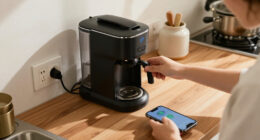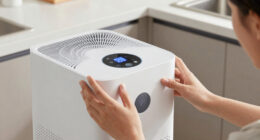
Choosing a smart thermostat for a cheese aging room is less about adding another app and more about keeping temperature steady, checking readings remotely, and knowing when conditions need attention. My leading picks are the Inkbird WiFi ITC-308 for its separate heating and cooling outputs plus high- and low-temperature alarms, the INKTEM 236T for a waterproof probe and phone alerts, and the DEWENWILS 15A for a broad stated temperature range and flexible modes. Each takes a different approach to the job.

Get home appliances delivered free with Prime
- Fast, free delivery on millions of items
- Prime Video, Amazon Music and more included
- Member-only deals all year
The main tradeoff is between monitoring and control detail on one hand and load capacity or smart-home convenience on the other. The Inkbird is rated for a lower output load than the other listed controllers, while the INKTEM and DEWENWILS focus on outlet-level control with higher stated current limits. Meross offers broad platform compatibility and scheduling, though its display behavior and default range may need attention. None of these controllers measures humidity, a separate factor in cheese aging, so I would pair any choice with suitable humidity monitoring.
Complete the kit



Key Takeaways
- I rank the Inkbird WiFi ITC-308 first for aging rooms where high- and low-temperature alarms and distinct heating and cooling outputs matter more than maximum wattage.
- The INKTEM 236T is my best value-oriented fit for buyers who want phone alerts, timer modes, outage memory, and an IP67 waterproof probe.
- DEWENWILS provides the widest listed measurement range and a 15A rating, making it a flexible pick for varied room setups, but app control depends on Wi-Fi.
- Meross is the smart-home choice, with Apple Home, Alexa, Google Home, and SmartThings compatibility plus a schedule supporting up to 12 periods per day.
- All four control temperature rather than humidity; I would use a separate humidity monitor and verify each unit’s load rating against the connected equipment.
| Inkbird WiFi ITC-308 Digital Temperature Controller Thermostat |  | Best Overall for Temperature Alarms | Model: WiFi ITC-308-US | Control: Heating and cooling | Connectivity: 2.4 GHz Wi-Fi | VIEW ON AMAZON | See Our Full Breakdown |
| INKTEM WiFi Temperature-Controlled Outlet with Timer and Smart Memory |  | Best Value-Oriented Pick for a Damp Probe Environment | Model: 236T | Connectivity: 2.4 GHz Wi-Fi | Temperature range: -40°F to 212°F | VIEW ON AMAZON | See Our Full Breakdown |
| DEWENWILS Smart Wi-Fi Temperature Controller, 15A |  | Best for Flexible Range and Operating Modes | Current and voltage: 15A, 120V | Maximum wattage: 1800W | Temperature range: -40°F to 240°F | VIEW ON AMAZON | See Our Full Breakdown |
| Meross Smart Temperature Controller for Apple HomeKit |  | Best for Smart-Home Integration and Scheduling | Connectivity: Wi-Fi | Compatible platforms: Apple Home, Amazon Alexa, Google Home, SmartThings | Maximum load: 15A | VIEW ON AMAZON | See Our Full Breakdown |
| smart thermostat for cheese aging room | Connectivity | Model | Temperature range | Warranty |
|---|---|---|---|---|
| Inkbird WiFi ITC-308 Digital T | 2.4 GHz Wi-Fi | WiFi ITC-308-US | — | — |
| INKTEM WiFi Temperature-Contro | 2.4 GHz Wi-Fi | 236T | -40°F to 212°F | 2 years |
| DEWENWILS Smart Wi-Fi Temperat | Wi-Fi | — | -40°F to 240°F | 1 year |
| Meross Smart Temperature Contr | Wi-Fi | — | — | — |
More Details on Our Top Picks
Inkbird WiFi ITC-308 Digital Temperature Controller Thermostat
For a cheese aging room where I want to know when temperature drifts high or low, the Inkbird WiFi ITC-308 makes the strongest all-around case. Its dual relay outputs are designed to control heating and refrigeration equipment, while the app supports remote monitoring over 2.4 GHz Wi-Fi. That combination suits a room that needs active correction in either direction, rather than a heater-only setup.
Its clearest advantage over the DEWENWILS and INKTEM is the stated set of high- and low-temperature alarms, including a sensor malfunction alarm. For stored cheese, an alarm can help flag a problem before a small temperature shift goes unnoticed. Celsius or Fahrenheit display and calibration add useful flexibility when matching readings to a separate thermometer or a documented aging routine.
The main compromise is electrical capacity: the listed maximum output load is 1100W at 110V, below the 1800W figures listed for DEWENWILS and INKTEM. I would check the connected appliance’s actual draw and startup demands before choosing it. It also relies on a 2.4 GHz network, and it does not claim humidity control. For a room where alarm coverage is the priority and the equipment fits its load limit, I place it first; buyers with higher-power equipment should compare INKTEM or DEWENWILS carefully.
Pros:- Separate heating and cooling outputs for compatible equipment
- App-based remote monitoring on 2.4 GHz Wi-Fi
- High- and low-temperature alarms plus a sensor malfunction alarm
- Supports Celsius and Fahrenheit with temperature calibration
Cons:- Maximum listed output is 1100W at 110V, lower than the INKTEM and DEWENWILS figures
- Requires a 2.4 GHz Wi-Fi network for app access
- No humidity measurement or control is listed
Best for: Cheese makers who want remote temperature readings and explicit high-, low-, and sensor-fault alarms, with compatible equipment within the controller’s stated load limit.
Not ideal for: Buyers whose heater or cooling equipment exceeds 1100W at 110V, or anyone looking for humidity control in the same device.
- Model:WiFi ITC-308-US
- Control:Heating and cooling
- Connectivity:2.4 GHz Wi-Fi
- Maximum output load:1100W at 110V
- Temperature units:Celsius or Fahrenheit
- Alerts:High, low, and sensor malfunction
- Power:Corded electric, 110V
Our verdict“I rank the Inkbird first for aging rooms that need clear temperature alarms and whose equipment stays within its comparatively modest load rating.”
INKTEM WiFi Temperature-Controlled Outlet with Timer and Smart Memory
The INKTEM 236T is a strong fit when I want temperature control with remote checks and alerts, without giving up timer-based operation. It offers temperature, duration-timer, and combined temperature-and-timer modes. For a cheese room, that range can help match the controller to compatible equipment and a chosen routine, although I would not treat timer cycling as a replacement for a properly sized thermostat strategy.
Its IP67 waterproof probe is a useful distinction from the other listed models, particularly where condensation or careful cleaning makes probe exposure a concern. The product also lists over-current protection, outage memory, and phone alerts. Compared with the Inkbird, INKTEM lists a higher 16A and 1800W maximum, but Inkbird supplies explicit high- and low-temperature alarm details. I would pick INKTEM for its probe and flexible modes, not assume its listed capacity makes it suitable for every compressor or heater.
The limitation is that it requires 2.4 GHz Wi-Fi for remote monitoring, and its ABS controller should not be mistaken for a waterproof housing just because the probe is rated IP67. Its stated range ends at 212°F, which is ample for ordinary room-temperature control but narrower than DEWENWILS’ listed upper limit. For a buyer seeking a well-equipped outlet controller with a protected probe and outage memory, it is more compelling than a bare timer; buyers needing the clearest alarm specification should favor Inkbird.
Pros:- IP67 waterproof temperature probe
- Temperature, timer, and combined temperature-and-timer modes
- Remote monitoring and phone alerts over Wi-Fi
- Over-current protection and outage memory
Cons:- App functions require a 2.4 GHz Wi-Fi connection
- Waterproof rating applies to the probe, not the controller housing
- Listed temperature range tops out at 212°F, below DEWENWILS’ 240°F
Best for: Small-scale cheesemakers who want remote readings, phone alerts, timer modes, and a waterproof temperature probe for a humid or condensation-prone room.
Not ideal for: People who need a waterproof controller enclosure, do not have 2.4 GHz Wi-Fi, or need explicit alarm functions beyond the supplied description.
- Model:236T
- Connectivity:2.4 GHz Wi-Fi
- Temperature range:-40°F to 212°F
- Probe:IP67 waterproof
- Control modes:Temperature, timer, and combined temperature/timer
- Power-loss behavior:Memory restores temperature and timing settings
- Warranty:2 years
Our verdict“I recommend the INKTEM for buyers who value a waterproof probe, alerts, and timer flexibility more than Inkbird’s specifically described alarm set.”
DEWENWILS Smart Wi-Fi Temperature Controller, 15A
The DEWENWILS 15A suits buyers who want a wide stated measurement range and several ways to run connected equipment. Its listed span of -40°F to 240°F reaches beyond the INKTEM’s upper limit and the Inkbird range supplied here. For a typical cheese aging room, those extremes are rarely the working target, but a broad range can make one controller more adaptable across different temperature-controlled tasks.
Six modes cover heating or cooling, with and without timers, as well as timer-only and off settings. The backlit LCD provides a local readout, while app control and schedules support adjustments away from the room. Like INKTEM, DEWENWILS lists 1800W at 120V and power-outage memory. Compared with INKTEM, it offers a higher stated maximum temperature and 0.1°F accuracy; INKTEM counters with a waterproof probe, over-current protection, and a longer listed warranty.
The key drawback is that remote app control requires Wi-Fi; a clear local display does not provide remote oversight when the network is unavailable. The supplied details also do not identify the same specific high-, low-, or sensor-fault alerts listed for Inkbird. I would choose DEWENWILS for mode flexibility and range, but skip it if alarm detail or probe water resistance is the deciding factor. As with all four options, it is a temperature controller, not a humidity solution.
Pros:- Broad listed temperature range of -40°F to 240°F
- Six operating modes, including heating and cooling with timer options
- Backlit LCD and app scheduling
- Restores previous settings after a power outage
Cons:- Remote app control depends on Wi-Fi
- No waterproof probe rating is listed
- Specific high-, low-, and sensor-failure alarms are not listed in the supplied details
Best for: Buyers who want heating and cooling modes, schedules, outage memory, and a broad stated temperature range for a compatible aging-room setup.
Not ideal for: Those who need a waterproof probe, detailed fault alarms, or remote access that works without Wi-Fi.
- Current and voltage:15A, 120V
- Maximum wattage:1800W
- Temperature range:-40°F to 240°F
- Temperature accuracy:0.1°F
- Connectivity:Wi-Fi
- Modes:Cooling + timer, heating + timer, cooling, heating, timer, off
- Display:Backlit LCD
- Warranty:1 year
Our verdict“I favor DEWENWILS when broad range and flexible operating modes lead the decision, while INKTEM is the stronger match for probe protection and Inkbird for explicit alarms.”
Meross Smart Temperature Controller for Apple HomeKit
Meross is the smart-home pick in this group. It works with Apple Home, Amazon Alexa, Google Home, and SmartThings, and combines app, button, and voice control. For a cheesemaker already managing household or workshop devices through one of those platforms, this can make room checks and routine adjustments easier to fold into an existing setup.
Its schedule supports up to 12 periods per day, and the controller also offers timers, temperature history, compressor protection, and power-off memory. Temperature history gives more context than a live reading alone, while compressor protection is relevant when controlling compatible refrigeration. Against DEWENWILS, Meross offers a stronger named smart-home ecosystem and a longer sensor lead; against Inkbird, it has broader platform compatibility but the supplied product details do not list the same explicit high-, low-, and sensor-malfunction alarms.
Two quirks keep it from ranking higher for a cheese room. The display may switch off after a long idle period and requires a long press of the Mode button to wake, and its default control range is limited to 95°F until changed in the app. The listing also states 3600W at 240V, so I would confirm the connected equipment and installation requirements rather than compare that figure directly with 120V outlet ratings. Meross makes the most sense for a platform-led setup; buyers who prioritize a waterproof probe or clearly stated temperature alarms should look at INKTEM or Inkbird.
Pros:- Compatible with Apple Home, Alexa, Google Home, and SmartThings
- Supports app, button, and voice control
- Up to 12 scheduled periods per day, plus timers and temperature history
- Includes compressor protection and power-off memory
Cons:- Display can turn off after inactivity and needs a button hold to reactivate
- Default control range is limited to 95°F until changed in the app
- No humidity measurement or waterproof probe rating is listed
Best for: Smart-home users who want voice control, temperature history, and detailed daily scheduling across Apple Home, Alexa, Google Home, or SmartThings.
Not ideal for: Buyers who want a display that stays continuously lit, a waterproof probe, or a controller that works well without changing its default range in the app.
- Connectivity:Wi-Fi
- Compatible platforms:Apple Home, Amazon Alexa, Google Home, SmartThings
- Maximum load:15A
- Listed wattage:1800W at 120V; 3600W at 240V
- Measurement range:-22°F to 230°F
- Sensor length:79 inches
- Scheduling:Up to 12 periods per day
- Display:Backlit LCD
Our verdict“I would choose Meross for broad smart-home integration and schedule depth, but not when a continuously visible display or explicit alarm coverage is the main need.”

How We Picked
I ranked these controllers for the specific demands of a cheese aging room, not as general-purpose smart plugs. My priorities were the ability to operate heating and cooling equipment, the information and alerts available when I am away from the room, probe suitability, outage recovery, and the electrical limits stated for each model. Those details affect whether a controller can help maintain conditions or simply switch a device on and off.
I gave extra weight to features that support practical oversight: high- and low-temperature alarms, remote readings, temperature history, and recovery after a power loss. Probe protection can matter in a damp or washdown-adjacent space, but a waterproof probe does not make the controller enclosure waterproof. I also compared each unit’s stated current and wattage rather than assuming that all 15A- or 16A-rated devices suit every heater or refrigeration unit.
The lineup includes plug-in controllers, not dedicated commercial refrigeration controls. I therefore treat each as a candidate for appropriately rated, compatible equipment, not as a substitute for professional electrical design or a room-specific humidity system. I ranked Inkbird first because its alarm and dual-output approach is especially useful for temperature oversight; INKTEM follows with strong probe and alert details; DEWENWILS earns a flexible-range role; and Meross stands out most for smart-home integration and scheduling.
| smart thermostat for cheese aging room | Temperature range |
|---|---|
| Inkbird WiFi ITC-308 Digital T | — |
| INKTEM WiFi Temperature-Contro | -40°F to 212°F |
| DEWENWILS Smart Wi-Fi Temperat | -40°F to 240°F |
| Meross Smart Temperature Contr | — |
Factors to Consider When Choosing Smart Thermostat For Cheese Aging Rooms
I would choose a controller only after matching it to the room’s equipment and the way I plan to monitor the aging process. A thermostat can switch compatible heating or cooling devices, but the four options differ in alarms, probes, load ratings, and smart-home features. The following checks help separate a useful room controller from one that only appears convenient on a feature list.
Start With the Temperature-Control Setup
Decide whether the room needs heating, refrigeration, or both before comparing apps. The Inkbird ITC-308 explicitly has dual relay outputs for heating and cooling equipment, while DEWENWILS and INKTEM list heating and cooling modes. Meross also supports compatible heating and cooling appliances and adds compressor protection. The room’s equipment and control requirements should lead the choice, not the number of modes in isolation.
Aging rooms may need a relatively stable set point, but a plug-in controller is not a replacement for suitable refrigeration controls or professional installation. Check whether the controller’s switching method matches the appliance and whether the appliance can safely be controlled by an external outlet thermostat.
Match the Load Rating to the Appliance
Read the equipment label and compare its electrical draw with the controller’s stated limits. INKTEM lists 16A and 1800W, DEWENWILS lists 15A and 1800W at 120V, and Inkbird lists 1100W at 110V. Meross provides 15A and separate wattage figures for 120V and 240V. These figures are not interchangeable, and compressor startup can add demands beyond ordinary running draw.
If the rating or appliance compatibility is unclear, I would ask a qualified electrician or the equipment manufacturer rather than infer suitability from a plug shape. Do not select the Inkbird solely for its alarms if the connected device exceeds its listed output limit.
Choose the Monitoring and Alert Features You Will Use
Remote readings help when the aging room is away from the main living or work area. Inkbird lists high-, low-, and sensor-malfunction alarms; INKTEM lists phone alerts and remote monitoring. DEWENWILS and Meross offer app control, while Meross also adds temperature history and broad voice-platform compatibility. Compare what the provided details actually claim: a remote reading is not automatically an alert for every fault condition.
Wi-Fi is a shared dependency across these choices. The Inkbird and INKTEM specify 2.4 GHz networks, and DEWENWILS needs Wi-Fi for remote app control. If the room has unreliable coverage, plan for a local thermometer and a way to check conditions independently rather than relying on the app alone.
Think About Probe Placement and Moisture
Probe placement affects how useful a reading is. The INKTEM’s IP67 probe is the only one here with a supplied waterproof rating, while Meross specifies a 79-inch stainless steel sensor. DEWENWILS lists a sensor range and accuracy but no water-resistance rating in the supplied details. Keep probes where they measure representative room conditions, away from direct heater discharge, cold coils, or an open door.
A waterproof probe does not make the controller body waterproof. Cheese rooms can involve condensation and cleaning, so position the electronics in a suitable dry location and follow product instructions. None of these products includes humidity control, and a probe aimed at temperature cannot replace a separate humidity instrument.
Account for Outages, Schedules, and Local Use
Power-loss memory appears on DEWENWILS, INKTEM, and Meross, and Inkbird’s supplied description focuses instead on its alarm and controller features. Memory can restore settings after electricity returns, but it cannot keep equipment running during an outage. For a room holding valuable batches, I would still plan how to check the room after a power interruption.
Schedules and timers are useful only when they suit the control task. Meross offers up to 12 periods a day; DEWENWILS provides six operating modes; INKTEM combines temperature and timer operation. If I mainly need automatic response to room temperature, I would prioritize thermostat behavior and reliable alerts over extra timer options. A continuously visible local display may also matter: Meross can turn its display off after inactivity, while DEWENWILS specifies a backlit LCD.
Frequently Asked Questions
Can these smart thermostats control both a heater and a refrigerator?
The Inkbird explicitly lists dual relay outputs for heating and refrigeration equipment, and the DEWENWILS, INKTEM, and Meross descriptions also include heating and cooling control or modes. That does not mean every heater or refrigerator is compatible. I would check each appliance’s electrical draw, control requirements, and the controller’s load rating before connecting it.
Which option has the clearest temperature alarm details?
The Inkbird listing specifically identifies high- and low-temperature alarms, plus a sensor malfunction alarm, so it has the clearest stated alarm set in this comparison. INKTEM lists remote monitoring and phone alerts, but the supplied information does not define the same set of alarm types. I would confirm alert behavior in the product documentation before relying on any controller for unattended batches.
Do I need 2.4 GHz Wi-Fi for these controllers?
The Inkbird and INKTEM specify 2.4 GHz Wi-Fi, and DEWENWILS needs Wi-Fi for remote app control. Meross is described as Wi-Fi-connected, but the supplied details do not state a band. If the aging room has weak coverage, the local display and an independent thermometer remain useful because an app cannot provide dependable remote checks without a working connection.
Will one of these controllers manage humidity as well as temperature?
No humidity measurement or control is listed for any of the four products. Cheese aging can depend on humidity as well as temperature, so I would pair the chosen controller with a separate humidity monitor and, if needed, separate humidity-control equipment. The INKTEM’s waterproof probe rating concerns the probe’s water resistance; it does not mean that the unit measures humidity.
How should I choose between Inkbird and INKTEM?
I would choose Inkbird when explicit high-, low-, and sensor-fault alarms matter most and the connected equipment stays within its 1100W-at-110V limit. INKTEM is a better fit when a waterproof probe, phone alerts, timer modes, and a higher listed 16A/1800W rating matter more. Both need 2.4 GHz Wi-Fi for their connected functions, and neither replaces checking appliance compatibility or monitoring humidity separately.
Conclusion
For most buyers comparing these four options for a cheese aging room, I would start with the Inkbird ITC-308 if alarm visibility is the priority and the equipment fits its load limit. Choose the INKTEM 236T if its waterproof probe, phone alerts, and timer combinations better match the room. DEWENWILS makes sense for someone who values a broad stated temperature range and six operating modes; Meross is the natural choice for an existing Apple Home, Alexa, Google Home, or SmartThings setup with detailed scheduling.
Whichever controller I select, I would verify appliance compatibility and electrical draw, keep the electronics in an appropriate dry location, and add separate humidity monitoring. The strongest pick is the one that fits the room’s equipment and gives me a dependable way to spot temperature problems—not simply the one with the most connected features.
Fall Picks

Arlo Essential Wireless Security Camera 2K (3rd Gen), 3-Camera Set with Yard Sign
As an affiliate, we earn on qualifying purchases.