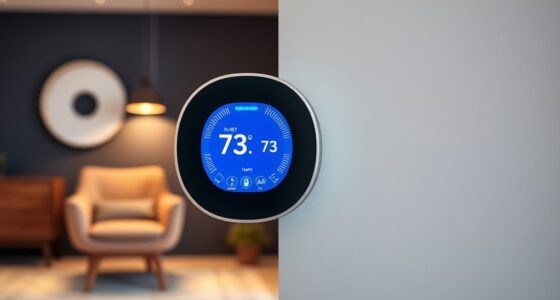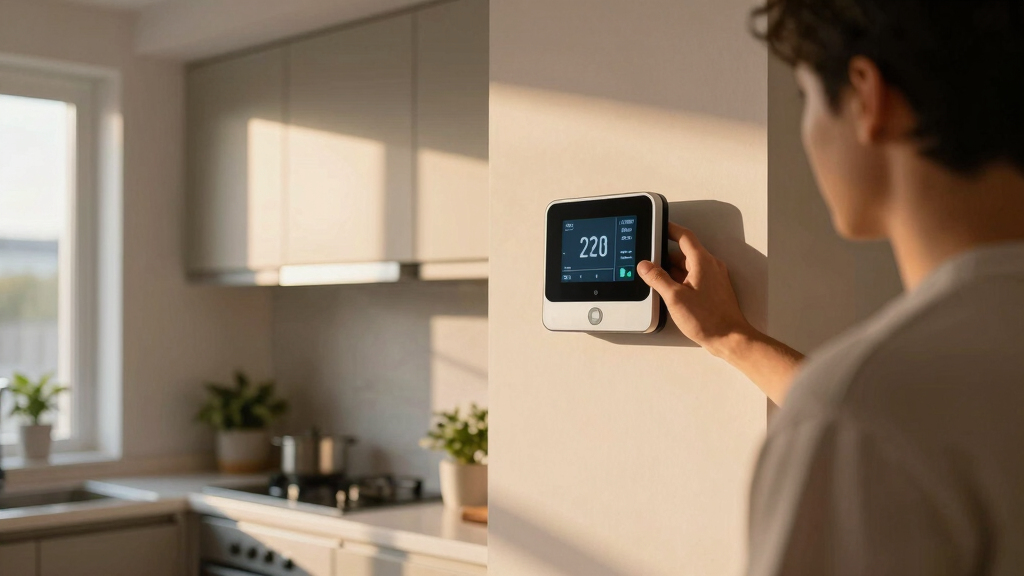

For those seeking detailed insight into home energy consumption at the circuit level, choosing the right monitor can be complex. The best options offer accurate measurements, easy installation, and smart home compatibility, but often involve tradeoffs between cost, complexity, and feature set. The Emporia Vue 3 stands out as an overall top choice for its balance of affordability and features, while the Refoss Smart Home Energy Monitor excels with open API support for tech-savvy users. Expect some monitors to require extensive wiring or lack advanced integrations, making it important to match your technical comfort and goals. Continue reading for a full breakdown of the top models and what makes each one unique.

Get home appliances delivered free — and shop member deals
- Fast, free delivery on millions of items
- Access to Prime Big Deal Days deals on October 6–7
- Prime Video, Amazon Music and more included
Complete the kit


Key Takeaways
- Most high-performing monitors deliver precise circuit-level data, but setup complexity varies significantly.
- Open API and smart home compatibility are key for users wanting integration flexibility, favoring models like Refoss.
- Cost often correlates with the number of circuits monitored and additional features like AI or IoT integration.
- Installation difficulty can range from simple plug-and-play to requiring professional wiring, affecting overall value.
- Top monitors tend to balance real-time data accuracy with user-friendly interfaces, but some trade affordability for advanced features.
| Emporia Vue 3 Home Energy Monitor |  | Best Overall for Versatility and Expandability | Certification: UL Listed, CE Listed | Installation: Circuit panel with clamp-on sensors | Supported Systems: Single phase, split phase, 2-wire, 3-wire, 3-phase, 4-wire Wye | VIEW LATEST PRICE | See Our Full Breakdown |
| Refoss Smart Home Energy Monitor with Open API, Home Assistant Compatibility, No Cloud Dependency |  | Best for Privacy-Conscious Tech Enthusiasts and Local Control | Model: EM16P | Current Sensors: 2 main (200A), 16 branch (1–60A) | Accuracy: ±1% (200A), ±2% (low current) | VIEW LATEST PRICE | See Our Full Breakdown |
| Emporia Vue 3 Home Energy Monitor – Smart Home Automation Module and Real-Time Electricity Usage Monitor |  | Best for Automation and Real-Time Data in Single-Phase Systems | Part Number: EMV3A-2P-8 | Item Weight: 3.36 pounds | Dimensions: 10 x 5 x 5 inches | VIEW LATEST PRICE | See Our Full Breakdown |
| Emporia Vue 3 Home Energy Monitor – Smart Home Automation Module and Real-Time Electricity Usage Monitor |  | Best for Critical Load Monitoring and Automation in Multi-Phase Systems | Certification: CE, UL | Supported Systems: Single phase, multi-phase | Connectivity: Wi-Fi | VIEW LATEST PRICE | See Our Full Breakdown |
| Meross Smart Home Energy Monitor, Real-Time Power & Cost Tracking |  | Best for Simplicity and Local Data Privacy in US Systems | Certification: ETL, UL 61010 | Maximum Current: 200A main, 60A branch | Data Storage: Up to 5 years | VIEW LATEST PRICE | See Our Full Breakdown |
| Smart Home Energy Monitor with 16 50A Circuit Sensors, Real-Time Power Usage & Cost Tracking |  | Best for Customizable Privacy and Multi-Phase Monitoring | Sensor Count: 16 | Sensor Current Rating: 50A | Supported Voltages: 120/240VAC, 415Y/240VAC (no Delta) | VIEW LATEST PRICE | See Our Full Breakdown |
| SIEMENS Inhab Smart Home Energy Monitor with Circuit Level Sensors |  | Best for Professional-Grade Residential Monitoring | Circuit Sensors: 16-50Amp | Main Sensors: 2 x 200Amp | Compatibility: USA and Canada | VIEW LATEST PRICE | See Our Full Breakdown |
| Smart Home Energy Monitor with 200A Current Transformer, 90-250VAC, Single Phase |  | Best for Solar-Ready, Single-Phase Monitoring | Measurement Type: Voltmeter | Operating Voltage: 90-250V AC | Current Measurement Range: 0.2-80A | VIEW LATEST PRICE | See Our Full Breakdown |
| Home Energy Monitor with IoT and AI Integration |  | Best for AI-Driven Energy Optimization | Monitoring Channels: 10 | Connectivity: WiFi, Ethernet | Supported Systems: Single-phase, three-phase, split-phase | VIEW LATEST PRICE | See Our Full Breakdown |
| Smart Energy Monitor with 3 200A Circuit Level Sensors, WiFi Power Meter for Home Energy Tracking |  | Best for High-Capacity, Appliance-Level Monitoring | Sensors: 3 x 200A clamp-on sensors | Connectivity: WiFi 2.4 GHz | Compatibility: Single-phase, 3-phase, 4-wire Wye systems | VIEW LATEST PRICE | See Our Full Breakdown |
| Smart Home Energy Monitor with 16 50A Circuit Sensors |  | Best Overall Circuit-Level Home Energy Monitor | Number of Sensors: 16 50A circuit sensors | Supports: Single-phase up to 240VAC, split-phase 120/240VAC, three-phase up to 415Y/240VAC | Connectivity: Dual-band Wi-Fi (2.4G/5G), RJ45 wired | VIEW LATEST PRICE | See Our Full Breakdown |
| Smart Home Energy Monitor with 8 50A Circuit Level Sensors, Compatible with Home Assistant |  | Best for Privacy-Conscious Users and Simpler Setups | Number of Sensors: 8 | Sensor Current: 50A | Supported Voltages: up to 415Y/240VAC | VIEW LATEST PRICE | See Our Full Breakdown |
| Refoss Smart Home Energy Monitor with 16 60A Circuit Sensors |  | Best for High-Precision, Long-Term Energy Management | Number of Sensors: 16 | Sensor Current Rating: 60A | Main Sensors: 2 (up to 200A) | VIEW LATEST PRICE | See Our Full Breakdown |
| circuit level home energy monitor | Connectivity |
|---|---|
| Emporia Vue 3 Home Energy Moni | 2.4 GHz Wi-Fi |
| Refoss Smart Home Energy Monit | Open API, MQTT, Web UI |
| Emporia Vue 3 Home Energy Moni | 2.4 GHz WiFi |
| Emporia Vue 3 Home Energy Moni | Wi-Fi |
| Meross Smart Home Energy Monit | WiFi, Open API |
| Smart Home Energy Monitor with | WiFi 2.4GHz |
| SIEMENS Inhab Smart Home Energ | — |
| Smart Home Energy Monitor with | — |
| Home Energy Monitor with IoT a | WiFi, Ethernet |
| Smart Energy Monitor with 3 20 | WiFi 2.4 GHz |
| Smart Home Energy Monitor with | Dual-band Wi-Fi (2.4G/5G), RJ45 wired |
| Smart Home Energy Monitor with | WiFi (2.4GHz), LAN |
| Refoss Smart Home Energy Monit | Wi-Fi, Open API, MQTT, WebSocket |
More Details on Our Top Picks
Emporia Vue 3 Home Energy Monitor
The Emporia Vue 3 stands out for its comprehensive monitoring capabilities, supporting solar, net metering, and multiple system configurations, making it ideal for homeowners seeking an all-in-one solution. Compared with the Refoss EM16P, it offers broader system support and an expandable sensor setup, but this comes with a higher price and more complex installation. Its UL and CE certifications add confidence in safety and reliability, while remote management via Wi-Fi makes ongoing control straightforward. The main tradeoff involves the need for additional sensors for detailed circuit monitoring, which can increase costs. This monitor makes the most sense for tech-savvy users who want detailed insights and flexibility in system expansion.
Pros:- Supports a wide range of electrical system configurations
- Expandable with multiple sensors for detailed circuit analysis
- UL and CE certified for safety and reliability
- Remotely accessible via smartphone app
Cons:- Requires Wi-Fi for real-time data, which may be unstable in some environments
- Additional sensors increase overall cost and installation complexity
Best for: Homeowners with complex electrical setups, solar PV systems, or those interested in future expansion
Not ideal for: Renters or casual users seeking a simple plug-and-play monitor with minimal setup
- Certification:UL Listed, CE Listed
- Installation:Circuit panel with clamp-on sensors
- Supported Systems:Single phase, split phase, 2-wire, 3-wire, 3-phase, 4-wire Wye
- Sensor Capacity:Up to 16 branch sensors
- Connectivity:2.4 GHz Wi-Fi
- Data Retention:7 days minute data, indefinite hourly data
Our verdict“This pick is best for those needing a flexible, professional-grade energy monitor with expandability options.”
Refoss Smart Home Energy Monitor with Open API, Home Assistant Compatibility, No Cloud Dependency
The Refoss EM16P offers excellent local control and privacy, supporting open API, MQTT, and seamless integration with Home Assistant, making it ideal for DIY automation enthusiasts. Unlike the Meross model, which relies heavily on app-based control, the Refoss provides direct integration, giving users more control over their data and automation. Its ±1% accuracy on main circuits and support for detailed circuit monitoring make it suitable for users who want precise energy data without cloud dependency. However, setup requires some technical knowledge, and its limited circuit current support means it’s best for typical residential systems. This device is well-suited for users comfortable with technical setup who prioritize privacy and local control.
Pros:- Supports local control via open API and MQTT
- Seamless integration with Home Assistant and AI automation
- High accuracy and detailed energy data
- Easy clamp-on installation
Cons:- Requires technical knowledge for setup and integration
- Limited to circuits within specified current ranges
- No built-in cloud for remote access
Best for: Home automation hobbyists and users prioritizing local data control and privacy
Not ideal for: Less tech-savvy users or those seeking plug-and-play solutions with minimal setup
- Model:EM16P
- Current Sensors:2 main (200A), 16 branch (1–60A)
- Accuracy:±1% (200A), ±2% (low current)
- Connectivity:Open API, MQTT, Web UI
- Certification:ETL, UL 61010
- Warranty:2 years
Our verdict“This monitor is ideal for users who want detailed, private energy monitoring with advanced automation capability.”
Emporia Vue 3 Home Energy Monitor – Smart Home Automation Module and Real-Time Electricity Usage Monitor
The Emporia Vue 3 with its automation module offers a strong balance between detailed real-time data and smart home integration, making it suitable for users who want to automate energy savings. Compared with the Meross model, it provides more comprehensive system support and real-time data, but with increased complexity and cost. Its UL-listed safety certification and support for multiple configurations make it versatile, especially for single-phase setups. However, full functionality depends on Wi-Fi connectivity, and additional sensors may be necessary for full 3-phase coverage. This choice fits best for those who want automation but don’t mind a bit more setup effort.
Pros:- UL listed for safety and reliability
- Supports multiple electrical system configurations
- Provides real-time energy monitoring with detailed data
- Supports automation features
Cons:- Requires Wi-Fi for full functionality
- Additional sensors needed for certain 3-phase configurations
- Advanced features may require app familiarity
Best for: Homeowners interested in automation and real-time usage data for single-phase systems
Not ideal for: Users seeking a simple, plug-and-play monitor with minimal installation
- Part Number:EMV3A-2P-8
- Item Weight:3.36 pounds
- Dimensions:10 x 5 x 5 inches
- Supported Systems:Single phase, single-split phase, 2-wire, 3-wire, 3-phase, 4-wire Wye
- Connectivity:2.4 GHz WiFi
- Data Retention:7 days (minute), indefinite (hourly)
Our verdict“This monitor is suitable for users who want automation and real-time detailed data in single-phase systems, accepting some setup complexity.”
Emporia Vue 3 Home Energy Monitor – Smart Home Automation Module and Real-Time Electricity Usage Monitor
This Emporia Vue 3 model integrates critical load monitoring with automation, making it ideal for users with complex or multi-phase systems. Its ability to support multiple sensors and configurations allows for detailed monitoring and automation, but this increases installation complexity and cost compared to simpler models like the Meross. UL certification ensures safety, while the remote app control supports managing energy remotely. However, the need for Wi-Fi and potential extra sensors for three-phase systems could be hurdles for some users. It’s best for those who need precise control over critical loads and are comfortable with a more involved setup process.
Pros:- Supports multiple sensors for detailed load analysis
- UL-certified for safety and reliability
- Enables remote control and automation
- Compatible with various electrical system types
Cons:- Installation can be complex and may need professional help
- Requires Wi-Fi for full features
- Additional sensors can add to cost
Best for: Homeowners with multi-phase or complex electrical systems requiring detailed load management
Not ideal for: Casual users or those with basic single-phase setups seeking simplicity
- Certification:CE, UL
- Supported Systems:Single phase, multi-phase
- Connectivity:Wi-Fi
- Sensor Support:Multiple sensors for detailed monitoring
- Data Retention:7 days (minute data), indefinite hourly
- Dimensions:10 x 5 x 5 inches
Our verdict“This model is best for users who need detailed critical load monitoring in complex systems and are comfortable with advanced setup.”
Meross Smart Home Energy Monitor, Real-Time Power & Cost Tracking
The Meross Smart Home Energy Monitor offers accurate real-time power, voltage, current, and cost data, making it ideal for users who want straightforward circuit-level monitoring without reliance on cloud services. Unlike the Emporia Vue 3, which supports multiple sensors and configurations, the Meross is more streamlined, but this limits its expandability. Its focus on local data storage and easy Home Assistant integration appeals to privacy-conscious users, though installation can be challenging for those unfamiliar with electrical work. It makes sense for those who prioritize privacy and a dedicated app over advanced system support.
Pros:- Accurate real-time energy and cost tracking
- Supports circuit-level analysis
- Local data storage enhances privacy
- Integrates with Home Assistant
Cons:- Installation may be complex for novices
- Limited support for multi-phase systems
- No built-in display; relies on app for data
Best for: Homeowners who prioritize data privacy and simple, circuit-level monitoring
Not ideal for: Users wanting extensive system support, multi-phase configurations, or advanced automation features
- Certification:ETL, UL 61010
- Maximum Current:200A main, 60A branch
- Data Storage:Up to 5 years
- Connectivity:WiFi, Open API
- Included Components:Wire harness, CTs, insulation plugs
- Dimensions:4.5 x 3.48 x 1.1 inches
Our verdict“This monitor suits users seeking privacy-focused, accurate circuit-level energy data with straightforward integration for US electrical systems.”
Smart Home Energy Monitor with 16 50A Circuit Sensors, Real-Time Power Usage & Cost Tracking
This monitor stands out for its ability to support multiple phases and a large number of circuits, making it ideal for rental properties or small commercial setups where detailed, customizable monitoring is needed. Unlike the Siemens Inhab, which primarily targets residential use and requires professional installation, this device emphasizes local data storage and privacy, appealing to users concerned with cloud dependence. However, it demands some technical know-how, especially with MQTT and Home Assistant integration, which can be daunting for less experienced users. The WiFi 2.4GHz support is sufficient for most, but the lack of 5GHz compatibility may affect connectivity in congested networks. This product is best suited for technically inclined users who want comprehensive, customizable circuit-level data and prioritize data privacy over plug-and-play simplicity.
Pros:- Supports multiple phases and a wide range of appliances for comprehensive monitoring
- Local data storage enhances privacy and security
- Ideal for rental properties with customizable billing and cost allocation
Cons:- Requires familiarity with MQTT or Home Assistant setup, which can be complex
- Limited to WiFi 2.4GHz, no mention of 5GHz support
- Interface and user experience details are scarce
Best for: Tech-savvy homeowners, rental property managers, or small business owners needing detailed, multi-phase monitoring with privacy control
Not ideal for: Users seeking an easy, plug-and-play setup without technical configuration or advanced integration needs
- Sensor Count:16
- Sensor Current Rating:50A
- Supported Voltages:120/240VAC, 415Y/240VAC (no Delta)
- Connectivity:WiFi 2.4GHz
- Compatibility:Home Assistant, MQTT
- Warranty:1 year
- Dimensions:3.1 x 1.2 x 4.18 inches
- Weight:4.05 pounds
Our verdict“This option makes the most sense for technically skilled users seeking detailed, flexible circuit-level monitoring with privacy controls.”
SIEMENS Inhab Smart Home Energy Monitor with Circuit Level Sensors
The Siemens Inhab Energy Monitor is tailored for users who want a reliable, real-time view of energy consumption at the circuit level, similar to the Smart Home Energy Monitor with 16 circuits but with a focus on ease of installation and energy management features. Compared to the first product, it offers robust advanced features, such as peak demand tracking and net metering support, making it suitable for more proactive energy management. Installation, however, may require professional help, especially for those unfamiliar with electrical panels, and it’s limited to the US and Canadian markets, restricting international users. This device is best suited for homeowners or small business operators who want a professional-grade, easy-to-install, circuit-level energy management solution without extensive customization or technical setup.
Pros:- Provides real-time energy data at the circuit level
- Supports advanced features like peak demand and net metering
- Easy installation in existing electrical panels
Cons:- Installation may require professional electrical work
- Limited to US and Canadian markets
- Requires compatible smart devices and app setup
Best for: Homeowners or small business owners in the US or Canada seeking professional-grade, easy-to-install circuit-level energy monitoring
Not ideal for: International users or those wanting a highly customizable or open-source system
- Circuit Sensors:16-50Amp
- Main Sensors:2 x 200Amp
- Compatibility:USA and Canada
- Item Weight:4.8 pounds
- Dimensions:1.1 x 5.71 x 2.76 inches
- Part Number:INHEM1216
Our verdict“This monitor appeals to users who want a straightforward, reliable, and professional energy management solution in North America.”
Smart Home Energy Monitor with 200A Current Transformer, 90-250VAC, Single Phase
This device excels at tracking bidirectional energy flow, including solar generation and grid consumption, making it a prime choice for households with solar panels. Unlike the circuit-based monitors, its clamp-on sensors provide straightforward installation on single-phase systems, ideal for owners who want to monitor solar and grid energy without complex wiring. Its reliance on WiFi and the lack of detailed user interface information could be limiting for some users, especially those seeking extensive data analysis or multi-phase support. This pick is best suited for homeowners with solar setups on single-phase systems who prioritize real-time app control and want a simple yet effective energy monitoring solution.
Pros:- Supports real-time monitoring via mobile app
- Records energy data over hours, days, months, and years
- Compatible with solar power systems and grid usage
Cons:- Limited to single-phase systems
- Requires WiFi for app connectivity
- No detailed app interface info available
Best for: Homeowners with solar panels on single-phase systems seeking bidirectional energy monitoring
Not ideal for: Users with three-phase or complex electrical systems needing detailed circuit-level data
- Measurement Type:Voltmeter
- Operating Voltage:90-250V AC
- Current Measurement Range:0.2-80A
- Maximum Current Transformer:200A
- Temperature Rating:55°C
- Certifications:CE, RoHS, UL
Our verdict“This monitor is ideal for solar-equipped households on single-phase systems wanting straightforward, bidirectional energy tracking.”
Home Energy Monitor with IoT and AI Integration
This monitor combines multiple circuit channels with AI-powered analysis, making it suitable for users interested in detailed energy savings insights. Unlike the simpler models, it offers AI-driven recommendations and supports integration with popular home automation platforms like Home Assistant and MQTT, appealing to users wanting a highly connected setup. With 10 channels and data retention up to 36 months, it provides extensive long-term insights, but some reviews suggest mixed satisfaction regarding user experience. Its installation may demand a certain level of technical competence, especially when configuring AI features, but it opens the door to advanced energy management for tech enthusiasts. This system is best suited for homeowners eager to leverage AI and IoT for energy savings and automation.
Pros:- Supports real-time monitoring and detailed energy analysis
- AI-powered insights help identify savings opportunities
- Compatible with home automation systems like Home Assistant and MQTT
Cons:- Mixed reviews on user experience and interface
- Installation may require technical expertise
- Limited detailed user interface info
Best for: Tech-savvy homeowners or automation enthusiasts seeking AI-driven energy insights and extensive system integration
Not ideal for: Users preferring simple, plug-and-play devices or with limited technical experience
- Monitoring Channels:10
- Connectivity:WiFi, Ethernet
- Supported Systems:Single-phase, three-phase, split-phase
- Data Retention:45 days (minute), 36 months (monthly/yearly)
- Compatibility:Home Assistant, MQTT, ModBus TCP
- Certification:FCC, CE, UL/IEC
- Weight:2.8 pounds
- Dimensions:4.73 x 3.15 x 1.22 inches
Our verdict“This pick appeals to users who want AI-enhanced, comprehensive energy management embedded in their home automation ecosystem.”
Smart Energy Monitor with 3 200A Circuit Level Sensors, WiFi Power Meter for Home Energy Tracking
This system is designed for precise monitoring of high-current appliances, such as air conditioners and water heaters, with three clamp-on 200A sensors. Its focus on bidirectional energy tracking, including solar generation, makes it suitable for users wanting detailed, real-time data on specific heavy-duty loads. Compared to the other products, it emphasizes straightforward installation with clamp sensors and app control through SmartLife, offering a practical solution for those who prefer minimal wiring. However, installation must be performed by qualified personnel to ensure safety, and WiFi compatibility may restrict usage in some complex electrical setups. This monitor is ideal for homeowners who need accurate, appliance-level energy data and are comfortable with professional installation.
Pros:- Accurate real-time energy monitoring for heavy-duty appliances
- Supports bidirectional measurement including solar energy
- Easy clamp-on sensors and app integration
Cons:- Installation requires qualified personnel for safety
- Limited to 2.4 GHz WiFi networks
- Compatibility may be limited with complex electrical systems
Best for: Homeowners with high-current appliances or solar systems seeking detailed, real-time energy data
Not ideal for: Users with complex wiring or those without access to qualified installation services
- Sensors:3 x 200A clamp-on sensors
- Connectivity:WiFi 2.4 GHz
- Compatibility:Single-phase, 3-phase, 4-wire Wye systems
- Measurement:Bidirectional energy, voltage, current, power factor
- Accuracy:±2%
- App Support:SmartLife app
- Safety:Installation by qualified personnel required
Our verdict“This monitor suits homeowners with high-current loads or solar setups who need precise, appliance-level data and professional installation support.”
Smart Home Energy Monitor with 16 50A Circuit Sensors
This monitor stands out for its ability to track energy consumption across up to 16 circuits, making it ideal for comprehensive home energy management. Compared with the Refoss Smart Home Energy Monitor with 16 60A Sensors, it offers similar circuit coverage but supports dual-band Wi-Fi and wired connections for more stable data transmission. Its clamp-on sensors are straightforward to install, yet some users may find configuring Wi-Fi and network settings somewhat technical. While it provides detailed real-time data and supports multiple circuit monitoring, it lacks dedicated mobile app features or remote control options, which could limit convenience for some users. This model is best suited for homeowners seeking detailed, multi-circuit insights with flexible connectivity options.
Pros:- Provides detailed real-time energy usage data for multiple circuits
- Supports stable dual-band Wi-Fi and wired connections
- Easy to install with clamp-on sensors in most circuit panels
Cons:- Requires some technical knowledge for Wi-Fi and wiring setup
- Limited support for mobile app or remote control features
Best for: Homeowners who want extensive circuit monitoring and stable network options without complex automation integration
Not ideal for: Users seeking remote control via mobile apps or those with limited technical experience in network setup
- Number of Sensors:16 50A circuit sensors
- Supports:Single-phase up to 240VAC, split-phase 120/240VAC, three-phase up to 415Y/240VAC
- Connectivity:Dual-band Wi-Fi (2.4G/5G), RJ45 wired
- Installation:Circuit panel clamp-on sensors
- Item Weight:4 pounds
- Product Dimensions:5.75 x 2.95 x 1.1 inches
Our verdict“This pick makes the most sense for users who need comprehensive circuit-level monitoring with flexible connectivity options.”
Smart Home Energy Monitor with 8 50A Circuit Level Sensors, Compatible with Home Assistant
This monitor offers a streamlined installation process with support for up to 8 circuits, making it suitable for users who want reliable real-time data without the complexity of extensive wiring. Unlike the Refoss 16 Sensor Model, it supports app-based monitoring on both Android and Apple devices, with LAN-only mode ensuring data privacy. However, its 8-sensor limit may be restrictive for larger homes or those needing detailed circuit breakdowns. While easy to install and compatible with various electrical systems, it requires some technical knowledge for initial setup in complex wiring environments. Despite the fewer sensors, its emphasis on privacy and app support makes it a good choice for users prioritizing data security over maximum circuit coverage.
Pros:- Supports real-time energy monitoring via app and LAN-only mode for privacy
- Easy to install with clamp-on sensors in most circuit panels
- Compatible with various electrical systems and solar/net metering
Cons:- Limited to 8 sensors by default, which may be insufficient for bigger homes
- Requires some technical knowledge for installation in complex systems
Best for: Homeowners seeking straightforward installation with strong privacy controls and mobile app access
Not ideal for: Large households requiring monitoring of many circuits or advanced automation features
- Number of Sensors:8
- Sensor Current:50A
- Supported Voltages:up to 415Y/240VAC
- Connectivity:WiFi (2.4GHz), LAN
- App Compatibility:Android, Apple
- Item Dimensions:3.1 x 1.2 x 4.2 inches
Our verdict“This monitor fits best for privacy-conscious users who need reliable, straightforward circuit monitoring without extensive automation.”
Refoss Smart Home Energy Monitor with 16 60A Circuit Sensors
The Refoss monitor excels at high-precision measurement across multiple circuits, with support for up to 18 circuits, including 2 main sensors capable of handling up to 200A. Its capability to integrate with home automation systems via Web UI, Open API, MQTT, and WebSocket makes it ideal for energy-savvy households and those with solar setups. Compared to the Smart Home Energy Monitor with 16 Sensors, it offers more advanced integration options and long-term data storage, making it better suited for detailed analytics and automation. However, setup can be complex, and some users report initial configuration challenges. Its local control and API support provide a significant advantage for users with technical skills looking to customize their energy management system.
Pros:- High-precision monitoring with support for up to 18 circuits
- Local control with no cloud dependency, ensuring privacy
- Supports solar energy optimization and long-term data storage
Cons:- Requires technical expertise for setup and integration
- Limited to specific electrical system configurations, which may not suit all homes
Best for: Tech-savvy homeowners and energy enthusiasts seeking detailed, long-term data analytics and automation integration
Not ideal for: Users with limited technical experience or smaller homes with fewer circuits
- Number of Sensors:16
- Sensor Current Rating:60A
- Main Sensors:2 (up to 200A)
- Compatibility:Single-phase, Split-phase, 3-phase 4-wire Wye systems
- Connectivity:Wi-Fi, Open API, MQTT, WebSocket
- Data Storage:5 years
Our verdict“This device is ideal for users who need detailed, long-term data combined with automation capability and privacy assurances.”

How We Picked
These products were evaluated based on criteria that matter to most users: measurement accuracy, ease of installation, build quality, integration capabilities, and value for money. We prioritized monitors that provide reliable circuit-level data and are compatible with common smart home systems. Cost was also a factor, but not at the expense of core performance. The ranking reflects a balance between technical features and practical usability, ensuring each option serves a specific user need. Products with extensive wiring requirements or limited compatibility were rated lower, as they can limit appeal for average homeowners.Factors to Consider When Choosing Best Circuit Level Home Energy Monitors
Choosing the best circuit level home energy monitor involves understanding several key factors. Beyond just reading features, it’s important to consider your home’s wiring complexity, your technical comfort, and how you plan to use the data. The right monitor should fit your existing smart home setup and offer a good balance of accuracy and ease of use. Avoid models that require professional installation if you’re not comfortable with wiring, and be mindful of compatibility with your preferred automation platform. Here are the main factors to guide your decision:Number of Circuits Monitored
Some monitors track only a handful of circuits, suitable for small homes or basic monitoring, while others support dozens of circuits, ideal for comprehensive energy management. Consider your current setup and future expansion plans. More circuits usually mean higher cost and complexity but provide a clearer overall picture of your home’s energy use.
Ease of Installation
Installation difficulty varies widely. Plug-and-play models are designed for DIY setup, but many circuit-level monitors require wiring into your breaker panel, which can be complex and might need a professional. Weigh your comfort level and whether you’re willing to invest in professional help to avoid errors that could impact safety or accuracy.
Compatibility and Integration
Most users want their energy monitor to work seamlessly with existing smart home systems like Home Assistant, SmartThings, or Alexa. Check each product’s compatibility before buying. Some monitors offer open APIs, making custom integrations easier, but may require technical skills to set up and maintain.
Data Accuracy and Real-Time Monitoring
High accuracy in circuit-level measurement ensures you get reliable data to make informed decisions. Consider models with high-quality sensors and proven track records. Keep in mind that some cheaper options might sacrifice data precision for cost savings, which could lead to misleading insights.
Budget and Value
Prices range from budget-friendly options to premium models loaded with advanced features. Think about your priorities: if you need detailed data and smart home integration, investing in a higher-end model makes sense. For basic monitoring, simpler and less expensive units may suffice, but be aware of potential tradeoffs in features and accuracy.
Frequently Asked Questions
Can I install a circuit level energy monitor myself?
Many monitors are designed for DIY installation, especially those that support plug-and-play setups. However, circuit-level monitors that integrate directly into your breaker panel often require electrical wiring knowledge and should be installed by a licensed electrician for safety and accuracy. Proper installation ensures reliable data and reduces risks of damage or electrical issues. If you’re unsure about wiring or local regulations, hiring a professional is the safest choice, even if it adds to the initial cost.
Will a circuit level monitor work with my smart home system?
Most modern circuit level monitors support popular smart home platforms like Home Assistant, SmartThings, or Alexa. Compatibility details are usually specified in product descriptions. Monitors with open APIs or dedicated integrations make setup easier and more reliable. If seamless integration is a priority, verify compatibility before purchase, and consider models that explicitly state their support for your existing ecosystem.
How many circuits should I monitor in my home?
The ideal number depends on your home size and your energy management goals. Small apartments may only need monitoring of main circuits, while larger homes benefit from multiple sensors on major appliances and sub-circuits. More circuits mean more detailed data, but also higher cost and complexity. Start with essential circuits and expand as needed, balancing your budget and technical capacity.
Are there monitors suitable for renters or non-permanent setups?
Yes, some monitors are designed for easier installation and removal, making them suitable for renters. Plug-and-play models that attach to your existing breaker or outlet can provide useful data without permanent modifications. However, circuit-level monitors usually need to be wired into your breaker panel, which is less practical unless permitted by your landlord or property owner. Consider these factors carefully to avoid damage or violating rental agreements.
What should I prioritize: accuracy or ease of use?
It depends on your goals. If you want detailed, reliable data to optimize energy savings, prioritize accuracy, even if installation is more complex. But if you prefer a quick setup and basic monitoring, ease of use should come first, accepting some compromises in data precision. Many users find a middle ground with models that balance both qualities, especially those that offer clear interfaces and good integration options.
Conclusion
For most homeowners, the Emporia Vue 3 offers the best overall value, combining solid accuracy, ease of installation, and smart home compatibility at a reasonable price. Budget-conscious buyers should consider simpler, plug-and-play options, while tech enthusiasts seeking extensive integration may prefer models like the Refoss Smart Home Energy Monitor. Those with larger properties or specific automation needs might opt for monitors supporting dozens of circuits, such as the Smart Home Energy Monitor with 16 50A Circuit Sensors. For beginners, a straightforward, easy-to-install model provides peace of mind, while advanced users will appreciate the detailed data and customization options of premium picks. Carefully matching your technical skills, home size, and energy goals will lead to the best choice.
NFL season / tailgating Picks
team gear
As an affiliate, we earn on qualifying purchases.