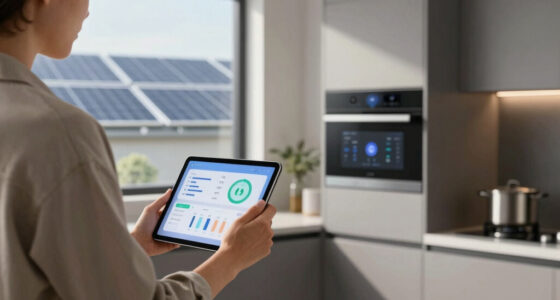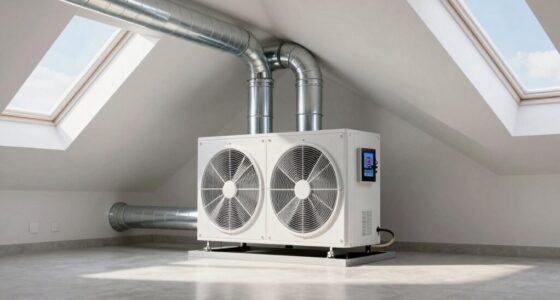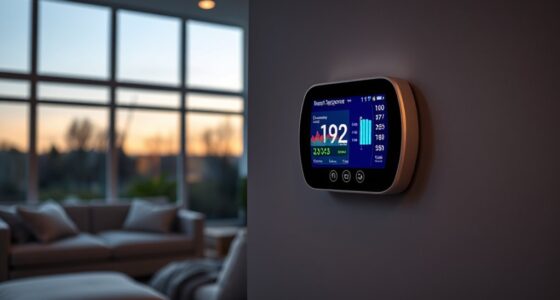
Smart thermostats help you meet Passive House standards by automatically optimizing your home’s heating and cooling, ensuring minimal energy waste and consistent comfort. They learn your routines, adjust temperatures based on weather forecasts, and integrate with sensors for better control. This reduces your utility bills and carbon footprint while maintaining ideal indoor conditions. If you keep exploring, you’ll discover how these devices can seamlessly support a highly energy-efficient, sustainable home environment.
Key Takeaways
- Optimize energy use by learning routines and adjusting temperatures automatically, reducing waste to meet Passive House standards.
- Enable precise, consistent indoor climate control for enhanced comfort and stability.
- Integrate with weather data and outdoor sensors for real-time, adaptive temperature regulation.
- Support sustainability goals by lowering utility bills and carbon footprint through efficient energy management.
- Facilitate seamless integration with heating and cooling systems to maintain minimal energy consumption.

Smart thermostats have become indispensable tools for achieving energy efficiency and ideal comfort in modern homes, especially when aiming to meet rigorous standards like Passive House. These devices are designed to maximize your home’s heating and cooling systems, helping you reduce energy consumption without sacrificing comfort. By learning your daily routines and preferences, a smart thermostat adjusts temperature settings automatically, ensuring your home stays comfortable while using the least amount of energy necessary. This precise control is crucial for Passive House standards, which demand minimal energy waste and consistent indoor comfort.
Smart thermostats optimize comfort and energy efficiency, essential for Passive House standards.
Unlike traditional thermostats, smart thermostats allow you to fine-tune your indoor climate with remarkable accuracy. You can set different temperatures for various times of the day or days of the week, creating a customized schedule that aligns with your lifestyle. This flexibility means you’re not wasting energy heating or cooling when you’re away or asleep, directly contributing to energy efficiency. Furthermore, many smart thermostats can be integrated with weather forecasts and sensors, adapting your home’s heating and cooling in real time based on outdoor conditions. This responsiveness ensures that your home maintains a stable, comfortable environment while minimizing unnecessary energy use.
User comfort is central to the functionality of smart thermostats. They provide consistent temperature regulation, reducing cold spots or overheated areas that can make your home uncomfortable. With features like remote access via smartphone apps, you can adjust your home’s temperature from anywhere, ensuring your living space is always at the right comfort level before you arrive. Some models even include humidity sensors and air quality monitoring, which enhance overall indoor comfort by maintaining ideal moisture levels and air purity. These capabilities align perfectly with Passive House standards, which prioritize not just energy efficiency but also superior indoor air quality and thermal comfort.
Smart thermostats also contribute to the overall sustainability of your home. By maximizing energy use, they lower your utility bills and reduce your carbon footprint. Their ability to learn from your habits and automatically adjust settings means you’re not constantly fiddling with controls, thereby simplifying home management. Over time, this intelligent regulation helps you meet Passive House criteria, which emphasize minimal energy consumption and maximum indoor comfort. Additionally, passive house standards focus on reducing thermal bridging and air leakage, which smart thermostats can indirectly support by maintaining stable indoor temperatures and reducing unnecessary heating and cooling cycles. In essence, a smart thermostat acts as the heart of your home’s climate control system, seamlessly balancing energy efficiency with user comfort in pursuit of a more sustainable and comfortable living environment.

Quietcool QC CL-4700 RF Classic Advanced Whole House Fan with Wireless Control - Up to 4415 CFM - Two Speed - Covers up to 2,208 SQFT - 10 Year Warranty - Removable Grille
QuietCool advanced whole house fans use and improve upon the principle of ventilation cooling with savings off traditional...
As an affiliate, we earn on qualifying purchases.
Frequently Asked Questions
Can Smart Thermostats Replace Traditional Passive House Ventilation Systems?
Smart thermostats can’t fully replace traditional passive house ventilation systems due to their limitations. While they efficiently control indoor temperature, they lack the continuous air exchange and filtration that ventilation systems provide. However, you can improve overall energy efficiency by integrating smart thermostats with your ventilation system, ensuring better climate control while maintaining healthy indoor air quality. Remember, both components work best together for ideal passive house standards.
How Do Smart Thermostats Affect Indoor Air Quality in Passive Houses?
Smart thermostats improve indoor air quality in passive houses by actively monitoring and adjusting temperature and humidity levels. They optimize humidity control, preventing excess moisture that can cause mold and poor air quality. By integrating with ventilation systems, they ensure fresh air circulates efficiently, maintaining a healthy environment. This real-time management helps you breathe easier and keeps indoor air cleaner, making your passive house more comfortable and healthier.
Are Smart Thermostats Compatible With All Passive House Construction Types?
You might worry that smart thermostat compatibility varies with passive house construction types, but most are designed for broad compatibility. Smart thermostats generally work well with different passive house construction methods, including wood, concrete, or hybrid builds. They adapt easily, helping you optimize energy efficiency and comfort. Just make certain you choose a model compatible with your system’s wiring and control setup, and you’ll enjoy seamless integration regardless of your passive house’s construction.
What Are the Energy Savings Benefits of Using Smart Thermostats in Passive Homes?
Using smart thermostats in your passive home boosts energy efficiency by precisely controlling indoor temperatures, reducing unnecessary heating or cooling. This targeted management leads to significant cost savings on energy bills while maintaining comfort. You’ll enjoy better control, optimize energy use, and lower your carbon footprint. By adapting to your schedule and preferences, smart thermostats help you maximize passive house standards, making your home more sustainable and economical.
Do Smart Thermostats Require Special Installation for Passive House Standards?
Imagine a sleek, modern device replacing an old rotary dial—smart thermostats don’t need special installation for Passive House standards, but you should consider installation considerations and wiring requirements. You might need to upgrade your wiring to support advanced features or ensure compatibility with your home’s insulation and ventilation systems. Consulting a professional helps guarantee seamless integration, maximizing efficiency without compromising the Passive House standards you’re aiming to meet.

QuietCool QC CL-6000 RF Classic Advanced Whole House Fan with Wireless Control - Up to 5665 CFM - Two Speed - Covers up to 2,833 SQFT - 10 Year Warranty - Removable Grille
QuietCool advanced whole house fans use and improve upon the principle of ventilation cooling off traditional cooling methods...
As an affiliate, we earn on qualifying purchases.
Conclusion
By using smart thermostats, you can substantially enhance your home’s energy efficiency and meet Passive House standards with ease. Did you know that smart thermostats can reduce energy consumption by up to 12%? This not only lowers your utility bills but also helps protect the environment. Embracing smart technology makes it easier than ever to create a comfortable, sustainable living space that aligns with high-performance building standards.
Quietcool QC CL-7000 RF Classic Advanced Whole House Fan with Wireless Control - Up to 6924 CFM - Two Speed - Covers up to 3,462 SQFT - 10 Year Warranty - Removable Grille
QuietCool advanced whole house fans use and improve upon the principle of ventilation cooling with savings off traditional...
As an affiliate, we earn on qualifying purchases.
Quietcool QC CL-3100 RF Classic Advanced Whole House Fan with Wireless Control - Up to 3126 CFM - Two Speed - Covers up to 1,608 SQFT - 10 Year Warranty - Removable Grille
QuietCool advanced whole house fans use and improve upon the principle of ventilation cooling with savings off traditional...
As an affiliate, we earn on qualifying purchases.