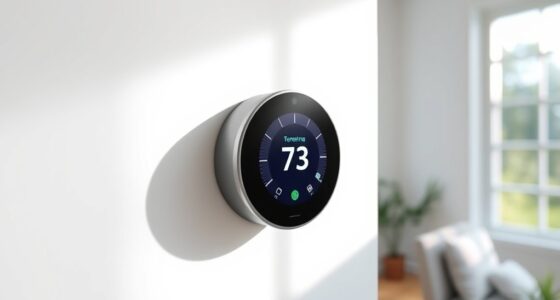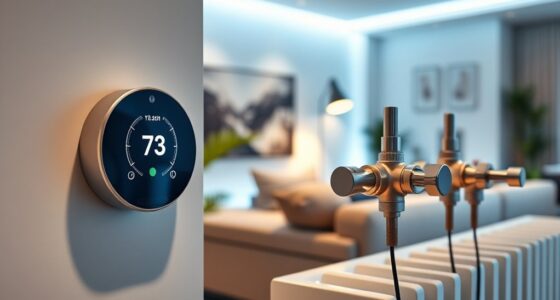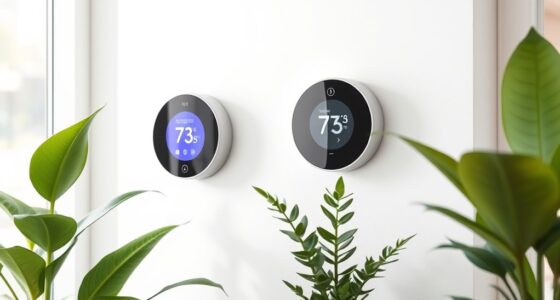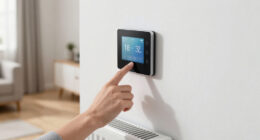
To select the best spot for your smart thermostat, place it on an interior wall at eye level, away from direct sunlight, drafts, or heat sources like vents and lamps. Avoid locations near kitchens or bathrooms where moisture and humidity can skew readings. Make sure it’s in a central area with good airflow to get accurate temperature data. Proper placement boosts performance, energy efficiency, and comfort—keep exploring to discover more tips for ideal setup.
Key Takeaways
- Install on an interior wall at eye level, away from direct sunlight and drafts.
- Choose a central location within each zone for accurate temperature detection.
- Avoid placing near heat sources, vents, radiators, or areas with fluctuating temperatures.
- Ensure good airflow and avoid blocking the thermostat with furniture or decor.
- Follow manufacturer guidelines for height and distance to optimize performance.
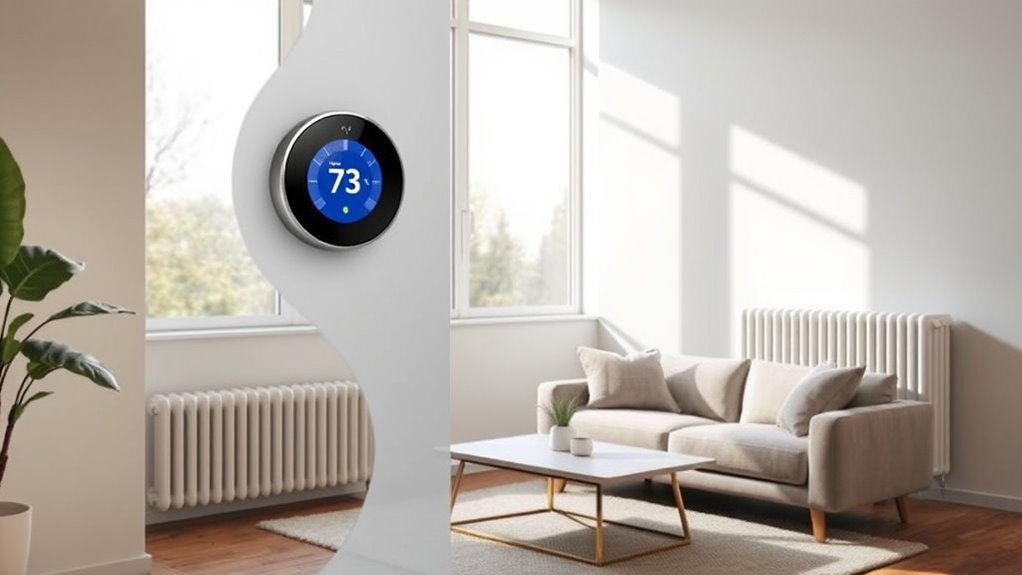
Choosing the right spot for your smart thermostat is vital to guarantee accurate temperature readings and ideal comfort. Proper placement ensures your heating and cooling system responds correctly, maintaining a consistent indoor environment. When selecting a location, consider how humidity control factors into your overall comfort. High humidity levels can make your home feel warmer or colder than the actual temperature, so picking a spot that accurately reflects the room’s conditions helps your thermostat manage moisture levels effectively. Avoid placing it near sources of moisture like bathrooms or kitchens, where humidity fluctuates wildly and could skew readings. Instead, aim for a balanced environment that’s neither too humid nor too dry.
A key thermostat placement tip is to position it away from direct sunlight, drafts, or heat sources. Sunlight can cause false high readings, prompting your system to cool unnecessarily. Drafts from windows or doors can lead to inconsistent temperature detection, making your HVAC work harder to maintain comfort. Similarly, avoid placing it near vents, radiators, or lamps, as these heat sources can also cause inaccurate readings. Ideally, your thermostat should be installed on an interior wall, roughly at eye level, where it can accurately sense the room’s true temperature without interference. This location allows your system to respond efficiently, preventing energy waste and ensuring comfort.
Another important aspect is to consider airflow around the thermostat. Ensure it isn’t blocked by furniture or decor that might restrict air circulation. Good airflow helps the thermostat get a consistent reading, which is vital for precise temperature control. If your house has multiple zones, think about placing thermostats in central locations within each zone to optimize humidity control and temperature accuracy. This approach minimizes the risk of false readings caused by localized temperature variations. Additionally, understanding the contrast ratio of your HVAC components can help ensure your system performs optimally under different conditions, enhancing overall comfort and efficiency.
Don’t forget to check the manufacturer’s guidelines for specific placement instructions. Many smart thermostats come with recommended height and distance from walls or objects. Following these guidelines not only enhances humidity control but also improves the device’s overall accuracy and responsiveness. Remember that proper placement isn’t just about comfort; it’s about energy efficiency and prolonging the lifespan of your HVAC system. Investing a little time to find the ideal spot pays off in consistent comfort and lower energy bills.
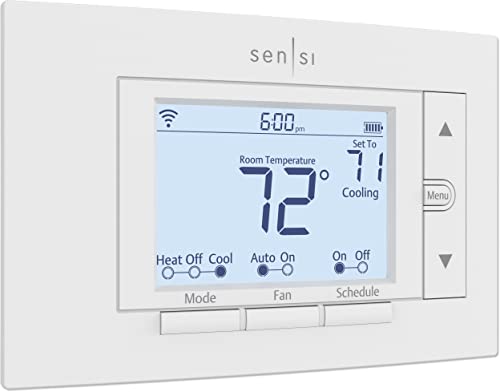
Sensi Smart Thermostat, 100 Years Of Expertise, Wi-Fi, Data Privacy, Programmable, Easy DIY Install, Works With Alexa, Energy Star Certified, Mobile App, ST55
PRIVACY PROTECTION*: Sensi won’t sell your personal information to third parties
As an affiliate, we earn on qualifying purchases.
As an affiliate, we earn on qualifying purchases.
Frequently Asked Questions
How Close Should the Thermostat Be to Windows or Vents?
You should keep your thermostat away from windows and vents, ideally at least 3 feet, to prevent inaccurate readings caused by drafts or airflow. Proximity to windows can cause temperature fluctuations, while being too close to vents might lead to false readings from nearby air currents. By maintaining a proper vent distance and avoiding window proximity, you guarantee your thermostat accurately monitors your home’s temperature, optimizing comfort and energy efficiency.
Can Furniture Placement Affect Thermostat Readings?
Think of your thermostat as the heart of your home’s climate; furniture interference and obstructed airflow can mislead it, causing inaccurate readings. When you place furniture near the thermostat, it blocks proper air circulation, making the device think the room’s cooler or warmer than it actually is. To guarantee accurate temperature detection, keep furniture away and allow for free airflow around your smart thermostat.
Is It Better to Install the Thermostat Higher or Lower on the Wall?
You should install the thermostat higher on the wall, ideally about 5 feet above the floor, for accurate readings. Proper wall placement guarantees it’s away from direct sunlight, drafts, or heat sources that could skew temperature readings. Avoid placing it too low, as furniture or drafts can interfere. A well-chosen thermostat height optimizes comfort and energy efficiency, making your smart thermostat work effectively.
Should the Thermostat Be Placed Away From Appliances or Electronics?
You should place your thermostat away from electronics and appliances to prevent interference. Electronics proximity can cause false readings or inaccurate temperature measurements, making your system work harder than necessary. Keep it at least a few feet from devices like TVs, computers, or refrigerators. This ensures your thermostat gets a true ambient temperature reading, helping it maintain a consistent and comfortable environment efficiently.
How Does Outdoor Weather Impact Thermostat Placement Decisions?
Outdoor weather fluctuations can greatly impact your thermostat placement. You should avoid placing it near exterior walls or windows exposed to outdoor conditions, as outdoor weather can cause temperature swings that skew readings. When outdoor conditions change rapidly, it’s best to install your thermostat in a central, sheltered location inside your home. This ensures consistent temperature readings, helping your smart thermostat operate efficiently despite outdoor weather fluctuations.

Amazon Smart Thermostat – Save money and energy – Works with Alexa and Ring – C-wire required
Smart upgrade – Amazon Smart Thermostat is an easy way to switch from a traditional thermostat and help…
As an affiliate, we earn on qualifying purchases.
As an affiliate, we earn on qualifying purchases.
Conclusion
Remember, the right location can make or break your smart thermostat’s performance. Take the time to find a spot away from drafts, direct sunlight, and heat sources, and where it can accurately read your home’s temperature. If you cut corners, you’ll be fighting an uphill battle to stay comfortable and save energy. So, don’t put it in a spot where it’s bound to be misled—think of it as giving your thermostat the best shot to do its job right.

ecobee Smart Sensor 2 Pack – Comfort, Security, Energy Savings, Temperature and Occupancy Detection – Compatible with ecobee Thermostats for Home
Knows when a room is occupied and communicates the temperature to your ecobee smart thermostat from up to…
As an affiliate, we earn on qualifying purchases.
As an affiliate, we earn on qualifying purchases.

Honeywell Home X7S Smart Thermostat with Advanced Occupancy Sensing, Humidity Monitoring, and Customizable Touchscreen Display, Black
Customizable Display: A sleek 4.3” display delivers enhanced visibility with the option to choose the color and style…
As an affiliate, we earn on qualifying purchases.
As an affiliate, we earn on qualifying purchases.