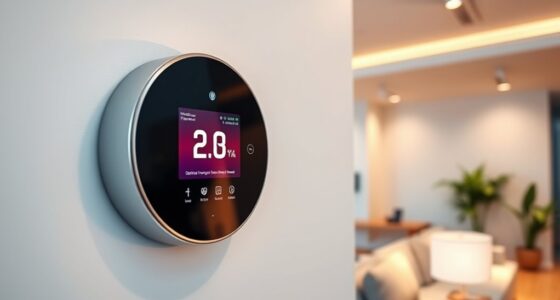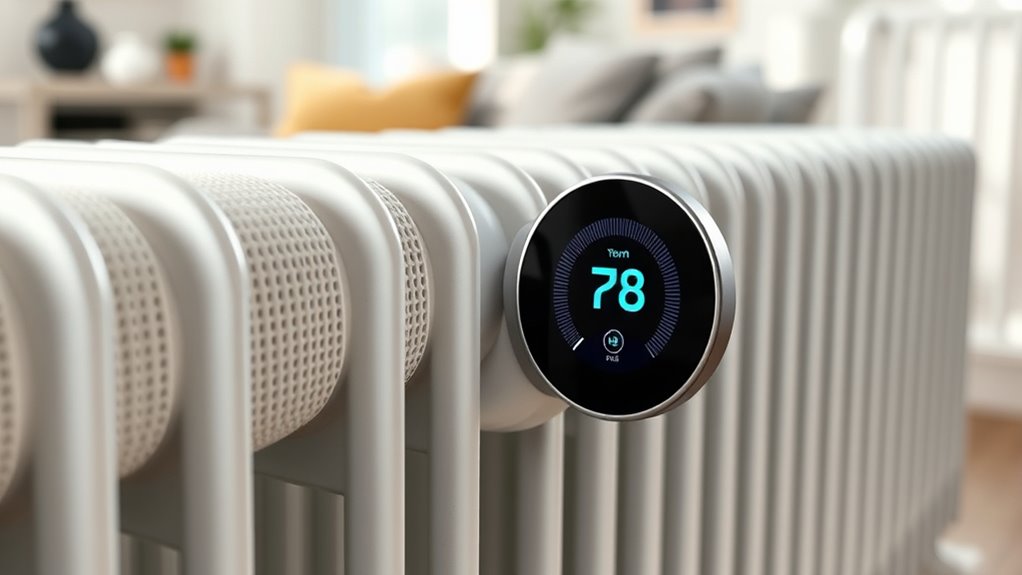

To install a smart thermostat on your radiator system, start by checking compatibility with your radiator type and existing setup. Follow the manufacturer’s instructions for wiring or wireless pairing, ensuring proper sensor placement for accurate temperature readings. Use the app to set schedules, zones, and calibration for peak comfort and efficiency. Once installed and configured, you’ll be able to control your heating remotely and maximize performance. Keep going to discover detailed steps to make your setup seamless.
Key Takeaways
- Verify compatibility with your radiator type and heating system before installation.
- Connect the smart thermostat wirelessly to your Wi-Fi network for remote control.
- Calibrate sensors and place them accurately to ensure precise temperature readings.
- Follow the manufacturer’s pairing instructions to set up and integrate the device seamlessly.
- Use the app to create schedules, zones, and manually adjust settings for optimal comfort and efficiency.
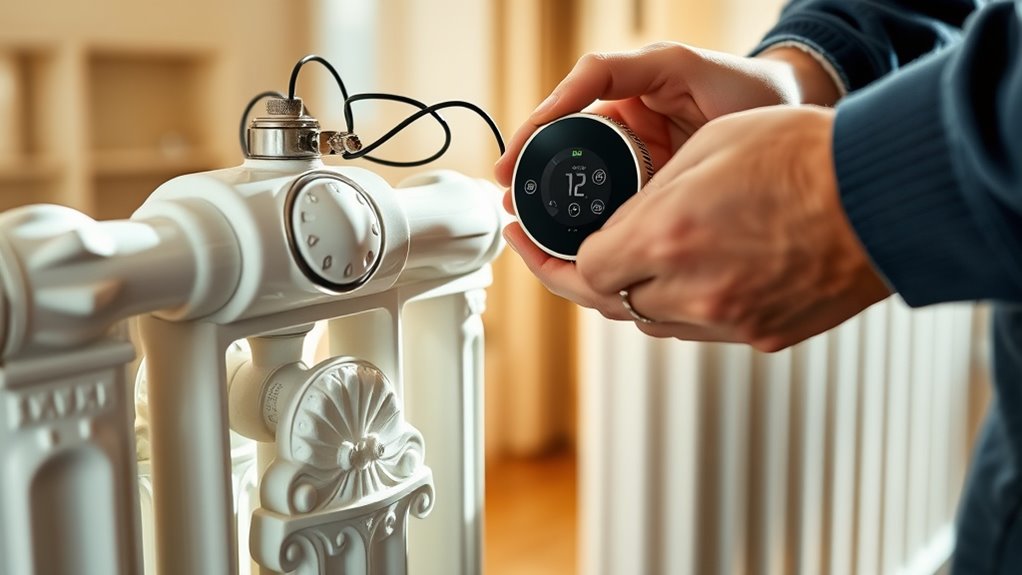
Installing a smart thermostat on your radiator heating system can substantially improve your home’s comfort and energy efficiency. With the right device, you gain precise control over your heating, making it easier to maintain a cozy environment while reducing energy waste. One of the key features to look for is wireless compatibility, which allows you to connect the thermostat seamlessly to your home Wi-Fi network. This connectivity means you can manage your heating remotely through a smartphone app, giving you flexibility whether you’re at home, at work, or traveling. Wireless compatibility also simplifies installation, as you don’t need extensive wiring or modifications to your existing setup.
Once installed, you’ll want to focus on proper temperature calibration. This step ensures the thermostat accurately reads and regulates the ambient temperature in your rooms. Many smart thermostats come with easy-to-use calibration features that let you fine-tune the device to match your comfort preferences. Proper calibration prevents your heating system from over- or under-heating, which can lead to wasted energy or discomfort. You might need to adjust the sensor placement or input specific temperature settings based on your room’s characteristics. Some models even offer predictive learning capabilities, adapting over time to your habits for more precise control. Additionally, understanding the importance of sensor placement can significantly impact the accuracy of your thermostat’s readings and overall performance.
During installation, pay close attention to the compatibility of the thermostat with your existing radiator system. Not all radiator systems are the same, so verifying that your chosen smart thermostat supports your type of radiators is vital. Many smart thermostats are designed to work with various heating setups, but double-checking compatibility helps avoid issues later. Once installed, pairing the device with your home’s Wi-Fi network typically involves straightforward steps—entering your network details through the thermostat’s app and confirming the connection. After setup, you can set schedules, create heating zones, or manually adjust the temperature from your device, all while guaranteeing your system responds accurately thanks to proper calibration.
Frequently Asked Questions
Can Smart Thermostats Be Used With Older Radiator Systems?
Yes, you can use smart thermostats with older radiator systems, but you might face retrofit challenges. Many older systems have manual valves that aren’t compatible with smart controls, so you’ll need to upgrade or adapt your valves for compatibility. make sure you check valve types and compatibility before installation, as this will make your smart thermostat work effectively and avoid frustrating retrofit issues.
Do Smart Thermostats Require Wi-Fi Connection for Operation?
Think of smart thermostats as the keys to your digital castle—they do need a Wi-Fi connection to function properly. Without it, they can’t communicate via wireless protocols, limiting remote control and automation features. This reliance on Wi-Fi also raises concerns about user privacy, as your data travels through networks. So, to enjoy seamless control and protect your privacy, make sure your thermostat stays connected to a reliable internet source.
Are There Compatibility Issues With Existing Radiator Valves?
You might encounter compatibility issues with existing radiator valves when integrating a smart thermostat. Check if your radiator valves support smart thermostat integration, especially if they’re traditional manual valves. Some valves need adapters or upgrades to work seamlessly with smart thermostats. Ensuring radiator valve compatibility beforehand helps prevent installation problems and guarantees your smart thermostat functions correctly, allowing you to control your heating efficiently and comfortably.
How Secure Is the Data Transmitted by Smart Thermostats?
You might wonder about the security of your data with smart thermostats. Rest assured, most use strong data encryption to protect your information during transmission. While privacy concerns are valid, reputable brands prioritize security and regularly update their systems. To stay safe, choose devices with robust encryption and clear privacy policies. This way, you can enjoy the convenience of smart heating without worrying about your data’s safety.
Can Multiple Thermostats Control One Heating Zone?
Think of your heating zone as a well-orchestrated band, where multiple thermostats can play in harmony. Yes, you can have multi-zone control, allowing different thermostats to manage the same zone for better accuracy. With thermostat synchronization, they work together seamlessly, preventing conflicts and ensuring comfort. Just like a vintage radio, modern smart thermostats communicate efficiently, giving you control and flexibility over your heating system without missing a beat.
Conclusion
Installing smart thermostats on your radiator system is a smart move that can save energy and boost comfort. When you take the time to set them up correctly, you guarantee efficient heating and better control over your home’s temperature. It’s like giving your radiator a brain, making your living space more responsive and cozy. So, go ahead—embrace the technology, and enjoy a warmer, smarter home that adapts perfectly to your needs.