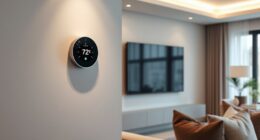
To set up HVAC zoning with smart thermostats, start by dividing your home into zones such as bedrooms and living areas. Install motorized dampers in your ductwork and connect them to a zoning controller. Then, link each zone to a smart thermostat and program your preferences. The system will automatically adjust dampers based on temperature needs, providing personalized comfort and saving energy. Continue exploring to learn more about optimizing your zoning system.

Get home appliances delivered free with Prime
- Fast, free delivery on millions of items
- Prime Video, Amazon Music and more included
- Member-only deals all year
Key Takeaways
- Identify and divide your home into zones like bedrooms or living areas for targeted control.
- Install motorized duct dampers at zone points and connect them to a zoning controller.
- Program smart thermostats for each zone with preferred temperature settings and schedules.
- Ensure dampers are calibrated correctly and system components are properly connected for smooth operation.
- Use remote access and automation features to manage and optimize your HVAC zoning system efficiently.

HVAC zoning with smart thermostats allows you to customize your home’s temperature settings for different areas, improving comfort and energy efficiency. This setup involves dividing your home into zones, each controlled independently to meet specific heating or cooling needs. To make this possible, you’ll need to install duct dampers and connect them to zoning controllers. Duct dampers are essential components because they regulate airflow within your ductwork, opening or closing to direct heated or cooled air where it’s needed most. Zoning controllers act as the central hub, managing the operation of these dampers based on the settings you program into your smart thermostats.
HVAC zoning with smart thermostats enhances comfort and efficiency through independent control of home zones using duct dampers and controllers.
When setting up your system, start by identifying the zones you want to control separately. Common zones include bedrooms, living areas, and basements. Once you’ve mapped out your zones, you’ll install duct dampers within your ductwork at the points where airflow needs regulation. These dampers can be motorized or manual, but for a smart zoning system, motorized dampers are vital. They connect to the zoning controllers, which communicate with your smart thermostats to adjust dampers automatically based on temperature preferences.
Next, you’ll install the zoning controllers, which act as the system’s brain. These controllers connect to your smart thermostats, sensors, and dampers, coordinating their operation seamlessly. When you set a temperature on a smart thermostat, the zoning controller determines whether the damper in that zone should open or close to achieve the desired temperature. This setup ensures that each zone maintains its setpoint without affecting the rest of the house, leading to more precise climate control.
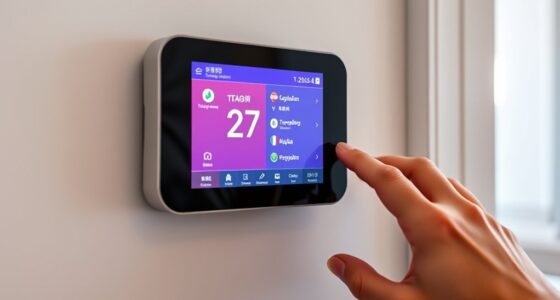
Integration with smart thermostats offers additional advantages. You can easily customize schedules, receive alerts, and control zones remotely via your smartphone or voice commands. The system automatically adjusts dampers based on real-time data, optimizing comfort and reducing energy waste. For example, if a bedroom isn’t in use during the day, the system can close its damper, saving energy by not conditioning an unused space. Proper installation and calibration of HVAC system components such as dampers and controllers are key to maximizing your system’s efficiency. Verify dampers are correctly positioned and calibrated for smooth operation. Regular maintenance, like checking for obstructions or dust on the dampers and sensors, keeps the system running at its best. With smart thermostats, duct dampers, and zoning controllers working together, you gain full control over your home’s climate, enjoying personalized comfort and lower utility bills.
As an affiliate, we earn on qualifying purchases.
Frequently Asked Questions
Can Smart Thermostats Control Multiple Zones Simultaneously?
Yes, smart thermostats can control multiple zones simultaneously through multi zone control. They often synchronize with other compatible thermostats, allowing you to manage different areas efficiently. By connecting to a central hub or using a multi-zone system, you can set different temperatures for each zone while maintaining overall comfort. This thermostat synchronization simplifies your HVAC management, saves energy, and guarantees consistent comfort across your entire space.
What Are the Energy Savings Benefits of HVAC Zoning?
You’ll notice energy savings quickly when you implement HVAC zoning, as it boosts energy efficiency by heating or cooling only the areas you use. This targeted approach reduces waste, leading to significant cost reduction over time. With smart thermostats, you gain precise control, ensuring each zone gets just the right temperature. As a result, your home becomes more comfortable while you save money and lower your energy bills effortlessly.
Are There Compatibility Issues With Existing HVAC Systems?
You might face some HVAC compatibility issues when integrating smart thermostats for zoning. Not all systems support advanced features like smart thermostat integration or zoning controls, so it’s crucial to verify your HVAC compatibility first. Make sure your system has the necessary wiring and compatible components to avoid installation problems. Consulting a professional can help identify potential issues and ensure seamless integration, maximizing your energy savings and comfort.
How Difficult Is It to Install Smart Thermostats for Zoning?
Installing smart thermostats for zoning is like untangling a knot—manageable with patience. You’ll face some installation challenges, mainly wiring requirements, as each zone needs proper connections. If your existing system has straightforward wiring, it’s easier, but complex setups might need extra effort or professional help. Overall, with basic tools and clear instructions, you can handle the installation, turning your home into a smart, comfortable oasis.
Can Zoning Be Adjusted Remotely via Smartphone Apps?
Yes, zoning can be adjusted remotely via smartphone apps. With remote access, you can control your smart thermostats from anywhere, making it easy to customize temperatures for each zone. Simply open the app on your phone, select the desired zone, and adjust the settings as needed. This app control provides convenience, energy savings, and comfort, ensuring your HVAC system responds quickly to your preferences no matter where you are.
As an affiliate, we earn on qualifying purchases.
Conclusion
By embracing HVAC zoning with smart thermostats, you’re gently guiding your home toward comfort and efficiency. It’s like giving each space a whisper of personalized care, ensuring everyone feels just right. With a little setup, you create a harmonious environment where temperature feels naturally tuned to your lifestyle. Over time, this subtle shift can transform your home into a sanctuary, quietly enhancing your everyday comfort without any fuss.
As an affiliate, we earn on qualifying purchases.
smart home zoning thermostat kit
As an affiliate, we earn on qualifying purchases.
As an affiliate, we earn on qualifying purchases.
NFL season / tailgating Picks
team gear
As an affiliate, we earn on qualifying purchases.