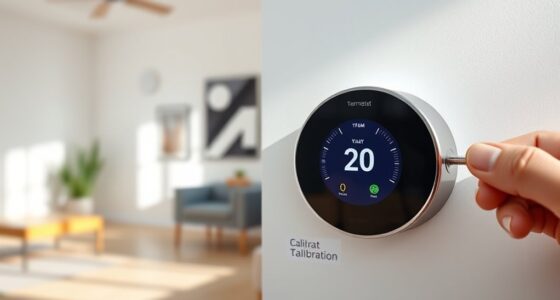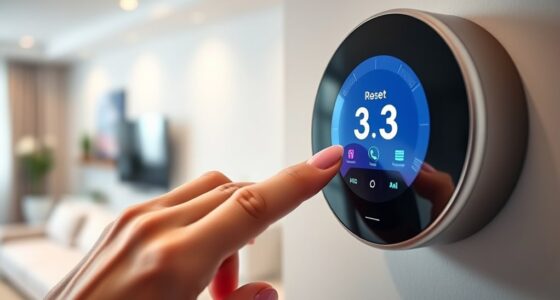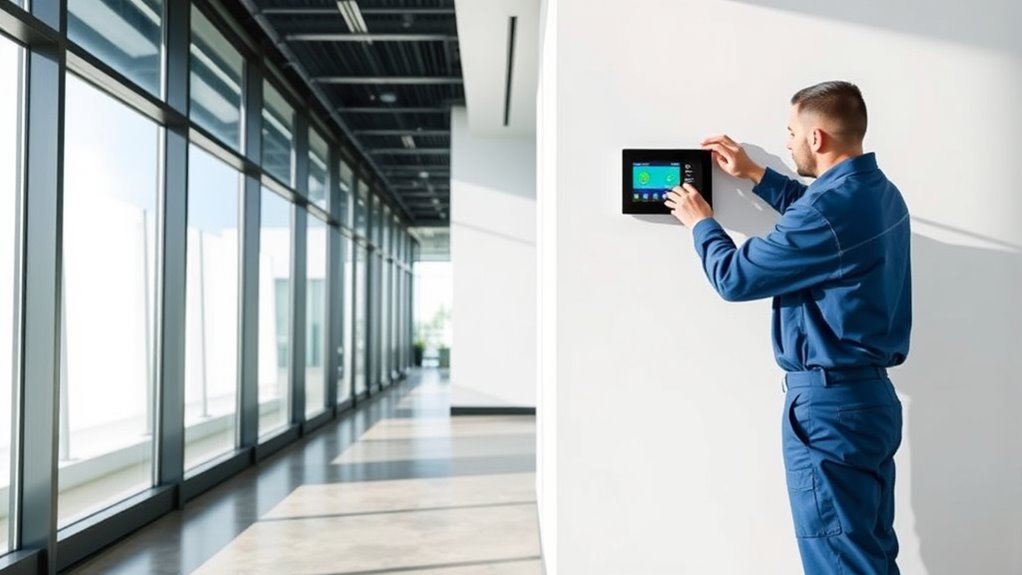

Installing smart thermostats in your commercial space can boost energy efficiency, cut costs, and improve occupant comfort. They offer easy remote control, real-time energy monitoring, and automation to optimize heating and cooling based on occupancy and weather. Plus, they seamlessly integrate with existing building systems and help identify issues early. This smart upgrade makes managing your climate easier and more sustainable. Keep exploring to discover how these features can transform your building’s performance.
Key Takeaways
- Assess building compatibility and HVAC system requirements before installation.
- Choose user-friendly smart thermostats with integration capabilities for commercial use.
- Plan for proper network connectivity and integration with existing building management systems.
- Schedule professional installation and system calibration to ensure optimal performance.
- Educate staff on remote control, scheduling, and maintenance features for ongoing efficiency.
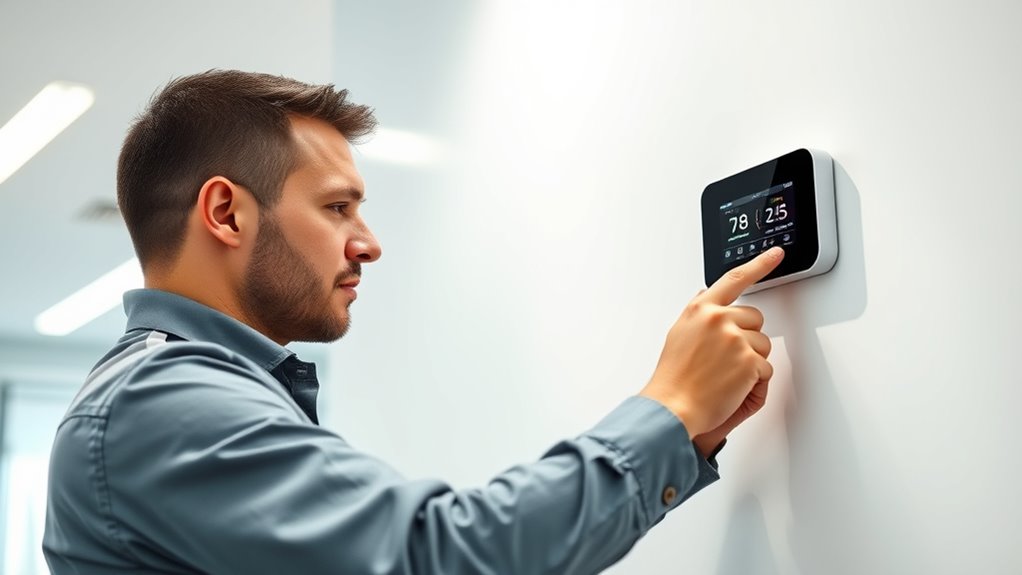
Installing smart thermostats in commercial spaces can considerably enhance energy efficiency and occupant comfort. These devices enable you to control heating and cooling systems more precisely, leading to significant energy savings over time. By adjusting temperatures based on occupancy patterns and real-time data, you can prevent unnecessary energy consumption, reducing utility costs and minimizing environmental impact. Additionally, smart thermostats often come with advanced features that allow for seamless scheduling and automation, ensuring your space stays comfortable without constant manual intervention.
One of the key advantages of these thermostats is their user interface. Designed with user-friendly controls, they make it easy for you to set preferences, monitor usage, and make quick adjustments from any device. Whether you’re managing a large office or a retail space, a clear and intuitive interface helps you understand energy consumption patterns and identify opportunities for further savings. Many models offer touchscreen displays, mobile apps, or web portals, giving you flexibility to manage your climate controls remotely. This ensures you’re always in command, whether you’re on-site or off-site, without the need for complex programming or technical expertise.
Installing a smart thermostat also means benefiting from real-time feedback and insights. You can track how much energy is being used, identify inefficiencies, and make data-driven decisions to optimize your HVAC operations. Features like adaptive learning allow the thermostat to automatically adjust settings based on historical data, occupancy, and weather forecasts. This not only enhances comfort for your occupants but also maximizes energy savings by avoiding over-conditioning or under-conditioning spaces. The ability to fine-tune your environment through an easy-to-navigate user interface ensures you stay in control, reducing waste and improving overall operational efficiency.
Furthermore, integrating smart thermostats into your building management system can streamline maintenance and troubleshooting. Many models provide alerts for system issues or maintenance needs, enabling proactive management. This proactive approach helps prevent costly repairs and downtime, keeping your commercial space running smoothly. The combination of energy savings, ease of use, and automation makes smart thermostats a smart investment for any commercial property aiming for sustainability and cost-effectiveness.

Quietcool QC CL-7000 RF Classic Advanced Whole House Fan with Wireless Control - Up to 6924 CFM - Two Speed - Covers up to 3,462 SQFT - 10 Year Warranty - Removable Grille
QuietCool advanced whole house fans use and improve upon the principle of ventilation cooling with savings off traditional...
As an affiliate, we earn on qualifying purchases.
Frequently Asked Questions
How Do Smart Thermostats Integrate With Existing Commercial HVAC Systems?
Smart thermostats integrate with your existing commercial HVAC systems through compatible wiring and communication protocols like Wi-Fi or Z-Wave. They connect seamlessly, allowing you to control and customize temperature settings remotely. This integration boosts energy efficiency by optimizing heating and cooling schedules. Plus, it enhances user convenience, letting you monitor and adjust your system anytime, anywhere, ensuring your space stays comfortable while saving costs.
What Is the Typical Return on Investment Period for Smart Thermostats?
You can expect a typical return on investment period of 1 to 3 years for smart thermostats. This mainly depends on your energy savings and installation costs. By reducing energy consumption through precise scheduling and remote control, you’ll see savings fast. Although installation costs might be higher initially, the ongoing energy savings quickly offset this expense, making smart thermostats a smart investment for your commercial space.
Are There Specific Certifications Required for Installing Smart Thermostats?
You don’t need specific certifications to install smart thermostats, but following proper installation standards is vital. Certification requirements ensure you’re knowledgeable about electrical systems and safety codes, reducing risks and ensuring compliance. Many professionals pursue certifications like the EPA’s Lead-Safe Certification or manufacturer training, which can boost your credibility. By adhering to installation standards, you avoid costly mistakes, making your work more efficient and providing clients with reliable, energy-saving solutions.
How Do Smart Thermostats Handle Multiple Zones in Large Commercial Buildings?
Smart thermostats handle multiple zones in large commercial buildings by utilizing zoning configurations and sensor placements. You can set up individual zones with separate thermostats or use a central system that communicates with zone-specific sensors. These sensors monitor temperature and occupancy, enabling precise control. As a result, you optimize energy efficiency and comfort, ensuring each zone maintains its desired temperature without affecting others. Proper zoning and sensor placement are key to effective management.
What Security Measures Protect Smart Thermostat Data From Cyber Threats?
You’re protected by robust cybersecurity protocols that safeguard your smart thermostat data from cyber threats. Data encryption is a key feature, ensuring all your information remains secure during transmission and storage. Regular software updates, strong passwords, and multi-factor authentication further enhance security. By following these best practices, you minimize risks and keep your system safe from unauthorized access, ensuring your commercial space remains secure and efficiently managed.

Quietcool QC CL-4700 RF Classic Advanced Whole House Fan with Wireless Control - Up to 4415 CFM - Two Speed - Covers up to 2,208 SQFT - 10 Year Warranty - Removable Grille
QuietCool advanced whole house fans use and improve upon the principle of ventilation cooling with savings off traditional...
As an affiliate, we earn on qualifying purchases.
Conclusion
Installing smart thermostats in your commercial space can markedly boost energy efficiency and comfort. Imagine a retail store where temperature adjustments are automated based on customer traffic, saving costs while enhancing shopper experience. By embracing smart technology, you take control of your environment and reduce operational expenses. Don’t wait—start upgrading your space today and see how smart thermostats transform your business’s comfort and savings effortlessly.
Quietcool QC CL-3100 RF Classic Advanced Whole House Fan with Wireless Control - Up to 3126 CFM - Two Speed - Covers up to 1,608 SQFT - 10 Year Warranty - Removable Grille
QuietCool advanced whole house fans use and improve upon the principle of ventilation cooling with savings off traditional...
As an affiliate, we earn on qualifying purchases.
QuietCool QC CL-6000 RF Classic Advanced Whole House Fan with Wireless Control - Up to 5665 CFM - Two Speed - Covers up to 2,833 SQFT - 10 Year Warranty - Removable Grille
QuietCool advanced whole house fans use and improve upon the principle of ventilation cooling off traditional cooling methods...
As an affiliate, we earn on qualifying purchases.