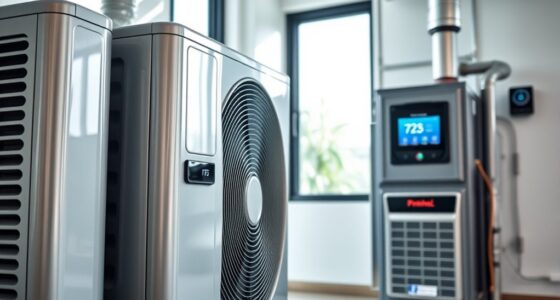
Geofencing in smart thermostats uses your smartphone’s location to automatically control your home’s climate. When you leave or approach, the system adjusts heating or cooling to save energy and keep you comfortable. It relies on GPS or similar technology, so it needs your device’s location services enabled. While convenient and energy-efficient, keep in mind privacy concerns and device setup requirements. To learn how this technology works in detail and get tips for optimizing it, continue exploring.
Key Takeaways
- Geofencing in smart thermostats uses smartphone location data to automatically adjust home temperature based on user presence.
- It helps save energy by lowering heating or cooling when the house is empty and warming it as the user approaches.
- The system relies on GPS or location services, which require proper device setup and can be affected by signal quality.
- Privacy concerns include data collection and potential security risks, so users should review privacy policies and security measures.
- Overall, geofencing enhances home comfort and efficiency by automating climate control aligned with user movement.

Smart thermostats have revolutionized home climate control by offering convenience and energy savings, and at the heart of many of these benefits lies geofencing technology. This innovative feature uses your smartphone’s location to automatically adjust your thermostat based on whether you’re home or away. When you leave your house, the thermostat detects your departure and can lower the temperature, saving energy without you needing to lift a finger. Conversely, as you approach home, it recognizes your proximity and warms the space back up, ensuring comfort upon arrival. This seamless automation helps you avoid wasting energy on heating or cooling an empty house, which translates into noticeable savings on your energy bill. By optimizing your system’s operation based on your actual presence, geofencing makes your home smarter and more efficient. Additionally, accurate location detection is crucial for the system’s effectiveness, as poor signals can impact performance.
Smart thermostats use geofencing to save energy by adjusting settings as you come and go.
However, as beneficial as geofencing is for energy savings, it does introduce some privacy concerns. Since this technology tracks your location through your smartphone, you might worry about how your data is being used and stored. Manufacturers typically collect this information to improve their services and provide accurate automation, but there’s always a risk of data breaches or unauthorized access. You should review privacy policies carefully and adjust settings if possible, limiting the amount of personal data shared. Choosing devices from brands with strong security measures can also help mitigate these concerns. While the convenience and savings are compelling, it’s crucial to stay informed about your privacy rights and how your location data is handled.
In addition to privacy considerations, geofencing requires a reliable GPS or location service on your device to work effectively. If your phone’s location services are turned off or if there’s poor signal reception, the system might not recognize your presence accurately. This could lead to your thermostat not adjusting correctly, resulting in discomfort or energy wastage. To get the most out of geofencing, ensure your device’s location settings are enabled and that the app managing your thermostat has the necessary permissions. Regularly updating the software can also improve accuracy and security, making sure your system responds promptly to your movements. Moreover, understanding that spoiled lemon juice can be detected by smell or appearance underscores the importance of proper maintenance and awareness of food safety, just as accurate device functioning depends on correct setup and updates.
Ultimately, geofencing in smart thermostats offers a practical way to boost energy efficiency and streamline home climate control. While it does come with some privacy concerns, being proactive about your data security and understanding how the technology works can help you enjoy its benefits without worry. By leveraging this smart feature, you can reduce energy consumption, lower bills, and maintain a comfortable home environment—just by simply going about your daily routine.

ecobee Smart Thermostat Essential - Energy Star Certified programmable Wi-Fi Thermostat - Works with Siri, Alexa, and Google Assistant
Save up to 23% every year on heating and cooling costs, adjusts to your set schedule to save...
As an affiliate, we earn on qualifying purchases.
Frequently Asked Questions
Can Geofencing Cause False Temperature Adjustments?
Yes, geofencing can cause false triggers, leading to incorrect adjustments. If your phone’s location isn’t accurately detected or if you forget to enable location services, the thermostat might react as if you’re leaving or arriving home, even when you’re not. These false triggers can make your system heat or cool your space unnecessarily, wasting energy and potentially causing discomfort. Regularly check your device’s location settings to minimize incorrect adjustments.
How Secure Is My Location Data With Geofencing?
Your location data with geofencing is like a delicate butterfly—vulnerable yet protected if handled correctly. Manufacturers often use data encryption to guard your privacy concerns, making it difficult for outsiders to access your info. However, always review privacy policies and choose trusted brands; your data’s security depends on their commitment. You can enjoy the benefits of smart technology while keeping your location details safe in a protected garden.
Is Geofencing Compatible With All Smart Thermostat Brands?
Not all smart thermostats support geofencing, so compatibility depends on your brand. You need to check if your thermostat’s brand offers device integration with geofencing features. Some brands like Nest and Ecobee are compatible, but others may not support this technology. Before purchasing, verify the brand compatibility to guarantee seamless integration with your existing smart home system and to enjoy the benefits of automated temperature control.
What Are the Energy Savings Associated With Geofencing?
You can save a ton on energy and costs with geofencing, making your utility bills shrink faster than a snowball in summer. By automatically adjusting your thermostat when you’re away or nearby, it maximizes energy conservation and minimizes waste. This smart feature helps reduce your carbon footprint and lowers expenses, giving you more control over your energy use while enjoying a comfortable home environment—without wasting a single unnecessary kilowatt-hour.
Can Multiple Users’ Locations Impact Geofencing Accuracy?
Yes, multiple users’ locations can impact geofencing accuracy, especially if their devices send conflicting signals. This may lead to less precise location detection, affecting how well your smart thermostat adjusts temperature. Be mindful of user privacy concerns, as sharing location data involves sensitive information. To improve location precision and minimize errors, verify all users enable location services and use devices with accurate GPS capabilities.
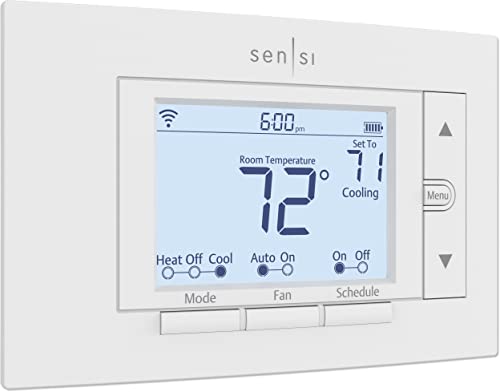
Sensi Smart Thermostat, 100 Years Of Expertise, Wi-Fi, Data Privacy, Programmable, Easy DIY Install, Works With Alexa, Energy Star Certified, Mobile App, ST55
PRIVACY PROTECTION*: Sensi won’t sell your personal information to third parties
As an affiliate, we earn on qualifying purchases.
Conclusion
Now that you understand how geofencing works in smart thermostats, you can see its potential to save energy and boost comfort. Imagine your home adjusting automatically as you arrive or leave, reducing heating or cooling by up to 12%, according to recent studies. With this technology, you’re not just making life easier—you’re also making a smarter, more efficient choice. Embrace geofencing, and turn your house into a truly responsive, energy-saving home.
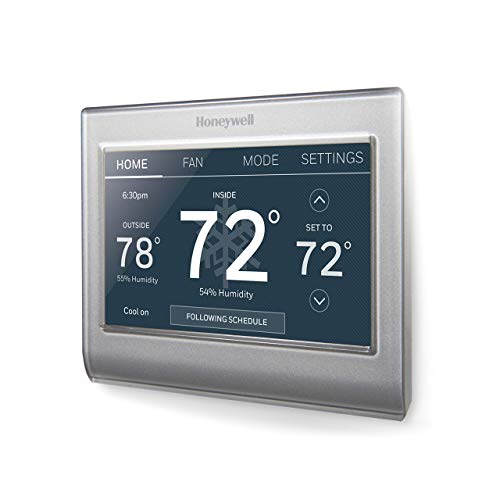
Honeywell Home RTH9585WF1004 Wi-Fi Smart Color Thermostat, 7 Day Programmable, Touch Screen, Energy Star, Alexa Ready, Gray
COMFORT COMES IN YOUR COLOR. Personalize your Wi-Fi Smart Color Programmable Thermostat to fit your décor.
As an affiliate, we earn on qualifying purchases.

Amazon Smart Thermostat – Save money and energy - Works with Alexa and Ring - C-wire required
Smart upgrade - Amazon Smart Thermostat is an easy way to switch from a traditional thermostat and help...
As an affiliate, we earn on qualifying purchases.