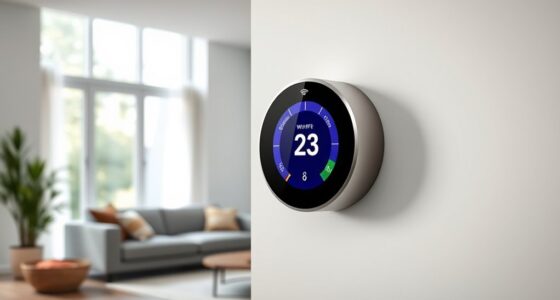
Smart thermostats support demand response programs by automatically adjusting your home’s temperature during peak energy periods, helping reduce overall energy consumption. They respond to signals from the grid, slightly raising or lowering setpoints to ease demand without sacrificing comfort. These devices learn your routines and preferences, making subtle adjustments that you won’t notice. By automating these changes, they help stabilize the grid and save you money. To see how this all works, keep exploring the key features involved.
Key Takeaways
- Enable remote and automated temperature adjustments during demand response events to reduce energy use.
- Dynamically raise or lower setpoints within comfort ranges to lessen peak load.
- Learn user routines to make subtle, less noticeable adjustments that support grid stability.
- Support grid stability by participating in demand response programs, reducing peak electricity demand.
- Provide real-time feedback and notifications to encourage user engagement and seamless program participation.
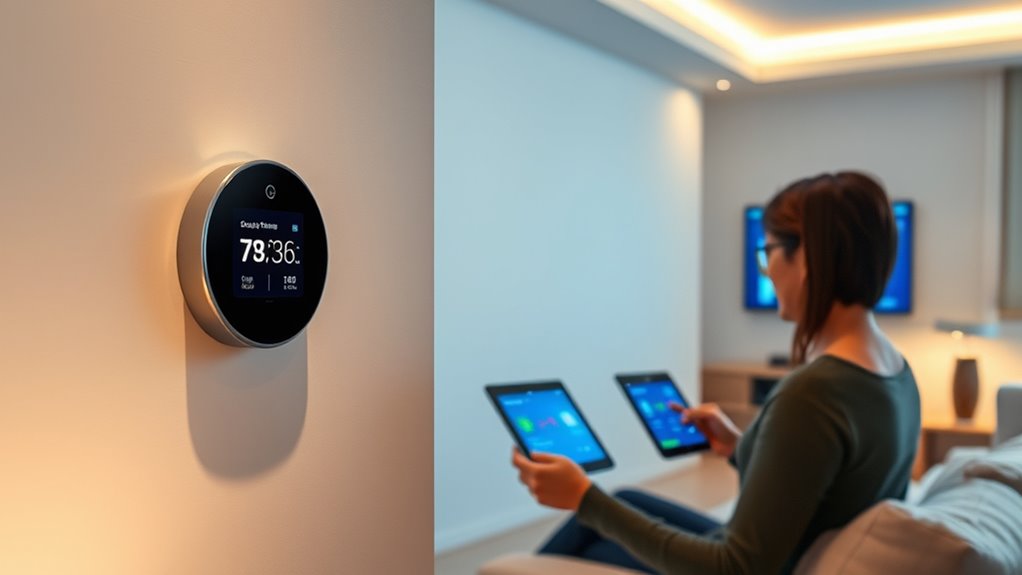
Smart thermostats have revolutionized how we manage home energy use, especially when paired with demand response programs. These devices give you the ability to control your home’s temperature remotely, automate adjustments, and respond dynamically to energy grid signals. By doing so, they help you achieve significant energy savings while maintaining user comfort. When demand response events occur—typically during peak energy periods—your smart thermostat adjusts your heating or cooling settings automatically, reducing electricity consumption without requiring manual intervention. This not only lowers your utility bills but also supports grid stability, helping prevent blackouts and reduce reliance on fossil fuels.
During a demand response event, your thermostat might slightly raise or lower the temperature setpoint—say, increasing the temperature a few degrees in summer or decreasing it in winter—to cut back on energy use. Because smart thermostats learn your routines and preferences, these adjustments are often subtle and less noticeable. You won’t feel uncomfortable or disrupted, as the device ensures your home remains within a comfortable range. This balance between energy savings and user comfort is one of the key benefits of smart thermostats in demand response programs. They give you control and transparency, often allowing you to customize how aggressive or lenient the device is during these events, further tailoring the experience to your preferences.
Moreover, smart thermostats provide real-time feedback and insights about your energy consumption, helping you understand how demand response actions impact your utility bills. Many models also offer scheduling features, so you can set your preferred temperature patterns, which the device adjusts automatically based on demand response signals. This automation saves you the hassle of manual adjustments and ensures you’re participating in energy-saving initiatives without sacrificing comfort. Additionally, some smart thermostats enable app-based notifications, so you’re always aware when a demand response event occurs and how your device is responding. Research indicates that integrating a variety of smart devices can further optimize energy management at home.
In essence, these devices empower you to take an active role in managing your energy use efficiently. They support demand response programs by intelligently reducing consumption during peak periods, which benefits the environment and the grid. At the same time, you enjoy consistent comfort, thanks to the device’s adaptive learning and flexible settings. This synergy makes smart thermostats a crucial tool for modern households looking to save money, reduce their carbon footprint, and participate in energy management initiatives seamlessly.
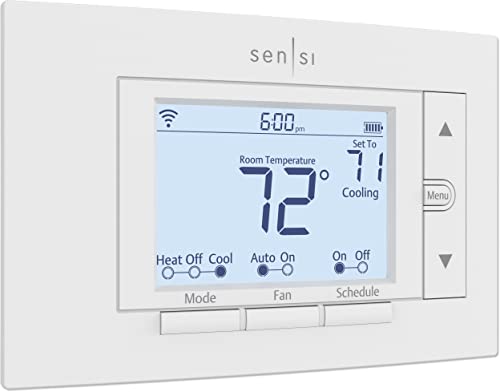
Sensi Smart Thermostat, 100 Years Of Expertise, Wi-Fi, Data Privacy, Programmable, Easy DIY Install, Works With Alexa, Energy Star Certified, Mobile App, ST55
PRIVACY PROTECTION*: Sensi won’t sell your personal information to third parties
As an affiliate, we earn on qualifying purchases.
As an affiliate, we earn on qualifying purchases.
Frequently Asked Questions
How Do Smart Thermostats Detect Peak Energy Demand Times?
Smart thermostats detect peak energy demand times by analyzing your home’s energy consumption patterns. They monitor real-time data and identify when your usage spikes, often aligning with overall grid load management signals. By recognizing these peak periods, they can automatically adjust your temperature settings to reduce energy use, helping to balance the grid and prevent overloads. This proactive approach makes demand response programs more efficient and saves you money.
Can Smart Thermostats Learn User Preferences Over Time?
Did you know that 90% of smart thermostats improve their accuracy over time? They use learning algorithms to adapt to your habits, making user customization seamless. Yes, smart thermostats can learn your preferences by analyzing your temperature adjustments and routines. This ongoing learning process helps optimize comfort and energy efficiency, ensuring your environment suits you perfectly without manual input every day.
Are Smart Thermostats Compatible With All Types of HVAC Systems?
Smart thermostats aren’t compatible with all HVAC systems, which can lead to installation challenges and compatibility issues. Before buying, you should check if your system is compatible, as some older or specialized units may require additional wiring or adapters. If you’re unsure, consulting a professional helps avoid problems. Knowing your system’s specifications guarantees a smooth setup, allowing you to enjoy the benefits of smart technology without frustration.
What Privacy Concerns Are Associated With Smart Thermostat Data?
You should be aware that smart thermostats collect data on your habits, raising privacy concerns. Data security is essential to protect your information from breaches, so choose devices with strong encryption. Always make sure you provide informed user consent before installation, understanding what data is collected and how it’s used. By staying vigilant about these aspects, you can enjoy the benefits of smart thermostats while safeguarding your privacy.
How Quickly Can a Smart Thermostat Respond to Demand Response Signals?
Smart thermostats respond to demand response signals in as little as a few seconds. Thanks to advanced signal processing, they achieve real-time response, allowing quick adjustments to energy use. Studies show that most smart thermostats can process signals and modify temperature settings within 5 to 10 seconds, helping utilities manage peak demand efficiently. This rapid response enhances grid stability while giving you control over your energy consumption seamlessly.

Amazon Smart Thermostat – Save money and energy – Works with Alexa and Ring – C-wire required
Smart upgrade – Amazon Smart Thermostat is an easy way to switch from a traditional thermostat and help…
As an affiliate, we earn on qualifying purchases.
As an affiliate, we earn on qualifying purchases.
Conclusion
By using smart thermostats, you play a crucial role in demand response programs that help balance electricity use. For example, during peak hours, these devices can reduce energy consumption by up to 15%, easing grid stress and lowering costs. This not only benefits the environment but also saves you money. Embracing smart thermostats makes it easy to participate in a smarter, more sustainable energy future—you’re part of the solution every time you optimize your home’s comfort.
Sensi Smart Thermostat, 100 Years Of Expertise, Wi-Fi, Data Privacy, Programmable, Easy DIY Install, Works With Alexa, Energy Star Certified, Mobile App, ST55
PRIVACY PROTECTION*: Sensi won’t sell your personal information to third parties
As an affiliate, we earn on qualifying purchases.
As an affiliate, we earn on qualifying purchases.
Sensi Smart Thermostat, 100 Years Of Expertise, Wi-Fi, Data Privacy, Programmable, Easy DIY Install, Works With Alexa, Energy Star Certified, Mobile App, ST55
PRIVACY PROTECTION*: Sensi won’t sell your personal information to third parties
As an affiliate, we earn on qualifying purchases.
As an affiliate, we earn on qualifying purchases.