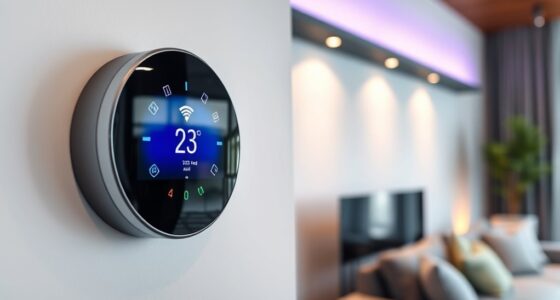
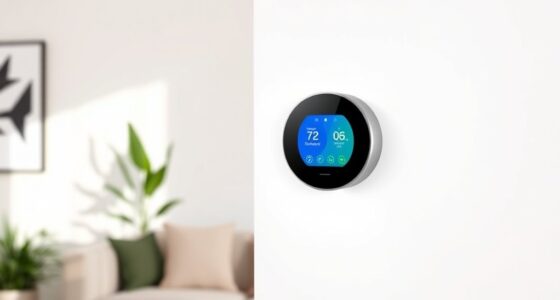
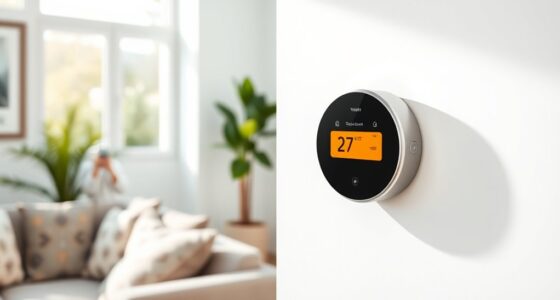
Smart thermostat integration standards guarantee that your devices communicate smoothly across different brands, making your smart home more efficient and user-friendly. These protocols allow your thermostat to work seamlessly with lighting, sensors, and HVAC systems, helping you save energy and reduce costs. By adopting common standards, devices stay compatible as technology advances, offering a reliable and flexible system. Keep exploring to discover how these standards can elevate your smart home experience even further.
Key Takeaways
- Integration standards ensure seamless communication and interoperability among different smart thermostats and connected devices.
- Protocols like Zigbee, Z-Wave, and Wi-Fi enable consistent device control and data sharing across brands.
- Standardization simplifies system expansion, upgrades, and future compatibility within smart home ecosystems.
- Uniform user interfaces promote easy operation and consistent experiences across various thermostat models.
- Standards support energy efficiency by enabling coordinated device responses to environmental changes and user preferences.

As smart thermostats become increasingly common in homes and buildings, establishing clear integration standards is essential for seamless operation and interoperability. When these devices work together smoothly, you benefit from improved energy efficiency and a more intuitive experience. Without standardized protocols, you might encounter compatibility issues, limited functionality, or confusing user interfaces that frustrate rather than help. That’s why defining common standards is vital to making sure your smart thermostat functions reliably across different systems and brands.
One of the primary goals of these integration standards is to optimize energy efficiency. When thermostats communicate effectively with other smart home devices—like lighting, window sensors, or HVAC systems—they can adapt more precisely to your lifestyle and environmental conditions. For example, if your window opens unexpectedly, a standardized system can automatically adjust the thermostat to save energy. These standards ensure that data flows seamlessly between devices, allowing for smarter, more responsive adjustments that reduce unnecessary energy consumption. As a result, you not only save money on utility bills but also contribute to a more sustainable environment.
Effective device communication enhances energy savings and promotes a sustainable, responsive smart home environment.
Additionally, standardized protocols help facilitate consistent communication across different brands, making it easier to expand and upgrade your smart home system over time without compatibility concerns. Clear device interoperability ensures your various smart devices can work together without technical hurdles, enhancing overall system reliability. Implementing these standards also supports future device compatibility, enabling new devices to integrate smoothly into your existing setup as technology advances. Equally important is the focus on user interface design. A well-integrated smart thermostat should be easy to operate, regardless of the device or platform you’re using. Consistent standards help create user interfaces that are intuitive and uniform across different brands and models. This means you won’t need to relearn how to navigate various apps or control panels; instead, you’ll find familiar layouts, clear icons, and straightforward controls. Good interface design minimizes confusion and enhances your ability to customize temperature settings, set schedules, or monitor energy usage effortlessly. When standards prioritize user experience, you get a device that feels natural and accessible, encouraging you to make full use of its features.
Furthermore, these standards facilitate interoperability, meaning your smart thermostat can integrate with a broader ecosystem of smart home devices. You won’t be limited to a single brand or technology; instead, you can create a cohesive system that works together seamlessly. This flexibility allows you to expand your smart home setup over time without worrying about compatibility issues. With consistent protocols and design principles, manufacturers can develop devices that communicate efficiently, making your smart home more reliable, convenient, and energy-conscious.
Frequently Asked Questions
How Do Standards Impact Smart Thermostat Pricing?
Standards directly influence smart thermostat pricing by shaping the pricing strategies manufacturers adopt. When standards promote compatibility and interoperability, companies may face higher development costs, which can increase consumer prices. Conversely, clear standards can reduce complexity, lowering production costs and making these devices more affordable. As a result, you benefit from improved consumer affordability, while brands balance innovation with competitive pricing to meet market demands effectively.
Are There Regional Differences in Integration Standards?
Regional differences dictate diverse deployment and device design, demanding diligent dedication to regional compliance and manufacturer compatibility. You’ll discover that standards vary across regions, affecting how seamlessly your smart thermostat interacts with local systems. These regional regulations can restrict or enhance your device’s functionality, so understanding local requirements helps ensure smooth setup and operation. Staying informed about regional compliance ensures compatibility, ultimately making your smart home smarter and more synchronized wherever you are.
Can Existing Thermostats Be Upgraded to Meet New Standards?
You can often upgrade legacy models to meet new standards, but compatibility challenges may arise. Check if your existing thermostat supports firmware updates or if new modules are available. Sometimes, replacing the device is necessary for full compatibility. Be aware that older models might lack features required by emerging standards, so weigh the cost and effort of upgrades against replacing the thermostat entirely for peak performance.
How Do Standards Affect Data Privacy and Security?
Standards play a vital role in protecting your data privacy and security. They require manufacturers to implement strong data encryption, which keeps your information safe from hackers. User authentication processes ensure only authorized users access your thermostat settings. By following these standards, you can trust that your personal data remains confidential, and your smart thermostat system is secure from potential cyber threats.
What Is the Future Outlook for Smart Thermostat Standards?
They say, “The only constant is change,” and that rings true for smart thermostat standards. You can expect ongoing improvements as interoperability challenges are addressed, making devices work together more seamlessly. Industry adoption will likely accelerate, driven by consumer demand for smarter, more connected homes. While uncertainties remain, the future looks promising, with standards evolving to enhance security, ease of use, and compatibility, ensuring your home stays both comfortable and connected.
Conclusion
Understanding smart thermostat integration standards is like learning a universal language that connects your devices seamlessly. By knowing these standards, you guarantee your home stays comfortable and efficient, without the chaos of miscommunication. Think of these standards as the threads weaving your smart home into a beautiful, cohesive tapestry. Embrace these protocols, and you’ll open the true potential of your smart thermostat, transforming your house into a harmonious haven where technology works effortlessly for you.