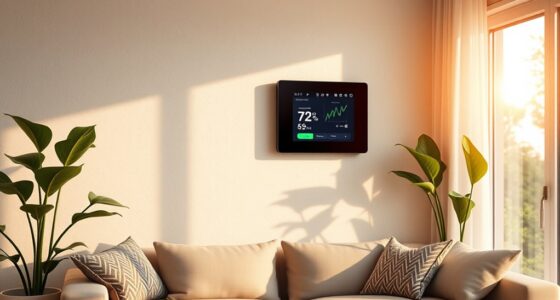
When you heat an insulated workspace properly, you maintain a steady, comfortable temperature without drafts or cold spots. Good insulation traps heat inside, so your space stays warm longer and requires less energy. Sealing gaps and choosing the right heating systems enhance this effect, making your environment more inviting and efficient. By ensuring your workspace is well-insulated and heated correctly, you enjoy a consistent, cozy atmosphere that supports productivity—and there’s more to discover on how to get the best results.
Key Takeaways
- Proper insulation maintains consistent indoor temperatures, enhancing overall comfort in the workspace.
- Sealed gaps and well-insulated spaces prevent drafts, eliminating cold spots and drafts.
- Efficient heating systems, properly calibrated, distribute warmth evenly throughout the workspace.
- Insulation reduces heat loss, allowing the workspace to stay warmer with less energy.
- Maintaining optimal insulation levels creates a cozy environment, boosting productivity and well-being.

Have you ever wondered how to keep your workspace warm without wasting energy? The key lies in proper heating of your insulated workspace. When your space is well-insulated, it becomes much easier to maintain a comfortable temperature while minimizing energy consumption. This is because insulation helps trap heat inside, reducing the workload on your heating system. As a result, you can achieve better energy efficiency and consistent temperature regulation without skyrocketing your energy bills. When you focus on heating an insulated workspace properly, you’re making sure that the warmth stays where you need it, instead of leaking out through gaps or weak spots.
Effective temperature regulation starts with sealing any drafts or leaks. Even small cracks around windows, doors, or vents can allow heat to escape, forcing your heating system to work harder to compensate. By sealing these leaks, you prevent unnecessary heat loss, which in turn improves energy efficiency. Once the space is properly sealed, you can set your thermostat to a comfortable level, knowing that the heat will stay inside. This helps keep your workspace consistently warm without frequent adjustments or excessive energy use. Proper insulation and sealing are essential for maximizing heat retention and overall efficiency. Regularly monitoring and maintaining your insulation and sealing strategies can significantly boost your workspace’s energy performance. Additionally, understanding how insulation materials work can help you select the most effective options for your space.
Sealing drafts keeps heat inside, boosting energy efficiency and maintaining a consistent, comfortable workspace.
Using the right heating equipment plays a significant role, too. Electric heaters, radiant panels, or heat pumps can all be effective options for an insulated workspace. The goal is to choose a system that matches the size of your area and provides even heat distribution. When your heating system is properly sized and calibrated, it won’t overwork itself, which means less energy waste. Additionally, programmable thermostats allow you to set schedules, so the heat only runs when you need it, further enhancing energy efficiency and ensuring temperature stays steady throughout your workday. Properly calibrated heating systems can also extend the lifespan of your equipment and improve overall performance.
Another important aspect is maintaining your insulation and heating equipment regularly. Over time, insulation can settle or become damaged, reducing its effectiveness. Regular inspections and upgrades ensure your workspace remains well-insulated, making heating more efficient. Additionally, proper insulation maintenance and keeping your heating system clean and serviced prevents unnecessary energy drain and keeps it running smoothly. Performing these routine checks helps identify issues early, saving money and effort in the long run.
Ultimately, when you heat an insulated workspace properly, you create an environment that’s not only warm and inviting but also energy-efficient. You’ll enjoy the comfort of a stable temperature while keeping your energy costs in check. This balance of comfort and efficiency means you can focus on your work without worrying about drafts, cold spots, or soaring utility bills. Proper heating and insulation work together to give you a workspace that feels just right, all while respecting your budget and the environment.
As an affiliate, we earn on qualifying purchases.
Frequently Asked Questions
How Does Proper Workspace Heating Impact Employee Productivity?
Proper workspace heating greatly boosts your employee productivity by ensuring ideal workspace comfort. When temperature regulation is well-maintained, employees stay focused and less distracted by discomfort or cold. Comfortable environments reduce fatigue and health issues, leading to fewer absences. By investing in effective heating, you create a more inviting workspace that encourages employees to perform at their best, ultimately enhancing overall efficiency and satisfaction.
What Are the Cost Differences Between Various Heating Methods?
You’ll find that the cost comparison between heating methods varies based on heating efficiency. Electric heaters generally have higher operating costs but lower upfront costs, while gas systems tend to be more efficient and cheaper to run long-term. Heat pumps offer a good balance of efficiency and cost savings, especially in well-insulated workspaces. Choose a method that aligns with your budget and energy goals for the most cost-effective solution.
Can Heating Improve Indoor Air Quality in Insulated Workspaces?
Heating can dramatically improve indoor air quality in insulated workspaces, transforming it into a pristine environment. By enhancing air circulation, you reduce airborne contaminants, and with humidity control, you prevent dry or damp conditions that foster mold and dust mites. This dual benefit keeps the air fresh, healthy, and comfortable. Proper heating creates an environment so clean, it’s almost like breathing in the purest mountain air every day.
How Often Should Insulation and Heating Systems Be Maintained?
You should check your insulation and heating systems at least once a year to guarantee insulation durability and peak performance. Regular maintenance prevents issues that could shorten your heating system’s lifespan and keeps your workspace comfortable. Keep an eye out for signs of wear or damage, and schedule professional inspections to catch problems early. Consistent upkeep helps prolong system life and maintains energy efficiency, saving you money and ensuring reliable warmth.
What Are Eco-Friendly Options for Heating Insulated Workspaces?
A stitch in time saves nine, so choosing eco-friendly heating options is wise. You can invest in renewable energy sources like solar or geothermal systems, which harness natural resources and reduce carbon footprints. Additionally, improve energy efficiency by using energy-efficient heaters and smart thermostats. These choices not only keep your insulated workspace warm sustainably but also lower your energy bills, supporting a healthier planet and a more comfortable environment for work.
As an affiliate, we earn on qualifying purchases.
Conclusion
Imagine working in a cozy cabin amidst a snowstorm, where warmth wraps you like a favorite blanket. Properly heating your insulated workspace is just like that—creating a haven where comfort boosts productivity and well-being. When your space stays warm, you’re less distracted by cold and more focused on your tasks. Just as a fire keeps a cabin inviting, a well-heated workspace keeps you motivated and efficient, proving that comfort truly fuels success.
programmable thermostat for workspace
As an affiliate, we earn on qualifying purchases.
As an affiliate, we earn on qualifying purchases.
draft sealing kit for windows and doors
As an affiliate, we earn on qualifying purchases.
As an affiliate, we earn on qualifying purchases.