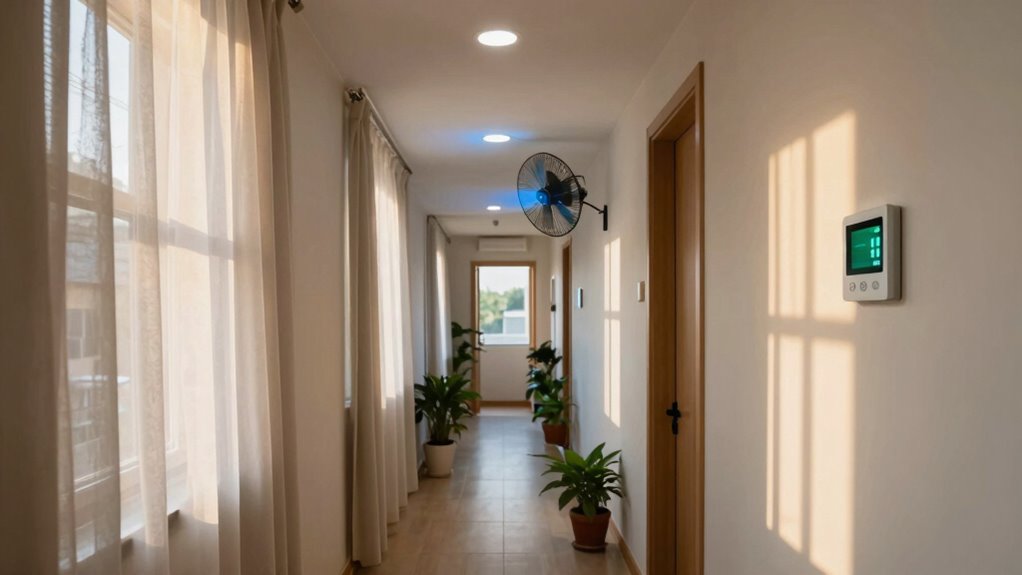

To control energy use in homes with hard-to-cool hallways, consider smart thermostats for remote adjustments and scheduling. Improve insulation to prevent hot spots and seal drafts with weather stripping for better air retention. Use ceiling fans to circulate air evenly, and opt for lighter colors on walls to reflect heat. These strategies not only enhance comfort but also reduce energy costs. There’s even more you can do to optimize your home for better cooling efficiency.
Key Takeaways
- Utilize Smart Thermostats: Monitor and adjust temperatures remotely, allowing for efficient scheduling and targeted cooling in hard-to-cool hallways.
- Improve Insulation: Upgrade insulation to eliminate gaps, helping maintain consistent temperatures and preventing hot spots in hallways.
- Strategically Use Ceiling Fans: Install ceiling fans to circulate air in hallways, enhancing airflow and cooling efficiency without increasing energy costs.
- Seal Drafts: Use door sweeps and weather stripping to eliminate drafts, keeping cool air inside and reducing energy waste.
- Choose Light Colors: Opt for lighter colors in hallway renovations to reflect heat, supporting a cooler environment and improving energy efficiency.
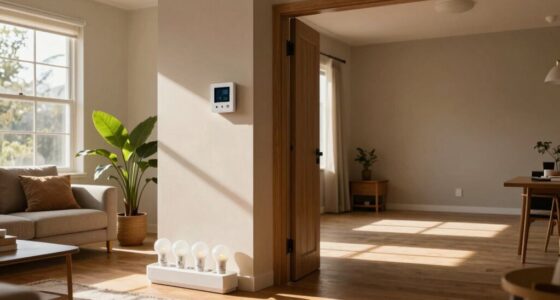
As you endeavor to create a more energy-efficient home, understanding how to control energy use is vital. One common challenge many homeowners face is managing hard-to-cool hallways. These spaces can often feel like energy vacuums, drawing more from your cooling system than necessary. By implementing a few strategic solutions, you can enhance comfort while optimizing energy efficiency.
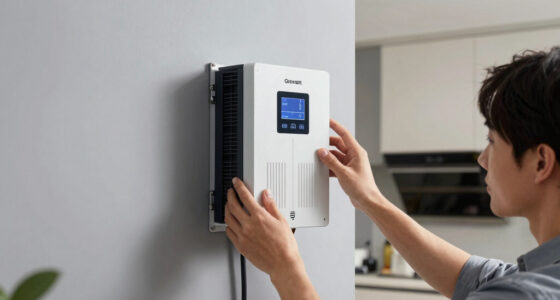
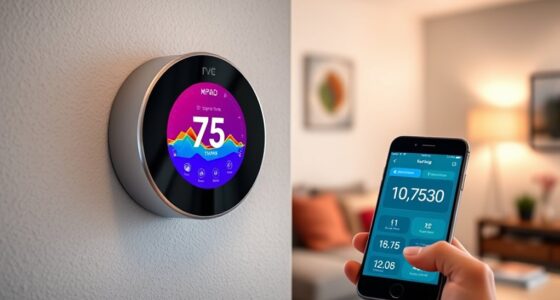
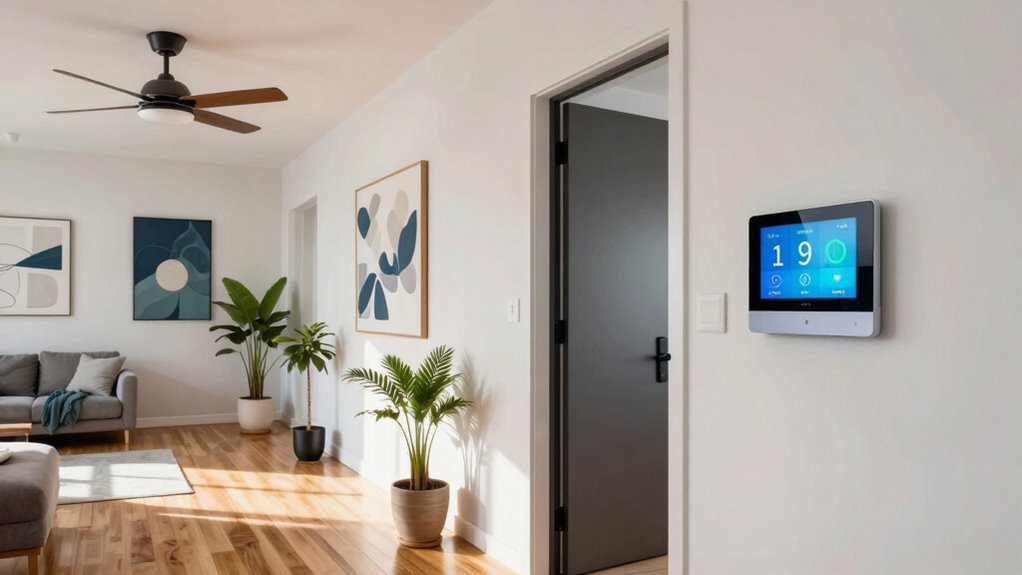
First, consider installing a smart thermostat. This handy device allows you to monitor and adjust your home’s temperature remotely. You can set schedules to cool your home during peak hours and guarantee consistent temperatures throughout. If your hallway’s airflow isn’t ideal, a smart thermostat can help you identify patterns in energy use, allowing you to make informed decisions about your cooling strategy. You can even program it to direct more cooling power to specific areas, including those tricky hallways.
Consider a smart thermostat to optimize your cooling strategy and ensure consistent temperatures, especially in hard-to-cool hallways.
Next, examine your insulation. Energy-efficient insulation plays a significant role in maintaining stable temperatures. If your hallway isn’t properly insulated, it can become a hot spot, causing your cooling system to work overtime. Check for gaps or weak spots that might be letting cool air escape. Adding or upgrading insulation can make a substantial difference. Not only will this improve comfort, but it’ll also reduce your energy bills. Additionally, air quality solutions such as sensors and purifiers can help you monitor and maintain optimal indoor conditions, further supporting energy efficiency. Improving insulation is especially effective when combined with other strategies for controlling thermal transfer. Ensuring proper insulation is a key element in reducing heat transfer and maintaining a cooler hallway.
Another effective measure is to use fans strategically. Ceiling fans can help move air around, distributing cool air more evenly. This is especially useful in hallways that don’t receive adequate airflow from your HVAC system. Make sure to set the fans to rotate counterclockwise during summer months to push cool air down.
You should also think about adding door sweeps and weather stripping to your hallways. These simple additions can help seal off drafts, keeping cool air inside where it belongs. Even small gaps can lead to significant energy losses, so it’s worth taking the time to address these issues. Proper sealing of air leaks can significantly improve your home’s overall energy efficiency.
Lastly, consider the color and materials used in your hallway. Dark colors absorb heat, making it harder to keep the space cool. Lighter colors reflect light and heat, which can help maintain a more pleasant temperature. If you’re thinking about renovations, this is an easy way to promote energy efficiency.

Amazon Smart Thermostat – Save money and energy – Works with Alexa and Ring – C-wire required
An Alexa thermostat – Amazon Smart Thermostat is an easy way to switch from a traditional thermostats for…
As an affiliate, we earn on qualifying purchases.
As an affiliate, we earn on qualifying purchases.
Frequently Asked Questions
What Are the Best Plants for Improving Indoor Air Quality?
The best plants for improving indoor air quality include spider plants, peace lilies, and snake plants. These air purifying plants not only enhance your home’s atmosphere but also thrive in various lighting conditions, making them perfect for indoor gardening. By incorporating a few of these green companions, you’ll enjoy cleaner air while adding a touch of nature to your space. Plus, they’re easy to care for, so you won’t have to stress!
How Can I Reduce Humidity Levels in My Home?
To reduce humidity levels in your home, start by exploring dehumidifier options that suit your space. These devices can efficiently extract moisture from the air. Additionally, implement ventilation strategies like using exhaust fans in kitchens and bathrooms to promote air circulation. Open windows when weather permits to let fresh air in, and consider using moisture-absorbing plants. By combining these methods, you’ll create a drier, more comfortable living environment.
What Is the Ideal Temperature for Energy Efficiency?
The ideal temperature for energy efficiency is typically around 68°F (20°C) during the winter and 78°F (26°C) in the summer. You might’ve heard that lower settings lead to energy savings, and that’s true! By adjusting your temperature settings just a few degrees, you can markedly cut down on energy costs. Plus, using a programmable thermostat helps maintain these levels automatically, ensuring comfort without breaking the bank.
How Often Should I Clean My Air Conditioning Filters?
You should clean your air conditioning filters every one to three months, depending on usage and dust levels. Regular filter maintenance not only improves air quality but also enhances your system’s efficiency. If you have pets or live in a dusty area, check them more frequently. A clean filter helps you breathe easier while reducing energy consumption, so don’t neglect this simple yet essential task for your home’s comfort.
Are There Energy-Efficient Lighting Options for Hallways?
Absolutely, there are energy-efficient lighting options for your hallways! Consider installing LED fixtures for their longevity and low energy use. Incorporating motion sensors can guarantee lights only activate when needed. Smart bulbs are another great option, allowing you to control brightness and schedules via your phone. Don’t forget about light placement; positioning fixtures strategically can enhance illumination while reducing energy consumption. With these choices, you’ll keep your hallways bright without skyrocketing your energy bills!
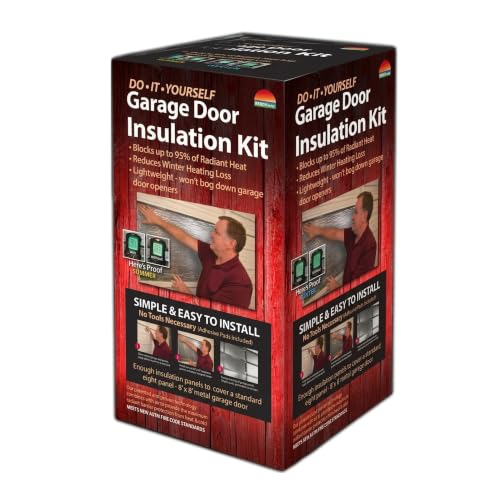
Reach Barrier 3009 Garage Door Insulation Kit
Reach Barrier(Tm) Reflective Insulation And Bubble Barrier Technology Blocks Up To 95-Percent Of Radiant Heat Which Will Help…
As an affiliate, we earn on qualifying purchases.
As an affiliate, we earn on qualifying purchases.
Conclusion
To sum up, managing energy use in homes with hard-to-cool hallways is essential for comfort and efficiency. Did you know that homes can lose up to 30% of their heating and cooling energy through poorly insulated spaces? By sealing gaps, utilizing fans, and optimizing your HVAC system, you can greatly reduce energy waste. Taking these steps not only enhances your home’s comfort but also cuts down on your energy bills, making a positive impact on your wallet and the environment.

Ohniyou Ceiling Fans with Lights, 52'' Low Profile Ceiling Fan with Light and Remote/APP Control, Modern Flush Mount Ceiling Fan for Indoor Bedroom Living Room, Dimmable, Quiet DC Motor, Black
Smart Ceiling Fans with APP & Remote Control: This modern ceiling fan with lights has all functions controllable…
As an affiliate, we earn on qualifying purchases.
As an affiliate, we earn on qualifying purchases.
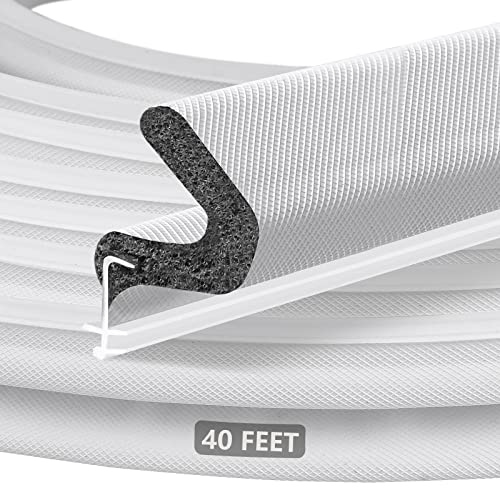
40FT Kerf V‑Shaped Weather Stripping Door Seal, Press‑in Seal for Pre‑Cut Slot Doors, Not Self‑Adhesive, Soundproof Draft Blocker for Exterior Front Doors, Fits Large Gaps, Easy DIY Install (White)
KERF SLOT ONLY DESIGN: This door seal is made exclusively for door frames with pre-cut kerf slots, press-in…
As an affiliate, we earn on qualifying purchases.
As an affiliate, we earn on qualifying purchases.