TL;DR
Polysilicon prices are holding steady at approximately $19.23/kg globally, despite industry focus on the U.S. Section 232 investigation. Market participants suggest potential impacts are uncertain, with some expecting limited effects on imports.
Global polysilicon prices remained unchanged at approximately $19.23 per kilogram last week, even as industry participants at SNEC highlighted that the outcome of the U.S. Section 232 investigation could influence future market dynamics.
The OPIS Global Solar Markets Report assessed the polysilicon benchmark at $19.227/kg, maintaining stability from the previous week. Despite this, industry insiders indicated that the focus at SNEC was on the potential impact of the U.S. government’s ongoing Section 232 investigation into polysilicon imports, with the final report believed to have been submitted to the White House and an announcement expected by July 4.
Market disparities persist, with price gaps between long-term contracts for non-Chinese polysilicon reaching as much as $5/kg, and spot-market differences up to $10/kg. Some industry voices suggest the investigation’s outcome may not fully restrict non-U.S. polysilicon imports, but could aim to prevent Chinese polysilicon that does not meet traceability standards from entering the U.S. market. Meanwhile, Chinese mono-grade polysilicon prices declined slightly, with producers adopting divergent strategies amid ongoing market pressures.
Despite some capacity restarts and increased supply from larger producers, prices are under downward pressure, with spot discussions at SNEC indicating prices as low as CNY31-32/kg. Authorities continue to promote consolidation efforts within China’s polysilicon sector, though progress remains uncertain. Export inquiries from India and Turkey are increasing, but significant growth appears unlikely in the near term due to limited outside capacity.
Implications of the U.S. Section 232 Investigation on Market Stability
The stability of polysilicon prices amid geopolitical and trade uncertainties is crucial for the solar industry’s supply chain. The outcome of the U.S. investigation could influence import patterns, pricing strategies, and capacity management globally. While current prices remain steady, potential restrictions or tariffs may reshape supply routes and competitiveness, especially for non-Chinese producers. This ongoing focus underscores the importance of trade policies in shaping the future of solar module manufacturing and project economics.

3Pcs Mini Solar Panel DC 6V Polysilicon Solar Cell Charger Module Solar DIY Portatil System Kits with 30cm Cable for Scientific Research Projects,Making Lawn Lights, Landscape Lights,DIY etc
- Durable Snowproof and Windproof Design: Resists heavy snow and strong winds
- Includes 30cm Connecting Cable: Easy installation with high efficiency output
- Ideal for DIY Projects: Suitable for scientific research and creative uses
As an affiliate, we earn on qualifying purchases.
As an affiliate, we earn on qualifying purchases.
Recent Trends and Industry Responses to Market Pressures
Over the past weeks, global polysilicon prices have remained stable, with assessments around $19.23/kg. Chinese producers are operating at varying levels of capacity utilization, with some increasing output to capitalize on lower costs during the wet season, while others remain cautious. The Chinese government continues to encourage consolidation within the sector, though progress is limited by the lack of clear policies. Meanwhile, export interest from countries like India and Turkey is rising, but large-scale outside capacity remains under development, limiting immediate export growth.
Market disparities persist, with significant price differences between sources and contract types. Industry players note that many producers are selling below cost, which could limit further price declines but also weaken overall market confidence. The sector’s future will heavily depend on U.S. trade policy developments and how Chinese authorities manage capacity and consolidation efforts.
“The outcome of the Section 232 investigation is unlikely to fully block non-U.S. polysilicon from entering the U.S. market but may focus on restricting Chinese material that lacks traceability.”
— an anonymous researcher

JJN Bifacial 425 Watt Solar Panel, N-Type UL 61730 16BB Solar Panels, 25% High Efficiency Monocrystalline Solar Module for 12V/24V/48V PV System for Homes Rooftop Farm RV and Off-Grid Applications
- Bifacial Technology: Generates power from both sides for higher efficiency
- High-Efficiency N-Type Cells: Uses 16BB cells for better performance and shading resistance
- Durable Weather Resistance: Corrosion-resistant frame with waterproof junction box
As an affiliate, we earn on qualifying purchases.
As an affiliate, we earn on qualifying purchases.
Unclear Impact of U.S. Investigation on Future Pricing
While the investigation’s findings are expected by July 4, it remains uncertain how the final decision will specifically influence polysilicon import policies, pricing, and supply chain dynamics. Industry experts suggest impacts may be limited or nuanced, but definitive outcomes are still pending.
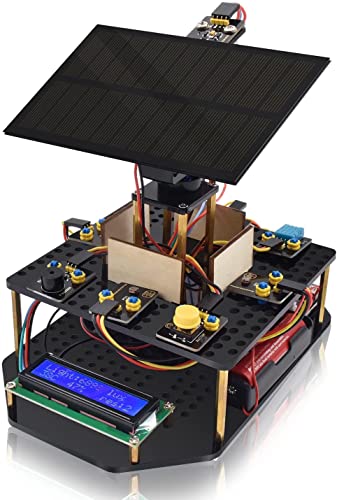
KEYESTUDIO DIY Solar Tracking Electronic Kit for Arduino, Smart Phone Charging, Temperature & Humidity Sensor, BH1750 Light Sensor, Educational Programming Kit for Teens & Adults 15+
- Arduino-based Solar Tracking Kit: Includes sensors, servos, and solar panel
- Smartphone Charging Module: Enables device charging via solar energy
- Temperature and Humidity Sensor: Monitors environmental conditions
As an affiliate, we earn on qualifying purchases.
As an affiliate, we earn on qualifying purchases.
Next Steps and Market Monitoring Post-Investigation
Market participants will closely watch the U.S. government’s official announcement in early July for potential tariffs or restrictions. Chinese producers may adjust strategies based on policy outcomes, and supply chain shifts are anticipated. Additionally, capacity adjustments and consolidation efforts in China are likely to continue, influencing global supply and prices.

DORAMI Clear Solar Power Crookes Radiometer Sun Light Energy Glass Windmill Spinning Vanes
- Working Principle: Rotates with sunlight or infrared light
- Material & Design: Handmade high-quality crystal glass
- Decorative Use: Ideal for offices, rooms, and parties
As an affiliate, we earn on qualifying purchases.
As an affiliate, we earn on qualifying purchases.
Key Questions
When is the U.S. Section 232 investigation expected to conclude?
The investigation findings are believed to have been submitted to the White House, with a decision anticipated by July 4.
Will polysilicon prices drop further?
Prices are already near their lows, and many producers are selling below cost. Further declines are unlikely unless new trade restrictions emerge.
How might the investigation impact Chinese polysilicon producers?
Potential restrictions could limit Chinese material’s access to the U.S. market, but the impact depends on the final policy and enforcement details.
Is there a risk of supply shortages due to the investigation?
Current supply levels are stable, but uncertainties around future trade policies could affect supply chain stability.
Are Chinese producers consolidating to avoid restrictions?
Some industry groups are promoting consolidation, but progress remains uncertain without clear policy directives.
Source: PV Magazine