
To measure your smart thermostat savings, start by collecting your utility bills for at least 12 months before installation to establish a baseline, accounting for seasonal changes. After installing, track your bills over the same period, paying attention to total energy use and costs. Use detailed consumption data from your utility or thermostat reports to identify trends and savings. Continuing with more insights will help you understand how to refine your measurements effectively.

Get home appliances delivered free with Prime
- Fast, free delivery on millions of items
- Prime Video, Amazon Music and more included
- Member-only deals all year
Key Takeaways
- Collect at least 12 months of utility bills pre- and post-installation to account for seasonal energy variations.
- Compare average monthly energy consumption and costs before and after installing the smart thermostat.
- Use built-in energy reports and third-party tools to visualize and analyze consumption patterns over time.
- Maintain consistent thermostat settings and usage habits to ensure accurate measurement of savings.
- Focus on overall energy trends and specific reductions in unnecessary heating or cooling for precise assessment.
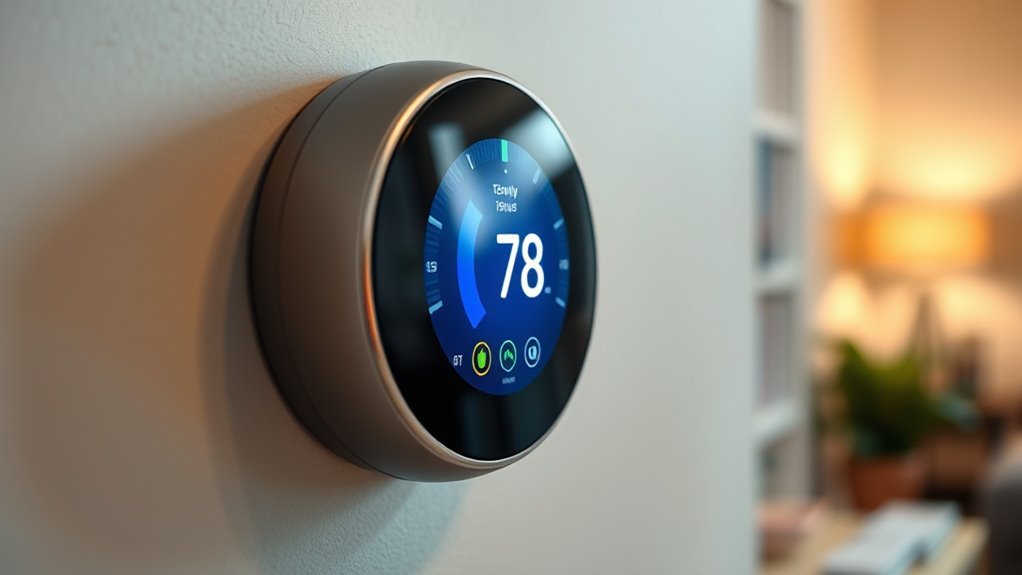
Smart thermostats have become popular tools for reducing energy bills, but understanding how much you actually save can be tricky. To get an accurate picture, you need to focus on proper measurement methods that highlight your savings. One key aspect is evaluating the energy efficiency improvements your smart thermostat provides. By upgrading to a smart device, you’re aiming to optimize your heating and cooling patterns, reducing unnecessary energy use. However, to confirm these benefits, you should conduct a thorough cost analysis, comparing your utility bills before and after installation.
Start by collecting your utility bills for at least a full year prior to installing the smart thermostat. This helps account for seasonal variations and provides a baseline for comparison. Once your smart thermostat is in place, continue tracking your bills over the same period. Ensure you’re consistently using the thermostat’s features, such as scheduling and temperature adjustments, to maximize energy efficiency. Many smart thermostats also offer energy reports, which can help you see how your usage changes over time and identify patterns that contribute to savings.
Track utility bills for a year before and after installing your smart thermostat to measure savings accurately.
To perform a meaningful cost analysis, compare your average monthly energy costs before and after installation. Look at the total kilowatt-hours (kWh) consumed and the associated costs. Keep in mind that some fluctuations are normal, so focus on the overall trend rather than isolated months. If your utility provider offers detailed consumption data, leverage it to pinpoint exactly how much energy is saved due to the smart thermostat’s optimized settings.
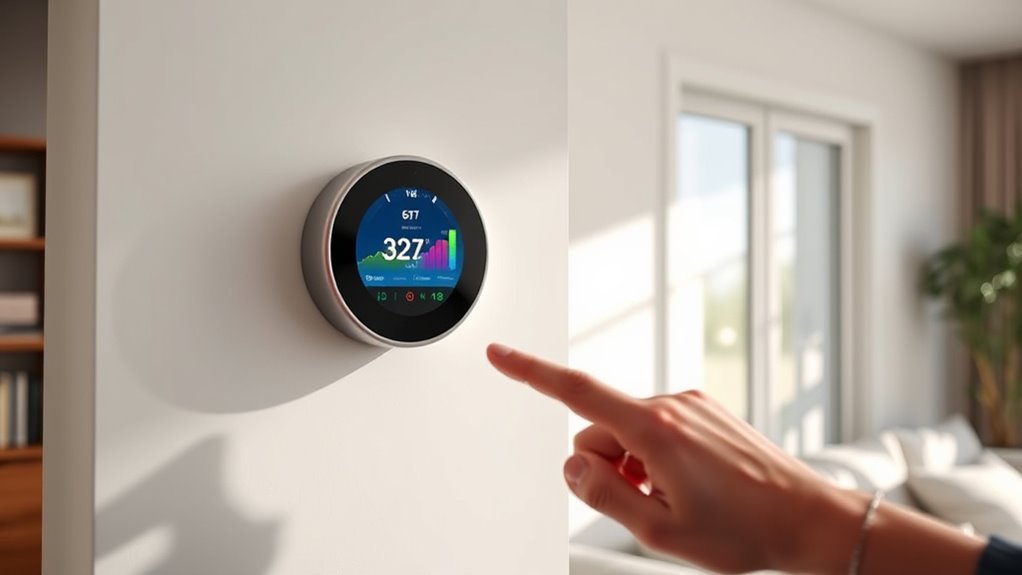
Another effective way to measure savings is to use the thermostat’s built-in reports or third-party energy tracking tools. These tools can help you visualize your energy consumption and identify periods of significant reduction. If your smart thermostat supports room-by-room or zone-based control, you can also compare energy use across different zones to see where efficiency improvements are most pronounced. Additionally, understanding Home Efficiency can help you better interpret the impact of your smart thermostat on overall energy savings.
Products Worth Considering

Philips Hue Smart LED Candle Bulbs, B39, E12, 2-Pack

Hisense 75U6SF Pro 75-Inch U6 Pro Mini-LED 4K UHD Smart Fire TV

TCL 75-Inch QM6K QLED Mini LED 4K HDR Smart Google TV, 144Hz
As an affiliate, we earn on qualifying purchases.
Frequently Asked Questions
Do Smart Thermostats Work Equally Well in All Climates?
Smart thermostats don’t work equally well in all climates because their climate adaptability varies. In moderate climates, they optimize thermostat efficiency effectively, saving you money and maintaining comfort. In extreme cold or heat, their efficiency may decrease unless you choose models designed for those conditions. To maximize savings, select a thermostat suited for your climate and guarantee it’s properly calibrated. This way, you’ll get the most benefit regardless of where you live.
Can I Get a Rebate for Installing a Smart Thermostat?
Yes, you can often get a rebate for installing a smart thermostat. Check your local utility company’s rebate programs, as they frequently offer incentives to reduce installation costs. These programs aim to promote energy efficiency, making your upgrade more affordable. Be sure to review eligibility requirements and application procedures to maximize your savings and guarantee you qualify for the rebate.
How Long Does It Take to See Savings After Installation?
Think of your savings as a garden that starts blooming after planting. Usually, you’ll notice savings within one or two billing cycles post-installation, depending on your usage patterns. The installation timeline is quick, often just a day, but it takes a billing cycle or two for your utility provider to reflect the changes. Keep an eye on your bill—your smart thermostat is working to save you money now.
Do Smart Thermostats Require Professional Installation?
Smart thermostats usually don’t require professional installation, but you should consider installation considerations and compatibility issues. If your HVAC system is complex or incompatible, you might need expert help to make certain of proper setup. Check the thermostat’s compatibility with your system first. If it’s compatible and straightforward, you can often install it yourself by following the manufacturer’s instructions, saving time and money while enjoying your smart thermostat’s benefits.
Are There Features to Help Monitor Overall Energy Consumption?
You might think smart thermostats only control temperature, but many feature energy monitoring and consumption tracking. These tools give you real-time data on your energy use, helping you identify patterns and inefficiencies. With this insight, you can adjust your habits or settings to save money and reduce waste. So, yes, most smart thermostats include features that help you monitor overall energy consumption, making it easier to optimize your home’s efficiency.
Conclusion
By paying close attention to your utility bills and tracking your thermostat adjustments, you gently uncover the subtle benefits of your smart thermostat. Over time, these small insights can reveal how your energy habits evolve, quietly enhancing your savings. Remember, the true value isn’t just in the numbers but in the comfort and efficiency you cultivate. With patience and awareness, you’ll find your investment in smarter living quietly rewarding, guiding you toward a more balanced and sustainable home.