
TL;DR

Get home appliances delivered free — and shop member deals
- Fast, free delivery on millions of items
- Access to Prime Big Deal Days deals on October 6–7
- Prime Video, Amazon Music and more included
A Spanish study compares eight PV technologies, finding tandem perovskite-silicon cells have about 30% lower environmental impact than traditional silicon panels. However, their benefits depend on long operational lifetimes and stability. The study highlights that thin-film technologies like cadmium telluride remain the lowest impact options.
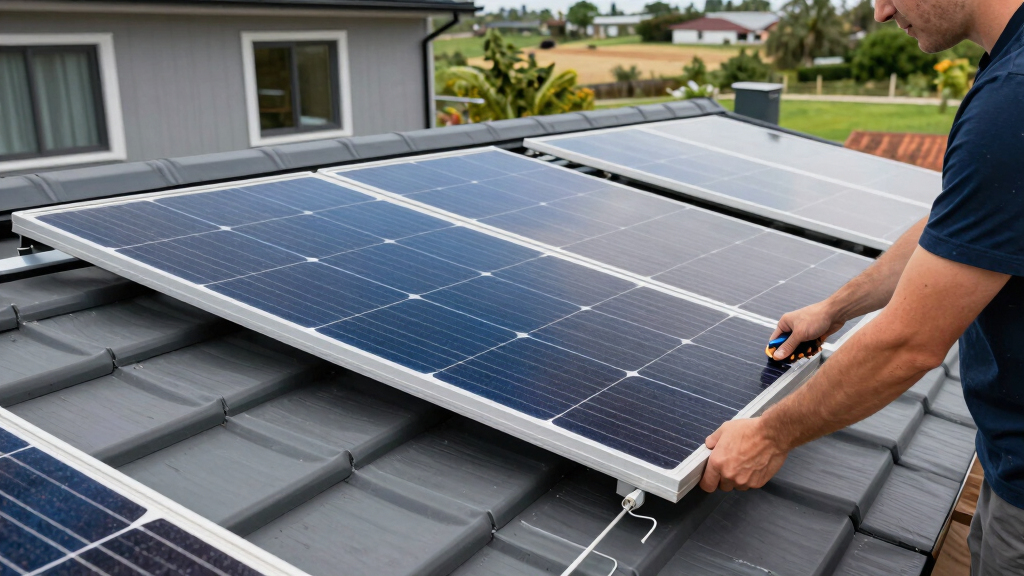
A Spanish research team has found that tandem perovskite-silicon photovoltaic (PV) modules can reduce environmental impacts by approximately 30% compared to conventional silicon-based panels, according to their latest study. The findings, based on a comprehensive life cycle assessment, highlight the potential for higher efficiency PV systems to contribute to more sustainable solar energy deployment, provided they achieve long operational lifetimes.
The study, conducted by researchers from Universitat Politècnica de Catalunya (UPC), analyzed eight PV technologies across three generations, focusing on cradle-to-gate impacts including raw material extraction, manufacturing, and module production. It concluded that tandem PV modules, which combine perovskite and silicon layers, offer lower impacts per kilowatt-hour due to their higher conversion efficiencies, which can exceed 30% in laboratory conditions. However, these systems are highly sensitive to degradation rates and require operational lifespans of over 15 years to outperform traditional silicon panels environmentally.
Among the technologies evaluated, cadmium telluride (CdTe) thin-film PV systems showed the lowest overall environmental impacts, driven by their minimal material and energy requirements. The researchers noted that the low thickness of thin-film absorber layers—20 to 80 times thinner than silicon wafers—significantly reduces resource consumption. They also identified key impact hotspots, such as silicon wafer production and energy-intensive manufacturing processes, and highlighted challenges in recycling tandem modules due to separation issues between layered materials.
Implications of Tandem PV for Sustainable Energy
This research suggests that tandem PV technologies could significantly enhance the sustainability of solar energy by offering higher efficiencies and lower environmental impacts per unit of electricity generated. If technological challenges related to stability and recyclability are addressed, tandem systems may accelerate the transition to cleaner energy. However, their environmental benefits are currently dependent on achieving long lifetimes and low degradation rates, which are still under development.
high efficiency tandem perovskite silicon solar panels
As an affiliate, we earn on qualifying purchases.
As an affiliate, we earn on qualifying purchases.
Background on PV Technologies and Environmental Assessments
The study builds on previous assessments of PV technologies, including first-generation silicon systems like PERC, and second-generation thin films such as CdTe and CIGS. While silicon remains dominant, recent innovations aim to improve efficiency and reduce impacts. Tandem perovskite-silicon cells have shown promising efficiencies in lab settings but face challenges in stability and scalability. The research emphasizes that lifecycle impacts are influenced by material use, manufacturing energy, and end-of-life recycling potential, with thin-films generally offering lower impacts due to their minimal material requirements.
“Perovskite-silicon tandem technologies have shown a reduced environmental impact compared to current dominant silicon-based cells.”
— Julia Otero
long lifespan photovoltaic modules
As an affiliate, we earn on qualifying purchases.
As an affiliate, we earn on qualifying purchases.
Uncertainties Around Long-Term Stability and Recycling
While the study indicates potential environmental benefits of tandem PV, it remains unclear whether current stability and degradation issues can be sufficiently addressed at scale. The impact of lead-based perovskites on toxicity and recycling remains a concern, with ongoing research exploring lead-free alternatives. The long-term performance and economic viability of tandem modules are still under evaluation, and their real-world environmental benefits depend heavily on achieving operational lifespans exceeding 15 years.
thin film cadmium telluride solar panels
As an affiliate, we earn on qualifying purchases.
As an affiliate, we earn on qualifying purchases.
Next Steps for Tandem PV Development and Deployment
Further research is needed to improve the stability, recyclability, and scalability of tandem PV systems. Industry efforts may focus on developing lead-free perovskites and advanced encapsulation techniques. Regulatory frameworks and recycling processes will also need adaptation to handle layered tandem modules effectively. Commercial deployment could accelerate if these technical challenges are addressed, potentially leading to broader adoption of high-efficiency, low-impact PV technologies within the next decade.
As an affiliate, we earn on qualifying purchases.
Key Questions
How much lower is the environmental impact of tandem PV compared to silicon?
The study estimates that tandem PV modules can reduce environmental impacts by about 30% per kilowatt-hour compared to traditional silicon-based panels.
What are the main challenges facing tandem PV technology?
The primary challenges include improving perovskite stability, addressing toxicity concerns related to lead-based perovskites, and developing effective recycling methods for layered modules.
Will tandem PV systems be commercially viable soon?
Commercial viability depends on overcoming stability and recycling issues. While efficiencies are promising, large-scale deployment requires further technological advancements and lifecycle testing.
How do thin-film technologies compare environmentally?
Thin-film PV systems like cadmium telluride currently show the lowest environmental impacts due to their minimal material use and lower energy requirements during manufacturing.
What is the significance of the 15-year operational lifetime threshold?
The study indicates that tandem PV modules need to operate for at least 15 years to achieve environmental benefits that surpass those of conventional silicon panels.
Source: PV Magazine
NFL season / tailgating Picks
team gear
As an affiliate, we earn on qualifying purchases.